World Heritage Identification Number: 765
World Heritage since: 1996
Category: Natural Heritage
WHE Type: Natural Landscapes & Geographic Features
Transboundary Heritage: No
Endangered Heritage: No
Country: 🇷🇺 Russian Federation
Continent: Europe
UNESCO World Region: Europe and North America
Map
The Volcanoes of Kamchatka: A Geological Marvel and Biodiversity Hotspot
The Volcanoes of Kamchatka, located on the Kamchatka Peninsula in eastern Russia, represent one of the most significant geological marvels and biodiverse ecosystems globally. Inscribed as a UNESCO World Heritage Site in 1996 and extended in 2001, this region boasts a high concentration of active volcanoes, diverse volcanic features, and rich wildlife.
Geologically speaking, the Volcanoes of Kamchatka constitute a unique and captivating landscape. With at least 160 major volcanoes scattered across the peninsula, it hosts the highest density of active volcanoes worldwide. Broader geological surveys that include medium-sized features and extinct cones report more than 300 volcanoes in total found in Kamchatka. Among these, 29 remain active, making up a significant portion of the volcanic features within the six protected sites that encompass the UNESCO World Heritage Site.
The World Heritage Site consists of six protected areas: Kronotsky Zapovednik, Bystrinsky Nature Park, Nalychevo Nature Park, South Kamchatka Nature Park, South Kamchatka Federal Wildlife Refuge, and Klyuchevskoy Nature Park.
The inclusion of these sites underscores the importance of the region's geological and ecological value. It is important to note that the Kuril Islands, which are part of the broader volcanic chain extending from Kamchatka to Japan, are not officially listed in this specific UNESCO listing, but they share similar volcanic activity.
The region is part of the Pacific Ring of Fire, where the Pacific Plate subducts beneath the Okhotsk Plate, resulting in frequent earthquakes and volcanic eruptions. The region's volcanoes exhibit various types, such as stratovolcanoes, shield volcanoes, and calderas, offering researchers valuable insights into the Earth's geological processes.
Beyond its geological significance, the Volcanoes of Kamchatka serve as a haven for diverse and abundant wildlife. The interplay between active volcanoes and glaciers creates a dynamic environment that supports a remarkable array of species. The region is home to the world's largest known variety of salmonid fish, including the Chinook, Coho, Sockeye, and Pink Salmon. Kamchatka’s rivers and lakes serve as crucial spawning grounds for these fish, which, in turn, sustain a variety of predators.
The nutrient-rich ecosystems support thriving populations of sea otters, harbor seals, and approximately 50 percent of the world's Steller’s sea eagles. On land, the peninsula is home to one of the largest populations of brown bears — estimated between 10,000 and 15,000 — as well as wolves, moose, and wolverines.
Kamchatka’s ecosystems are sustained by volcanic ash, which enriches the soil and provides essential nutrients to both terrestrial and aquatic habitats. This interplay of geological activity and biological diversity makes the region a vital part of the global ecosystem.
The region's unique combination of geological wonders and biodiversity makes it an essential destination for scientists, adventurers, and nature enthusiasts alike. As a testament to its global importance, the Volcanoes of Kamchatka continue to inspire awe and fascination among those who explore its rugged landscapes and vibrant ecosystems.
UNESCO Description of the World Heritage Site
This is one of the most outstanding volcanic regions in the world, with a high density of active volcanoes, a variety of types, and a wide range of related features. The six sites included in the serial designation group together the majority of volcanic features of the Kamchatka peninsula. The interplay of active volcanoes and glaciers forms a dynamic landscape of great beauty. The sites contain great species diversity, including the world's largest known variety of salmonoid fish and exceptional concentrations of sea otter, brown bear and Stellar's sea eagle.
UNESCO Justification of the World Heritage Site
The Committee inscribed the Volcanoes of Kamchatka as one of the most outstanding examples of the volcanic regions in the world on the basis of natural criteria (vii), (viii) and (ix). The site contains a high density of active volcanoes, a variety of different types and a wide range of volcanic features. The Peninsula location between a large continental landmass and the Pacific Ocean also exhibits unique characteristics with major concentrations of wildlife.
Criterion (viii): The addition of Kluchevskoy Nature Park as the sixth component of the site further adds to the overall coverage of the range of Kamchatka's natural features. The addition to the site clearly meets criterion (viii) in its own right as an outstanding example of geological processes and landforms and therefore contributes in a very significant way to the expanded site as a whole meeting criterion (viii).
Criterion (ix) : The expanded site is also biologically analogous to six islands and its geographic location between a large continental landmass and the Pacific Ocean has given it unique characteristics. Natural processes continue with on-going volcanic activity and colonisation. Kluchevskoy Nature Park contributes significantly to the expanded site as a whole meeting criterion (ix).
Criterion (vii): The Kamchatka Volcanoes is a landscape of exceptional natural beauty with its large symmetrical volcanoes, lakes, wild rivers and spectacular coastline. It also contains superlative natural phenomena in the form of salmon spawning areas and major concentrations of wildlife (e.g. seabird colonies) along the coastal zone of the Bering Sea. Kluchevskoy Nature Park contributes very significantly to the site as a whole meeting criterion (vii).
Criterion (x): The Kamchatka Volcanoes contain an especially diverse range of palearctic flora (including a number of nationally threatened species and at least 16 endemics), and bird species such as the Stellar’s Sea Eagle (50% of world population), white tailed eagle, gyr falcon and peregrine falcon, which are attracted to the availability of spawning salmon. The rivers inside and adjacent to the site contain the world’s greatest known diversity of salmonid fish. All 11 species coexist in several of Kamchatka’s rivers.
Encyclopedia Record: Volcanoes of Kamchatka
The volcanoes of Kamchatka are a large group of volcanoes situated on the Kamchatka Peninsula, in eastern Russia. The Kamchatka River and the surrounding central side valley are flanked by large volcanic belts containing around 160 volcanoes, 29 of them still active. The peninsula has a high density of volcanoes and associated volcanic phenomena, with 29 active volcanoes being included in the six UNESCO World Heritage List sites in the Volcanoes of Kamchatka group, most of them on the Kamchatka Peninsula.Additional Site Details
Area: 3,995,769 hectares
Number of Components: 6
(viii) — Outstanding example representing major earth stages
(ix) — Outstanding example representing ecological and biological processes
(x) — Contains most important habitats for biodiversity
Coordinates: 56.33333333 , 158.5
IUCN World Heritage Outlook
The 2025 Conservation Outlook on Volcanoes of Kamchatka reports the following assessment:
Source: International Union for Conservation of Nature (IUCN) · View assessment
Image
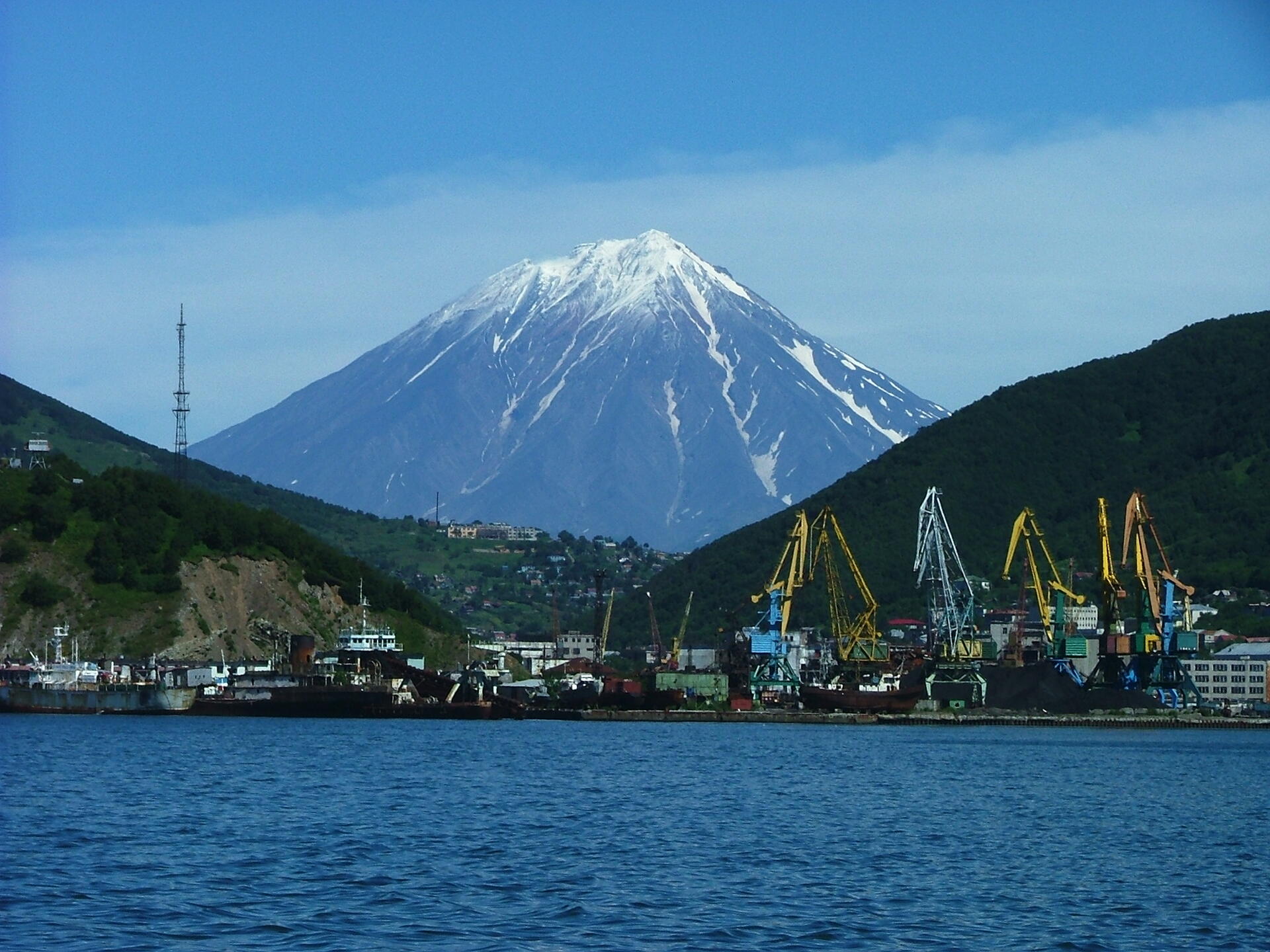
© Vfp15, CC BY-SA 3.0 Resized from original. (This derivative is under the same CC BY-SA license.)
World Heritage Research
Discover scientific research and academic studies that deepen our understanding of Volcanoes of Kamchatka from its history and significance to its conservation, management, and contemporary challenges.
-
Eruptions in the Northern Group of Volcanoes, in Kamchatka, during the Early 21st Century
Increased volcanic activity characterized the early 21st century in Kamchatka's Northern Group, with notable eruptions at Sheveluch, Klyuchevskoy, Bezymianny, and the Tolbachik Fissure Zone. Sheveluch exhibited continuous dome growth, reaching 600 meters after nearly four decades of activity, while Klyuchevskoy experienced ten summit eruptions and two lateral vent openings following an eight-year quiet period. Bezymianny displayed near-annual explosive-effusive eruptions, and the Tolbachik Fissure Zone resumed activity after a 36-year hiatus.
Ozerov, A. Yu., Girina, O. A., Zharinov, N. A., Belousov, A. B., & Demyanchuk, Yu. V. (2020). Eruptions in the Northern Group of Volcanoes, in Kamchatka, during the Early 21st Century. Journal of Volcanology and Seismology, 14(1), 1–17. https://doi.org/10.1134/s0742046320010054
View Publication Record | Read Publication -
Mantle and Crustal Sources of Magmatic Activity of Klyuchevskoy and Surrounding Volcanoes in Kamchatka Inferred From Earthquake Tomography
A groundbreaking seismic tomographic model of the Kamchatka region reveals that the magmatic activity beneath Klyuchevskoy and surrounding volcanoes is driven by asthenospheric flow through a slab window at the Kamchatka-Aleutian junction. This study, utilizing unprecedented high-resolution data from local earthquakes recorded during an international experiment (2015–2016), identified high-velocity anomalies in the upper crust linked to ancient basaltic shield volcanoes and a prominent low-velocity anomaly in the uppermost mantle associated with the eastern branch of the Central Kamchatka Depression, interpreted as a recent rift zone. The interaction between hot asthenospheric material and slab-derived fluids is proposed as the key mechanism shaping volcanic activity in this region.
Koulakov, I., Shapiro, N. M., Sens‐Schönfelder, C., Luehr, B. G., Gordeev, E. I., Jakovlev, A., Abkadyrov, I., Chebrov, D. V., Bushenkova, N., Droznina, S. Y., Senyukov, S. L., Novgorodova, A., & Stupina, T. (2020). Mantle and Crustal Sources of Magmatic Activity of Klyuchevskoy and Surrounding Volcanoes in Kamchatka Inferred From Earthquake Tomography. Journal of Geophysical Research: Solid Earth, 125(10). Portico. https://doi.org/10.1029/2020jb020097
View Publication Record | Read Publication -
Tomographic Images of Magma Chambers Beneath the Avacha and Koryaksky Volcanoes in Kamchatka
A new tomographic model reveals distinct magma reservoirs beneath the Avacha and Koryaksky volcanoes in Kamchatka, with exceptionally high Vp/Vs ratios (up to 2.4) indicating regions of partial melt or fluid accumulation. The study used seismic wave arrival times from nearly 5,000 local events recorded between 2009–2018 to map these anomalies. Beneath Avacha, the magma reservoir is shallower (~2 km depth), connected to the surface by a conduit marked by active seismicity, while beneath Koryaksky, it lies deeper (~7 km) and aligns with a vertical cluster of seismic activity, suggesting fluid ascent pathways. A 2–3 km thick layer of low seismic velocity between the volcanoes is interpreted as volcanoclastic sediments. The findings indicate that upper-crustal magma reservoirs are not interconnected, providing critical insights into volcanic hazards in Kamchatka.
Bushenkova, N., Koulakov, I., Senyukov, S., Gordeev, E. I., Huang, H.-H., El Khrepy, S., & Al Arifi, N. (2019). Tomographic Images of Magma Chambers Beneath the Avacha and Koryaksky Volcanoes in Kamchatka. Journal of Geophysical Research: Solid Earth, 124(9), 9694–9713. Portico. https://doi.org/10.1029/2019jb017952
View Publication Record | Read Publication -
Volcanoes of Kamchatka
In 2013, Kamchatka's volcanic activity was characterized by intense seismic and eruptive events, including the emergence of a new cone at Shiveluch volcano, subplinian eruptions at Kluchevskoy, and renewed activity at Zhupanovsky after a 56-year dormancy. Researchers analyzed near real-time data from seismic, visual, video, and satellite observations to track earthquakes (ranging from KS=1.8 to 8.5) across Northern, Avacha, Mutnovsky-Gorely, and Kizimen groups, documenting energy releases and epicenter distributions. The study highlighted the dynamic nature of Kamchatka's volcanic system, with long-term eruptions at Tolbachik fissure and Kizimen concluding during this period.
Seniukov, S., & Nuzhdina, I. (2019). VOLCANOES of KAMCHATKA. Zemletriaseniia Severnoi Evrazii [Earthquakes in Northern Eurasia], (22), 485–501. Internet Archive. https://doi.org/10.35540/1818-6254.2019.22.43
View Publication Record | Read Publication -
Seismically active subcrustal magma source of the Klyuchevskoy volcano in Kamchatka, Russia
Klyuchevskoy volcano, located in Kamchatka’s UNESCO-listed volcanic region, harbors a unique subcrustal magma source characterized by persistent seismic activity at depths exceeding 20 km. Unlike typical crustal earthquakes, these deep tremors exhibit tectonic signatures, indicating brittle failure in mantle rock. Researchers used P-to-S converted teleseismic waves to pinpoint the crust-mantle transition (~25 km) and a deeper seismic boundary (~50 km), confirming that Klyuchevskoy’s magma originates from depths of 46 ± 7 km—a finding supported by melt inclusion analysis. This subcrustal zone, marked by vigorous magma accumulation, challenges conventional models of volcanic processes in island arc systems.
Levin, V., Droznina, S., Gavrilenko, M., Carr, M. J., & Senyukov, S. (2014). Seismically active subcrustal magma source of the Klyuchevskoy volcano in Kamchatka, Russia. Geology, 42(11), 983–986. https://doi.org/10.1130/g35972.1
View Publication Record | Read Publication -
Uzon volcano caldera (Kamchatka): A unique natural laboratory of the present-day naphthide genesis
Research at Uzon volcano caldera, Kamchatka, reveals it as a unique natural laboratory for studying present-day oil formation. Analysis of thermal spring oil shows using gas chromatography–mass spectrometry demonstrates that these compounds share genetic identity with organic matter from Pliocene–Quaternary deposits, confirming their biogenic origin. The study debunks theories suggesting hydrothermal abiogenic synthesis, providing critical insights into naphthide genesis processes in volcanic environments.
Kontorovich, A. E., Bortnikova, S. B., Karpov, G. A., Kashirtsev, V. A., Kostyreva, E. A., & Fomin, A. N. (2011). Uzon volcano caldera (Kamchatka): A unique natural laboratory of the present-day naphthide genesis. Russian Geology and Geophysics, 52(8), 768–772. https://doi.org/10.1016/j.rgg.2011.07.002
View Publication Record | Read Publication -
Seismic properties of the supra‐subduction mantle: Constraints from peridotite xenoliths from the Avacha volcano, southern Kamchatka
Research reveals that the supra-subduction mantle beneath the Avacha volcano, southern Kamchatka, exhibits distinct seismic properties shaped by low-stress deformation and fluid-driven processes. The study identifies an axial [100] olivine crystal preferred orientation (CPO) in peridotite xenoliths, which implies fast S-wave polarization aligned with flow direction in the mantle wedge. Additionally, orthopyroxene enrichment due to reactive percolation of hydrous melts or fluids lowers the Vp/Vs ratio but does not fully account for the exceptionally low ratios (<1.7) observed in other subduction zones like Japan and the Andes. The findings suggest that intrinsic anisotropy within these peridotites may explain such low Vp/Vs ratios, offering new insights into the seismic behavior of supra-subduction mantle environments.
Soustelle, V., & Tommasi, A. (2010). Seismic properties of the supra‐subduction mantle: Constraints from peridotite xenoliths from the Avacha volcano, southern Kamchatka. Geophysical Research Letters, 37(13). Portico. https://doi.org/10.1029/2010gl043450
View Publication Record | Read Publication