World Heritage Identification Number: 1339
World Heritage since: 2010
Category: Cultural Heritage
WHE Type: Memorial Sites
Transboundary Heritage: No
Endangered Heritage: No
Country: 🇲🇭 Marshall Islands
Continent: Oceania
UNESCO World Region: Asia and the Pacific
Map
Bikini Atoll Nuclear Test Site: A Symbol of the Dawn of the Nuclear Age
The Bikini Atoll Nuclear Test Site, located in the Marshall Islands, stands as a poignant reminder of the advent of the nuclear era. Inscribed on the UNESCO World Heritage List in 2010, this atoll bears witness to the profound impact of nuclear testing during the latter half of the 20th century.
More to come…UNESCO Description of the World Heritage Site
In the wake of World War II, in a move closely related to the beginnings of the Cold War, the United States of America decided to resume nuclear testing in the Pacific Ocean, on Bikini Atoll in the Marshall archipelago. After the displacement of the local inhabitants, 67 nuclear tests were carried out from 1946 to 1958, including the explosion of the first H-bomb (1952). Bikini Atoll has conserved direct tangible evidence that is highly significant in conveying the power of the nuclear tests, i.e. the sunken ships sent to the bottom of the lagoon by the tests in 1946 and the gigantic Bravo crater. Equivalent to 7,000 times the force of the Hiroshima bomb, the tests had major consequences on the geology and natural environment of Bikini Atoll and on the health of those who were exposed to radiation. Through its history, the atoll symbolises the dawn of the nuclear age, despite its paradoxical image of peace and of earthly paradise. This is the first site from the Marshall Islands to be inscribed on the World Heritage List.
UNESCO Justification of the World Heritage Site
Criterion (iv): Bikini Atoll is an outstanding example of a nuclear test site. It has many military remains and characteristic terrestrial and underwater landscape elements. It is tangible testimony of the birth of the Cold War and it bears testimony to the race to develop increasingly powerful nuclear weapons. In the wake of the Hiroshima and Nagasaki bombs, the Bikini Atoll site confirmed that mankind was entering a nuclear era. It also bears witness to the consequences of the nuclear tests on the civil populations of Bikini and the Marshall Islands, in terms of population displacement and public-health issues.
Criterion (vi): The ideas and beliefs associated with the Bikini nuclear test site, and more generally with the escalation of military power which characterized the Cold War, are of international significance. These events gave rise to a large number of international movements advocating nuclear disarmament; they gave rise to powerful symbols and to many images associated with the “nuclear era”, which characterized the second part of the 20th century.
Encyclopedia Record: Bikini Atoll
Bikini Atoll, known as Eschscholtz Atoll between the 19th century and 1946, is a coral reef in the Marshall Islands consisting of 23 islands surrounding a 229.4-square-mile (594.1 km2) central lagoon. The atoll is at the northern end of the Ralik Chain, approximately 530 miles (850 km) northwest of the capital Majuro.Additional Site Details
Area: 73,500 hectares
Number of Components: 1
(vi) — Directly associated with events or living traditions
Coordinates: 11.6 , 165.3805555556
Image
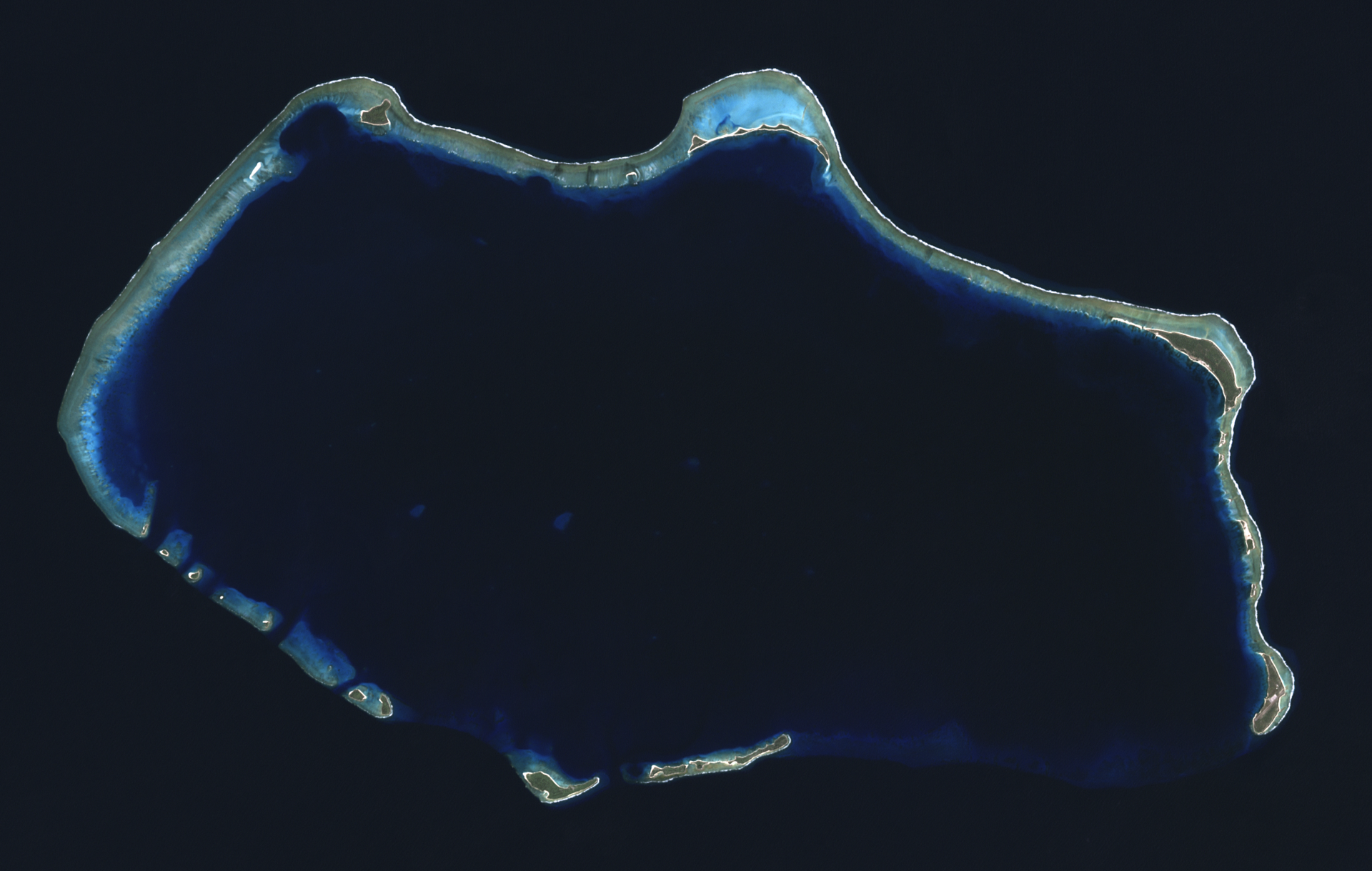
NASA, Public domain
World Heritage Research
Discover scientific research and academic studies that deepen our understanding of Bikini Atoll Nuclear Test Site from its history and significance to its conservation, management, and contemporary challenges.
-
Case Study: The Bikini Atoll Magnetic Anomaly Forensic Prediction of Helical Remagnetization from Vacuum Stiffness Collapse
A novel forensic prediction suggests that the Castle Bravo nuclear test of 1954 at Bikini Atoll may have left a permanent signature in the local geomagnetic field. The study, rooted in the Axiomatic Physical Homeostasis (APH) framework, proposes that the test's anomalous yield and fallout resulted from a transient collapse of the Vacuum Geometric Stiffness, followed by a rapid re-crystallization process. This violent restoration is theorized to have generated a Torsional Electromagnetic Pulse—a chiral shockwave distinct from conventional electromagnetic pulses—which could have induced Helical Remagnetization in ferromagnetic minerals on the crater floor and fused fallout material (Sedenion Slag). The research derives the expected field topology and outlines a paleomagnetic core sampling protocol to verify the existence of this 'Bravo Helix' signature, offering a new avenue for investigating the long-term magnetic effects of nuclear tests.
Schutza, A. M. (2026). Case Study: The Bikini Atoll Magnetic Anomaly Forensic Prediction of Helical Remagnetization from Vacuum Stiffness Collapse. Zenodo. https://doi.org/10.5281/ZENODO.18327145
View Publication Record | Read Publication -
Eviota niedenthali, a new dwarfgoby from Bikini Atoll, Marshall Islands (Teleostei: Gobiidae)
Researchers have identified and described Eviota niedenthali, a new species of dwarf goby from Bikini Atoll, Marshall Islands. This discovery contributes to the biodiversity documentation of UNESCO World Heritage Sites, particularly in regions with limited exploration like the Bikini Atoll Nuclear Test Site. The species is characterized by unique morphological traits, including a specific dorsal/anal-fin formula (8/8), branched pectoral-fin rays, absence of a fifth pelvic-fin ray, and distinctive black spots on the caudal peduncle and pectoral-fin base. The study employed detailed morphological analysis to distinguish this species from others in the Eviota genus, highlighting its significance for marine biodiversity research.
Greenfield, D., Erdmann, M., & Ichida, N. (2026). Eviota niedenthali, a new dwarfgoby from Bikini Atoll, Marshall Islands (Teleostei: Gobiidae). Journal of the Ocean Science Foundation. https://doi.org/10.5281/ZENODO.20299413
View Publication Record | Read Publication -
Environmental Consequences of Nuclear Tests in the Ocean: A Comprehensive Review
Oceanic nuclear weapons testing, particularly between 1946 and 1958, has left lasting ecological scars, yet also revealed remarkable resilience in marine ecosystems. A comprehensive review highlights the paradox of coral reef recovery at Bikini Atoll despite severe immediate disruption from shockwaves, thermal effects, and habitat destruction. The study synthesizes data from multiple test sites—Bikini and Enewetak Atolls (Marshall Islands), Mururoa Atoll (French Polynesia), Chernaya Bay (Novaya Zemlya), and the Montebello Islands (Australia)—to examine long-term radionuclide contamination in sediments, water columns, and marine food webs. Case studies, such as sea turtles acting as 'swimming tree rings' recording nuclear history and plutonium transport from Chernaya Bay to the Arctic Ocean, underscore the persistence of radioactive fallout. The review proposes an integrated framework for environmental monitoring and remediation, aligning with nuclear justice objectives and sustainable development goals.
Jorbenadze, M. (2026). Environmental Consequences of Nuclear Tests in the Ocean: A Comprehensive Review. Zenodo. https://doi.org/10.5281/ZENODO.22285527
View Publication Record | Read Publication -
Radiation Monitoring Handbook for Marine Environments: From Nuclear Test Legacies to Autonomous Robotic Surveillance
A comprehensive handbook reveals the enduring ecological consequences of oceanic nuclear weapons testing, highlighting long-term radionuclide contamination and bioaccumulation pathways in marine organisms. It integrates three key domains: the historical legacy of tests at Bikini Atoll (Marshall Islands), Mururoa Atoll (French Polynesia), Chernaya Bay (Novaya Zemlya), and Montebello Islands (Australia); autonomous underwater vehicle (AUV) technologies for radiation detection; and strategic frameworks for global marine protection. The study documents immediate ecological destruction, persistent sediment contamination, and the paradoxical resilience of coral reef ecosystems, offering a systematic approach to monitoring and mitigating nuclear test legacies in marine environments.
Jorbenadze, M. (2026). RADIATION MONITORING HANDBOOK FOR MARINE ENVIRONMENTS: From Nuclear Test Legacies to Autonomous Robotic Surveillance. Zenodo. https://doi.org/10.5281/ZENODO.22509089
View Publication Record | Read Publication -
Humanity is What States Make of It?
This study reveals that the concept of humanity within the UNESCO World Heritage regime (2010–2022) is shaped by state assertions and contestations, reflecting a multipolar world order. It identifies a third iteration of humanity—one defined as a diverse community represented by states—while acknowledging persistent liberal visions. The research argues that this iteration endures due to institutional infrastructures sustaining the List of World Heritage sites, which adjudicate global political visions. Focusing on nominations like Bikini Atoll and the Silk Roads, it explores how interpretive practices and debates on universal value influence peace and solidarity. The analysis combines political theory with empirical examination of regime dynamics.
Kalaycioglu, E. (2025). Humanity is What States Make of It? The Politics of World Heritage, 173–222. https://doi.org/10.1093/9780198912798.003.0005
View Publication Record | Read Publication -
The 36 Cl Bomb‐Pulse in Ice at a High‐Accumulation Site in Antarctica
A global tracer for nuclear fallout, the radioisotope 36 Cl, has been used to deduce key atmospheric exchange times. Produced in large quantities during high-yield thermonuclear tests at Bikini and Enewetak Atolls in the 1950s, 36 Cl was dispersed worldwide via the stratosphere. Measurements from an Antarctic ice core reveal a one-way transport dominance, simplifying interpretation of its movement between the stratosphere and troposphere. The study estimates exchange times of 3.7 years for stratosphere-troposphere gaseous exchange and 4.2 years for interhemispheric stratospheric exchange, providing an independent constraint on ozone flux that aligns with other direct estimates.
Fifield, L. K., Etheridge, D. M., di Tada, M. L., Liu, K., Cresswell, R. G., & Keywood, M. D. (2025). The 36 Cl Bomb‐Pulse in Ice at a High‐Accumulation Site in Antarctica. Journal of Geophysical Research: Atmospheres, 130(24). Portico. https://doi.org/10.1029/2025jd044388
View Publication Record | Read Publication -
Eviota bikiniensis, a new dwarfgoby from Bikini Atoll, Marshall Islands (Teleostei: Gobiidae)
Researchers have identified a new species of dwarfgoby, Eviota bikiniensis, from Bikini Atoll in the Marshall Islands. This discovery is notable for its unique morphological traits, including the absence of cephalic sensory-canal pores, thickened unbranched pectoral-fin rays, no fifth pelvic-fin ray, and a distinctive blue-white elongated first dorsal-fin spine in males. The study highlights the biodiversity of this UNESCO-listed nuclear test site, offering insights into the adaptability and diversity of marine life in such environments.
Erdmann, M. V., Greenfield, D. W., & Ichida, N. K. (2025). Eviota bikiniensis, a new dwarfgoby from Bikini Atoll, Marshall Islands (Teleostei: Gobiidae). Ocean Science Foundation. https://doi.org/10.5281/ZENODO.17794265
View Publication Record | Read Publication