World Heritage Identification Number: 854
World Heritage since: 1998
Category: Natural Heritage
WHE Type: Natural Landscapes & Geographic Features
Transboundary Heritage: No
Endangered Heritage: Yes
Country: 🇸🇧 Solomon Islands
Continent: Oceania
UNESCO World Region: Asia and the Pacific
Map
Exploring East Rennell: The Largest Raised Coral Atoll in the World
East Rennell, a significant part of Rennell Island, is a unique and captivating destination located in the Solomon Islands group in the western Pacific Ocean. Inscribed as a UNESCO World Heritage Site in 1998, this extraordinary location offers a fascinating blend of geological wonders, biodiversity, and cultural heritage.
More to come…UNESCO Description of the World Heritage Site
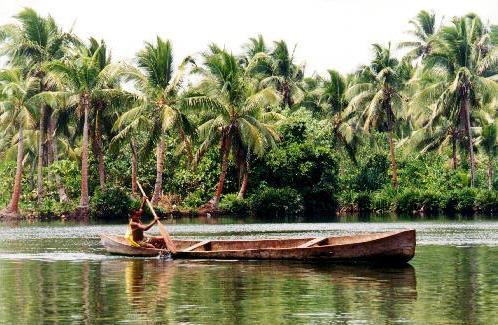
East Rennell makes up the southern third of Rennell Island, the southernmost island in the Solomon Island group in the western Pacific. Rennell, 86 km long x 15 km wide, is the largest raised coral atoll in the world. The site includes approximately 37,000 ha and a marine area extending 3 nautical miles to sea. A major feature of the island is Lake Tegano, which was the former lagoon on the atoll. The lake, the largest in the insular Pacific (15,500 ha), is brackish and contains many rugged limestone islands and endemic species. Rennell is mostly covered with dense forest, with a canopy averaging 20 m in height. Combined with the strong climatic effects of frequent cyclones, the site is a true natural laboratory for scientific study. The site is under customary land ownership and management.
UNESCO Justification of the World Heritage Site
Criterion (ix): East Rennell demonstrates significant on-going ecological and biological processes and is an important site for the science of island biogeography. The property is an important stepping stone in the migration and evolution of species in the western Pacific and for speciation processes, especially with respect to avifauna. Combined with the strong climatic effects of frequent cyclones, the property is a true natural laboratory for scientific study. The unmodified forest vegetation contains floral elements from the more impoverished Pacific Islands to the east and the much richer Melanesian flora to the west. For its size, Rennell Island has a high number of endemic species, particularly among its avifauna and also harbours 10 endemic plant species. The wildlife includes 11 species of bat (one endemic) and 43 species of breeding land and water birds (four species and nine subspecies endemic respectively). The invertebrate life is also rich with 27 species of land snail (seven endemics) and approximately 730 insect species, many of which are endemic. The flora of Lake Tegano is dominated by more than 300 species of diatoms and algae, some of which are endemic. There is also an endemic sea snake in the lake.
Encyclopedia Record: East Rennell
East Rennell is the southern portion of Rennell Island in the Solomon Islands which is designated a UNESCO World Heritage Site. Rennell is the largest raised coral atoll in the world and the area in East Rennell surrounding Lake Tegano contains many endemic species.Additional Site Details
Area: 37,000 hectares
Number of Components: 1
Coordinates: -11.68333 , 160.33333
IUCN World Heritage Outlook
The 2025 Conservation Outlook on East Rennell reports the following assessment:
Source: International Union for Conservation of Nature (IUCN) · View assessment
Image
Unknown, Public domain
World Heritage Research
Discover scientific research and academic studies that deepen our understanding of East Rennell from its history and significance to its conservation, management, and contemporary challenges.
-
Tourism development in the Solomon Islands
A study highlights the untapped potential of East Rennell, a UNESCO World Heritage Site in the Solomon Islands, to drive sustainable tourism development, despite current challenges such as insufficient infrastructure, political conflicts, and environmental threats. The research identifies opportunities for heritage tourism linked to WWII history, dive tourism, and unique ecological and cultural resources, while critiquing the site's limited economic and cultural benefits for local communities. It also emphasizes the potential of Marovo Lagoon for eco-friendly tourism, contingent on stronger government support and greater awareness from environmentalists and NGOs. The study underscores the need for proactive measures to prevent further decline in the Solomon Islands' tourism sector, particularly amid the COVID-19 pandemic.
Noor, F. A. M., Patovaki, J., & Stephenson, M. L. (2022). Tourism development in the Solomon Islands. Routledge Handbook on Tourism and Small Island States in the Pacific, 154–164. https://doi.org/10.4324/9780429019968-12
View Publication Record | Read Publication -
Monitoring and Assessment on the UNESCO Endangered Heritage Sites using Space Technology-A Case Study on East Rennell, Solomon Islands
East Rennell Island, a UNESCO Endangered World Heritage Site since 2013, demonstrates resilience in vegetation recovery despite threats from deforestation and natural disasters. A study using long-term remote sensing data (MODIS, WorldView) revealed that areas of vegetation degradation matched those of improvement between 2000–2020, with weak but recoverable trends in forest cover change. High-resolution land cover classification provided a baseline for future monitoring. The research suggests that strict protection measures—limiting mining, logging, and road construction—could preserve this unique ecosystem's regenerative capacity.
Huo, S., Mengmeng, W., Chen, G., Huiqin, S., & Yang, R. (2021). Monitoring and Assessment on the UNESCO Endangered Heritage Sites using Space Technology-A Case Study on East Rennell, Solomon Islands. https://doi.org/10.21203/rs.3.rs-467580/v1
View Publication Record | Read Publication -
Monitoring and assessment of endangered UNESCO World Heritage Sites using space technology: a case study of East Rennell, Solomon Islands
A balance between vegetation degradation and improvement was observed on East Rennell Island from 2000 to 2020. The study, leveraging multi-source remote sensing data (MODIS and Worldview), revealed that while the island's forest cover change trend showed weak continuity, significant recovery is possible with adequate protection measures and investment. East Rennell demonstrates strong vegetation regeneration capacity, underscoring the critical need to restrict disruptive human activities such as mining, logging, and road construction to preserve its unique ecosystem. The research utilized Sen + Mann–Kendall and Hurst index models to analyze forest cover changes and developed a high-resolution land cover classification system for future monitoring.
Huo, S., Wang, M., Chen, G., Shu, H., & Yang, R. (2021). Monitoring and assessment of endangered UNESCO World Heritage Sites using space technology: a case study of East Rennell, Solomon Islands. Heritage Science, 9(1). https://doi.org/10.1186/s40494-021-00574-5
View Publication Record | Read Publication -
New Faunal Records from a World Heritage Site in Danger: Rennell Island, Solomon Islands1
A recent survey of East Rennell, a UNESCO World Heritage Site in the Solomon Islands, uncovered four new vertebrate records for the island: Stephan's emerald dove, Maluku myotis, littoral skink, and brahminy blindsnake. This discovery highlights the potential for continued field studies combined with DNA analysis to reveal even greater endemic biodiversity on the island. The survey documented a total of 56 species, including squamates, mammals, and birds, underscoring the rich vertebrate diversity that could be lost due to ongoing habitat destruction outside protected areas. The findings emphasize the urgent need for conservation actions that integrate local community needs to protect this significant site.
Lavery, T. H., DeCicco, L. H., Richmond, J. Q., Tigulu, I. G., Andersen, M. J., Boseto, D., & Moyle, R. G. (2021). New Faunal Records from a World Heritage Site in Danger: Rennell Island, Solomon Islands1. Pacific Science, 75(3). https://doi.org/10.2984/75.3.8
View Publication Record | Read Publication -
Heritage law in Pacific Island states
Heritage law in Pacific Island states reveals the intricate legal frameworks that protect both cultural and natural heritage, shaped by colonial legacies and regional agreements. The study highlights how Pacific communities maintain an unbreakable connection to their environment, with key insights drawn from international conventions like the World Heritage Convention and the Convention for Intangible Cultural Heritage. By analyzing case studies such as East Rennell Island (Solomons), Phoenix Islands (Kiribati), and New Caledonia’s lagoons, it demonstrates how governance structures reflect historical influences while addressing contemporary heritage challenges.
Lixinski, L. (2020). Heritage law in Pacific Island states. Environmental Law and Governance in the Pacific, 215–236. https://doi.org/10.4324/9780429260896-14
View Publication Record | Read Publication -
Achieving the desired state of conservation for East Rennell, Solomon Islands: Progress, opportunities and challenges
East Rennell remains on the List of World Heritage in Danger due to persistent threats such as logging, mining, invasive species, and climate change. Despite the 2015 Desired State of Conservation for Removal (DSOCR) outlining necessary actions, minimal progress has been made, primarily hindered by competing priorities and resource constraints. The Solomon Islands Government's efforts have not sufficiently addressed these challenges, making it unlikely that East Rennell will be removed from the danger list by the 2021 target date. Furthermore, local communities, including the East Rennellese, report limited financial benefits from the site's listing, which may undermine their support for conservation efforts. Effective conservation strategies must align with local aspirations, focusing on livelihood improvements and cultural preservation to ensure long-term success.
Kiddle, G. L. (2020). Achieving the desired state of conservation for East Rennell, Solomon Islands: Progress, opportunities and challenges. Asia & the Pacific Policy Studies, 7(3), 262–277. Portico. https://doi.org/10.1002/app5.311
View Publication Record | Read Publication -
Monitoring vegetation dynamics in East Rennell Island World Heritage Site using multi-sensor and multi-temporal remote sensing data
East Rennell Island, the first natural site under customary law inscribed on UNESCO’s World Heritage List, has shown a gradual decline in vegetation cover from 2000 to 2015, with an annual decrease of –0.0011 in the normalized difference vegetation index (NDVI). Despite this trend, 95% of the island remains undisturbed by forest cover, and the rate of change is less pronounced within the East Rennell World Heritage Site (ERWHS) compared to areas outside it. The study utilized multi-sensor and multi-temporal remote sensing data to track these changes, revealing that while potential threats like logging, mining, and agriculture persist, forest cover change outside ERWHS has remained below 15% over the studied period. The findings provide actionable insights for the Government of Solomon Islands, suggesting the integration of unmanned air vehicles (UAVs) and field surveys to enhance monitoring and ensure the long-term conservation of ERWHS.
Wang, M., He, G., Ishwaran, N., Hong, T., Bell, A., Zhang, Z., Wang, G., & Wang, M. (2018). Monitoring vegetation dynamics in East Rennell Island World Heritage Site using multi-sensor and multi-temporal remote sensing data. International Journal of Digital Earth, 13(3), 393–409. https://doi.org/10.1080/17538947.2018.1523955
View Publication Record | Read Publication