World Heritage Identification Number: 740
World Heritage since: 1995
Category: Natural Heritage
WHE Type: Natural Landscapes & Geographic Features
Transboundary Heritage: No
Endangered Heritage: No
Country: 🇬🇧 United Kingdom of Great Britain and Northern Ireland
Continent: Europe
UNESCO World Region: Europe and North America
Map
Gough and Inaccessible Islands: A Remote Treasure Trove of Biodiversity
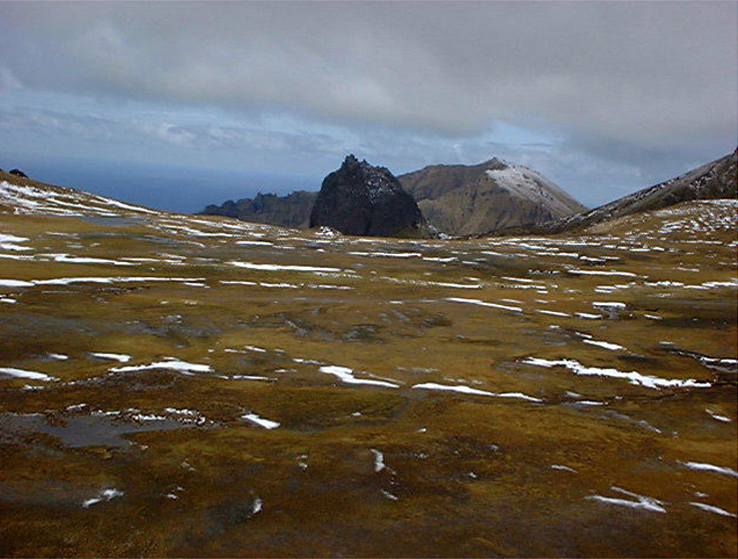
The Gough and Inaccessible Islands, located in the remote south Atlantic, form a unique and largely undisturbed ecosystem that is home to some of the world's most remarkable wildlife and plant life. These islands, dependencies of Tristan da Cunha and part of the British overseas territory of Saint Helena, Ascension, and Tristan da Cunha, have been recognized by UNESCO as a World Heritage Site since 1995.
More to come…UNESCO Description of the World Heritage Site
The site, located in the south Atlantic, is one of the least-disrupted island and marine ecosystems in the cool temperate zone. The spectacular cliffs of Gough and Inaccessible Islands, towering above the ocean, are free of introduced mammals and home to one of the world’s largest colonies of sea birds. Gough Island is home to two endemic species of land birds, the gallinule and the Gough rowettie, as well as to 12 endemic species of plants, while Inaccessible Island boasts two birds, eight plants and at least 10 invertebrates endemic to the island.
UNESCO Justification of the World Heritage Site
Criterion (vii): Two eroded remnants of long-extinct volcanos, Gough and Inaccessible Islands display outstanding natural beauty. Their precipitous cliffs around much of the coastline, covered with breeding seabirds, are highly spectacular.
Criterion (x): Gough and Inaccessible Island represent two of the least disturbed cool-temperate island ecosystems in the South Atlantic Ocean, and are internationally important for their colonies of some 22 species of seabirds, several of which only breed here. They also support a number of endemic species and subspecies of land birds, including the Gough Moorhen (a flightless rail) and the Gough Bunting, both endemic to Gough, and the Inaccessible Rail, the smallest flightless bird in the world, endemic to Inaccessible Island. This island forms part of the Tristan Endemic Bird Area, and Gough has been designated as its own Endemic Bird Area by BirdLife International. Key seabird species include the Atlantic Petrel, Spectacled Petrel, Tristan Albatross, Sooty Albatross, the subspecies of Yellow-nosed Albatross, and the Northern Rockhopper Penguin. The islands also support some 40 plant species (including vascular plants, bryophytes and lichens), which are endemic to the Tristan da Cunha island group, including a number of which are endemic to Gough and/or Inaccessible Islands.
Encyclopedia Record: Gough Island
Gough Island, also known historically as Gonçalo Álvares, is a rugged volcanic island in the South Atlantic Ocean. It is a dependency of Tristan da Cunha and part of the British overseas territory of Saint Helena, Ascension and Tristan da Cunha. It is approximately 400 km (250 mi) south-east of the Tristan da Cunha archipelago, 2,400 km (1,500 mi) north-east from South Georgia Island, 2,700 km (1,700 mi) west from Cape Town, and over 3,200 km (2,000 mi) from the nearest point of South America.Additional Site Details
Area: 7,900 hectares
Number of Components: 2
(x) — Contains most important habitats for biodiversity
Coordinates: -40.32472222 , -9.928611111
IUCN World Heritage Outlook
The 2025 Conservation Outlook on Gough and Inaccessible Islands reports the following assessment:
Source: International Union for Conservation of Nature (IUCN) · View assessment