
World Heritage Identification Number: 474
World Heritage since: 1999
Category: Cultural Heritage
WHE Type: Protected Areas & National Parks
Transboundary Heritage: No
Endangered Heritage: No
Country: 🇭🇺 Hungary
Continent: Europe
UNESCO World Region: Europe and North America
Map
Hortobágy National Park: A Glimpse into the Heart of Hungarian Culture
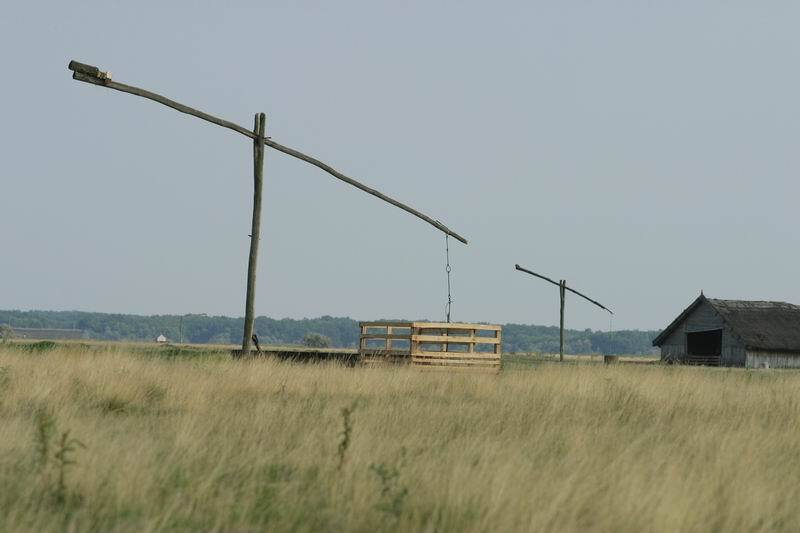
The Hortobágy National Park, often referred to as the "Puszta," is a captivating expanse of plains and wetlands nestled in the eastern region of Hungary. This vast, unspoiled territory spans over 800 square kilometers and has been recognized as a UNESCO World Heritage Site since 1999.
More to come…UNESCO Description of the World Heritage Site
The cultural landscape of the Hortobágy Puszta consists of a vast area of plains and wetlands in eastern Hungary. Traditional forms of land use, such as the grazing of domestic animals, have been present in this pastoral society for more than two millennia.
UNESCO Justification of the World Heritage Site
Criterion (iv): The Hungarian Puszta is an exceptional surviving example of a cultural landscape constituted by a pastoral society.
Criterion (v): The landscape of the Hortobágy National Park maintains intact and visible traces of its traditional land-use forms over several thousand years, and illustrates the harmonious interaction between people and nature.
Encyclopedia Record: Hortobágy National Park
Hortobágy is an 800 km2 national park in eastern Hungary, rich with folklore and cultural history. The park, a part of the Alföld, was designated as a national park in 1973, and elected among the World Heritage Sites in 1999. The Hortobágy is Hungary's largest protected area, and the largest semi-natural grassland in Europe.Additional Site Details
Area: 74,820 hectares
Number of Components: 1
(v) — Outstanding example of traditional human settlement
Coordinates: 47.59458 , 21.15678
World Heritage Research
Discover scientific research and academic studies that deepen our understanding of Hortobágy National Park - the Puszta from its history and significance to its conservation, management, and contemporary challenges.
-
Flyway population increase and emergence of new wintering grounds with climate change in an Arctic-breeding goose
A significant rise in the Greater White-fronted Goose (GWfG) population along the Pannonic flyway, particularly in Hortobágy National Park, has been linked to climate change. Over 31 years (1989–2019), GWfG counts surged from under 2,000 to over 30,000 individuals, with a notable shift toward overwintering beginning in the mid-2000s. Milder winters, characterized by fewer frost and snowy days, have been the primary driver of this increase, while hunting disturbance and land cover changes played minor roles. Spring counts rose rapidly in the early years, whereas autumn counts increased more recently, indicating a dynamic response to climate shifts. The study highlights how climate change is reshaping migratory patterns, with implications for conservation strategies.
Gyüre, P., & Lengyel, S. (2026). Flyway population increase and emergence of new wintering grounds with climate change in an Arctic-breeding goose. Scientific Reports, 16(1). https://doi.org/10.1038/s41598-026-40447-0
View Publication Record | Read Publication -
The late Quaternary environmental history of the Hortobágy landscape
A two-phase construction of the Ecse Mound, dating to the end of the Copper Age, has been revealed through sedimentological and malacological analysis. This discovery sheds light on the landscape evolution around Hortobágy National Park during the Holocene period, following the Middle and Upper Pleniglacial, and Late Glacial phases of the Ice Age. The study utilized undisturbed core drilling and radiocarbon (AMS) measurements to analyze sediment properties both within the mound and its substrate base rock. Additionally, it highlights the need for standardized methodology in kurgan research to ensure consistent and comparable results across different studies.
Szilágyi, G. L. The late Quaternary environmental history of the Hortobágy landscape. https://doi.org/10.14232/phd.12422
View Publication Record | Read Publication -
Late Quaternary Paleoecology and Environmental History of the Hortobágy, an Alkaline Steppe in Central Europe
Research challenges the long-held belief that Hungary's Hortobágy National Park—the Puszta, a UNESCO-listed alkaline steppe, was shaped by 19th-century human interventions. Instead, paleoecological and paleobiological evidence reveals its origins trace back to the end of the Ice Age, with minimal impact from early grazing practices. The study, using long-term data analysis, highlights that while ancient human activities had negligible influence on this unique ecosystem, 19th-century drainage and intensive agriculture significantly altered its landscape. This work underscores the natural resilience of alkaline steppes and provides critical insights for conservation efforts in similar cultural landscapes.
Szilágyi, G., Gulyás, S., Vári, T. Z., & Sümegi, P. (2024). Late Quaternary Paleoecology and Environmental History of the Hortobágy, an Alkaline Steppe in Central Europe. Diversity, 16(1), 67. https://doi.org/10.3390/d16010067
View Publication Record | Read Publication -
Harem size should be measured by more than the sum of its parts: Phenology‐based measurements reveal joint effects of intrinsic and extrinsic factors on a polygamous herbivore under non‐stationary climatic conditions
A 15-year study of Przewalski horses in Hortobágy National Park reveals that harem size stability in reintroduced populations is influenced by complex interactions between demography and climate, even under non-stationary conditions. Despite an eightfold increase in population size—from 21 to 174 individuals—and a corresponding rise in the number of harems from three to 23, harem sizes remained consistent. The research identifies adult sex ratio, annual mortality rates, mean number of harems, stallion age, and drought severity as key predictors of harem dynamics. These findings underscore the importance of intrinsic population processes in regulating social structures, offering critical insights for conservation strategies in semi-free-ranging species.
Szemán, K., Végvári, Z., Gőri, S., Kapocsi, I., Székely, T., & Manning, J. A. (2024). Harem size should be measured by more than the sum of its parts: Phenology‐based measurements reveal joint effects of intrinsic and extrinsic factors on a polygamous herbivore under non‐stationary climatic conditions. Ecology and Evolution, 14(2). Portico. https://doi.org/10.1002/ece3.10865
View Publication Record | Read Publication -
Open Spaces and Elements Designed to the Landscape of Hortobágy National Park
A unique morphologic system enhances landscape perception and identity in Hortobágy National Park, demonstrating how standardized design elements can harmonize with local characteristics. The study proposes a comprehensive approach to improve visitor experience, sustainability, and accessibility while addressing language barriers and lack of recognition. By integrating high-tech solutions and universal design principles, the research offers a viable model for Hungarian national parks, balancing economic viability, social engagement, and environmental sustainability. The methodology combines global case analysis, local data evaluation, experimental design, and iterative assessment to refine a cohesive landscape identity.
Garzón, F. A. M. (2021). Open Spaces and Elements Designed to the Landscape of Hortobágy National Park. Landscape Architecture and Art, 17(17), 7–12. https://doi.org/10.22616/j.landarchart.2020.17.01
View Publication Record | Read Publication -
Zoochory on and off: A field experiment for trait‐based analysis of establishment success of grassland species
A field experiment at Hortobágy National Park, Hungary, revealed that extensive cattle grazing (zoochory) significantly enhances the long-term establishment success of grassland species outside source plots. While fencing reduced cover and flowering in source plots, it decreased the likelihood of species colonizing surrounding areas. Successful colonizers were characterized by traits such as high specific leaf area, low dry matter content, short stature, light seeds, early flowering, and anemochory. This study challenges the assumption that fencing is always beneficial for grassland restoration, highlighting the importance of grazing in maintaining biodiversity.
Kiss, R., Deák, B., Tóthmérész, B., Miglécz, T., Tóth, K., Török, P., Lukács, K., Godó, L., Körmöczi, Z., Radócz, S., Borza, S., Kelemen, A., Sonkoly, J., Kirmer, A., Tischew, S., & Valkó, O. (2021). Zoochory on and off: A field experiment for trait‐based analysis of establishment success of grassland species. Journal of Vegetation Science, 32(4). Portico. https://doi.org/10.1111/jvs.13051
View Publication Record | Read Publication -
Intestinal parasites in Przewalski's horses (Equus ferus przewalskii): a field survey at the Hortobágy National Park, Hungary
A field survey of Przewalski's horses (Equus ferus przewalskii) in the Hortobágy National Park, Hungary, revealed a 100% prevalence of intestinal parasites, with strongyle-type eggs detected in all 79 fecal samples analyzed. The study identified an average of 1287 eggs per gram (EPG), indicating high fecal egg-shedding levels, and found that Cyathostominae were the dominant parasite subfamily, with Strongylus vulgaris being the most prevalent strongylin at 40.5%. Additionally, 27.8% of horses tested positive for Parascaris sp., while 2.5% harbored Oxyuris equi. The research also noted a higher prevalence of Triodontophorus serratus and Poteriostomum spp. in juveniles and observed that horses with S. vulgaris exhibited lower EPG levels. This was the first comprehensive study of intestinal parasites in this population, providing critical insights into their health dynamics within the Pentezug Wildhorse Reserve.
Jota Baptista, C., Sós, E., Szabados, T., Kerekes, V., & Madeira de Carvalho, L. (2021). Intestinal parasites in Przewalski’s horses (Equus ferus przewalskii): a field survey at the Hortobágy National Park, Hungary. Journal of Helminthology, 95. https://doi.org/10.1017/s0022149x21000274
View Publication Record | Read Publication
