World Heritage Identification Number: 1415
World Heritage since: 2018
Category: Mixed Cultural Heritage and Natural Heritage
WHE Type: Natural Landscapes & Geographic Features
Transboundary Heritage: No
Endangered Heritage: No
Country: 🇨🇦 Canada
Continent: Americas
UNESCO World Region: Europe and North America
Map
Pimachiowin Aki: A Cultural Landscape of Indigenous Significance
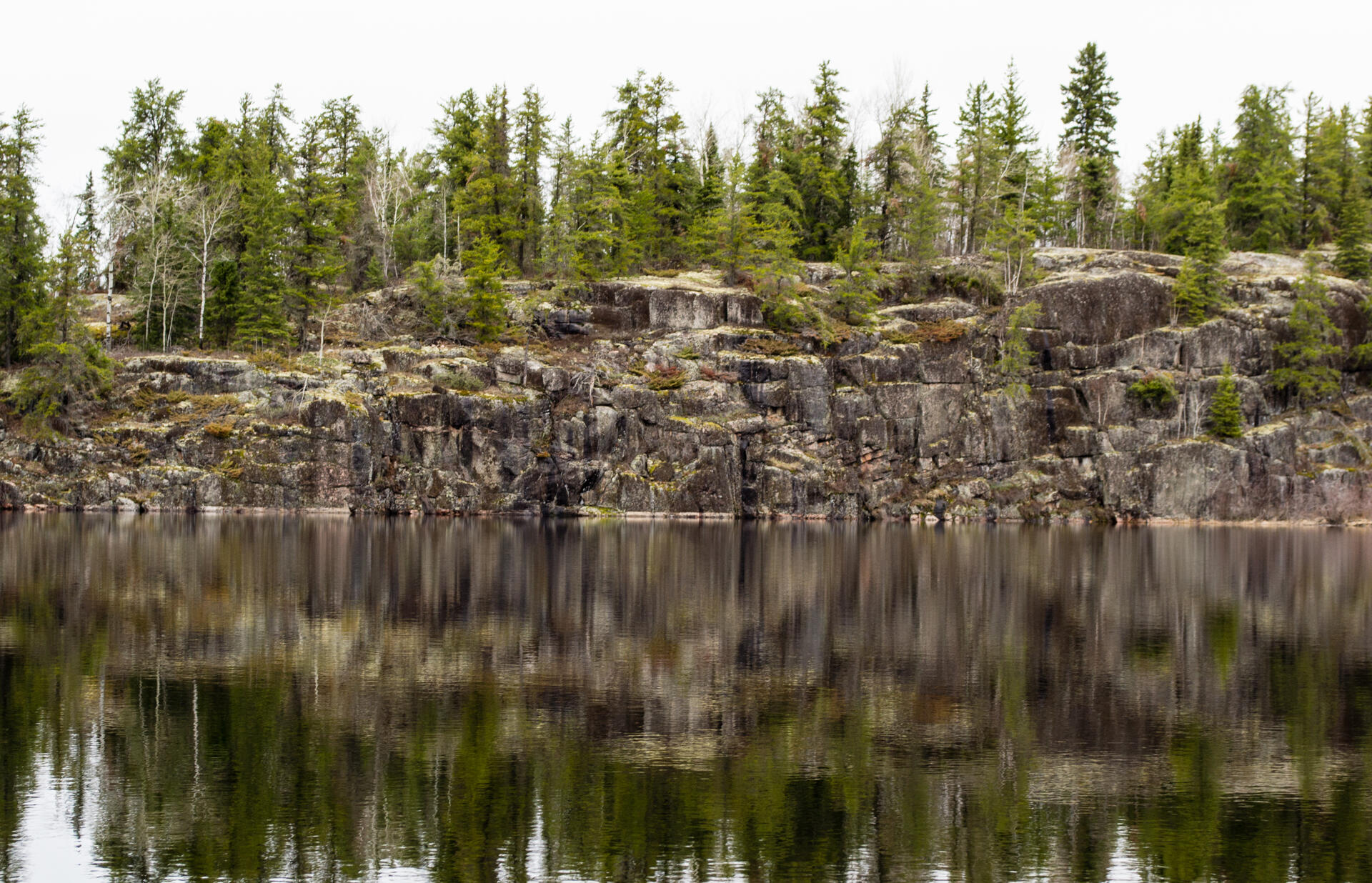
Pimachiowin Aki, meaning 'The Land That Gives Life', is a vast and pristine wilderness straddling the provinces of Manitoba and Ontario in Canada. This UNESCO World Heritage Site spans over 29,000 square kilometers, encompassing the traditional territories of four Anishinaabe First Nations communities – Poplar River First Nation, Little Grand Rapids First Nation, Pauingassi First Nation, and Bloodvein First Nation.
More to come…UNESCO Description of the World Heritage Site
Pimachiowin Aki ('The Land That Gives Life') is a landscape of rivers, lakes, wetlands, and boreal forest. It forms part of the ancestral home of the Anishinaabeg, an indigenous people living from fishing, hunting and gathering. The site encompasses the traditional lands of four Anishinaabeg communities (Bloodvein River, Little Grand Rapids, Pauingassi and Poplar River). It is an exceptional example of the cultural tradition of Ji-ganawendamang Gidakiiminaan ('keeping the land'), which consists of honouring the gifts of the Creator, respecting all forms of life, and maintaining harmonious relations with others. A complex network of livelihood sites, habitation sites, travel routes and ceremonial sites, often linked by waterways, provides testimony to this ancient and continuing tradition.
UNESCO Justification of the World Heritage Site
Criterion (iii): Pimachiowin Aki provides an exceptional testimony to the continuing Anishinaabe cultural tradition of Ji-ganawendamang Gidakiiminaan (Keeping the Land). Ji-ganawendamang Gidakiiminaan guides relations between Anishinaabeg and the land; it is the framework through which the cultural landscape of Pimachiowin Aki is perceived, given meaning, used and sustained across the generations. Widely dispersed across the landscape are ancient and contemporary livelihood sites, sacred sites and named places, most linked by waterways that are tangible reflections of Ji-ganawendamang Gidakiiminaan.
Criterion (vi): Pimachiowin Aki is directly and tangibly associated with the living tradition and beliefs of the Anishinaabeg, who understand they were placed on the land by the Creator and given all they need to survive. They are bound to the land and to caring for it through a sacred responsibility to maintain their cultural tradition of Ji-ganawendamang Gidakiiminaan (Keeping the Land). This involves ceremonies at specific sites to communicate with other beings, and respect for sacred places such as pictograph sites, Thunderbird nests, and places where memegwesiwag (little rock people) dwell, in order to ensure harmonious relations with the other spirit beings with whom Anishinaabeg share the land, and to maintain a productive life on the land. The beliefs and values that make up Ji-ganawendamang Gidakiiminaan are sustained by systems of customary governance based on family structures and respect for elders, and through vibrant oral traditions that are tangibly associated with intimate knowledge of the land through named places that serve as mnemonic prompts, including locations of resources, travel routes, and the history of Anishinaabe occupation and use. The size of Pimachiowin Aki and the strength of these traditions make it an exceptional example of a belief that can be seen to be of universal significance.
Criterion (ix): Pimachiowin Aki is the most complete and largest example of the North American boreal shield, including its characteristic biodiversity and ecological processes. Pimachiowin Aki contains an exceptional diversity of terrestrial and freshwater ecosystems and fully supports wildfire, nutrient flow, species movements, and predator-prey relationships, which are essential ecological processes in the boreal forest. Pimachiowin Aki’s remarkable size, intactness, and ecosystem diversity support characteristic boreal species such as Woodland Caribou, Moose, Wolf, Wolverine, Lake Sturgeon, Leopard Frog, Loon and Canada Warbler. Notable predator-prey relationships are sustained among species such as Wolf and Moose and Woodland Caribou, and Lynx and Snowshoe Hare. Traditional use by Anishinaabeg, including sustainable fishing, hunting and trapping, is also an integral part of the boreal ecosystems in Pimachiowin Aki.
Encyclopedia Record: Pimachiowin Aki
Pimachiowin Aki is a UNESCO World Heritage Site located in the boreal forest that covers parts of Manitoba and Ontario. The site is more than 29,000 square kilometres (11,000 sq mi) in area, and includes ancestral lands of four First Nations including Poplar River First Nation, Little Grand Rapids First Nation, Pauingassi First Nation, and Bloodvein First Nation. The area also includes the Manitoba Provincial Wilderness Park of Atikaki Provincial Park and the Ontario Woodland Caribou Provincial Park. The World Heritage Site's original proposal started with the signing of the Protected Areas and First Nation Resource Stewardship Accord in 2002. The name means land that gives life in Ojibwe.Additional Site Details
Area: 2,904,000 hectares
Number of Components: 1
(vi) — Directly associated with events or living traditions
(ix) — Outstanding example representing ecological and biological processes
Coordinates: 51.8264166667 , -95.4112777778
IUCN World Heritage Outlook
The 2025 Conservation Outlook on Pimachiowin Aki reports the following assessment:
Source: International Union for Conservation of Nature (IUCN) · View assessment
World Heritage Research
Discover scientific research and academic studies that deepen our understanding of Pimachiowin Aki from its history and significance to its conservation, management, and contemporary challenges.
-
World Heritage law, Indigenous Peoples, and the nature–culture divide: Reconciling criteria with emerging practice
Indigenous ontologies and the World Heritage Convention's nature-culture divide can be reconciled through adaptive criteria. The 1972 World Heritage Convention, while successful in global heritage protection, has faced criticism for its rigid separation of cultural and natural heritage, which often overlooks Indigenous peoples' inseparable relationships with land. A case study on Pimachiowin Aki demonstrates that advisory bodies are actively working to bridge this gap despite structural barriers. The research suggests that amending World Heritage criteria to reflect emerging practices could foster more inclusive and holistic recognition of Indigenous peoples within the convention's framework.
Campbell, S. (2026). World Heritage law, Indigenous Peoples, and the nature–culture divide: Reconciling criteria with emerging practice. International Journal of Cultural Property, 33. https://doi.org/10.1017/s0940739126100484
View Publication Record | Read Publication -
Perspectives on landscape
A values-based framework for landscape conservation, rooted in Indigenous perspectives and intangible cultural practices, emerges as a key insight for Canada's approach to landscape management. This study contrasts Canada's unique historical and geographical context with the Historic Landscape Characterisation approach, emphasizing the importance of embedded values, knowledge, and beliefs in shaping landscapes. Two case studies—Rideau Canal (a World Heritage Site) and Pimachiowin Aki (a potential World Heritage nomination)—serve as examples to derive lessons and principles for conservation practices. The research highlights how Indigenous cultural landscapes contribute to a deeper understanding of landscape significance, offering a model that integrates both tangible and intangible heritage.
Prosper, L. (2018). Perspectives on landscape. Routledge Handbook of Landscape Character Assessment, 234–248. https://doi.org/10.4324/9781315753423-17
View Publication Record | Read Publication -
Domestic Policy Focus Highly Important For Protecting Primary Forests
A critical focus on domestic policy is more effective for protecting primary forests, particularly in developed countries that hold significant portions of these ecosystems. Canada's Boreal Forest region, encompassing 25% of the world's remaining primary forest and storing vast carbon reserves, exemplifies this approach. Over the past 15 years, Canada has established over 870,000 km² of new protected areas, with indigenous governments leading innovative land-use planning efforts, such as protecting 30,000 km² within Pimachiowin Aki. Similarly, Australia's indigenous ranger programs have expanded Indigenous Protected Areas from 568 km² in 1998 to 500,347 km² by 2014. While international agreements play a role, domestic policies—particularly those involving provincial and indigenous governments—are driving substantial on-the-ground conservation outcomes.
Wells, J., Schindler, D., Pimm, S., Courtois, V., Smith, K., Schaefer, J., Jacobs, J., & Raven, P. (2015). Domestic Policy Focus Highly Important For Protecting Primary Forests. Conservation Letters, 8(2), 148–149. Portico. https://doi.org/10.1111/conl.12165
View Publication Record | Read Publication -
The Incalculable Weight of Small Numbers: Hunters, Land Use, and the Poplar River First Nation Proposal for a World Heritage Site
Poplar River First Nation's bid to designate their traditional trapline territory as part of the UNESCO World Heritage Site Pimachiowin Aki represents a groundbreaking Indigenous-led initiative. This effort leverages global recognition to achieve local goals, challenging conventional development paradigms and ensuring the permanence of cultural practices. Despite its small population, the community's resistance to non-renewable resource exploitation has garnered significant attention in Manitoba, Canada, and internationally. The study highlights the transformative potential of Indigenous-led conservation efforts in redefining land protection and sustainable development.
Pawlowska-Mainville, A., & Kulchyski, P. (2015). The Incalculable Weight of Small Numbers: Hunters, Land Use, and the Poplar River First Nation Proposal for a World Heritage Site. International Journal of Canadian Studies, 52, 133–149. https://doi.org/10.3138/ijcs.52.133
View Publication Record | Read Publication -
The proposed Pimachiowin Aki World Heritage Site Project: management and protection of indigenous world heritage sites in a Canadian context
The proposed Pimachiowin Aki World Heritage Site Project (PPAWHSP) aims to establish a transboundary protected area spanning 43,000 km² in Canada's boreal forest, integrating First Nations' traditional lands and existing protected areas. This initiative seeks to foster community-based management, promote tourism, and ensure economic benefits for Indigenous groups while drawing lessons from other globally managed World Heritage Sites (WHS). The study emphasizes the importance of effective Indigenous involvement in governance and sustainable development, offering a model for balancing conservation with local economic growth in a Canadian context.
Lemelin, R. H., & Bennett, N. (2010). The proposed Pimachiowin Aki World Heritage Site Project: management and protection of indigenous world heritage sites in a Canadian context. Leisure/Loisir, 34(2), 169–187. https://doi.org/10.1080/14927713.2010.481113
View Publication Record | Read Publication