World Heritage Identification Number: 577
World Heritage since: 1997
Category: Natural Heritage
WHE Type: Natural Landscapes & Geographic Features
Transboundary Heritage: No
Endangered Heritage: No
Country: 🇦🇺 Australia
Continent: Oceania
UNESCO World Region: Asia and the Pacific
Map
Heard and McDonald Islands: A Volcanic Window into the Earth
The Territory of Heard Island and McDonald Islands (HIMI), located in the Southern Ocean, offers a unique perspective into the geological and ecological wonders of the world. Inscribed as a UNESCO World Heritage Site in 1997, these remote islands provide a valuable insight into ongoing geomorphic processes and glacial dynamics.
More to come…UNESCO Description of the World Heritage Site
Heard Island and McDonald Islands are located in the Southern Ocean, approximately 1,700 km from the Antarctic continent and 4,100 km south-west of Perth. As the only volcanically active subantarctic islands they ‘open a window into the earth’, thus providing the opportunity to observe ongoing geomorphic processes and glacial dynamics. The distinctive conservation value of Heard and McDonald – one of the world’s rare pristine island ecosystems – lies in the complete absence of alien plants and animals, as well as human impact.
UNESCO Justification of the World Heritage Site
Criterion (viii): The islands contain outstanding examples of significant on-going geological processes occurring in an essentially undisturbed environment, particularly physical processes which provide an understanding of the role of crustal plates in the formation of ocean basins and continents, and of atmospheric and oceanic warming. The islands are distinctive among oceanic islands in being founded upon a major submarine plateau which in this case deflects Antarctic circumpolar waters northwards, with striking consequences for geomorphological processes. They also offer an active example of plume volcanism, providing direct geological evidence of the action of the longest operational plume system known in the world. This includes information about plume interaction with overlying crustal plates, as well as insights into mantle plume composition due to the widest range of isotopic compositions of strontium, neodymium, lead and helium known from any oceanic island volcano system. Big Ben on Heard Island is the only known continuously active volcano on a sub-Antarctic island, whereas the volcano on MacDonald Island recently became active again after a 75,000 year period of dormancy, increasing significantly in size since inscription. Heard Island’s relatively shallow and fast-flowing glaciers respond quickly to climate change, faster than any glaciers elsewhere, making them particularly important in monitoring climate change. They have fluctuated dramatically in recent decades and have retreated significantly.
Criterion (ix): Heard Island and McDonald Islands are outstanding examples representing significant on-going ecological, biological, and evolutionary processes. As the only sub-Antarctic islands virtually free of introduced species and with negligible modification by humans, they are a classic example of a sub-Antarctic island group with large populations of marine birds and mammals numbering in the millions, but low species diversity. These intact ecosystems provide opportunities for ecological research investigating population dynamics and interactions of plant and animal species, as well as monitoring the health and stability of the larger southern oceans ecosystem. Areas of newly deglaciated land as well as areas isolated from each other by glaciers provide unparalleled opportunities for the study of the dispersal and establishment of plants and animals. The islands also furnish crucial, alien-free habitat for large populations of marine birds and mammals, including major breeding populations of seals, petrels, albatrosses and penguins. Endemic species demonstrating ongoing evolutionary processes include the Heard Island cormorant, the endemic subspecies of the Heard Island sheathbill, and a number of endemic invertebrates (some endemic to Heard and McDonald Islands, and some endemic to the Heard and McDonald Islands-Kerguelen region).
Encyclopedia Record: Heard Island and McDonald Islands
The Territory of Heard Island and McDonald Islands is an Australian external territory in the southern Indian Ocean. Discovered in the mid-19th century, the territory is a group of sub-Antarctic volcanic islands that lie on the Kerguelen Plateau. It is about 4000 kilometres (2500 mi) south-west of the Australian mainland and 1700 kilometres (1100 mi) north of Antarctica. The territory contains Australia's only active volcanoes and is home to its highest point outside the Australian Antarctic Territory, Mawson Peak. The territory is uninhabited and has been described as one of the most remote places on Earth.Additional Site Details
Area: 658,903 hectares
Number of Components: 1
(ix) — Outstanding example representing ecological and biological processes
Coordinates: -53.1 , 73.5
IUCN World Heritage Outlook
The 2025 Conservation Outlook on Heard and McDonald Islands reports the following assessment:
Source: International Union for Conservation of Nature (IUCN) · View assessment
Image
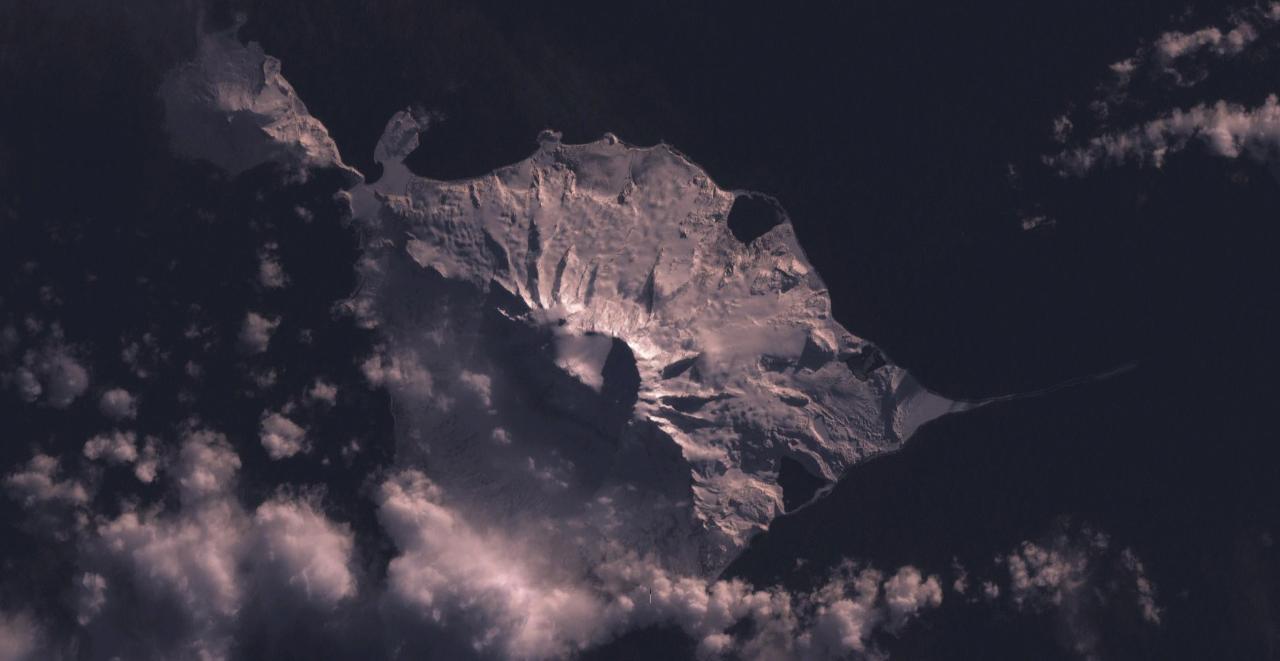
NASA, Public domain
World Heritage Research
Discover scientific research and academic studies that deepen our understanding of Heard and McDonald Islands from its history and significance to its conservation, management, and contemporary challenges.
-
The conservation status of Heard Island and the McDonald Islands
Heard Island and the McDonald Islands, the last unspoilt subantarctic biome, face increasing threats from human activity despite their extreme isolation. This study reveals that current legal protections are insufficient to maintain their biological integrity, highlighting a delicate conservation balance. It identifies urgent reforms, including new legislation or integration under the Antarctic Treaty (Environmental Protection) Act 1980, as critical for their future preservation. The research combines historical, geographical, and biological analysis with an assessment of existing legal controls, advocating for stronger measures to safeguard these unique ecosystems. Recommendations include declaring the Islands a UNESCO Biosphere Reserve or World Heritage Site, contingent on implementing prior reforms.
Keage, P. L. (1981). The conservation status of Heard Island and the McDonald Islands (Version 1) [University of Tasmania]. https://doi.org/10.25959/23233346.V1
View Publication Record | Read Publication -
Atmospheric inputs of volcanic iron around Heard and McDonald Islands, Southern ocean
Volcanic emissions from Heard Island on the Kerguelen plateau significantly increase atmospheric iron (Fe) loading and solubility, highlighting volcanoes as crucial sources of aeolian Fe for remote oceanic regions. This discovery challenges conventional models that often overlook volcanic contributions to marine ecosystems. The study analyzed atmospheric samples around Heard and McDonald Islands in the Southern Ocean, revealing elevated Fe concentrations linked to volcanic activity. These findings underscore the importance of incorporating volcanic inputs into biogeochemical models to better understand nutrient cycling in the remote Southern Ocean.
Perron, M. M. G., Proemse, B. C., Strzelec, M., Gault-Ringold, M., & Bowie, A. R. (2021). Atmospheric inputs of volcanic iron around Heard and McDonald Islands, Southern ocean. Environmental Science: Atmospheres, 1(7), 508–517. https://doi.org/10.1039/d1ea00054c
View Publication Record | Read Publication -
Glacial and Hydrothermal Sources of Dissolved Iron (II) in Southern Ocean Waters Surrounding Heard and McDonald Islands
Heard and McDonald Islands (HIMI) serve as significant sources of dissolved iron (II) (DFe(II)) in the Southern Ocean, with distinct mechanisms governing its release. Heard Island's glacial runoff contributes reduced iron, while McDonald Islands' shallow hydrothermal activity is a notable source. The study, conducted during the austral summer of 2016, used DFe(II) and hydrogen peroxide measurements to identify these sources. Elevated DFe(II) concentrations around HIMI, reaching up to 1.01 nmol L⁻¹ near McDonald Islands, suggest increased iron availability for marine biota and potential transport to the broader Kerguelen Plateau, where annual plankton blooms occur.
Holmes, T. M., Wuttig, K., Chase, Z., Schallenberg, C., van der Merwe, P., Townsend, A. T., & Bowie, A. R. (2020). Glacial and Hydrothermal Sources of Dissolved Iron (II) in Southern Ocean Waters Surrounding Heard and McDonald Islands. Journal of Geophysical Research: Oceans, 125(10). Portico. https://doi.org/10.1029/2020jc016286
View Publication Record | Read Publication -
Identifying Zinc Inputs to Heard and McDonald Islands Region using Zinc Concentrations and Isotopic Compositions
Research indicates that hydrothermal activity near Heard and McDonald Islands, an active volcanic region in the Southern Ocean, may be contributing zinc (Zn) to surrounding waters. This study used Zn concentrations and isotopic compositions to explore potential Zn sources, suggesting a possible hydrothermal influence near McDonald Island and specific stations around Heard Island. The findings hint at enhanced biological productivity due to trace element inputs from volcanic activity. To strengthen conclusions, additional data such as Zn excess and mantle helium concentrations are recommended.
Mohamed, F. A. A. (2020). Identifying Zinc Inputs to Heard and McDonald Islands Region using Zinc Concentrations and Isotopic Compositions. Science. https://doi.org/10.11575/PRISM/38124
View Publication Record | Read Publication -
Factors Controlling the Lack of Phytoplankton Biomass in Naturally Iron Fertilized Waters Near Heard and McDonald Islands in the Southern Ocean
Despite high natural iron fertilization from glacial and volcanic sources near Heard and McDonald Islands, phytoplankton biomass remains unexpectedly low compared to the central Kerguelen Plateau. This paradoxical 'high nutrient, high iron, low chlorophyll' (HNHFeLC) phenomenon was investigated using ocean color data and in situ samples collected during the HEOBI voyage in 2016. Researchers found that deep mixing, shading by re-suspended sediment particles, and dilution with surrounding low-chlorophyll waters in the Antarctic Circumpolar Current played significant roles in limiting phytoplankton growth. Additionally, a shift from microphytoplankton to nanophytoplankton dominance was observed, highlighting the complex dynamics of short-term responses to climate change and cryospheric processes.
Wojtasiewicz, B., Trull, T. W., Clementson, L., Davies, D. M., Patten, N. L., Schallenberg, C., & Hardman-Mountford, N. J. (2019). Factors Controlling the Lack of Phytoplankton Biomass in Naturally Iron Fertilized Waters Near Heard and McDonald Islands in the Southern Ocean. Frontiers in Marine Science, 6. https://doi.org/10.3389/fmars.2019.00531
View Publication Record | Read Publication -
Managing Marine Protected Areas in Remote Areas: The Case of the Subantarctic Heard and McDonald Islands
The Heard Island and McDonald Islands (HIMI) Marine Reserve, one of the world's most remote marine protected areas (MPAs), has successfully balanced sustainable fisheries with biodiversity conservation. Despite its harsh conditions and isolation, the reserve has seen no illegal fishing since 2006/07, thanks to collaboration between managers and the fishing industry. Commercial fishers actively monitor the area, report infringements, and conduct annual ecological surveys, providing critical data for environmental tracking. This partnership, underpinned by secure fishing rights, demonstrates that remote MPAs can achieve conservation outcomes when governance integrates industry participation and robust monitoring. The study highlights the potential for similar models in other remote large MPAs, offering a blueprint for cost-effective conservation strategies.
Brooks, C. M., Epstein, G., & Ban, N. C. (2019). Managing Marine Protected Areas in Remote Areas: The Case of the Subantarctic Heard and McDonald Islands. Frontiers in Marine Science, 6. https://doi.org/10.3389/fmars.2019.00631
View Publication Record | Read Publication -
Shallow Seafloor Gas emissions Near Heard and McDonald Islands on the Kerguelen Plateau, Southern Indian Ocean
Researchers have uncovered evidence of submarine gas emissions near Heard and McDonald Islands on the Kerguelen Plateau, marking the first documented seafloor bubble production in this remote region. The study, utilizing hydroacoustic flares, deep-tow camera footage, water properties analysis, and isotopic data (δ³He, δ¹³C, δ³⁴S), identified potential sources of methane and CO₂ linked to both shallow diffuse hydrothermal venting near McDonald Islands and deeper-sourced thermogenic methane or sediment-hosted geothermal systems at Heard Island. The findings suggest active carbon cycling processes in the southern Indian Ocean, with implications for understanding seafloor dynamics and volcanic activity on large igneous provinces.
Spain, E. A., Johnson, S. C., Hutton, B., Whittaker, J. M., Lucieer, V., Watson, S. J., Fox, J. M., Lupton, J., Arculus, R., Bradney, A., & Coffin, M. F. (2020). Shallow Seafloor Gas emissions Near Heard and McDonald Islands on the Kerguelen Plateau, Southern Indian Ocean. Earth and Space Science, 7(3). Portico. https://doi.org/10.1029/2019ea000695
View Publication Record | Read Publication