World Heritage Identification Number: 1185
World Heritage since: 2005
Category: Cultural Heritage
WHE Type: Buildings & Architectural Ensembles
Transboundary Heritage: No
Endangered Heritage: No
Country: 🇧🇪 Belgium
Continent: Europe
UNESCO World Region: Europe and North America
Map
A Glimpse into the History of Printing: The Plantin-Moretus House-Workshops-Museum Complex
The Plantin-Moretus House-Workshops-Museum Complex, situated in the heart of Antwerp, Belgium, stands as a testament to the rich history of printing and publishing during the Renaissance and Baroque periods. Inscribed as a UNESCO World Heritage Site in 2005, this complex offers an extraordinary insight into the life and work of one of the most prolific printing and publishing houses in Europe during the late 16th century.
More to come…UNESCO Description of the World Heritage Site
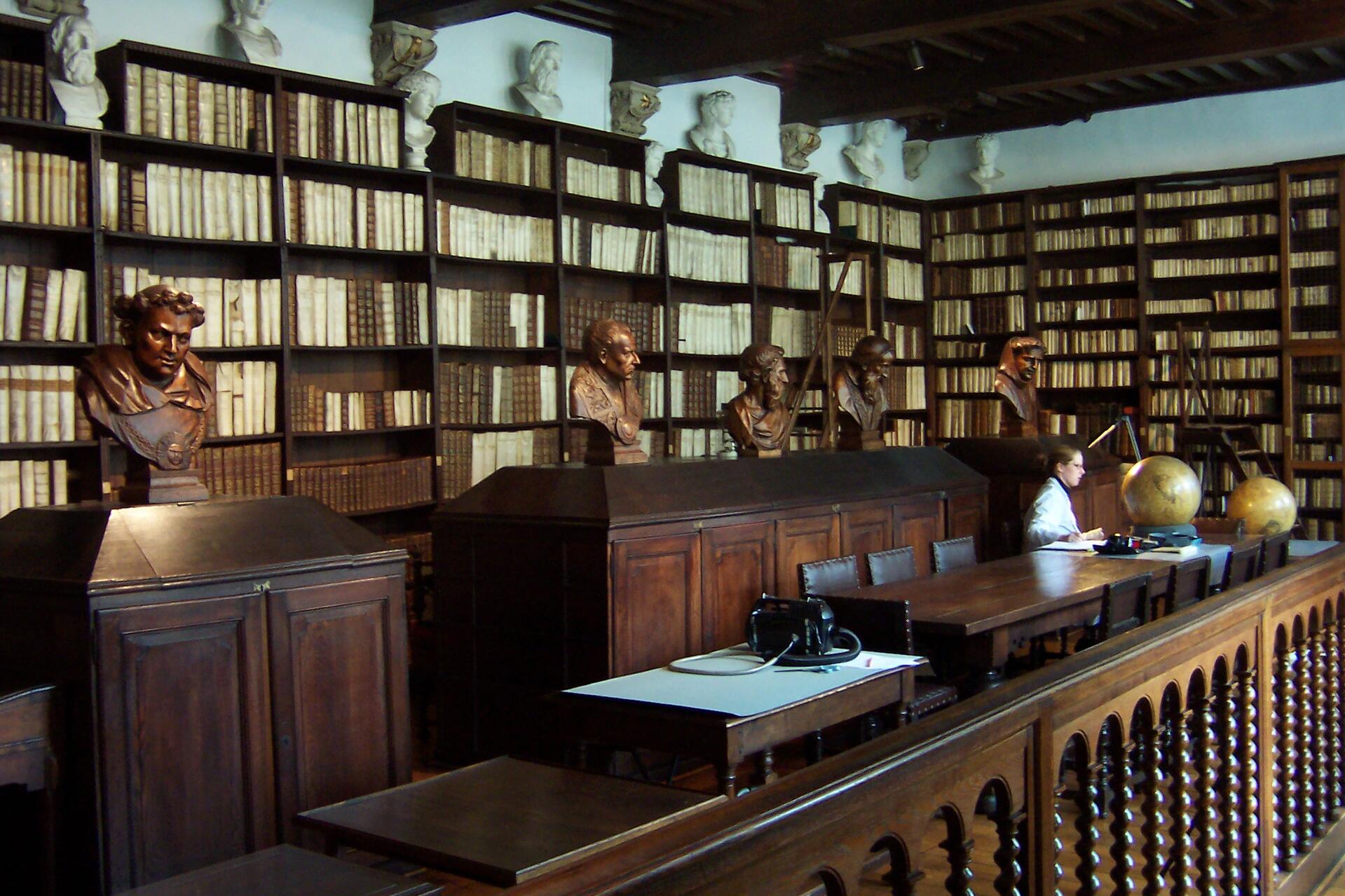
The Plantin-Moretus Museum is a printing plant and publishing house dating from the Renaissance and Baroque periods. Situated in Antwerp, one of the three leading cities of early European printing along with Paris and Venice, it is associated with the history of the invention and spread of typography. Its name refers to the greatest printer-publisher of the second half of the 16th century: Christophe Plantin (c. 1520–89). The monument is of outstanding architectural value. It contains exhaustive evidence of the life and work of what was the most prolific printing and publishing house in Europe in the late 16th century. The building of the company, which remained in activity until 1867, contains a large collection of old printing equipment, an extensive library, invaluable archives and works of art, among them a painting by Rubens.
UNESCO Justification of the World Heritage Site
Criterion (ii): Through the publications of the Officina Plantiniana, the Plantin-Moretus Complex is a testimony to the major role played by this important centre of 16th-century European humanism in the development of science and culture.
Criterion (iii): Considered as an integral part of the Memory of the World (UNESCO, 2001), the Plantinian Archives, including the business archives of the Officina, the books of commercial accounts and the correspondence with a number of world-renowned scholars and humanists, provide an outstanding testimony to a cultural tradition of the first importance.
Criterion (iv): As an outstanding example of the relationship between the living environment of a family during the 16th, 17th and 18th centuries, the world of work and the world of commerce, the Plantin-Moretus Complex is of unrivalled documentary value relating to significant periods of European history: the Renaissance, the Baroque and Classicism.
Criterion (vi): The Plantin-Moretus Complex is tangibly associated with ideas, beliefs, technologies and literary and artistic works of outstanding universal significance.
Encyclopedia Record: Plantin–Moretus Museum
The Plantin–Moretus Museum is a printing museum in Antwerp, Belgium which focuses on the work of the 16th-century printers Christophe Plantin and Jan Moretus. It is located in their former residence and printing establishment, the Plantin Press, at the Vrijdagmarkt in Antwerp, and has been a UNESCO World Heritage Site since 2005.Additional Site Details
Area: 0.23 hectares
Number of Components: 1
(iii) — Unique or exceptional testimony to a cultural tradition
(iv) — Outstanding example of a type of building or landscape
(vi) — Directly associated with events or living traditions
Coordinates: 51.21833 , 4.39778
World Heritage Research
Discover scientific research and academic studies that deepen our understanding of Plantin-Moretus House-Workshops-Museum Complex from its history and significance to its conservation, management, and contemporary challenges.
-
Historical Type in the Collection of the Plantin-Moretus Museum in Antwerp from a Metal Conservator's Point of View
Historical lead-based type used in book printing from the fifteenth to eighteenth centuries exhibits significant corrosion, particularly when composed of high antimony and low tin levels. This finding stems from a study comparing contemporary knowledge on type alloying with analytical research on a selection of historical type from the Plantin-Moretus Museum in Antwerp. The research reveals that such type compositions are highly susceptible to environmental degradation, necessitating careful preservation under controlled conditions to mitigate further corrosion.
Storme, P. (2016). Historical Type in the Collection of the Plantin-Moretus Museum in Antwerp from a Metal Conservator’s Point of View. TMG Journal for Media History, 19(2), 1. https://doi.org/10.18146/2213-7653.2016.265
View Publication Record | Read Publication -
Micro Raman investigation on corrosion of Pb‐based alloy replicas of letters from the museum Plantin‐Moretus, Antwerp
Corrosion of lead (Pb)-based alloys, particularly those containing antimony (Sb) and tin (Sn), can pose significant challenges for the conservation of historical artefacts. A study investigating replicas of letters from the Plantin-Moretus House-Workshops-Museum Complex in Antwerp revealed that exposure to acetic and formic acid vapours leads to the formation of hydrated Pb and Sn acetates and formates, with Sb-rich specimens exhibiting increased volume and brittleness. Micro Raman Spectroscopy (μRS) also detected metallic Sb peaks, suggesting that Sb influences corrosion behaviour. This finding underscores the need for careful conservation strategies when dealing with Pb-based artefacts containing Sb, as their restoration can be complicated by these corrosion products.
Ghiara, G., Campodonico, S., Piccardo, P., Martini, C., Storme, P., & Carnasciali, M. M. (2014). Micro Raman investigation on corrosion of Pb‐based alloy replicas of letters from the museum Plantin‐Moretus, Antwerp. Journal of Raman Spectroscopy, 45(11-12), 1093–1102. Portico. https://doi.org/10.1002/jrs.4592
View Publication Record | Read Publication -
Garden Archaeology in Flanders. Developing a new archaeological discipline in Flanders at the Neue Garten in the Landcommandery Alden Biesen (Bilzen) and the garden of the Plantin-Moretus Museum at Antwerp
Garden archaeology, a discipline distinct from traditional archaeology, has been successfully applied in Europe for two decades but only recently introduced in Flanders. This study presents the first two garden archaeology excavations in Flanders, focusing on the 18th-century Neue Garten at Alden Biesen and the early 17th-century garden within the Plantin-Moretus Museum complex. The research demonstrates that garden archaeology is more than a tool for reconstruction, providing substantial expertise in this multidisciplinary field. By investigating the layout of tuinpaden (garden paths) and traces of historical gardens, the study showcases its potential to uncover architectural and biological remains, offering valuable insights into the design and history of these spaces.
Dix, B., Vynckier, G., Bellens, T., Van den Bossche, H., & Fabri, R. (2013). Garden Archaeology in Flanders. Developing a new archaeological discipline in Flanders at the Neue Garten in the Landcommandery Alden Biesen (Bilzen) and the garden of the Plantin-Moretus Museum at Antwerp. Relicta. Archeologie, Monumenten- En Landschapsonderzoek in Vlaanderen, (10), 275–344. https://doi.org/10.55465/cfrb6467
View Publication Record | Read Publication -
Research on Corrosion of Lead Printing Letters from the Museum Plantin-Moretus, Antwerp
Research on lead-antimony printing letters from the UNESCO-listed Plantin-Moretus House-Workshops-Museum Complex in Antwerp reveals corrosion with exceptional volume increase, posing significant conservation challenges. The study employed a combination of analytical techniques—including microscopy, X-ray fluorescence (XRF), scanning electron microscopy with energy-dispersive X-ray analysis (SEM-EDX), X-ray diffraction (XRD), and electrolytic methods—to assess corrosion patterns and identify appropriate strategies for further investigation. An adapted Oddy test was also utilized to evaluate environmental factors contributing to degradation. This work provides critical insights into the preservation of historical metal artifacts, particularly those with complex alloy compositions, and highlights the need for specialized conservation approaches.
Storme, P., Jacobs, M., & Lieten, E. (2013). Research on Corrosion of Lead Printing Letters from the Museum Plantin-Moretus, Antwerp. Procedia Chemistry, 8, 307–316. https://doi.org/10.1016/j.proche.2013.03.038
View Publication Record | Read Publication -
Museum Plantin-Moretus MS of Glossaries
A previously unexamined manuscript of glossaries housed at the Plantin-Moretus House-Workshops-Museum Complex in Antwerp, Belgium, reveals new insights into 19th-century lexicography and industrial publishing. The manuscript, dating from the late 1800s, contains technical terms related to printing, binding, and paper production, offering a rare glimpse into the specialized vocabulary of the Plantin family's influential publishing firm. Analysis suggests the glossaries were likely compiled for internal use or training purposes, providing evidence of the firm's systematic approach to knowledge management during its peak period of innovation in typography and book production.
Stanley, E. G. (2012). Museum Plantin-Moretus MS of Glossaries. Notes and Queries, 59(4), 463. https://doi.org/10.1093/notesj/gjs197
View Publication Record | Read Publication