World Heritage Identification Number: 1005
World Heritage since: 2000
Category: Cultural Heritage
WHE Type: Buildings & Architectural Ensembles
Transboundary Heritage: No
Endangered Heritage: No
Country: 🇧🇪 Belgium
Continent: Europe
UNESCO World Region: Europe and North America
Map
The Major Town Houses of Victor Horta: Pioneering Works of Art Nouveau Architecture
The Major Town Houses of Victor Horta, inscribed as a UNESCO World Heritage Site in 2000, represent a significant contribution to the development of modern architecture. Located in Brussels, Belgium, these four buildings – Hôtel Tassel, Hôtel Solvay, Hôtel van Eetvelde, and Maison & Atelier Horta – were designed by Victor Horta, a key figure in the emergence of Art Nouveau.
More to come…UNESCO Description of the World Heritage Site
The four major town houses - Hôtel Tassel, Hôtel Solvay, Hôtel van Eetvelde, and Maison & Atelier Horta - located in Brussels and designed by the architect Victor Horta, one of the earliest initiators of Art Nouveau, are some of the most remarkable pioneering works of architecture of the end of the 19th century. The stylistic revolution represented by these works is characterised by their open plan, the diffusion of light, and the brilliant joining of the curved lines of decoration with the structure of the building.
UNESCO Justification of the World Heritage Site
Criterion (i): The Major Town Houses of Architect Victor Horta in Brussels are works of human creative genius, representing the highest expression of the influential Art Nouveau style in art and architecture.
Criterion (ii): The appearance of Art Nouveau in the closing years of the 19th century marked a decisive stage in the evolution of architecture in the West, prefiguring subsequent developments, and the Town Houses of Victor Horta in Brussels bear exceptional witness to its radical new approach.
Criterion (iv): The Major Town Houses of Architect Victor Horta in Brussels are outstanding examples of Art Nouveau architecture brilliantly illustrating the transition from the 19th to the 20th century in art, thought and society.
Encyclopedia Record: Hôtel Solvay
The Hôtel Solvay, also known as the Solvay House, is a large historic town house in Brussels, Belgium. It was designed by Victor Horta for Armand Solvay, the son of the chemist and industrialist Ernest Solvay, and built between 1895 and 1900, in Art Nouveau style. It is located at 224, avenue Louise/Louizalaan, not far from the Hôtel Max Hallet, another remarkable Art Nouveau building by Horta.Additional Site Details
Area: Not available
Number of Components: 4
(ii) — Significant interchange of human values
(iv) — Outstanding example of a type of building or landscape
Coordinates: 50.82806 , 4.36223
Image
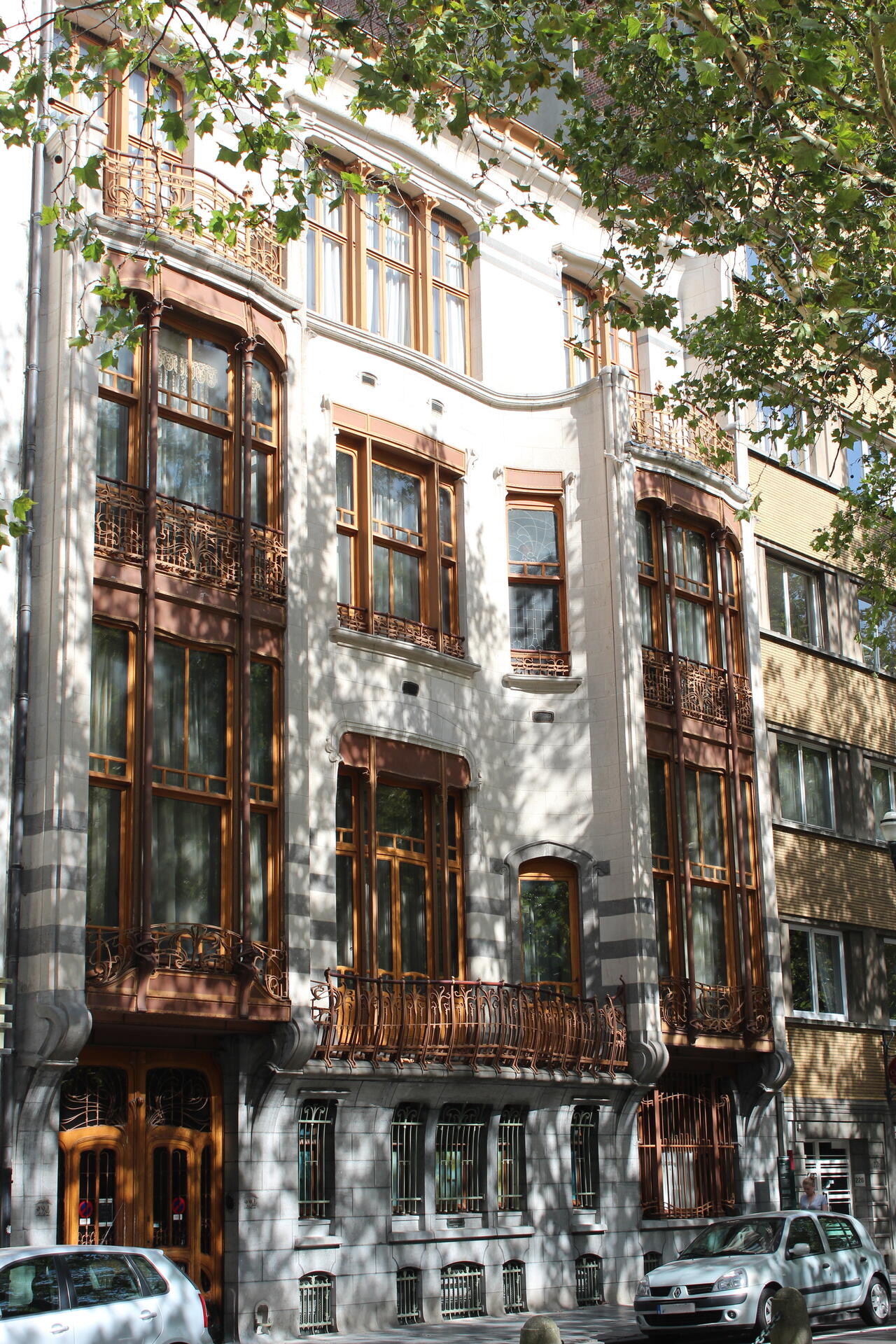
© Zinneke, CC BY-SA 3.0 Resized from original. (This derivative is under the same CC BY-SA license.)