
World Heritage Identification Number: 985
World Heritage since: 2000
Category: Mixed Cultural Heritage and Natural Heritage
WHE Type: Protected Areas & National Parks
Transboundary Heritage: Yes
Endangered Heritage: No
Country: Lesotho, South Africa
Continent: Africa
UNESCO World Region: Africa
Map
A Transboundary Treasure: The Maloti-Drakensberg Park
The Maloti-Drakensberg Park, a transnational World Heritage Site, straddles the border between South Africa and Lesotho, showcasing a breathtaking fusion of geological wonders, rich biodiversity, and cultural heritage. Established in 2000, it encompasses two distinct yet interconnected protected areas: the uKhahlamba Drakensberg National Park in South Africa and the Sehlathebe National Park in Lesotho.
More to come…UNESCO Description of the World Heritage Site
The Maloti-Drakensberg Park is a transnational property composed of the uKhahlamba Drakensberg National Park in South Africa and the Sehlathebe National Park in Lesotho. The site has exceptional natural beauty in its soaring basaltic buttresses, incisive dramatic cutbacks, and golden sandstone ramparts as well as visually spectacular sculptured arches, caves, cliffs, pillars and rock pools. The site's diversity of habitats protects a high level of endemic and globally important plants. The site harbors endangered species such as the Cape vulture (Gyps coprotheres) and the bearded vulture (Gypaetus barbatus). Lesotho’s Sehlabathebe National Park also harbors the Maloti minnow (Pseudobarbus quathlambae), a critically endangered fish species only found in this park. This spectacular natural site contains many caves and rock-shelters with the largest and most concentrated group of paintings in Africa south of the Sahara. They represent the spiritual life of the San people, who lived in this area over a period of 4,000 years.
UNESCO Justification of the World Heritage Site
Criterion (i): The rock art of the Maloti-Drakensberg Park is the largest and most concentrated group of rock paintings in Africa south of the Sahara and is outstanding both in quality and diversity of subject.
Criterion (iii): The San people lived in the mountainous Maloti-Drakensberg area for more than four millennia, leaving behind them a corpus of outstanding rock art, providing a unique testimony which throws much light on their way of life and their beliefs.
Criterion (vii): The site has exceptional natural beauty with soaring basaltic buttresses, incisive dramatic cutbacks and golden sandstone ramparts. Rolling high altitude grasslands, the pristine steep-sided river valleys and rocky gorges also contribute to the beauty of the site.
Criterion (x): The property contains significant natural habitats for in situ conservation of biological diversity. It has outstanding species richness, particularly of plants. It is recognised as a Global Centre of Plant Diversity and endemism, and occurs within its own floristic region – the Drakensberg Alpine Region of South Africa. It is also within a globally important endemic bird area and is notable for the occurrence of a number of globally threatened species, such as the Yellow-breasted Pipit. The diversity of habitats is outstanding, ranging across alpine plateaux, steep rocky slopes and river valleys. These habitats protect a high level of endemic and threatened species.
Encyclopedia Record: Maloti-Drakensberg Park
The Maloti-Drakensberg Park is a World Heritage Site, established on 11 June 2001 by linking the Sehlabathebe National Park in the Kingdom of Lesotho and the uKhahlamba Drakensberg Park in KwaZulu-Natal, South Africa. The highest peak is Thaba Ntlenyana rising to 3,482 metres.Additional Site Details
Area: 249,313 hectares
Number of Components: 2
(iii) — Unique or exceptional testimony to a cultural tradition
(vii) — Contains superlative natural phenomena or beauty
(x) — Contains most important habitats for biodiversity
Coordinates: -29.7652777778 , 29.1230555556
IUCN World Heritage Outlook
The 2025 Conservation Outlook on Maloti-Drakensberg Park reports the following assessment:
Source: International Union for Conservation of Nature (IUCN) · View assessment
Image
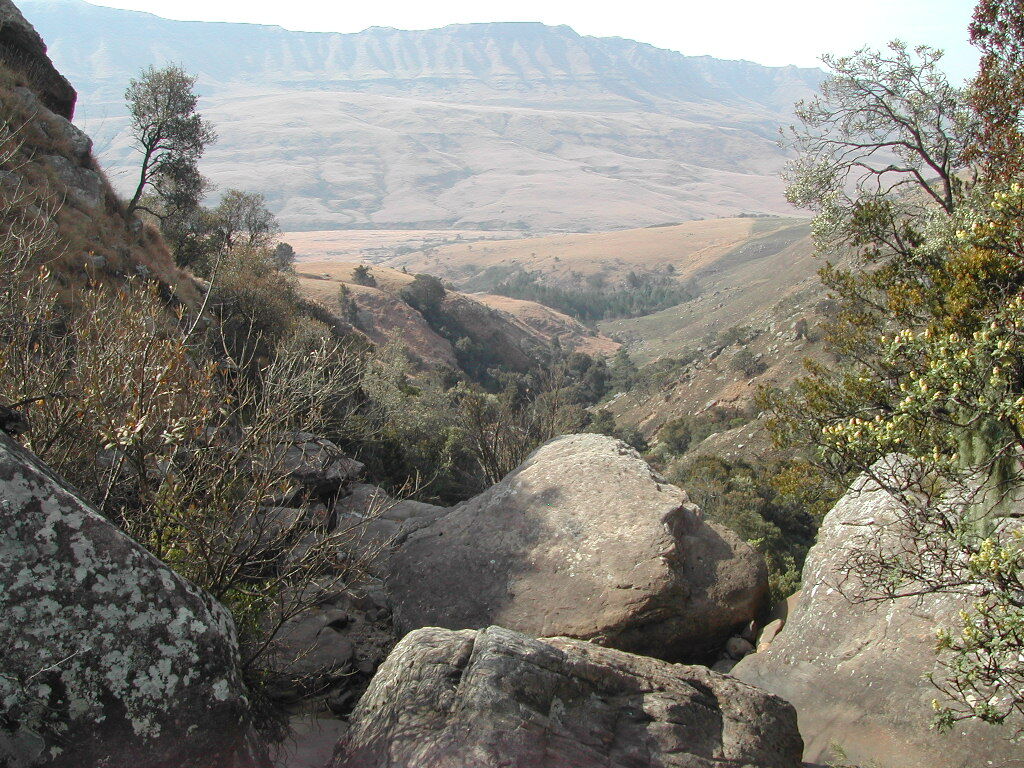
© Francesco Bandarin, CC BY-SA 3.0 igo Resized from original. (This derivative is under the same CC BY-SA license.)
World Heritage Research
Discover scientific research and academic studies that deepen our understanding of Maloti-Drakensberg Park from its history and significance to its conservation, management, and contemporary challenges.
-
Bridging Borders, Ecological Connectivity, Peace Parks Linking Conservation Corridors in the Conflict Zones: Climate Change &; Environmental Peacebuilding to Transform Transboundary Environmental Challenges into Opportunities
Climate change, while posing significant challenges to conflict-prone regions, also presents opportunities for fostering peace and cooperation through environmental conservation initiatives. This study demonstrates that transboundary protected areas (TBPAs), such as peace parks and conservation corridors, can serve as powerful tools for ecological connectivity and environmental peacebuilding. Analyzing three case studies—Cordillera del Cóndor between Peru and Ecuador, Maloti-Drakensberg Park between Lesotho and South Africa, and Siachen Glacier within Pakistan and India—the research highlights how shared vulnerabilities to climate change can spur collaboration, trust-building, and long-term peace. By linking conservation efforts across borders, countries can mitigate environmental degradation, enhance biodiversity, and transform contentious landscapes into symbols of ecological harmony. The findings underscore the potential for TBPAs to address transboundary challenges while fostering sustainable development and cooperation.
Rashid, M. A., Bilal, F. E., & Javaid, M. (2025). Bridging Borders, Ecological Connectivity, Peace Parks Linking Conservation Corridors in the Conflict Zones: Climate Change &; Environmental Peacebuilding to Transform Transboundary Environmental Challenges into Opportunities. ACADEMIA International Journal for Social Sciences, 4(4), 135–166. https://doi.org/10.63056/acad.004.04.0875
View Publication Record | Read Publication -
Tourism and fracking in the northern Drakensberg area: emerging challenges for tourism sustainability
Tourism business owners in the Northern Drakensberg, a UNESCO World Heritage Site renowned for its scenic beauty and cultural richness, strongly oppose fracking due to anticipated negative impacts on sustainable tourism. The study highlights significant challenges posed by fracking, including poor public consultation, environmental degradation, and economic disruptions. These findings underscore the urgent need for improved education and awareness about fracking's potential benefits while addressing its risks. The research used an interpretive qualitative approach, gathering insights from semi-structured interviews and focus group discussions with seven tourism-related business owners in the area.
Dube-Xaba, Z. (2024). Tourism and fracking in the northern Drakensberg area: emerging challenges for tourism sustainability. Discover Sustainability, 5(1). https://doi.org/10.1007/s43621-024-00650-3
View Publication Record | Read Publication -
Engaging local communities in conservation and governance of the World Heritage in a transnational context: An example from the Maloti-Drakensberg Park World Heritage Site (Lesotho/South Africa)
Local communities and indigenous peoples play a pivotal role as custodians of World Heritage sites, yet their engagement in conservation and governance remains underexplored. This study highlights the strategic importance of involving these groups in the stewardship of UNESCO World Heritage Sites, emphasizing equitable benefit-sharing as a key objective of the World Heritage Convention's 5th 'C' (Communities). Using the Maloti-Drakensberg Park—a transnational site spanning Lesotho and South Africa—as a case study, the research examines how community engagement can enhance conservation efforts while ensuring sustainable development. The approach combines qualitative analysis with participatory methods to assess governance structures, highlighting both challenges and opportunities in transnational contexts.
Loza, J. (2023). Engaging local communities in conservation and governance of the World Heritage in a transnational context: An example from the Maloti-Drakensberg Park World Heritage Site (Lesotho/South Africa). Managing Transnational UNESCO World Heritage Sites in Africa, 47–56. https://doi.org/10.1007/978-3-030-80910-2_5
View Publication Record | Read Publication -
Long-term frequent fires do not decrease topsoil carbon and nitrogen in an Afromontane grassland
Contrary to expectations, long-term frequent fires do not decrease topsoil carbon and nitrogen in Afromontane grasslands of the Maloti-Drakensberg Park. Instead, annual spring burning significantly increased soil organic carbon (SOC) and nitrogen (SON), with an average C sequestration rate of 0.30 Mg ha⁻¹ y⁻¹ across all treatments. This unexpected finding is attributed to the aluandic properties of Drakensberg soils, which are acidic and high in organic matter. The study compared SOC and SON from six fire regimes (annual, biennial, five-year, infrequent) with varying seasons over a 39-year period, revealing that autumn burning did not yield similar increases. Infrequently burnt plots exhibited the lowest carbon stocks, highlighting the importance of fire season in shaping soil organic matter dynamics.
Findlay, N., Manson, A., Cromsigt, J. P., Gordijn, P., Nixon, C., Rietkerk, M., Thibaud, G., Wassen, M. J., & Beest, M. t. (2022). Long-term frequent fires do not decrease topsoil carbon and nitrogen in an Afromontane grassland. African Journal of Range & Forage Science, 39(1), 44–55. https://doi.org/10.2989/10220119.2021.2016966
View Publication Record | Read Publication -
Commercial success from a community partnership with the private sector, at Witsieshoek Mountain Lodge in the Maloti Drakensberg Transfrontier Park World Heritage Site, South Africa
Witsieshoek Mountain Lodge (WML), located within the UNESCO World Heritage Site Maloti-Drakensberg Park, demonstrates how community ownership combined with private sector expertise can drive commercial success and sustainability. The lodge, initially dilapidated, has been transformed into a thriving 88-bed enterprise through partnership with Transfrontier Parks Destinations (TFPD), which provided business acumen, market linkages, and investment finance. This collaboration not only generated meaningful financial returns for the community but also created full-time employment for locals while achieving Fair Trade Tourism certification, underscoring its sustainable tourism model.
Anna, S. (2021). Commercial success from a community partnership with the private sector, at Witsieshoek Mountain Lodge in the Maloti Drakensberg Transfrontier Park World Heritage Site, South Africa. Tourism Cases. https://doi.org/10.1079/tourism.2021.0034
View Publication Record | Read Publication -
To what degree does a UNESCO World Heritage Site listing improve the conservation of heritage sites? Insights from the case of the Maloti-Drakensberg World Heritage Site (South Africa-Lesotho)
A UNESCO World Heritage Site listing significantly enhances heritage conservation, but its effectiveness varies depending on multiple factors. This study examines the Maloti-Drakensberg Park, a transboundary site spanning South Africa and Lesotho, to assess how the 2013 extension of its listing—particularly for rock art sites—impacted conservation practices. The research finds that while the designation can drive positive changes, its success hinges on parameters such as property type, listing procedure, governance mechanisms, stakeholders involved, and multi-scale contextual issues. The analysis underscores the need for tailored, context-sensitive strategies to maximize the benefits of World Heritage status, suggesting pathways for improvement in conservation outcomes.
Duval, M. (2021). To what degree does a UNESCO World Heritage Site listing improve the conservation of heritage sites? Insights from the case of the Maloti-Drakensberg World Heritage Site (South Africa-Lesotho). International Journal of Heritage Studies, 28(3), 376–399. https://doi.org/10.1080/13527258.2021.2009540
View Publication Record | Read Publication -
The alpine flora on inselberg summits in the Maloti–Drakensberg Park, KwaZulu-Natal, South Africa
Inselberg summits within the Maloti-Drakensberg Park, South Africa, host a unique alpine flora that contributes significantly to the biodiversity of the Drakensberg Alpine Centre (DAC). This study reveals that inselbergs support 7.9% of DAC species, including 114 endemics or near-endemics, and are notably free from human disturbance or alien plant invasion. However, their high vulnerability to climate change underscores their conservation importance as escarpment vegetation faces increasing degradation due to land use pressures. The research, conducted in 2005, compared inselberg flora with the broader DAC and Platberg, identifying distinct family rankings and growth form consistency. Key findings include potential new species, range extensions, and the dominance of families like Asteraceae, Poaceae, and Ericaceae among endemics.
Brand, R. F., Scott-Shaw, C. R., & O’Connor, T. G. (2019). The alpine flora on inselberg summits in the Maloti–Drakensberg Park, KwaZulu-Natal, South Africa. Bothalia, 49(1). https://doi.org/10.4102/abc.v49i1.2386
View Publication Record | Read Publication -
Plant–soil interactions in lower–upper montane systems and their implications in a warming world: a case study from the Maloti-Drakensberg Park, southern Africa
Research in the Maloti-Drakensberg Park reveals that soil nutrient availability, particularly phosphorus and nitrogen, is more constrained than previously understood due to factors like nutrient leaching, low pH, and high rainfall. Despite the presence of nutrient-rich flood basalts, these soils share strong links with the nutrient-poor Cape Floristic Region, suggesting a fragile nutrient economy vulnerable to climate change. The study highlights the treeline ecotone as a critical temperature threshold area where vegetation shifts could be readily detected, providing insights into how mountain plant communities may respond to warming conditions. This work proposes key research areas to investigate potential ecological impacts on nutrient-poor-adapted biota under future climate scenarios.
Carbutt, C., & Edwards, T. J. (2015). Plant–soil interactions in lower–upper montane systems and their implications in a warming world: a case study from the Maloti-Drakensberg Park, southern Africa. Biodiversity, 16(4), 262–277. https://doi.org/10.1080/14888386.2015.1116409
View Publication Record | Read Publication -
Review: Transforming the Frontier: Peace Parks and the Politics of Neoliberal Conservation in Southern Africa
Neoliberal conservation efforts, such as transfrontier conservation areas (TFCAs), often exacerbate socioeconomic inequalities they aim to address. Bram Büscher's study of the Maloti-Drakensberg Transfrontier Park (MDTP) reveals that while TFCAs promise biodiversity conservation and economic development through ecotourism, their implementation reinforces existing power imbalances and neoliberal capitalist globalization. The research employs critical political ecology and ethnographic methods to analyze the MDTP's twin objectives: conserving globally significant biodiversity and fostering socioeconomic development. Büscher argues that the TFCA narrative serves as a tool for legitimizing neoliberal conservation, often prioritizing consensus-building over tangible outcomes. Despite limited resistance, the study highlights the structural challenges in achieving equitable and effective conservation strategies.
Swatuk, L. A. (2014). Transforming the Frontier: Peace Parks and the Politics of Neoliberal Conservation in Southern Africa. Durham, NC: Duke University Press. 312 pages. ISBN 9780822354208, $24.95 paperback. by BramBüscher, 2013. Review of Policy Research, 31(4), 360–362. Portico. https://doi.org/10.1111/ropr.12085
View Publication Record | Read Publication -
Beyond Borders: The Shady Past and Uncertain Future of (Trans) National Parks
National parks, despite their widespread appeal and proliferation, have historically failed to meet ecological and social conservation goals. A critical analysis of three scholarly works reveals that the national park ideal is malleable and fluid, shaped by diverse visions and adaptable to local contexts, rather than a unified concept. While some conservation models like UNESCO World Heritage Sites impose strict criteria, national parks lack such governance, leading to conflicts among competing interests. The study highlights how neoliberal conservation practices, exemplified by transfrontier conservation areas (TFCAs) in the Maloti-Drakensberg Park, often prioritize economic and political agendas over ecological restoration or local community benefits, resulting in dispossession and environmental degradation. To address these challenges, the authors advocate for redefining the national park idea, integrating science into management policies, adopting transnational perspectives, and exploring indigenous epistemologies to foster more sustainable and just conservation practices.
Clapperton, J. (2013). Beyond Borders: The Shady Past and Uncertain Future of (Trans) National Parks. Conservation Biology, 27(6), 1491–1493. Portico. https://doi.org/10.1111/cobi.12190
View Publication Record | Read Publication -
Transforming the Frontier: Peace Parks and the Politics of Neoliberal Conservation in Southern Africa
Transfrontier conservation projects, often touted as 'win-win' solutions for biodiversity protection and regional development, are more deeply intertwined with neoliberal political economies than previously acknowledged. Bram Büscher's study of the Maloti-Drakensberg Transfrontier Conservation and Development Project reveals that these initiatives derive their strength from strategies of consensus, antipolitics, and marketing rather than genuine on-the-ground development efforts. Through extensive ethnographic research, Büscher argues that transfrontier conservation reframes environmental protection and sustainable development to align with a contradictory global order, often at the expense of local priorities.
Büscher, B. (2020). Transforming the Frontier. https://doi.org/10.1515/9780822399087
View Publication Record | Read Publication -
Floristic composition of wetlands of the South African section of the Maloti-Drakensberg Transfrontier Park
A comprehensive survey of wetlands in the South African section of the Maloti-Drakensberg Transfrontier Park (MDTP) identified 36 distinct plant communities, categorized into five main types based on altitude and soil conditions. These include high-altitude fens, hygrophilous grasslands, shrubby wetlands, mixed sedgelands, and low-altitude sedge and reedlands. The study found that altitude and soil wetness are the primary factors influencing wetland vegetation composition. Conducted across six catchments along altitudinal gradients, this research provides critical insights into the ecological diversity of MDTP wetlands, contributing to conservation efforts in this UNESCO World Heritage Site.
Sieben, E. J. J., Kotze, D. C., & Morris, C. D. (2010). Floristic composition of wetlands of the South African section of the Maloti-Drakensberg Transfrontier Park. Bothalia, 40(1), 117–134. https://doi.org/10.4102/abc.v40i1.201
View Publication Record | Read Publication