World Heritage Identification Number: 1216
World Heritage since: 2006
Category: Natural Heritage
WHE Type: Protected Areas & National Parks
Transboundary Heritage: No
Endangered Heritage: No
Country: 🇨🇴 Colombia
Continent: Americas
UNESCO World Region: Latin America and the Caribbean
Map
Malpelo Fauna and Flora Sanctuary: A Marine Biodiversity Haven
The Malpelo Fauna and Flora Sanctuary, inscribed as a UNESCO World Heritage Site in 2006, is a significant marine protected area located approximately 506 kilometers off the coast of Colombia. Encompassing Malpelo Island and its surrounding marine environment spanning 857,150 hectares, this sanctuary serves as a vital habitat for numerous globally threatened marine species and boasts one of the most diverse marine ecosystems in the Eastern Tropical Pacific.
More to come…UNESCO Description of the World Heritage Site
Located some 506 km off the coast of Colombia, the site includes Malpelo island (350 ha) and the surrounding marine environment (857,150 ha). This vast marine park, the largest no-fishing zone in the Eastern Tropical Pacific, provides a critical habitat for internationally threatened marine species, and is a major source of nutrients resulting in large aggregations of marine biodiversity. It is in particular a ‘reservoir' for sharks, giant grouper and billfish and is one of the few places in the world where sightings of the short-nosed ragged-toothed shark, a deepwater shark, have been confirmed. Widely recognized as one of the top diving sites in the world, due to the presence of steep walls and caves of outstanding natural beauty, these deep waters support important populations of large predators and pelagic species (e.g. aggregations of over 200 hammerhead sharks and over 1,000 silky sharks, whale sharks and tuna have been recorded) in an undisturbed environment where they maintain natural behavioural patterns.
UNESCO Justification of the World Heritage Site
Criterion (vii): The pristine underwater environment of Malpelo Fauna and Flora Sanctuary featuring dramatic cliffs, rock formations, caves and tunnels, as well as abundant and diverse marine life is of striking natural beauty. The major aggregations of the full range of large top predators are an increasingly rare sight in the World's overfished seas. The geographically extraordinary position at the meeting point of several marine currents, the varied underwater mountain seascape and the excellent state of conservation combine to make the property a World Class ocean oasis – and an exhilarating experience for divers.
Criterion (ix): Due to its remote location and as the largest no-fishing zone in the Eastern Tropical Pacific, Malpelo Fauna and Flora Sanctuary supports unaltered ecosystems free of major acute threats. The confluence of several marine currents turns the property into an unusual geographical spot with a complex and diverse array of habitats and species. The three major marine communities surrounding Malpelo Island can be distinguished as belonging to the vertical habitats, the coral reefs and the pelagic. Large top predators continue to fulfil their ecological roles and behaviour patterns continue undisturbed, providing unique opportunities for research. The evolutionary processes associated with the extreme isolation, the convergence of several ocean currents and related nutrient regimes and the geological formations are of great ecological importance and scientific interest. Free of alien invasive species, Malpelo Island and the surrounding waters are not only a conservation gem on its own but contribute to the maintenance, dispersal and replenishment of benthic larvae of corals, fish and mollusks and other marine life in the broader Eastern Tropical Pacific. As the wider region is under increasing pressure from overfishing and other threats, the property is thus of enormous conservation and indeed economic importance well beyond its boundaries.
Encyclopedia Record: Malpelo Island
Malpelo is an oceanic island in the eastern Pacific Ocean, about 500 km (310 mi) west of the Colombian mainland with a military post defended by the Colombian Armed Forces. It consists of a sheer and barren rock with three high peaks, the highest being the 300 m (980 ft) Cerro de la Mona. The island is about 1.5 kilometres in length from northeast to southwest, and 640 metres across at its widest.Additional Site Details
Area: 857,500 hectares
Number of Components: 1
(ix) — Outstanding example representing ecological and biological processes
Coordinates: 4.003344 , -81.607572
IUCN World Heritage Outlook
The 2025 Conservation Outlook on Malpelo Fauna and Flora Sanctuary reports the following assessment:
Source: International Union for Conservation of Nature (IUCN) · View assessment
Image
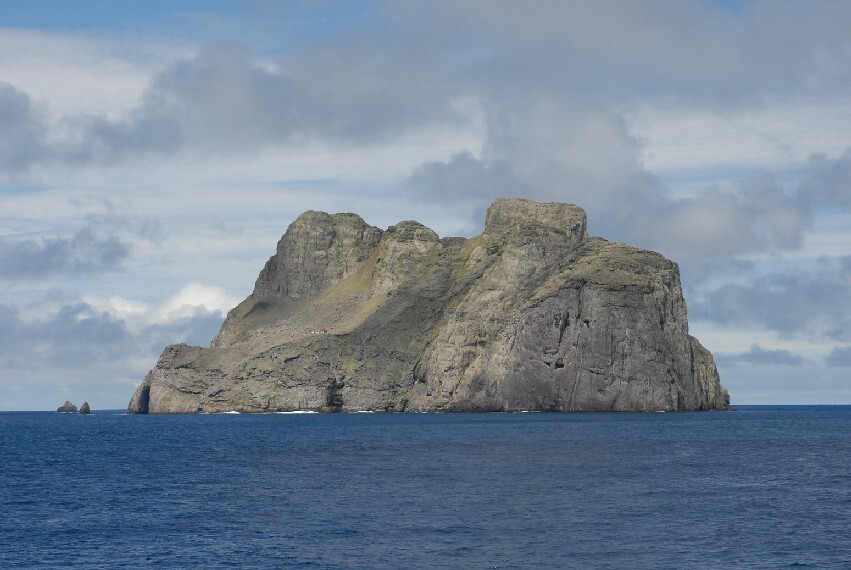
NOAA, Public domain
World Heritage Research
Discover scientific research and academic studies that deepen our understanding of Malpelo Fauna and Flora Sanctuary from its history and significance to its conservation, management, and contemporary challenges.
-
Discovering the mesophotic fauna of Malpelo Ridge: biodiversity insights in a remote marine sanctuary
A recent study reveals that Malpelo Fauna and Flora Sanctuary harbors significantly higher fish biomass in its mesophotic ecosystems (30-150 m depth) than previously estimated. The research, conducted during the 2025 Mesophotic Scientific Expedition, identified six new fish species for the sanctuary, including olive grouper and misty grouper, suggesting deeper reef-associated habitats support substantial biodiversity. Additionally, the study documented 64 benthic megafaunal taxa and 33 fish taxa using remotely operated vehicle (ROV) surveys and scientific diving, with over 90% of macrobenthic records representing new species for the region. The dataset, compliant with international standards, provides baseline information on mesophotic biodiversity in the Colombian Pacific, contributing to global repositories like OBIS and GBIF.
Cedeño-Posso, C., Chasqui, L., Lizarazo, N., Barrios-Vásquez, E., Osorno, A., Giraldo, D., Marín-Pulgarín, E., Sánchez, J., Lazarus, J. F., Borrero-Pérez, G., Vásquez Acosta, J. L., Florián-Sánchez, M. J., Caicedo-Amaranto, M., Rodríguez-Toscano, A., & Montoya-Cadavid, E. (2026). Discovering the mesophotic fauna of Malpelo Ridge: biodiversity insights in a remote marine sanctuary. Frontiers in Marine Science, 13. https://doi.org/10.3389/fmars.2026.1879566
View Publication Record | Read Publication -
Primer registro de Psammocora cf. stellata (Scleractinia: Psammocoridae)en el Santuario de Fauna y Flora Malpelo, Pacífico colombiano
Researchers document the first record of the coral genus Psammocora in the Malpelo Fauna and Flora Sanctuary, a UNESCO World Heritage Site off Colombia's Pacific coast. The discovery, identified as Psammocora cf. stellata, was made during a scientific dive at 22 meters depth near 'Cueva del Francés' on July 5, 2025. The identification relied on morphological features—nodular colony growth and distinct star-shaped corallites—observed in photographs, aligning closely with Psammocora stellata but lacking physical samples for confirmation. This finding expands the known coral diversity of Malpelo, contributing to the inventory of scleractinian corals in the Colombian Pacific. The study highlights the sanctuary's ecological significance and underscores the importance of visual documentation in marine biodiversity research.
Acosta Chaparro, A. F., & Navas Camacho, R. (2026). First record of Psammocora cf. stellata (Scleractinia: Psammocoridae). Boletín de Investigaciones Marinas Y Costeras, 55(2), 206–211. https://doi.org/10.25268/bimc.invemar.2026.55.2.1428
View Publication Record | Read Publication -
Similar Trait Structure and Vulnerability in Pelagic Fish Faunas on Two Remote Islands
Despite significant differences in species composition and abundance between the Malpelo Fauna and Flora Sanctuary, a marine protected area, and an unprotected site in Cape Verde, pelagic fish communities exhibit similar functional trait structures. This suggests that while species diversity may vary under different protection levels and productivity regimes, community resilience and vulnerability remain consistent. The study used Baited Remote Underwater Video Systems to assess pelagic vertebrate diversity and abundance, analyzing six key functional traits to evaluate functional diversity. Findings indicate a common 'functional backbone' in pelagic communities, implying that species composition does not necessarily influence functional structure or resilience potential.
Steinberg, M., Juhel, J.-B., Marques, V., Péron, C., Hocdé, R., Polanco, A. F., Pellissier, L., Villéger, S., Mouillot, D., & Letessier, T. B. (2021). Similar Trait Structure and Vulnerability in Pelagic Fish Faunas on Two Remote Islands. https://doi.org/10.21203/rs.3.rs-435131/v1
View Publication Record | Read Publication -
Monitoring of the status of eleven bony and cartilaginous fish populations in the Malpelo Sanctuary of Fauna and Flora, Colombian Pacific
A decade-long study of fish populations in the Malpelo Fauna and Flora Sanctuary reveals concerning trends for marine species. The research found that most of the eleven bony and cartilaginous fish species monitored exhibited non-significant declines in abundance from 2009 to 2019. Notably, the scalloped hammerhead shark (Sphyrna lewini) showed a statistically significant decrease, underscoring the need for urgent conservation action. The study employed underwater visual censuses to assess trends over time. While some species like the spotted eagle ray (Aetobatus laticeps) and whitetip reef shark (Triaenodon obesus) showed positive but non-significant trends, the overall findings highlight the importance of strengthening fisheries management measures not only within the sanctuary but also in the broader Tropical Eastern Pacific region to safeguard these critical species.
Ladino, F., Martínez, S., Duarte, M., Vélez, N., & Bessudo, S. (2021). Monitoring of the status of eleven bony and cartilaginous fish populations in the Malpelo Sanctuary of Fauna and Flora, Colombian Pacific. Boletín de Investigaciones Marinas Y Costeras, 50(1), 105–120. https://doi.org/10.25268/bimc.invemar.2021.50.1.1084
View Publication Record | Read Publication -
Triplefin fishes from the Malpelo Fauna and Flora Sanctuary, Colombian Pacific
Research on triplefin fishes (family Tripterygidae) in the Malpelo Fauna and Flora Sanctuary, Colombian Pacific, reveals new insights into the abundance and morphological variability of two endemic species: Axoclinus rubinoffi and Lepidonectes bimaculatus. The study found mean larval abundances of 1.88 individuals/m² for A. rubinoffi and 0.25 individuals/m² for L. bimaculatus, while adult densities were 0.22 and 0.19 individuals/m², respectively. These findings highlight significant differences in population densities compared to previous studies and extend the known natural variability of morphological traits. The research underscores the need for long-term data collection, including genetic information, to fully understand the population dynamics of these species. Triplefins were collected at night stations near El Arrecife and La Nevera, as well as around the island at depths of 0-30 meters.
Rojas, S., Beltrán, B., & Tavera, J. (2021). Triplefin fishes from the Malpelo Fauna and Flora Sanctuary, Colombian Pacific. Boletín de Investigaciones Marinas Y Costeras, 50(1), 11–26. https://doi.org/10.25268/bimc.invemar.2021.50.1.1058
View Publication Record | Read Publication -
The elasmobranchs of
Malpelo Flora andFauna Sanctuary ,Colombia A comprehensive survey of elasmobranchs (sharks and rays) in the Malpelo Fauna and Flora Sanctuary, Colombia, reveals 34 species, including five new shark records and three new ray records. Conducted between 1987 and 2021 using SCUBA diving, manned submersibles, and deep-ocean cameras down to 2211 meters, the study highlights that 64% of these species are threatened according to IUCN standards. This underscores Malpelo's critical role as a conservation stronghold for highly endangered marine fauna, providing essential baselines for monitoring and protection efforts in this unique marine-protected area.
Bessudo, S., Ladino, F., Becerril‐García, E. E., Shepard, C. M., Salinas‐De‐León, P., & Hoyos‐Padilla, E. M. (2021). The elasmobranchs of
View Publication Record | Read PublicationMalpelo Flora andFauna Sanctuary ,Colombia . Journal of Fish Biology, 99(5), 1769–1774. Portico. https://doi.org/10.1111/jfb.14874 -
Ocurrencia y Tasas de Encuentro de Mamíferos Marinos en las Aguas de la Isla Malpelo y Hacia el Continente
A decade-long study (2001–2010) of marine mammal sightings around Malpelo Island and its continental waters reveals that the bottlenose dolphin (Tursiops truncatus) is the most consistently abundant species, with stable encounter rates year-round. The research, combining data from four sources, identified seven species near the island—with peak richness in October–November—and 13 during cruises, where humpback whales (Megaptera novaeangliae) dominated (March–April). Humpbacks were seasonally linked to Malpelo, suggesting reproductive use. The study also found species associations with distinct water zones: M. novaeangliae near the continental shelf, D. delphis in intermediate waters, and T. truncatus across both, indicating overlapping populations. This work advances knowledge of marine mammal distribution in Colombian waters, highlighting Malpelo’s ecological significance.
Herrera Carmona, J. C., Capella Alzueta, J. J., Soler, G. A., Bessudo, S., García, C., & Flórez González, L. (2016). OCURRENCIA Y TASAS DE ENCUENTRO DE MAMÍFEROS MARINOS EN LAS AGUAS DE LA ISLA MALPELO Y HACIA EL CONTINENTE. Bulletin of Marine and Coastal Research, 40. https://doi.org/10.25268/bimc.invemar.2011.40.0.128
View Publication Record | Read Publication