World Heritage Identification Number: 159
World Heritage since: 1981
Category: Natural Heritage
WHE Type: Protected Areas & National Parks
Transboundary Heritage: No
Endangered Heritage: No
Country: 🇵🇦 Panama
Continent: Americas
UNESCO World Region: Latin America and the Caribbean
Map
Darien National Park: A Biodiverse Bridge Between Continents
Darien National Park, located in the easternmost part of Panama, is a testament to the rich biodiversity that spans the Americas. Inscribed as a UNESCO World Heritage Site in 1981, this expansive protected area—the largest in Central America—forms a crucial bridge between the subcontinents of North and South America.
The park's diverse landscapes encompass a wide range of habitats, including sandy beaches, rocky coastlines, mangrove forests, swamps, and both lowland and upland tropical rainforests. This ecological diversity provides a sanctuary for an extraordinary array of wildlife, including at least 169 mammal species, making Darien National Park one of the most significant World Heritage Sites in Central America.
One of the most striking features of Darien National Park is its coastal region. The park's long, undeveloped coastline boasts pristine sandy beaches that give way to rocky shores teeming with marine life. Extensive mangrove forests, which serve as vital nurseries for numerous aquatic species, further contribute to the region's rich marine biodiversity.
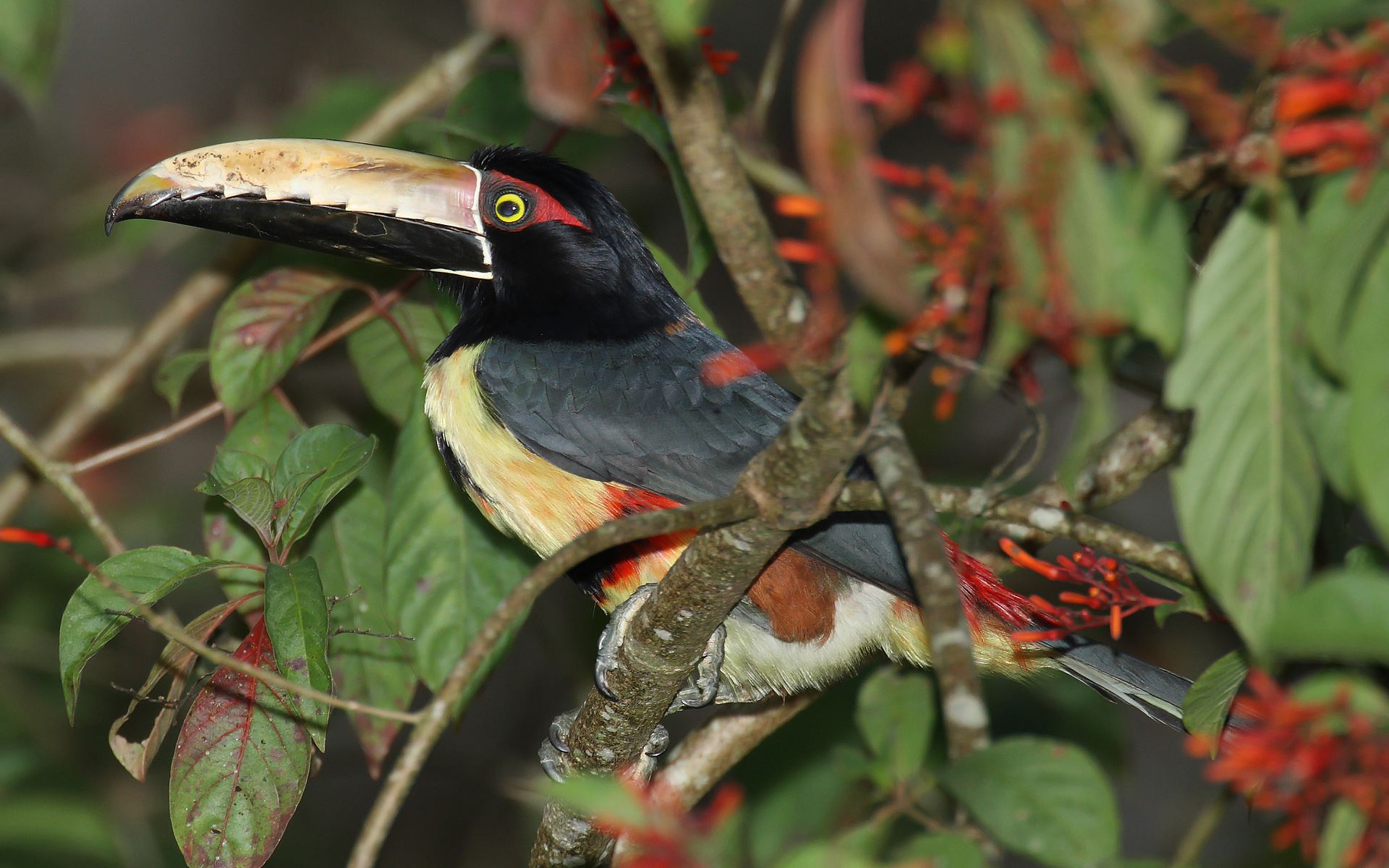
As one moves inland, the landscape transitions into a dense network of tropical rainforests. These forests harbor a myriad of plant and animal species, many of which are found nowhere else on Earth. Some of the notable inhabitants include jaguars, tapirs, monkeys, and over 670 documented bird species, such as the Harpy Eagle, Panama’s national bird, and the endangered Great Green Macaw.
In addition to its abundant wildlife, Darien National Park is also home to indigenous peoples, primarily the Emberá-Wounaan and Guna (Kuna) communities. These groups have lived in harmony with the environment for generations, preserving their traditional ways of life while contributing to the conservation efforts within the park, including its cultural dimension.
The park's importance extends beyond its regional borders. While separate from the Amazon, the Darien is one of the largest remaining intact forest areas in North and South America and is often described the continent's most important "natural lung" outside of the Amazon basin. By protecting vital migratory corridors and providing essential habitat for numerous species, the park helps ensure the continued survival of countless plants and animals across the Americas.
Despite its significance, Darien National Park faces numerous challenges. Illegal logging, mining, and agriculture threaten the park's fragile ecosystems, while climate change poses additional risks to the region's biodiversity. Efforts to protect and conserve this unique World Heritage Site are ongoing, with the hope that future generations will continue to benefit from the incredible wealth of life that Darien National Park represents.
UNESCO Description of the World Heritage Site
Forming a bridge between the two continents of the New World, Darien National Park contains an exceptional variety of habitats – sandy beaches, rocky coasts, mangroves, swamps, and lowland and upland tropical forests containing remarkable wildlife. Two Indian tribes live in the park.
UNESCO Justification of the World Heritage Site
Criterion (vii): The diversity of natural features in the property at the scale of a large and mostly undisturbed landscape is breathtaking. From the Pacific Coast to the highest peak of Darien Province, Darien National Park is one of the most diverse regions in all of Central America with an extraordinary range of landscapes. The main ranges, the Darien Range in the North, Pirre and Setetule in the heart of the property and the Sapo and Jurado Ranges in the South, are of volcanic origin, as illustrated by tuffs and lava. The many beautiful rivers and creeks, in particular the mighty Tuira and Balsas Rivers, are the arteries of the property. Of major importance for wildlife, they also serve as the only access and travel routes for inhabitants, researchers, visitors and park staff throughout most of the property to this day.
Criterion (ix): Biogeographically speaking, the location at the southernmost end of the geologically young land bridge connecting South America and Central America is a rare and scientifically fascinating setting. Darien National Park is within the area of first contact and interchange between two major, previously isolated landmasses, which is reflected in its biodiversity. The property is within the Southern limit of Mesoamerican elements of flora and fauna while also being influenced by elements of South American rainforests, a link between Central and South America all the way to the Amazon. The property contains the most extensive lowland tropical forest on the Pacific coast of Central America, permitting the conservation and continuation of ecological and evolutionary processes at a large scale. The uninterrupted altitudinal transition of different forest types from the coastal lowlands to the mountains allows the migration, of many species, an increasingly rare large-scale setting and interaction between different ecosystems which contributes to resilience in the face of anticipated climate change.
Criterion (x): Hundreds of vertebrates and thousands of invertebrates have been recorded in Darien National Park. With detailed research still scarce, there is an almost certain potential for further discoveries, especially in the poorly known and isolated cloud forests in higher elevations. Among the impressive 169 documented species of mammals are the critically endangered Brown-headed Spider Monkey, the endangered Central American Tapir, the vulnerable Giant Anteater and near-threatened species like Jaguar, Bush Dog and White-lipped Peccary. The many other charismatic species include Puma, Ocelot, Margay and Jaguarundi. The avifauna is particularly rich with 533 recorded species, for instance the endangered Great Green Macaw, the vulnerable Great Curassow and a major population of the near-threatened Harpy Eagle. There is a notable diversity of reptiles and amphibians with 99 and 78 confirmed species, respectively. The probably incomplete inventory of freshwater fish stands at 50. Endemism is considerable across many taxonomic groups of flora and fauna. There are even several endemic tree species among the more than 40 recorded endemic plants. A number of endemic mammals are restricted to the property, for instance the Darien Pocket Gopher and Slaty Slender Mouse Opossum.
Encyclopedia Record: Darién National Park
Darién National Park is a World Heritage Site in Panama. It is about 325 kilometers (202 mi) from Panama City, is the most extensive of all national parks of Panama, and is one of the most important World Heritage Sites in Central America.Additional Site Details
Area: 579,000 hectares
Number of Components: 1
(ix) — Outstanding example representing ecological and biological processes
(x) — Contains most important habitats for biodiversity
Coordinates: 7.736111111 , -77.54722222
IUCN World Heritage Outlook
The 2025 Conservation Outlook on Darién National Park reports the following assessment:
Source: International Union for Conservation of Nature (IUCN) · View assessment
Image
© Mdf, CC BY-SA 3.0 Resized from original. (This derivative is under the same CC BY-SA license.)
World Heritage Research
Discover scientific research and academic studies that deepen our understanding of Darien National Park from its history and significance to its conservation, management, and contemporary challenges.
-
First report of Ricollapallidinends and Rocconota tuberculigera (Hemiptera: Reduviidae: Harpactorinae) predatory Oebalus insularis (Hemiptera: Pentatomidae) in natural reserves of Darien, Panama
A groundbreaking discovery in Darien National Park, Panama, reveals the predatory behavior of two Reduviidae species, Ricolla pallidinervis and Rocconota tuberculigera, targeting Oebalus insularis, a notorious rice pest. This is the first documented instance of these Harpactorinae predators feeding on adult O. insularis within the park's buffer zone. The study underscores the ecological significance of protected areas as natural reservoirs for beneficial species, offering potential biocontrol solutions for agricultural pests. Researchers employed observational methods to document this interaction, highlighting the role of biodiversity in ecosystem services.
Ramírez Silva, J. A., Forero, D., Santos Murgas, A., Osorio, P., & Zachrisson, B. (2022). First report of Ricollapallidinends and Rocconota tuberculigera (Hemiptera: Reduviidae: Harpactorinae) predatory Oebalus insularis (Hemiptera: Pentatomidae) in natural reserves of Darien, Panama. Idesia (Arica), 40(1), 123–128. https://doi.org/10.4067/s0718-34292022000100123
View Publication Record | Read Publication