World Heritage Identification Number: 1121
World Heritage since: 2011
Category: Cultural Heritage
WHE Type: Agriculture Landscapes, Parks & Gardens
Transboundary Heritage: No
Endangered Heritage: No
Country: 🇨🇴 Colombia
Continent: Americas
UNESCO World Region: Latin America and the Caribbean
Map
The Coffee Cultural Landscape of Colombia: A Unique and Sustainable Tradition
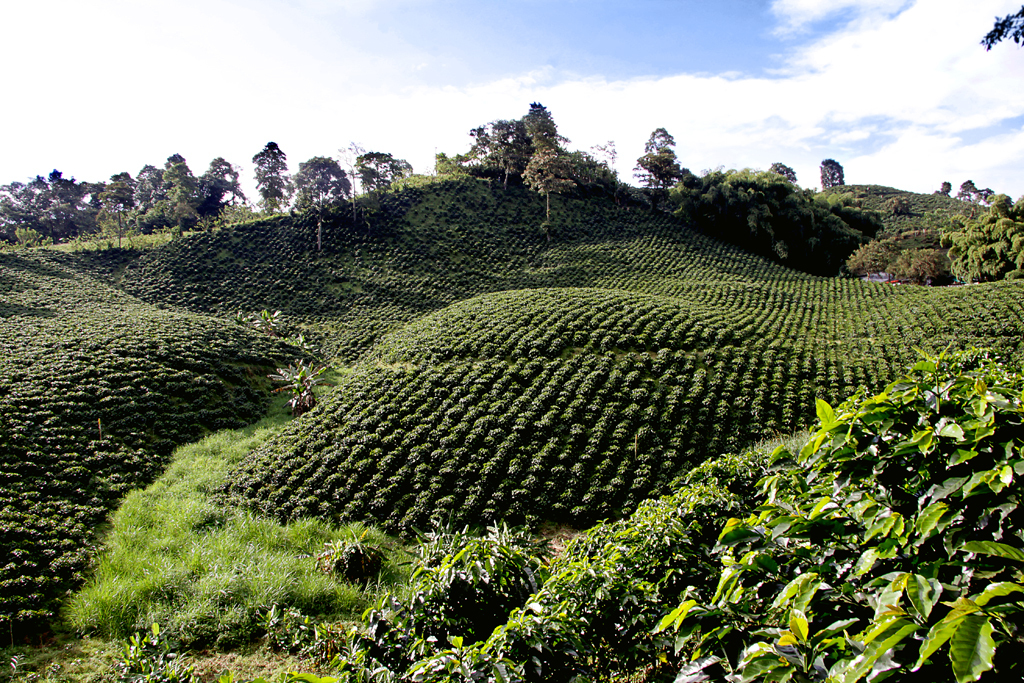
The Coffee Cultural Landscape of Colombia, inscribed as a UNESCO World Heritage Site in 2011, presents an exceptional example of a sustainable and productive cultural landscape. This unique and representative tradition spans across six farming landscapes, which encompass 18 urban centers nestled on the foothills of the western and central ranges of the Cordillera de los Andes in the west of the country.
More to come…UNESCO Description of the World Heritage Site
An exceptional example of a sustainable and productive cultural landscape that is unique and representative of a tradition that is a strong symbol for coffee growing areas worldwide - encompasses six farming landscapes, which include 18 urban centres on the foothills of the western and central ranges of the Cordillera de los Andes in the west of the country. It reflects a centennial tradition of coffee growing in small plots in the high forest and the way farmers have adapted cultivation to difficult mountain conditions. The urban areas, mainly situated on the relatively flat tops of hills above sloping coffee fields, are characterized by the architecture of the Antioquian colonization with Spanish influence. Building materials were, and remain in some areas, cob and pleated cane for the walls with clay tiles for the roofs.
UNESCO Justification of the World Heritage Site
Criterion (v): The CCLC is an outstanding example of continuing land-use, in which the collective effort of several generations of campesino families generated innovative management practices of natural resources in extraordinarily challenging geographical conditions. The strong community focus on coffee production in all aspects of life produced an unparalleled cultural identity, which finds its physical expression in the cultural patterns and materials used for coffee farming as well as the urban settlements.
Criterion (vi): The coffee tradition is the most representative symbol of national culture in Colombia, for which Colombia has gained worldwide recognition. In the CCLC this coffee culture has led to rich tangible and intangible manifestations in the territory, with a unique legacy, included in, but not limited to, the harmonious integration of the productive process in the social organization and housing typology, and communicated though associated local traditions and costumes, such as the sombrero aguadeño – a traditional type of hat – and the raw hide shoulder bag, still used by the coffee producers.
Encyclopedia Record: Colombian coffee growing axis
The Coffee Axis is a geographic, cultural, economic and ecological region of Colombia, located in the departments of Caldas, Risaralda and Quindío, as well as the regions of northwestern Tolima, northern and eastern Valle del Cauca and southwestern Antioquia, including the capital cities of the first four departments mentioned.Additional Site Details
Area: 141,120 hectares
Number of Components: 6
(vi) — Directly associated with events or living traditions
Coordinates: 4.889476 , -75.773082
World Heritage Research
Discover scientific research and academic studies that deepen our understanding of Coffee Cultural Landscape of Colombia from its history and significance to its conservation, management, and contemporary challenges.
-
Spatiotemporal Land Use and Land Cover Changes and Their Impact on Landscape Patterns in the Colombian Coffee Cultural Landscape (2014–2034)
Urban expansion and deforestation are significantly altering the Colombian Coffee Cultural Landscape (CCLC), a UNESCO World Heritage site, with urban areas projected to increase from 1.46% in 2014 to 15.64% by 2034, while forest cover is expected to decline by 77.8%. Concurrently, coffee-growing areas may shrink from 77.91% in 2019 to 68.40% by 2034, leading to heightened landscape fragmentation and spatial heterogeneity. The study employed a hybrid Cellular Automata and Artificial Neural Network (CA-ANN) model, validated with multispectral Landsat 8 and Synthetic Aperture Radar (Sentinel-1) data, achieving high accuracy (Kappa coefficient of 0.84). These findings underscore the urgent need for conservation strategies to mitigate anthropogenic pressures on this culturally significant landscape.
Rojas Celis, A. P., Shen, J., & Martinez Otalora, J. D. (2025). Spatiotemporal Land Use and Land Cover Changes and Their Impact on Landscape Patterns in the Colombian Coffee Cultural Landscape (2014–2034). Land, 14(5), 1045. https://doi.org/10.3390/land14051045
View Publication Record | Read Publication -
Towards participatory governance in the management of cultural heritage ecosystems: The Colombian Coffee Cultural Landscape
Research identifies three distinct visitor and resident segments within Colombia's Coffee Cultural Landscape, each characterized by varying levels of engagement and valuation intensity. These groups' perceptions of government actions significantly influence their participation, underscoring the potential for participatory governance models to enhance sustainability and local economic development in cultural heritage ecosystems. The study innovatively combines latent class modeling with multiple correspondence analysis to classify audience behavior, providing actionable insights for heritage management strategies.
Gómez Zapata, J. D., Del Barrio Tellado, M. J., & Sánchez Martínez, S. A. (2025). Hacia una gobernanza participativa en la gestión de los ecosistemas del patrimonio cultural: el paisaje cultural cafetero colombiano. Cuadernos de Economía, 44(96), 1157–1192. https://doi.org/10.15446/cuad.econ.v44n96.117867
View Publication Record | Read Publication -
Agroecology and local development in coffee communities of the Colombian Coffee Cultural Landscape
Traditional agroecological systems in Colombia's Coffee Cultural Landscape play a pivotal role in environmental conservation, economic development, and community strengthening. This study reveals that integrating agroecology with cultural identity is crucial for the sustainability of this globally recognized site. Researchers employed interviews, focus groups, and participant observation to analyze sociocultural determinants driving local development in southwestern Colombia. Their findings underscore the importance of collaboration among local actors and public policies that support these practices, offering a blueprint for sustainable coffee cultivation and community resilience.
Rueda-Rodríguez, H. F., Perafán-Cabrera, A., & Carvajal-Escobar, Y. (2024). Agroecology and local development in coffee communities of the Colombian Coffee Cultural Landscape. Revista de Ciencias Agrícolas, 41(3), e3246. https://doi.org/10.22267/rcia.20244103.246
View Publication Record | Read Publication -
Planting Futures: Preservation of the Coffee Cultural Landscape of Colombia
The Coffee Cultural Landscape of Colombia (CCLC), recognized by UNESCO for its outstanding universal value, faces significant threats from climate change, market volatility, and socio-economic pressures. This study focuses on developing a design intervention to mitigate these risks while preserving the unique cultural practices and landscape associated with small-scale coffee production in the Quindio Department. The CCLC embodies the innovative agricultural techniques and social capital of the Antioquian farming community, which has thrived despite challenging conditions using vernacular building materials and low mechanization. By addressing these vulnerabilities, the research aims to safeguard this heritage site for future generations, ensuring the continuity of its cultural significance.
Trivino Arenas, K. V. Planting Futures: Preservation of the Coffee Cultural Landscape of Colombia. https://doi.org/10.22215/etd/2024-16050
View Publication Record | Read Publication -
Cultural landscapes in Latin America and the Caribbean
The Coffee Cultural Landscape of Colombia (CCLC) is recognized as a 'relict or fossil landscape' within the UNESCO World Heritage system, symbolizing the enduring memory of slavery in the Americas. This study highlights the CCLC's unique challenges and opportunities for conservation, focusing on four key areas: education to enhance competitiveness and entrepreneurship aligned with CCLC values; promotion of tourism and community-based initiatives; financing for environmental sustainability; and public policy development for housing construction and conservation using traditional techniques. The research underscores the importance of integrating cultural, economic, and environmental strategies to safeguard this significant landscape, offering a model for similar sites in Latin America and the Caribbean.
Silva, C. A. V., Arriola, L. I. G., Savio, I. R., Monsalve, D. M. C., & Laboranti, V. L. (2023). Cultural landscapes in Latin America and the Caribbean. Routledge Handbook of Cultural Landscape Practice, 173–181. https://doi.org/10.4324/9781315203119-19
View Publication Record | Read Publication -
Nature’s Contributions to People Shape Sense of Place in the Coffee Cultural Landscape of Colombia
Farmers' nonmaterial experiences, such as peace, inspiration, and family cohesion, are the most significant drivers of their emotional attachment to Colombia's Coffee Cultural Landscape (CCLC), countering urban migration trends. A study in Pereira revealed that these intangible benefits—rootedness, tranquility, and supportive identities—outweigh tangible factors like agricultural practices or proximity to cities. Using mixed qualitative methods, including interviews and observations, researchers found that inclusive stakeholder engagement is crucial for preserving this sense of place amid rapid urbanization. The findings underscore the need for transparent, equitable mechanisms to empower local communities in safeguarding the CCLC's cultural and ecological heritage.
Murillo-López, B. E., Castro, A. J., & Feijoo-Martínez, A. (2022). Nature’s Contributions to People Shape Sense of Place in the Coffee Cultural Landscape of Colombia. Agriculture, 12(4), 457. https://doi.org/10.3390/agriculture12040457
View Publication Record | Read Publication -
Land cover changes in coffee cultural landscapes of Pereira (Colombia) between 1997 and 2014
Between 1997 and 2014, coffee crops in Pereira, Colombia—a UNESCO-listed cultural landscape—shrunk at a rate of -3.97% annually, largely due to political-economic shifts like the dissolution of key coffee agreements. Meanwhile, urban areas expanded by +4.14%, reflecting broader transformations in agricultural practices and land use. The study used Landsat satellite imagery (1997 and 2014) alongside GIS tools to track these changes, revealing how sociocultural factors, such as smallholder adaptations, contributed to the decline of coffee cultivation while increasing landscape heterogeneity.
Murillo-López, B. E., Feijoo-Martínez, A., & Carvajal, A. F. (2022). Land cover changes in coffee cultural landscapes of Pereira (Colombia) between 1997 and 2014. Cuadernos de Investigación Geográfica, 48(1), 175–196. https://doi.org/10.18172/cig.4908
View Publication Record | Read Publication -
The cultural landscape of coffee in Tolima, Colombia: heritage assessment, sustainability and management
A new management framework for the Tolima Coffee Cultural Landscape (CCLT) in Colombia has been proposed, offering a model that empowers local communities while ensuring heritage protection and sustainability. The study leverages an ethnohistorical approach to highlight the deep sociocultural ties between nature and culture, challenging conventional UNESCO frameworks with a context-specific Latin American perspective. By integrating qualitative and quantitative assessments, this work bridges academic research and policy, providing tools for governance that support economic resilience and cultural preservation. This approach sets a precedent for regional policies aimed at safeguarding intangible heritage while fostering sustainable livelihoods.
Velandia Silva, C. A., & Diab, M. C. (2021). The cultural landscape of coffee in Tolima, Colombia: heritage assessment, sustainability and management. Journal of Cultural Heritage Management and Sustainable Development, 13(2), 351–368. https://doi.org/10.1108/jchmsd-04-2021-0064
View Publication Record | Read Publication -
Accessibility as a Coverage Benefit Analysis Tool That an Airport Can Provide to a Region. Case Study: Colombian Coffee Cultural Landscape
A new airport in Colombia's UNESCO-listed Coffee Cultural Landscape (CCL) offers significant accessibility benefits, reducing travel time by 16% and increasing access to tourist points by 1%. This study introduces a methodology combining geographic location analysis with geostatistical methods to quantify the coverage advantages of airports in heritage regions. By modeling population and tourist equipment reach, researchers demonstrate how infrastructure like Coffee Airport in Palestina, Caldas, can serve as a catalyst for economic development while preserving cultural heritage. The findings underscore the potential of accessibility metrics to guide sustainable regional planning.
ESCOBAR, D. A., CARDONA, S., MONCADA, C. A.,. (2020). ACCESSIBILITY AS A COVERAGE BENEFIT ANALYSIS TOOL THAT AN AIRPORT CAN PROVIDE TO A REGION. CASE STUDY: COLOMBIAN COFFEE CULTURAL LANDSCAPE. GeoJournal of Tourism and Geosites, 31(3), 1092–1102. https://doi.org/10.30892/gtg.31322-545
View Publication Record | Read Publication -
Conditions of Territorial Accessibility Offered by the Network of Sustainable Tourism Routes That Are Part of the Coffee Cultural Landscape - Colombia
Research on the Coffee Cultural Landscape (CCL) of Colombia reveals that there is no direct relationship between sociodemographic and socioeconomic variables and tourism's contribution to the region's GDP. The study assessed territorial accessibility using models based on isochronous curves, which analyze travel time to determine population coverage along sustainable tourism routes within the CCL. Despite the importance of infrastructure in enhancing tourist potential, the findings highlight that tourism plays a minimal role in the economic output of this UNESCO World Heritage Site.
ORJUELA, A., ESCOBAR, D. A., MONCADA, C. A.,. (2020). CONDITIONS OF TERRITORIAL ACCESSIBILITY OFFERED BY THE NETWORK OF SUSTAINABLE TOURISM ROUTES THAT ARE PART OF THE COFFEE CULTURAL LANDSCAPE - COLOMBIA. GeoJournal of Tourism and Geosites, 32(4), 1290–1298. https://doi.org/10.30892/gtg.32415-571
View Publication Record | Read Publication -
Consumption of coffee in the Coffee Cultural Landscape of Colombia (CCLC): the "bad consumer" and the rise of specialty coffee
In the Coffee Cultural Landscape of Colombia (CCLC), local coffee consumption patterns are shifting from traditional, often 'bad' consumer behaviors to a growing preference for specialty coffee. This study, based on three months of anthropological fieldwork in the Eje Cafetero region, reveals how structural changes within the coffee chain—such as the rise of cafés especiales—are influencing these trends. The research highlights both the benefits and limitations of specialty coffee development, offering a nuanced analysis of consumption strategies in a patrimonial context.
Doga, M. (2019). Consumption of coffee in the Coffee Cultural Landscape of Colombia (CCLC): the “bad consumer” and the rise of specialty coffee. Ciencia Nueva. Revista de Historia Y Política, 3(2), 22. https://doi.org/10.22517/25392662.20931
View Publication Record | Read Publication -
From ‘Sustaining heritage’ to ‘Heritage sustaining broader societal wellbeing and benefits’
The Coffee Cultural Landscape of Colombia (CCLC) exemplifies how heritage can sustain broader societal wellbeing and benefits, moving beyond traditional conservation models. This study highlights the site's exceptional status as a living, productive agricultural landscape with robust legal protections, including land use management and denomination of origin instruments. The Management Plan is structured around values that contribute to Outstanding Universal Value, addressing sustainability challenges through a cultural landscape model. Risk-related changes in agricultural land use are mitigated by integrating conservation agriculture into national food security policies, such as CONPES. This approach demonstrates the potential for heritage sites to drive societal benefits while ensuring long-term sustainability.
Thompson, J., & Wijesuriya, G. (2018). From ‘Sustaining heritage’ to ‘Heritage sustaining broader societal wellbeing and benefits’. World Heritage and Sustainable Development, 180–195. https://doi.org/10.4324/9781315108049-15
View Publication Record | Read Publication -
Sustainable development and nature-culture linkages in the Coffee Cultural Landscape of Colombia
The Coffee Cultural Landscape of Colombia (CCLC) exemplifies sustainable agricultural practices and the intricate linkages between nature and culture. This landscape, recognized for its centennial tradition of small-scale coffee production at challenging mountain altitudes, showcases collective work ethics and associative management passed down through generations. These practices have not only ensured continuous land use but also fostered innovative natural resource management strategies, adapting to difficult geographic conditions. The study highlights the resilience and adaptability of this cultural landscape, serving as a model for sustainable development in similar regions.
Londoño, J. L. I., & Silva, C. A. V. (2018). Sustainable development and nature-culture linkages in the Coffee Cultural Landscape of Colombia. World Heritage and Sustainable Development, 226–239. https://doi.org/10.4324/9781315108049-19
View Publication Record | Read Publication -
Modelo de Diseño para la valoración y apropiación social del Patrimonio en El Paisaje Cultural Cafetero Colombiano
A dynamic and eco-efficient design model can significantly enhance the social appropriation of UNESCO-listed heritage sites, fostering economic, social, and environmental sustainability. This study focuses on Colombia's Coffee Cultural Landscape, recognized for its cultural significance. By integrating community participation and effective communication strategies, the proposed model facilitates a deeper connection between inhabitants and visitors with the site's fundamental components, ensuring long-term conservation of its cultural identity and biodiversity. The research employs a holistic approach, combining spatial and temporal dimensions to promote responsible and participative attitudes among stakeholders, thereby safeguarding the landscape's heritage value.
Gómez Alzate, A. (2015). Modelo de Diseño para la valoración y apropiación social del Patrimonio en El Paisaje Cultural Cafetero Colombiano. Kepes, 12(11), 117–138. https://doi.org/10.17151/kepes.2015.12.11.7
View Publication Record | Read Publication