World Heritage Identification Number: 742
World Heritage since: 1995
Category: Cultural Heritage
WHE Type: Historic Cities & Urban Areas
Transboundary Heritage: No
Endangered Heritage: No
Country: 🇨🇴 Colombia
Continent: Americas
UNESCO World Region: Latin America and the Caribbean
Map
Preserving Colonial Charm: The Historic Centre of Santa Cruz de Mompox
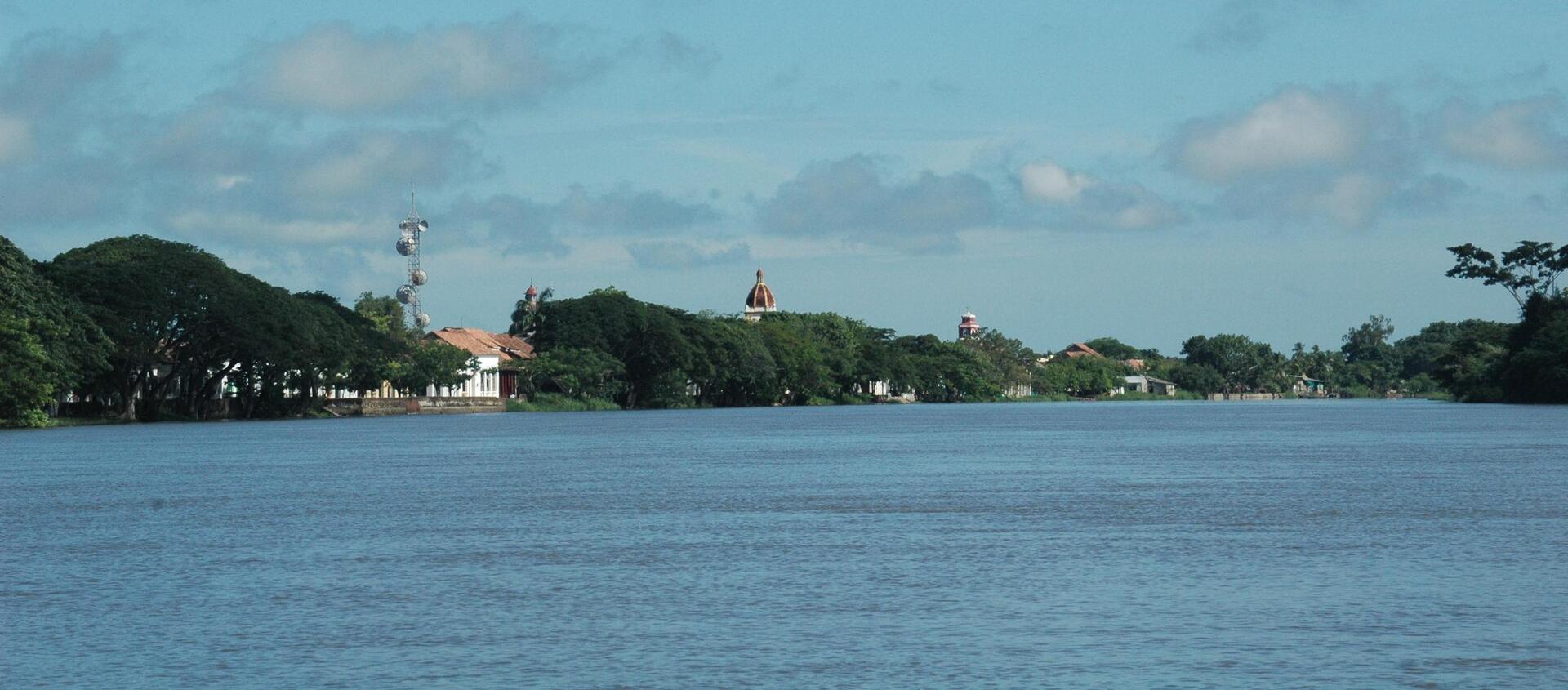
The Historic Centre of Santa Cruz de Mompox, located in the Bolívar Department of northern Colombia, stands as a testament to the rich history and cultural heritage of the region. Established in 1540, this charming town flourished due to its strategic position along the Magdalena River, playing a significant role in the Spanish colonization of northern South America. In 1995, the historic centre was recognized as a UNESCO World Heritage Site, acknowledging its well-preserved colonial architecture and unique blend of architectural styles.
More to come…UNESCO Description of the World Heritage Site
Founded in 1540 on the banks of the River Magdalena, Mompox played a key role in the Spanish colonization of northern South America. From the 16th to the 19th century the city developed parallel to the river, with the main street acting as a dyke. The historic centre has preserved the harmony and unity of the urban landscape. Most of the buildings are still used for their original purposes, providing an exceptional picture of what a Spanish colonial city was like.
UNESCO Justification of the World Heritage Site
Criterion (iv): The Historic Centre of Santa Cruz de Mompox forms an integral part of the processes of colonial penetration and dominion during the Spanish conquest and the growth of communications and commerce during the 17th to early 19th centuries.
Criterion (v): The special circumstances of the development of the town, which grew freely and longitudinally following the sinuous path of a road roughly parallel to the river, have given it a special quality with few parallels in the region of northern South America. The subsequent economic decline and the remarkable state of preservation that resulted confers a further dimension on this quality, making it the region’s most outstanding surviving example of this type of riverine urban settlement.
Encyclopedia Record: Santa Cruz de Mompox
Mompox, officially Santa Cruz de Mompós, is a town and municipality in northern Colombia, in the Bolívar Department. The town initially grew from its proximity to the Magdalena River and has preserved much of its colonial character. It also played an important role in the independence of America from Spain. Today, Mompox depends upon tourism, fishing, and some commerce generated by the local cattle raising. The municipality has a population of 46,408 and is adjacent to the municipalities of Pinillos and San Fernando. The historic center of Mompox was made a UNESCO World Heritage Site in 1995, owing to its preserved colonial architecture and mixture of architectural styles.Additional Site Details
Area: 54.05 hectares
Number of Components: 1
(v) — Outstanding example of traditional human settlement
Coordinates: 9.240492 , -74.423084
World Heritage Research
Discover scientific research and academic studies that deepen our understanding of Historic Centre of Santa Cruz de Mompox from its history and significance to its conservation, management, and contemporary challenges.
-
Tourism Value Chain Integration in a Fluvial Destination System: A Multi-Criteria Analysis of a Corridor in Colombia
A spatially continuous but functionally uneven tourism value chain characterizes the Cartagena de Indias–Santa Cruz de Mompox river corridor, with central nodes like Cartagena and Mompox showing stronger integration of attractions and services. Intermediate municipalities, however, remain underdeveloped due to limited promotion and training. While infrastructure and basic services are well-assessed, governance coordination and marketing are critically deficient. The study highlights high potential for heritage and nature tourism but identifies the need for gradual institutional development in eco-innovation and well-being. Using a multi-criteria analysis framework—combining territorial mapping, prioritization matrices, and attraction-based value chain assessment—the research provides a replicable model to strengthen sustainable tourism in fluvial corridors.
Chams-Anturi, O., Paipa-Sanabria, E., & Escorcia-Caballero, J. P. (2026). Tourism Value Chain Integration in a Fluvial Destination System: A Multi-Criteria Analysis of a Corridor in Colombia. Sustainability, 18(6), 2676. https://doi.org/10.3390/su18062676
View Publication Record | Read Publication -
Analysis of the Tourism Value Chain in Colombia: Challenges and Opportunities for Sustainable Development
A promising outlook for sustainable tourism development emerges from the analysis of Colombia's Cartagena de Indias-Santa Cruz de Mompox tourist route, which combines colonial charm, biodiversity, and cultural traditions. The study reveals that while infrastructure and essential services are well-developed, significant gaps exist in destination promotion and local resident training, limiting the region's ability to deliver high-quality experiences. Leveraging digital tools like mobile applications and augmented reality could modernize visitor experiences and attract tech-savvy travelers. The research utilized an exploratory and descriptive methodology, including documentary analysis, surveys with key stakeholders, and digital mapping, employing a 'Scoring' multicriteria decision-making method to evaluate factors such as infrastructure, accessibility, promotion, population density, and visitor volume. The findings highlight the potential for integrating community-based tourism initiatives, strengthening marketing strategies, and investing in infrastructure that caters to emerging global trends like regenerative tourism, positioning the route as a model of sustainable tourism development in Colombia.
Chams-Anturi, O., & Paipa-Sanabria, E. (2025). Analysis of the Tourism Value Chain in Colombia: Challenges and Opportunities for Sustainable Development. Proceedings of the International Conference on Industrial Engineering and Operations Management. https://doi.org/10.46254/an15.20250217
View Publication Record | Read Publication -
La vivienda rural productiva un tesoro entre el agua y la tierra
A significant portion of the corregimiento Los Piñones, located near the ciénaga El Uvero in Santa Cruz de Mompox, Colombia, faces chronic flooding and limited connectivity, which severely impacts its primary economic activities—fishing and agriculture. Despite these challenges, the study identifies a critical gap: while two elements (technology and mobility) are addressed in the local development plan (PBOT 2035), no structured proposals exist to improve living conditions or address the high deficit in infrastructure and housing quality. The research proposes a sustainable model for rural productive housing, tailored to local climate conditions, which could enhance economic resilience and quality of life for the population—comprising stable residents (children, women aged 25-50, and adults over 60) and transient male laborers. The study employs a multi-dimensional framework analyzing ecosystem, social fabric, permaculture, and identity to inform its recommendations.
Ayala Suárez, S. C. (2025). La vivienda rural productiva un tesoro entre el agua y la tierra [Pontificia Universidad Javeriana]. https://doi.org/10.60794/AGR7-9W54
View Publication Record | Read Publication -
La documentación digital del centro histórico de Santa Cruz de Mompox, declarado Patrimonio de la Humanidad por la UNESCO
A groundbreaking integration of SLAM (Simultaneous Localization and Mapping) technology with UAVs (Unmanned Aerial Vehicles) has revolutionized the documentation process for UNESCO World Heritage Sites, demonstrated through a case study in Santa Cruz de Mompox, Colombia. This innovative approach significantly accelerates data acquisition, enabling rapid, detailed topographic surveys even in complex urban landscapes. The experiment showcases how modern digital tools can streamline heritage documentation while preserving historical accuracy, offering a scalable model for future conservation efforts worldwide.
Dell’Amico, A., & La Placa, S. (2024). La documentación digital del centro histórico de Santa Cruz de Mompox, declarado Patrimonio de la Humanidad por la UNESCO. Mimesis.Jasd, 4(4), 41–48. https://doi.org/10.56205/mim.4-4.5
View Publication Record | Read Publication -
La conservación del patrimonio arquitectónico a partir del tipo. El caso de Santa Cruz de Mompox
Strict regulatory frameworks are essential to preserve the architectural heritage of UNESCO World Heritage Sites, as demonstrated by a study on Santa Cruz de Mompox. The research reveals that while initial recommendations were made in 1970 and formal regulations adopted in 1994, the implementation of a comprehensive management plan in 2010 was crucial to prevent significant alterations that could erode the site's unique architectural identity. The study analyzes these norms, particularly those governing expansions in surface area or height, which, if not carefully controlled, risk altering the very characteristics that define Mompox as a World Heritage Site. By focusing on typological analysis of buildings, the research underscores how even well-intentioned interventions can lead to irreversible loss of cultural and architectural values.
Chirivella Espuig, C. S. (2020). La conservación del patrimonio arquitectónico a partir del tipo. El caso de Santa Cruz de Mompox. Apuntes. Revista de Estudios Sobre Patrimonio Cultural, 32(2). https://doi.org/10.11144/javeriana.apc32-2.cpat
View Publication Record | Read Publication -
Mompox, Bolívar sustentable y sostenible en el tiempo
Santa Cruz de Mompox, a UNESCO World Heritage Site in Colombia's Bolívar department, is positioned as a rapidly growing tourist destination with significant socio-economic and intercultural impacts. This study proposes a strategic tourism plan to ensure its sustainable development over time, addressing the dynamic and flexible nature of tourism planning. The research employs a quantitative, descriptive approach with a non-experimental, transversal design, focusing on the site's potential to foster global social and economic integration through tourism. By analyzing Mompox's unique cultural and historical attributes, this work aims to provide actionable insights for balancing growth with preservation, ensuring long-term sustainability.
Alvarado Trespalacios, Y. B., & Rodero Acosta, A. L. (2020). Mompox, Bolívar sustentable y sostenible en el tiempo. Turismo Y Sociedad, 28, 39–56. https://doi.org/10.18601/01207555.n28.02
View Publication Record | Read Publication -
Trashumancia y dinámicas socioculturales Sabanas de Magangué y planicie inundable de Santa Cruz de Mompox, Región Caribe Colombiana
Transhumance, a traditional practice of moving livestock between wet and dry seasons, remains economically viable and sustainable in the Sabanas de Magangué and the floodplain of Santa Cruz de Mompox, Colombia. This study reveals that while practiced primarily by large and medium-scale ranchers, it relies on communal lands with low productivity, reflecting broader global patterns of marginalized geographical and social conditions. The research, based on semi-structured interviews with 85 actors involved in transhumance, highlights the formation of a micro-regional society characterized by transient, monetized economies tied to mobility. Three distinct worker groups—sabaneros, ríanos, and playoneros—have developed a unique culture and solidarity, sharing resources despite significant state absence. The findings underscore the resilience of this practice, despite its reliance on shared assets and limited institutional support.
Botero Arango, L. M. Trashumancia y dinámicas socioculturales Sabanas de Magangué y planicie inundable de Santa Cruz de Mompox, Región Caribe Colombiana. https://doi.org/10.11144/javeriana.10554.1001
View Publication Record | Read Publication