World Heritage Identification Number: 1676
World Heritage since: 2024
Category: Cultural Heritage
WHE Type: Memorial Sites
Transboundary Heritage: No
Endangered Heritage: No
Country: 🇿🇦 South Africa
Continent: Africa
UNESCO World Region: Africa
Map
Exploring the Legacy of Nelson Mandela: A Journey through South Africa's Human Rights, Liberation, and Reconciliation Sites
The designation of "Human Rights, Liberation and Reconciliation: Nelson Mandela Legacy Sites" by UNESCO in 2024 serves as a testament to the profound impact and enduring legacy of one of the most influential figures in modern history, Nelson Mandela. This serial property, consisting of fourteen components scattered across South Africa, offers a unique opportunity to delve into the rich tapestry of South Africa’s political history in the 20th century.
The Union Buildings in Pretoria, now the official seat of government, stand as a symbol of the transition from apartheid to democracy. Mandela was sworn in as the first Black president of South Africa within these hallowed walls, marking a turning point in the nation's history.
Another poignant site is the Sharpeville Sites, which commemorate the tragic massacre of 69 people who were peacefully protesting the unjust Pass Laws in 1960. This event galvanized the anti-apartheid movement and led to increased international pressure on the South African government.
Moving beyond the urban landscape, The Great Place at Mqhekezweni holds great significance. This site, where Mandela lived as a young man, embodies the traditional leadership that played a crucial role in shaping his worldview.
The philosophies of non-racialism, Pan-Africanism, and ubuntu, deeply rooted in this location, continue to resonate in contemporary South African society. The term ubuntu refers to a Southern African philosophy of togetherness, emphasizing interconnectedness, shared humanity, and communal responsibility.
Other vital components include the University of Fort Hare, where he was educated and later expelled for activism, and Liliesleaf Farm, the secret underground headquarters of the liberation movement. Sites like Ohlange in KwaZulu-Natal, where Mandela voted in 1994, and Waaihoek Wesleyan Church in Free State, where the ANC was founded in 1912, offer further insight into the broader struggle for freedom and democracy.
While Robben Island and the Mandela House Museum in Soweto are iconic landmarks of Mandela's life, they are not included in this 2024 serial property. Instead, this listing focuses on a broader range of sites, such as Walter Sisulu Square, where the Freedom Charter was adopted, and Constitution Hill, which highlight the collective resilience and the triumph of human rights.
It is important to know that Robben Island, where Mandela was incarcerated for 18 years, is a separate World Heritage Site inscribed in 1999.
The "Human Rights, Liberation and Reconciliation: Nelson Mandela Legacy Sites" serve as a powerful reminder of the past, a celebration of resilience, and a call to action for continued progress towards a more equitable and just society. By visiting these sites, one can gain a deeper understanding of Mandela's vision for a multiracial democracy and the enduring legacy of his work in promoting understanding, forgiveness, and reconciliation.
UNESCO Description of the World Heritage Site
The serial property represents the legacy of the South African struggle for human rights, liberation and reconciliation. It consists of fourteen component parts located around the country, all related to South Africa’s political history in the 20th century. The parts include the Union Buildings (Pretoria), now the official seat of government; the Sharpeville Sites, commemorating the massacre of 69 people protesting the unjust Pass Laws; and The Great Place at Mqhekezweni, a site symbolic of traditional leadership where Nelson Mandela lived as a young man. These places reflect key events linked to the long struggle against the apartheid state; Mandela’s influence in promoting understanding and forgiveness; and belief systems based on philosophies of non-racialism, Pan-Africanism and ubuntu, a concept that implies humanity is not solely embedded in an individual.
UNESCO Justification of the World Heritage Site
Criterion (vi): The component parts of the serial property are places of memory that are directly and tangibly associated with events and ideas of outstanding universal significance. The South African struggle against apartheid was the longest sustained struggle in modern times and involved the global community. What characterised the struggle most strongly, and what sets it apart from others, are the ideals that underpinned its activities – human rights, liberation and reconciliation, the principles of ubuntu – and how these came to be so strongly espoused through the leadership and influence of Nelson Mandela. The fourteen component parts directly and tangibly reflect the struggle and its underlying ideals and commemorate and anchor collective memories that bear powerful testimony to human rights based on the shared values of dignity, fairness, equality, respect and independence.
Encyclopedia Record: Nelson Mandela
Nelson Rolihlahla Mandela was a South African anti-apartheid activist, statesman, and revolutionary who was the first president of South Africa from 1994 to 1999. He was the country's first Black head of state and the first elected in a fully representative democratic election. His administration focused on dismantling the legacy of apartheid by fostering racial reconciliation, a national peace accord and eventual multiracial democracy. Ideologically an African nationalist and socialist, he served as the president of the African National Congress (ANC) party from 1991 to 1997.Additional Site Details
Area: 42.04 hectares
Number of Components: 14
Coordinates: -25.7406916667 , 28.2117916667
Image
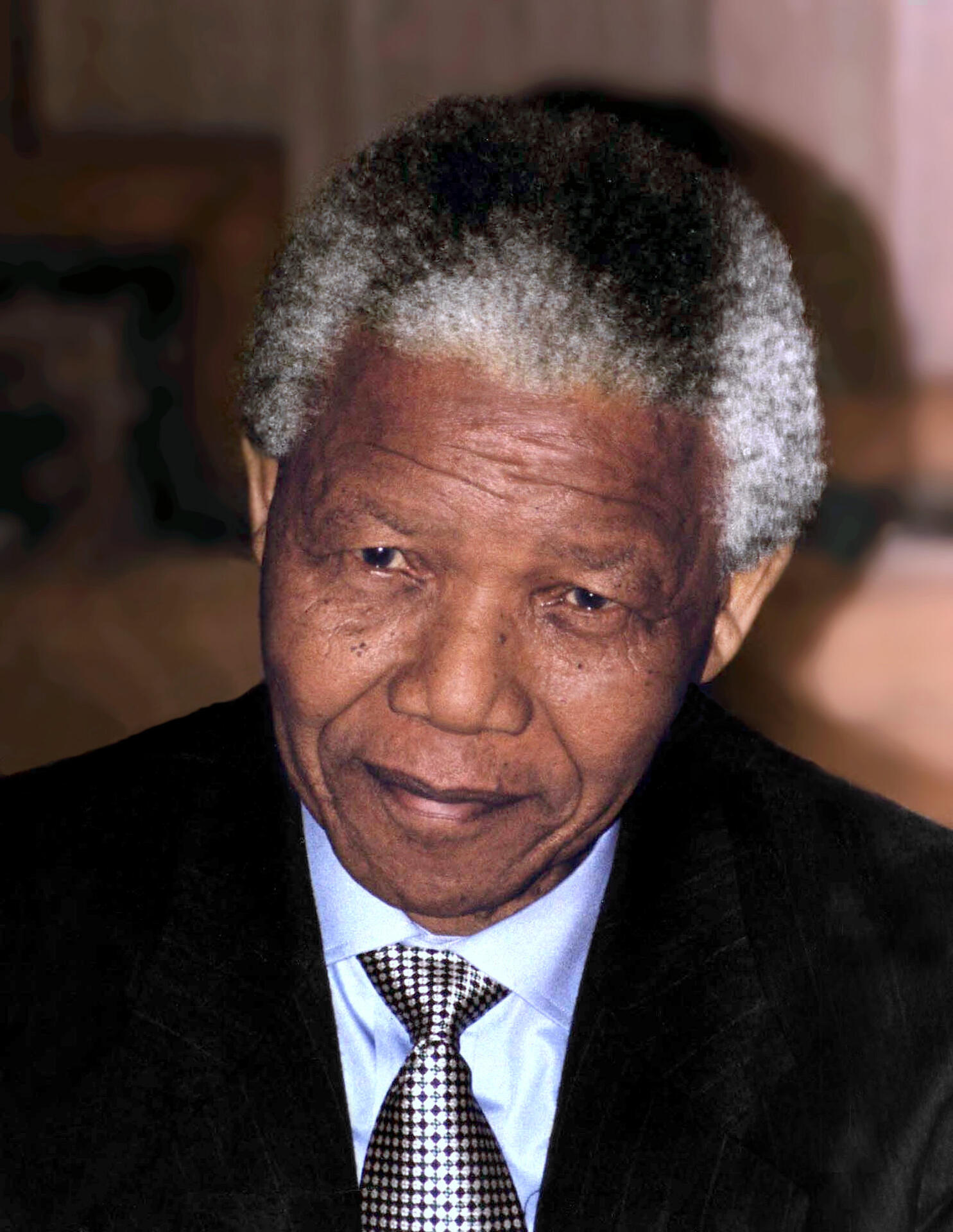
© Kingkongphoto & www.celebrity-photos.com from Laurel, CC BY-SA 2.0 Resized from original. (This derivative is under the same CC BY-SA license.)
World Heritage Research
Discover scientific research and academic studies that deepen our understanding of Human Rights, Liberation and Reconciliation: Nelson Mandela Legacy Sites from its history and significance to its conservation, management, and contemporary challenges.
-
Named after Nelson: Tracing the threads of graphic heritage in Gauteng, South Africa
An in-depth analysis of graphic heritage reveals profound layers of storytelling linked to place names and emotional connections, offering new insights into the legacy of Nelson Mandela. The study, conducted in collaboration with the Nelson Mandela Foundation, examines six sites named after Mandela in Gauteng, South Africa, using a constructionist perspective to explore how meanings are constructed through individual interpretations. Employing photographic documentation inspired by Zeisel's 'Design by Inquiry' framework, the research traces the dynamic interplay between graphic heritage, toponymy, and topophilia, enriching our understanding of Mandela's influence and its historical contexts.
Burger, Y., Harland, R., & McKenzie, C. (2024). Named after Nelson: Tracing the threads of graphic heritage in Gauteng, South Africa. Image & Text, (38), 1–26. https://doi.org/10.17159/2617-3255/2024/n38a7
View Publication Record | Read Publication -
Naomi Roux. Remaking the Urban: Heritage and Transformation in Nelson Mandela Bay.
Naomi Roux's 'Remaking the Urban: Heritage and Transformation in Nelson Mandela Bay' offers a critical examination of memory-making processes in urban landscapes, particularly in the Eastern Cape region. The study highlights how both government and community-driven initiatives shape public memory, focusing on four key sites: the Red Location Museum, the South End Museum, and urban public arts projects initiated by the Mandela Bay Development Agency (MBDA). Roux's work diverges from previous scholarship by integrating architectural design and personal archives to analyze urban spaces as records of the past and sites of struggle over legacy. This approach reveals the complexities and tensions inherent in heritage preservation and urban transformation, providing a nuanced understanding of how memory is constructed and contested in post-apartheid South Africa.
Thumbran, J. (2022). Naomi Roux. Remaking the Urban: Heritage and Transformation in Nelson Mandela Bay. The American Historical Review, 127(4), 2044–2045. https://doi.org/10.1093/ahr/rhac370
View Publication Record | Read Publication -
Memorialising Madiba in South Africa
Public spaces named after Nelson Mandela vary significantly in their representation of his legacy, with some providing rich insights into his values and others offering minimal information. This study introduces 'graphic heritage' as a critical tool to analyze material representations in these places, revealing stark contrasts between two urban sites: Nelson Mandela Square in Sandton, Johannesburg, and Nelson Mandela Park in Mamelodi, Pretoria. Using Zeisel's design inquiry method—comprising annotated diagrams, observations of physical traces, and photo-documentation—the research demonstrates that the process of place naming not only shapes our understanding of a person but also influences our experience and perception of the space itself. The findings highlight differing levels of access, motivations behind the naming acts, and visual-aesthetic considerations, underscoring the role of graphic heritage in both empirical research and critical inquiry.
Harland, R. G., Burger, Y., Barnes, A., & Burger, E. A. (2022). Memorialising Madiba in South Africa. The Journal of Public Space, 7(1), 17–36. https://doi.org/10.32891/jps.v7i1.1571
View Publication Record | Read Publication