World Heritage Identification Number: 1509
World Heritage since: 2016
Category: Natural Heritage
WHE Type: Protected Areas & National Parks
Transboundary Heritage: No
Endangered Heritage: No
Country: 🇨🇳 China
Continent: Asia
UNESCO World Region: Asia and the Pacific
Map
Hubei Shennongjia: A Biodiverse Haven in Central China
Hubei Shennongjia, located in the northwest region of Hubei Province, is a significant World Heritage Site that stands out due to its rich biodiversity and historical significance in botanical research. Inscribed as a UNESCO World Heritage Site in 2016, it spans across two main components: Shennongding/Badong to the west and Laojunshan to the east.
More to come…UNESCO Description of the World Heritage Site
Located in Hubei Province, in central-eastern China, the site consists of two components: Shennongding/Badong to the west and Laojunshan to the east. It protects the largest primary forests remaining in Central China and provides habitat for many rare animal species, such as the Chinese Giant Salamander, the Golden or Sichuan Snub-nosed Monkey, the Clouded Leopard, Common Leopard and the Asian Black Bear. Hubei Shennongjia is one of three centres of biodiversity in China. The site features prominently in the history of botanical research and was the object of international plant collecting expeditions in the 19th and 20th centuries.
UNESCO Justification of the World Heritage Site
Criterion (ix): Hubei Shennongjia protects the largest primary forests in Central China and is one of three centres of endemic plant species in China. The property includes 11 types of vegetation and an intact altitudinal vegetation spectrum across six gradients including evergreen broad-leaved forest, mixed evergreen and deciduous broad-leaved forest, deciduous broad-leaved forest, mixed coniferous and broad-leaved forest, coniferous forest, and bush/meadow. With 874 species of deciduous woody plants, belonging to 260 genera, the tree species and genus richness of the site is unparalleled for a deciduous broadleaf forest type worldwide and within the Northern Hemisphere’s evergreen and deciduous broad-leaved mixed forests, Hubei Shennongjia contains the most complete altitudinal natural belts in the world. Hubei Shennongjia is situated in the Daba Mountains Evergreen Forests ecoregion and also within a priority ecoregion, the Southwest China Temperate Forest both of which are not yet represented on the World Heritage List. It also protects the Shennongjia regional centre of plant diversity which has been identified as a gap on the World Heritage List. In association with its floral diversity the property protects critical ecosystems for numerous rare and endangered animal species.
Criterion (x): Hubei Shennongjia’s unique terrain and climate has been relatively little affected by glaciation and thus creates a haven for numerous rare, endangered and endemic species, as well as many of the world’s deciduous woody species. The property exhibits high levels of species richness, especially among vascular plants, and remarkably contains more than 63% of the temperate genera found across all of China, a megabiodiverse country with the world’s greatest diversity of temperate plant genera. The property includes 12.9% of the country’s vascular plant species. The mountainous terrain also contains critical habitat for a range of flagship animal species. 1,550 Golden or Sichuan Snub nosed Monkeys are recorded in the property. The Golden Snub-nosed Monkeys in Shennongjia are the most endangered of the 3 sub-species in China and are entirely restricted to the property. Other important species include Clouded Leopard, Common Leopard, Asian Golden Cat, Dhole, Asian Black Bear, Indian Civet, Musk Deer, Chinese Goral, Chinese Serow, Golden Eagle, Reeve’s Pheasant and the world’s largest amphibian the Chinese Giant Salamander. The property has extremely rich biodiversity, contains a large number of type species, and hosts numerous rare species which have been introduced into horticulture worldwide. Internationally, Shennongjia holds a special place for the study of plant systematics and horticultural science.
Encyclopedia Record: Shennongjia
Shennongjia Forestry District is a county-level administrative unit in northwestern Hubei province, People's Republic of China, directly subordinated to the provincial government. It occupies 3,253 square kilometres (1,256 sq mi) in western Hubei, and, as of 2007 had the resident population estimated at 74,000. On July 17, 2016, Hubei Shennongjia was listed as a World Heritage Site, the 50th World Heritage Site in China, because of its exceptional floral and faunal biodiversity and its protection of many rare, endangered, and endemic species.Additional Site Details
Area: 79,624 hectares
Number of Components: 2
(x) — Contains most important habitats for biodiversity
Coordinates: 31.4697222222 , 110.2077777778
IUCN World Heritage Outlook
The 2025 Conservation Outlook on Hubei Shennongjia reports the following assessment:
Source: International Union for Conservation of Nature (IUCN) · View assessment
Image
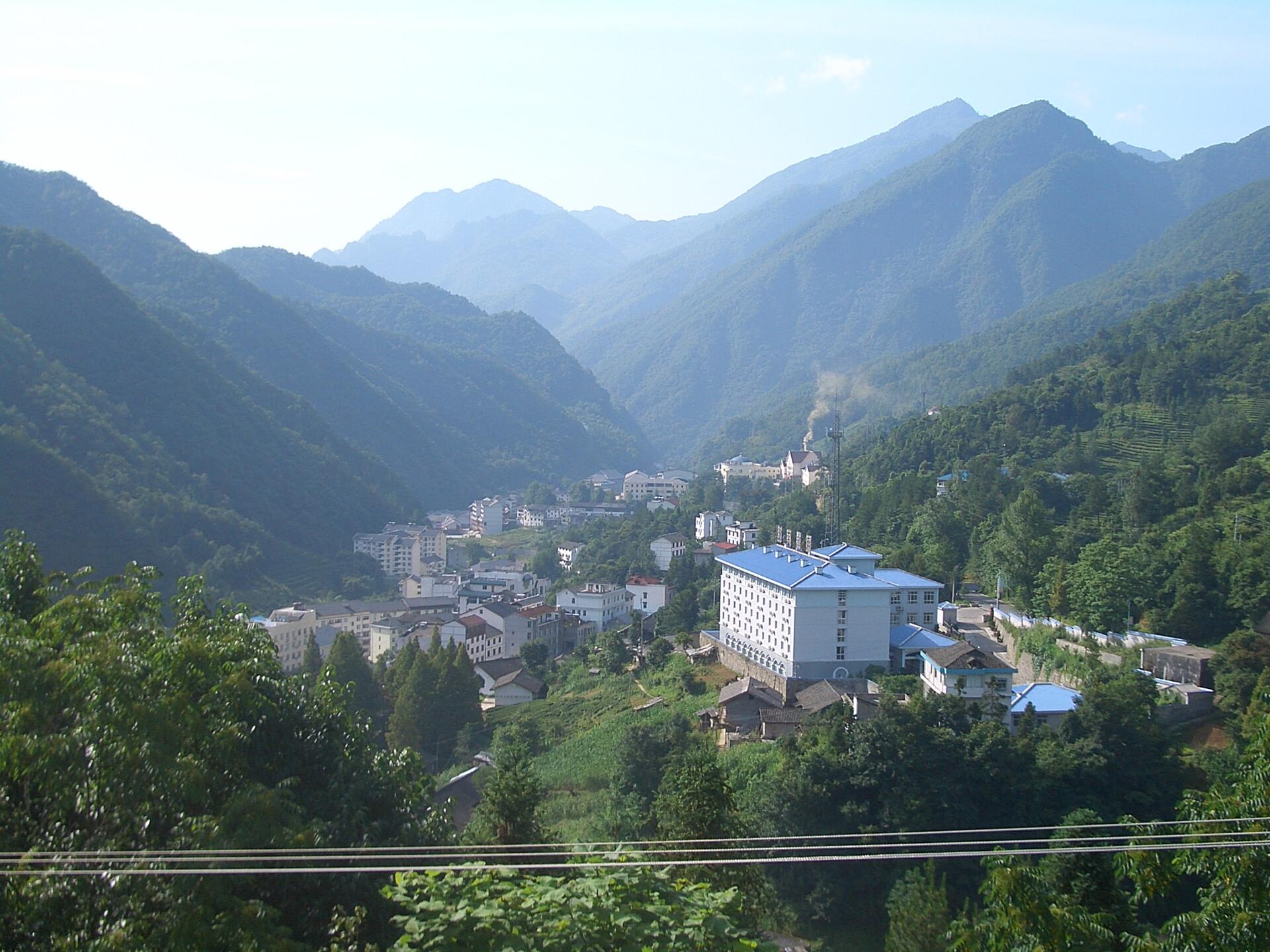
© User:Vmenkov, CC BY-SA 3.0 Resized from original. (This derivative is under the same CC BY-SA license.)
World Heritage Research
Discover scientific research and academic studies that deepen our understanding of Hubei Shennongjia from its history and significance to its conservation, management, and contemporary challenges.
-
A New Species of Rhopalopsole (Plecoptera, Leuctridae) From Hubei Province, China, Based on Morphological and Molecular Data
Researchers have identified a new species of stonefly, Rhopalopsole shennongjia, from the Shennongjia Forestry District in Hubei Province, China. This discovery was achieved by integrating morphological and molecular data, including genetic distance analysis using the COI gene to confirm species boundaries. The study also provides a comprehensive summary of the Leuctridae family in Hubei, including color plates for Rhopalopsole shaanxiensis, a previously unrecorded species in the region. Additionally, it offers an identification key for Rhopalopsole species found in Hubei, contributing significantly to the taxonomic understanding of this area's biodiversity.
Yang, X., & Du, Y.-Z. (2025). A New Species of Rhopalopsole (Plecoptera, Leuctridae) From Hubei Province, China, Based on Morphological and Molecular Data. Psyche: A Journal of Entomology, 2025(1). Portico. https://doi.org/10.1155/psyc/9910259
View Publication Record | Read Publication -
Spatial and Temporal Differentiation of Carbon Emission Efficiency and the Impact of Green Technology Innovation in Hubei Province
Hubei Province's carbon emission efficiency has shown significant spatial and temporal differentiation, with a rapid increase after initial fluctuations. The study found that green technological innovation positively correlates with improved carbon emission efficiency, while economic expansion and population density also show positive relationships, whereas industrial structure and government environmental regulations negatively impact efficiency. Notably, the Wuhan metropolitan area and the Xiang-yang-Shiyan-Suizhou-Shennongjia urban region exhibit distinct differences, while the Yichang-Jingzhou-Jing-Enshi urban agglomeration shows a narrowing trend in differentiation. The research also highlights a temporal lag between green technological innovation and its impact on carbon emission efficiency, with capital investment and technical achievements currently enhancing efficiency, while human capital has a positive effect during a second lag period.
Duan, S., Shang, B., Nie, Y., Wang, J., Li, M., & Yu, J. (2025). Spatial and Temporal Differentiation of Carbon Emission Efficiency and the Impact of Green Technology Innovation in Hubei Province. Sustainability, 17(8), 3613. https://doi.org/10.3390/su17083613
View Publication Record | Read Publication -
Fine-Scale Variations and Driving Factors of GPP Derived from Multi-Source Data Fusion in the Mountainous Region of Northwestern Hubei
A 20-year analysis of gross primary productivity (GPP) in northwestern Hubei, China, reveals significant fine-scale variations linked to elevation and climate. GPP increases with altitude, showing a pronounced upward trend in mountainous regions like Shennongjia, while low-elevation areas exhibit a decline. The study, leveraging multi-source remote sensing data fused at 30 m resolution, highlights that seasonal climate factors—particularly temperature and precipitation—strongly influence GPP, with their impacts varying by elevation and month. Temperature effects remain stable across altitudes, whereas precipitation correlations weaken with increasing elevation, reflecting diverse climatic responses. This research underscores the critical role of high-resolution spatiotemporal data in understanding carbon fixation dynamics in complex mountainous landscapes.
Bai, D., Wang, Y., Ma, Y., Li, H., & Guan, X. (2025). Fine-Scale Variations and Driving Factors of GPP Derived from Multi-Source Data Fusion in the Mountainous Region of Northwestern Hubei. Remote Sensing, 17(13), 2186. https://doi.org/10.3390/rs17132186
View Publication Record | Read Publication -
Spatiotemporal distribution and detection of spatial clusters of tuberculosis in Hubei Province, China using FleXScan (2017–2023)
A study analyzing tuberculosis (TB) distribution in Hubei Province, China, from 2017 to 2023, reveals significant spatiotemporal clustering of cases. Using the FleXScan method and GIS spatial analysis, researchers identified persistent high-risk clusters primarily in western and southwestern regions, including Enshi Prefecture and Shennongjia Forestry District. These areas maintained an average annual incidence of over 110 per 100,000 population with no significant decline, contrasting with the province's overall reduction from 68.28 to 54.54 per 100,000. The findings underscore the need for targeted TB prevention strategies that account for regional economic, geographical, and healthcare disparities.
Wang, L., Li, Y., Chen, J., Zhang, D., Zhang, Z., & Li, X. (2025). Spatiotemporal distribution and detection of spatial clusters of tuberculosis in Hubei Province, China using FleXScan (2017–2023). BMC Public Health, 25(1). https://doi.org/10.1186/s12889-025-23620-4
View Publication Record | Read Publication -
High yeast diversity in primeval forest of Shennongjia, including 21 new species characterized by morphological, phylogenetic, and genomic analyses
A groundbreaking study reveals Shennongjia, a UNESCO World Heritage Site in China's Hubei Province, as a hotspot for yeast diversity. Researchers identified 161 yeast species from 4,451 isolates, including 21 newly discovered species and 43 new taxonomic combinations. This discovery significantly expands the global record of yeast biodiversity, highlighting Shennongjia's unique ecological significance. The study employed enrichment cultures at varying temperatures to isolate primarily ascomycetous yeasts, followed by morphological, phylogenetic, and genomic analyses. These findings underscore the region's rich microbial diversity and its importance for further conservation efforts.
Qiu, Y., Zhu, H., Zhu, Q., Yang, L., Mao, Y., Wen, Z., Chen, S., Qiu, J., Bai, F., & Han, P. (2025). High yeast diversity in primeval forest of Shennongjia, including 21 new species characterized by morphological, phylogenetic, and genomic analyses. Mycosphere, 16(1), 4723–4782. https://doi.org/10.5943/mycosphere/16/1/35
View Publication Record | Read Publication -
Primula weiliei (Primulaceae), a new species from Hubei, Central China
Researchers have identified and described Primula weiliei, a new species of Primula from the Shennongjia Forestry District in Hubei Province, Central China. This discovery belongs to the section Aleuritia and is characterized by its dwarf, hairless habit, long petiole, fruits longer than calyx, and farina-covered scape. While it shares similarities with P. gemmifera and P. munroi subsp. yargongensis, Primula weiliei distinguishes itself through smaller calyxes, homostylous flowers, a corolla tube throat lacking annular appendage, and inflorescences with only 1–2 flowers. Based on IUCN Red List criteria, the species is classified as Critically Endangered (CR), highlighting its urgent conservation status.
Yang, L.-S., Wu, Z.-K., Liang, H.-W., Zhang, M.-H., Zhang, X.-C., Peng, S., & Hu, G.-W. (2024). Primula weiliei (Primulaceae), a new species from Hubei, Central China. PhytoKeys, 242, 1–8. https://doi.org/10.3897/phytokeys.242.119351
View Publication Record | Read Publication -
One new species of Pseudopoda Jäger, 2000 from Shennongjia, Central China (Araneae, Sparassidae)
Researchers have identified and described a new species of spider, Pseudopoda guanmenshan, from the Shennongjia National Nature Reserve in Hubei Province, China. This discovery adds to the rich biodiversity of the region and contributes to the understanding of the genus Pseudopoda, which is currently the largest in the family Sparassidae. The study involved a spider survey conducted in October 2023, followed by morphological comparison and detailed description of the new species. The paper provides photographs and a distribution map, offering valuable insights into the taxonomy and distribution of spiders in this UNESCO World Heritage Site.
Wen, L., Li, C., & Zhong, Y. (2024). One new species of Pseudopoda Jäger, 2000 from Shennongjia, Central China (Araneae, Sparassidae). Biodiversity Data Journal, 12. https://doi.org/10.3897/bdj.12.e130445
View Publication Record | Read Publication