World Heritage Identification Number: 705
World Heritage since: 1994
Category: Cultural Heritage
WHE Type: Archaeological Sites
Transboundary Heritage: No
Endangered Heritage: No
Country: 🇨🇳 China
Continent: Asia
UNESCO World Region: Asia and the Pacific
Map
The Ancient Building Complex in the Wudang Mountains: A Testament to Chinese Art and Architecture
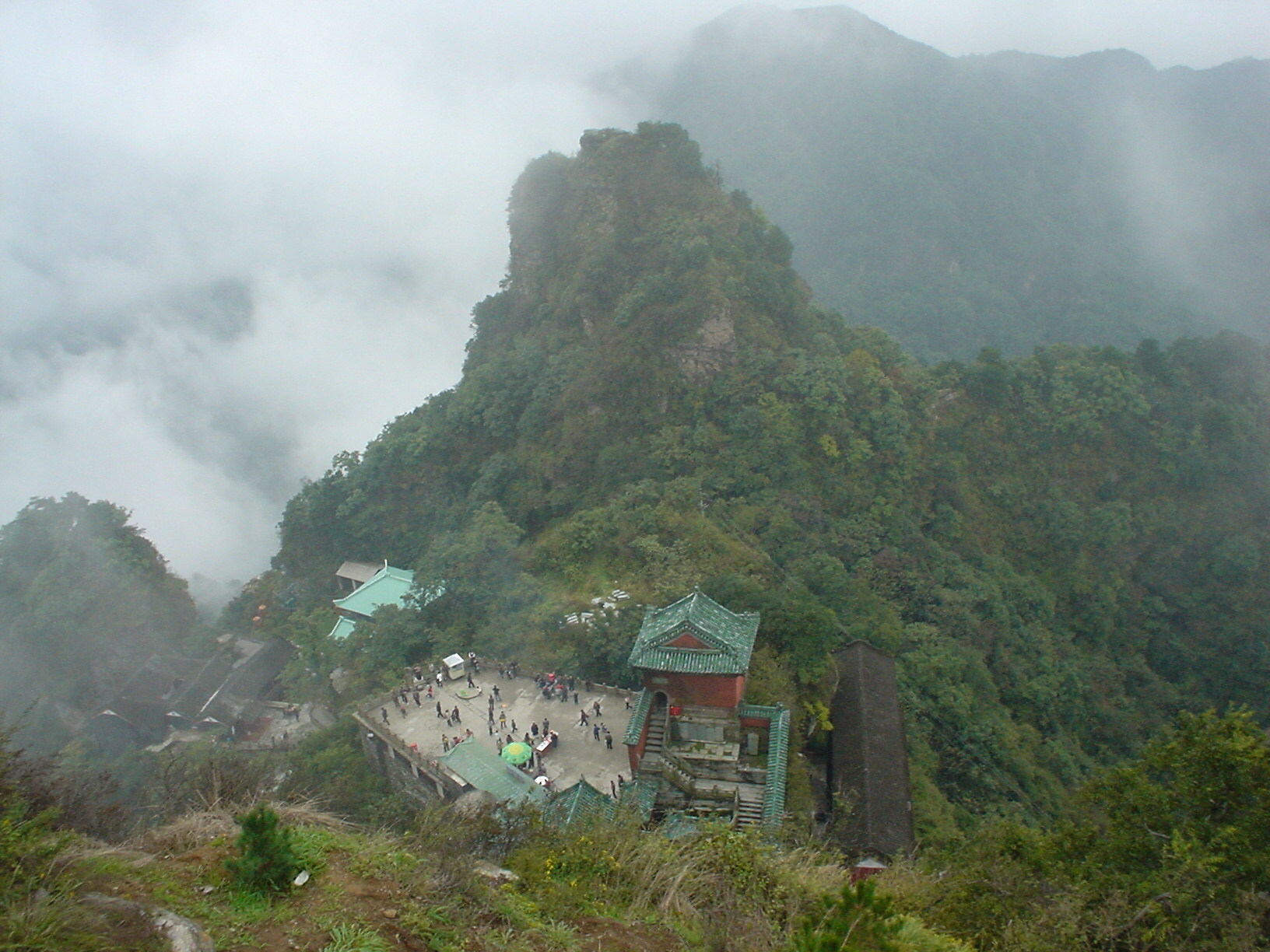
The Ancient Building Complex in the Wudang Mountains, located in the scenic valleys and on the slopes of the Wudang mountains in Hubei Province, China, stands as a testament to the architectural and artistic achievements of China's Yuan, Ming, and Qing dynasties. This complex, inscribed as a UNESCO World Heritage Site in 1994, offers a unique insight into the rich cultural heritage of China, particularly its Taoist traditions.
More to come…UNESCO Description of the World Heritage Site
The palaces and temples which form the nucleus of this group of secular and religious buildings exemplify the architectural and artistic achievements of China's Yuan, Ming and Qing dynasties. Situated in the scenic valleys and on the slopes of the Wudang mountains in Hubei Province, the site, which was built as an organized complex during the Ming dynasty (14th–17th centuries), contains Taoist buildings from as early as the 7th century. It represents the highest standards of Chinese art and architecture over a period of nearly 1,000 years.
UNESCO Justification of the World Heritage Site
Criterion (i): The ancient buildings in the Wudang Mountains represent the highest standards in Chinese art and architecture over a period of nearly one thousand years.
Criterion (ii): The Wudang buildings exercised an enormous influence on the development of religious and public art and architecture in China.
Criterion (vi): The religious complex in the Wudang Mountains was the centre of Taoism, one of the major eastern religions and one which played a profound role in the development of belief and philosophy in the region.
Encyclopedia Record: Wudang Mountains
The Wudang Mountains are a mountain range in the northwestern part of Hubei, China. They are home to a famous complex of Taoist temples and monasteries associated with the Lord of the North, Xuantian Shangdi. The Wudang Mountains are renowned for the practice of tai chi and Taoism as the Taoist counterpart to the Shaolin Monastery, which is affiliated with Chan Buddhism. The Wudang Mountains are one of the "Four Sacred Mountains of Taoism" in China, an important destination for Taoist pilgrimages. The monasteries such as the Wudang Garden were made a UNESCO World Heritage Site in 1994 because of their religious significance and architectural achievement.Additional Site Details
Area: Not available
Number of Components: 1
(ii) — Significant interchange of human values
(vi) — Directly associated with events or living traditions
Coordinates: 32.46667 , 111
Image
Unknown, Public domain
World Heritage Research
Discover scientific research and academic studies that deepen our understanding of Ancient Building Complex in the Wudang Mountains from its history and significance to its conservation, management, and contemporary challenges.
-
How can short travel videos facilitate tourists’ decision-making about traveling to cultural heritage destinations? Evidence from the Wudang Mountain Complex
Short travel videos significantly influence tourists' decision-making regarding cultural heritage destinations, with positive emotions and perceived cultural heritage value directly impacting choices. A study on the UNESCO-listed Wudang Mountain Complex revealed that while cultural involvement indirectly affects decisions through emotional responses and value perception, factors like cultural identity and destination image do not play a significant role. Using stimulus-organism-response theory, researchers analyzed 401 responses to short promotional videos, validating how these elements shape travel behavior. The findings offer actionable insights for marketing cultural heritage sites, emphasizing the importance of crafting videos that evoke positive emotions and highlight heritage value.
Wu, S., & Peng, X. (2025). How can short travel videos facilitate tourists’ decision-making about traveling to cultural heritage destinations? Evidence from the Wudang Mountain Complex. Asia Pacific Journal of Marketing and Logistics, 37(7), 1990–2006. https://doi.org/10.1108/apjml-05-2024-0577
View Publication Record | Read Publication -
Archaeometric Study of Red Lime Plaster in Ming Dynasty Wudang Mountain Architecture: Composition, Technology, and Symbolism
An archaeometric analysis of Ming Dynasty red lime plaster from Wudang Mountain's Wulong Palace and Laojun Hall reveals a two-layered construction technique, where the outer layer combines red earth, ochre, and magnesium lime for aesthetic and symbolic purposes—reflecting aristocratic privilege and reverence for vermilion—while the inner layer primarily supports structural adhesion. The study also identifies fiber reinforcement in both layers, with higher fiber content in the outer layer, showcasing advanced craftsmanship. Using XRF, XRD, TG-DSC, IR, and PLM, researchers analyzed mineral composition, lime types, organic additives, and fibers, providing insights for preservation efforts and deepening understanding of ancient Chinese architectural color symbolism.
Wei, G., Huang, X., Kang, Y., Wang, H., & Fan, Y. (2025). Archaeometric Study of Red Lime Plaster in Ming Dynasty Wudang Mountain Architecture: Composition, Technology, and Symbolism. International Journal of Architectural Heritage, 19(12), 3550–3563. https://doi.org/10.1080/15583058.2025.2509896
View Publication Record | Read Publication -
Exploring plastering techniques in ancient Chinese royal architecture at Huilong temple using multi-analytical methods
A groundbreaking analysis of the Huilong Taoist Temple, part of China's Wudang Mountains World Heritage Site, reveals that its well-preserved walls owe their durability to a sophisticated combination of raw materials and meticulous plastering techniques. Researchers discovered distinct compositions in two wall plaster layers: the surface layer incorporates magnesium lime, lateritic soil, ocher, and paper mulberry bast fiber for texture and color, while the base layer relies more on lime without ocher. This layered approach, with coarse materials forming the foundation and finer elements applied superficially, provides both structural integrity and aesthetic qualities. The study not only deepens our understanding of ancient Chinese royal architectural practices but also offers critical insights for modern conservation efforts at this UNESCO-listed site.
Sun, T., Wei, G., Kang, Y., & An, Z. (2025). Exploring plastering techniques in ancient Chinese royal architecture at Huilong temple using multi-analytical methods. Npj Heritage Science, 13(1). https://doi.org/10.1038/s40494-025-01664-4
View Publication Record | Read Publication -
How Do Natural Environmental Factors Influence the Spatial Patterns and Site Selection of Famous Mountain Temple Complexes in China? Quantitative Research on Wudang Mountain in the Ming Dynasty
Ancient temple complexes in China's mountainous landscapes, such as the UNESCO-listed Wudang Mountain site, were strategically planned to align with environmental factors like terrain, hydrology, climate, and soil conditions. Research using geospatial analysis reveals that temples were deliberately positioned along ridge-aligned belts with a southwest-northeast orientation, avoiding geotechnical extremes while prioritizing zones of moderate thermal, hydrological, and vegetative stability. Cliffside temples, in particular, showed strong correlations with soil pH, porosity, and bulk density. These findings indicate that temple planning was an active process integrating environmental adaptation and cultural symbolism, offering new insights for the conservation of mountain cultural heritage sites.
Yan, Y., Bai, Z., Hu, X., & Wang, Y. (2025). How Do Natural Environmental Factors Influence the Spatial Patterns and Site Selection of Famous Mountain Temple Complexes in China? Quantitative Research on Wudang Mountain in the Ming Dynasty. Land, 14(7), 1441. https://doi.org/10.3390/land14071441
View Publication Record | Read Publication -
Application of Femtosecond Laser Processing Method in the Sustainable Conservation of Stone Cultural Relics: An Example of Green Schist in Wudang Mountain, China
Researchers achieved significant breakthroughs in the sustainable conservation of stone cultural relics using femtosecond laser processing. By creating hierarchical micro-nano structures on green schist, a key material in Wudang Mountain's ancient building complex, they successfully modulated its wettability to achieve a water contact angle of up to 147°. This was accomplished by preparing grooves with an optimal spacing of 400 μm using femtosecond laser irradiation (238 fs, 100 kHz, 40 μJ, 33 μm, 500–40,000 pulses). The study systematically investigated the processing mechanism and performance, revealing that different compositions—quartz, chlorite, and muscovite—exhibit distinct responses to laser irradiation. These findings provide a novel approach for the sustainable conservation of ancient buildings and cultural relics, addressing challenges posed by environmental factors such as rain.
Chen, M., Wang, C., Li, K., Jia, X., Wang, C., & Wang, Y. (2024). Application of Femtosecond Laser Processing Method in the Sustainable Conservation of Stone Cultural Relics: An Example of Green Schist in Wudang Mountain, China. Sustainability, 16(8), 3169. https://doi.org/10.3390/su16083169
View Publication Record | Read Publication -
Analysis of Decorative Paintings in the Dragon and Tiger Hall of Yuzhen Palace: Culture, Materials, and Technology
Scientific analysis of the decorative paintings in the Dragon and Tiger Hall of Yuzhen Palace, Wudang Mountainsreveals they are among the rare surviving wooden painted structures from the early Ming dynasty (1412 AD). Using advanced techniques like optical microscopy, scanning electron microscopy (SEM), Raman spectroscopy, and infrared spectroscopy, researchers identified natural mineral pigments (azurite, malachite, vermilion, and hematite) consistent with official Xuanzi paintings of the period. The craftsmanship, applied directly to wood without a ground layer but with a thin tung oil-lime base, mirrors styles found in Taihe Palace's Golden Roof. This study provides critical data for the preservation and restoration of this culturally significant heritage site.
Zhu, Y., Qi, G., Guo, Y., & Wang, D. (2024). Analysis of Decorative Paintings in the Dragon and Tiger Hall of Yuzhen Palace: Culture, Materials, and Technology. Coatings, 14(8), 1022. https://doi.org/10.3390/coatings14081022
View Publication Record | Read Publication -
Case studies
Case studies on cultural landscapes reveal complex interactions between human and natural systems, highlighting their significance for heritage conservation. These studies demonstrate that communities associated with such landscapes often span vast networks, extending beyond geographical boundaries. Examples include tourists linked to West Lake, dispersed Maori peoples connected to Ihumaatao, Micronesians tied to Yap, Taiwanese associated with longan orchards, viticulture systems in the Azores, and Chinese Taoists spiritually connected to the Wudang Mountains. Scale emerges as a critical factor in understanding these landscapes, underscoring the importance of case studies in sharing knowledge for their preservation.
Brown, S. (2023). Case studies. Routledge Handbook of Cultural Landscape Practice, 303–307. https://doi.org/10.4324/9781315203119-32
View Publication Record | Read Publication