
World Heritage Identification Number: 1442
World Heritage since: 2014
Category: Cultural Heritage
WHE Type: Infrastructure & Industry
Transboundary Heritage: Yes
Endangered Heritage: No
Country: China, Kazakhstan, Kyrgyzstan
Continent: Asia
UNESCO World Region: Asia and the Pacific
Map
Exploring the Chang'an-Tianshan Corridor: A Journey Along the Ancient Silk Roads
The Chang'an-Tianshan Corridor, inscribed as a UNESCO World Heritage Site in 2014, offers a unique glimpse into the rich history and cultural exchange that occurred along the ancient Silk Roads network. Stretching over 5,000 kilometers (3,100 miles), this significant route connected Central China to the Zhetysu region of Central Asia, providing a conduit for trade, religious beliefs, scientific knowledge, technological innovation, cultural practices, and artistic exchanges from the 2nd century BC to the 16th century.
More to come…UNESCO Description of the World Heritage Site
This property is a 5,000 km section of the extensive Silk Roads network, stretching from Chang’an/Luoyang, the central capital of China in the Han and Tang dynasties, to the Zhetysu region of Central Asia. It took shape between the 2nd century BC and 1st century AD and remained in use until the 16th century, linking multiple civilizations and facilitating far-reaching exchanges of activities in trade, religious beliefs, scientific knowledge, technological innovation, cultural practices and the arts. The thirty-three components included in the routes network include capital cities and palace complexes of various empires and Khan kingdoms, trading settlements, Buddhist cave temples, ancient paths, posthouses, passes, beacon towers, sections of The Great Wall, fortifications, tombs and religious buildings.
UNESCO Justification of the World Heritage Site
Criterion (ii): The vastness of the continental routes networks, the ultra-long duration of use, the diversity of heritage remains and their dynamic interlinks, the richness of the cultural exchange they facilitated, the varied geographical environments they connected and crossed, clearly demonstrates the extensive interaction that took place within various cultural regions, especially the nomadic steppe and settled agrarian/oasis/pastoral civilizations, on the Eurasian continent between the 2nd century BC and the 16th century AD. These interaction and influences were profound in terms of developments in architecture and city planning, religions and beliefs, urban culture and habitation, merchandise trade and interethnic relations in all regions along the routes. The Tian-shan corridor is an extraordinary example in world history of how a dynamic channel linking civilizations and cultures across the Eurasian continent, realized the broadest and most long-lasting interchange among civilizations and cultures.
Criterion (iii): The Tian-shan corridor bears an exceptional witness to traditions of communication and exchange in economy and culture, and to social development across the Eurasian continent between the 2nd century BC to the 16th century AD. Trade had a profound influence on the settlement structure of the landscape, through the development of towns and cities that brought together nomadic and settled communities, through water management systems that underpinned those settlements, through the extensive network of forts, beacon towers, way stations and caravanserai that accommodated travellers and ensured their safety, through the sequence of Buddhist shrines and cave temples, and through manifestations of other religions such as Zoroastrianism, Manichaeism, Nestorian Christianity and Islam that resulted from the cosmopolitan, multi-ethnic communities that organised and benefitted from the high value trade.
Criterion (v): The Tian-shan corridor is an outstanding example of the way high value, long-distance trade prompted the growth of sizeable towns and cities, supported by elaborate, sophisticated water management systems that harvested water from rivers, wells and underground springs for residents, travellers and the irrigation of crops.
Criterion (vi): The Tian-shan Corridor is directly associated with Zhang Qian’s diplomatic mission to the Western Regions, a milestone event in the history of human civilization and cultural interchange in the Eurasian Continent. It also reflects in a profound way the tangible impact of Buddhism into ancient China which had significant impact on cultures of East Asia, and the spread of Nestorian Christianity (which reached China in 500 AD), Manichaeism, Zoroastrianism and early Islam. Many of the towns and cities along the corridor also reflect in an exceptional way the impact of ideas that flowed along the routes related to harnessing water power, architecture and town planning.
Encyclopedia Record: Silk Roads: the Routes Network of Chang'an-Tianshan Corridor
Silk Roads: The Routes Network of Chang'an-Tian Shan Corridor is a UNESCO World Heritage Site which covers the Chang'an-Tianshan portion of the ancient Silk Road and historical sites along the route. On June 22, 2014, UNESCO designated a 5,000 km (3,100 mi) stretch of the Silk Road network from Central China to the Zhetysu region of Central Asia as a World Heritage site. The corridor spans China, Kazakhstan and Kyrgyzstan and includes 33 new sites and several previously designated heritage sites.Additional Site Details
Area: 42,668.16 hectares
Number of Components: 33
(iii) — Unique or exceptional testimony to a cultural tradition
(v) — Outstanding example of traditional human settlement
(vi) — Directly associated with events or living traditions
Coordinates: 34.3044444444 , 108.8572222222
Image
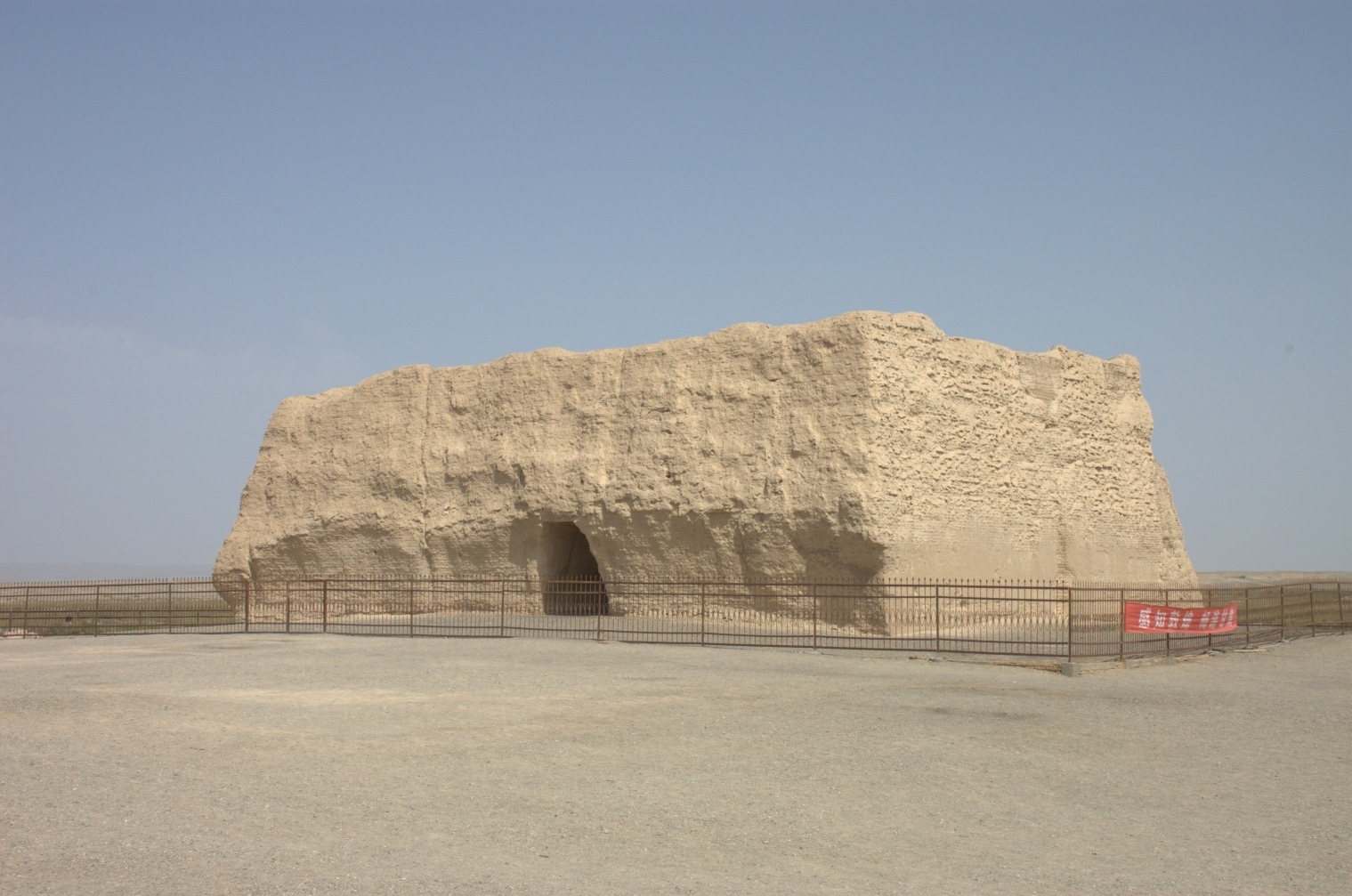
© 张骐, CC BY-SA 3.0 Resized from original. (This derivative is under the same CC BY-SA license.)
World Heritage Research
Discover scientific research and academic studies that deepen our understanding of Silk Roads: the Routes Network of Chang'an-Tianshan Corridor from its history and significance to its conservation, management, and contemporary challenges.
-
Extraction of Deterioration and Analysis of Vegetation Impact Effects on the South Palace Wall of Weiyang Palace
A groundbreaking study reveals that vegetation plays a dual role in the deterioration of earthen structures, with paper mulberry offering protective effects against erosion while ziziphus jujuba significantly worsens structural vulnerabilities by inducing cracks. Using high-resolution LiDAR scanning and unprecedented on-site botanical surveys, researchers analyzed the south palace wall of Weiyang Palace, a UNESCO World Heritage Site within the Silk Roads network. The study employed contour line analysis, facade grid analysis, and an object-oriented classification algorithm to map deterioration patterns and vegetation types, providing a technical model for monitoring earthen sites along the entire Silk Road network. These findings offer critical insights for guiding conservation efforts and understanding the complex interactions between vegetation and ancient structures.
Gao, S., Tao, L., Chen, F., Zhou, X., Shi, P., Yao, X., Zhu, M., Li, W., Zhou, W., Luo, Y., Li, H., Chen, C., & Zhang, X. (2024). Extraction of Deterioration and Analysis of Vegetation Impact Effects on the South Palace Wall of Weiyang Palace. https://doi.org/10.21203/rs.3.rs-4568335/v1
View Publication Record | Read Publication -
Silk Roads Heritage Diplomacy
Heritage diplomacy practices have shifted with China's Belt and Road Initiative (BRI), which, since its launch in 2013, offers financial support and coordination for transboundary heritage conservation efforts. While UNESCO remains the primary authority in managing cultural heritage, the BRI introduces a new dynamic that challenges the 'western-dominated' approach to heritage diplomacy. The successful inscription of the Silk Roads: the Routes Network of Chang'an-Tianshan Corridor as World Cultural Heritage in 2014 highlights this shift, contrasting with unsuccessful nominations in South Asia. This study examines how the BRI's involvement in cultural exchange initiatives and transboundary nominations may balance existing heritage governance structures, while also outlining the challenges and prospects ahead for such cooperation.
Chan, V. C. M. (2023). Silk Roads Heritage Diplomacy. Heritage Conservation and China’s Belt and Road Initiative, 143–159. https://doi.org/10.4324/9781003401919-13
View Publication Record | Read Publication -
Ancient Witnesses of the Silk Road: The Cultural Tourism Potential of Historical Caravanserais in Anatolia
Historical caravanserais along the Silk Road's Anatolian Caravan Roads can be sustainably integrated into cultural tourism through contemporary conservation and digital technologies. This study demonstrates that repurposing these ancient structures—such as those on the Konya-Antalya/Manavgat route—as part of a cultural route, while applying modern preservation techniques, enhances their potential for tourism. The research builds on the 2014 UNESCO designation of the Chang'an-Tianshan corridor as a World Heritage Site, proposing a scenario that balances heritage protection with accessibility. By leveraging digital tools and adaptive conservation approaches, the study offers a model for transforming neglected Silk Road landmarks into vibrant cultural destinations.
Dabanlı, O., & Şimşek, M. (2022). ANCIENT WITNESSES OF THE SILK ROAD: THE CULTURAL TOURISM POTENTIAL OF HISTORICAL CARAVANSERAIS IN ANATOLIA. Zenodo. https://doi.org/10.5281/ZENODO.7459996
View Publication Record | Read Publication -
A Study on the Spatial Interpretation Strategy of Chang'an City Site of Tang Dynasty: From the Perspective of Cultural Routes Interpretation
A novel spatial interpretation strategy for preserving and interpreting the Tang Dynasty Chang'an City Site, a UNESCO World Heritage Site and the starting point of the Silk Roads network, has been developed. This approach integrates potential underground ruins into modern urban development while addressing contradictions between heritage conservation needs and urban growth. By combining archaeological and literary materials, the study explores the relationship between historic urban contexts and contemporary city patterns, emphasizing the importance of spatial interpretation in guiding principles for cultural heritage preservation and land use co-development.
Yue, Y., Pezzetti, L. A., & Wang, L. (2021). A STUDY ON THE SPATIAL INTERPRETATION STRATEGY OF CHANG’AN CITY SITE OF TANG DYNASTY: FROM THE PERSPECTIVE OF CULTURAL ROUTES INTERPRETATION. The International Archives of the Photogrammetry, Remote Sensing and Spatial Information Sciences, XLVI-M-1-2021, 909–915. https://doi.org/10.5194/isprs-archives-xlvi-m-1-2021-909-2021
View Publication Record | Read Publication -
Gestión de las rutas patrimoniales: “Rutas de la seda, Red viaria del Corredor Chang´an-Tianshan” en China y “Camino de Santiago” en Castilla y León = The Heritage routes management: “Silk Road: Chang´an-Tianshan Corridor” in China and “Camino de Santiago" in Castilla y León
UNESCO's designation of 'Heritage Routes' for cultural routes with historical, patrimonial, and territorial value highlights the need for integrated linear management and protection. A comparative study of two UNESCO World Heritage Routes—the Silk Road: Chang'an-Tianshan Corridor in China and the Camino de Santiago in Castilla y León—reveals key differences and challenges in their management. While the Silk Road stands out for its cultural and landscape diversity, the Camino de Santiago is characterized by homogeneity. Both routes face common difficulties, including the multiplicity of laws across territories, the lack of cohesive route-wide policies, and a predominant focus on tourism over heritage conservation. The study underscores the importance of unified approaches to protect and promote these linear heritage sites effectively.
Huo, S., & Serrano, E. (2021). Gestión de las rutas patrimoniales: “Rutas de la seda, Red viaria del Corredor Chang´an-Tianshan” en China y “Camino de Santiago” en Castilla y León = The Heritage routes management: “Silk Road: Chang´an-Tianshan Corridor” in China and “Camino de Santiago” in Castilla y León. Polígonos. Revista de Geografía, (33), 21–51. https://doi.org/10.18002/pol.v33i0.7182
View Publication Record | Read Publication