World Heritage Identification Number: 1443
World Heritage since: 2014
Category: Cultural Heritage
WHE Type: Buildings & Architectural Ensembles
Transboundary Heritage: No
Endangered Heritage: No
Country: 🇨🇳 China
Continent: Asia
UNESCO World Region: Asia and the Pacific
Map
The Grand Canal: A Historical Waterway System in China
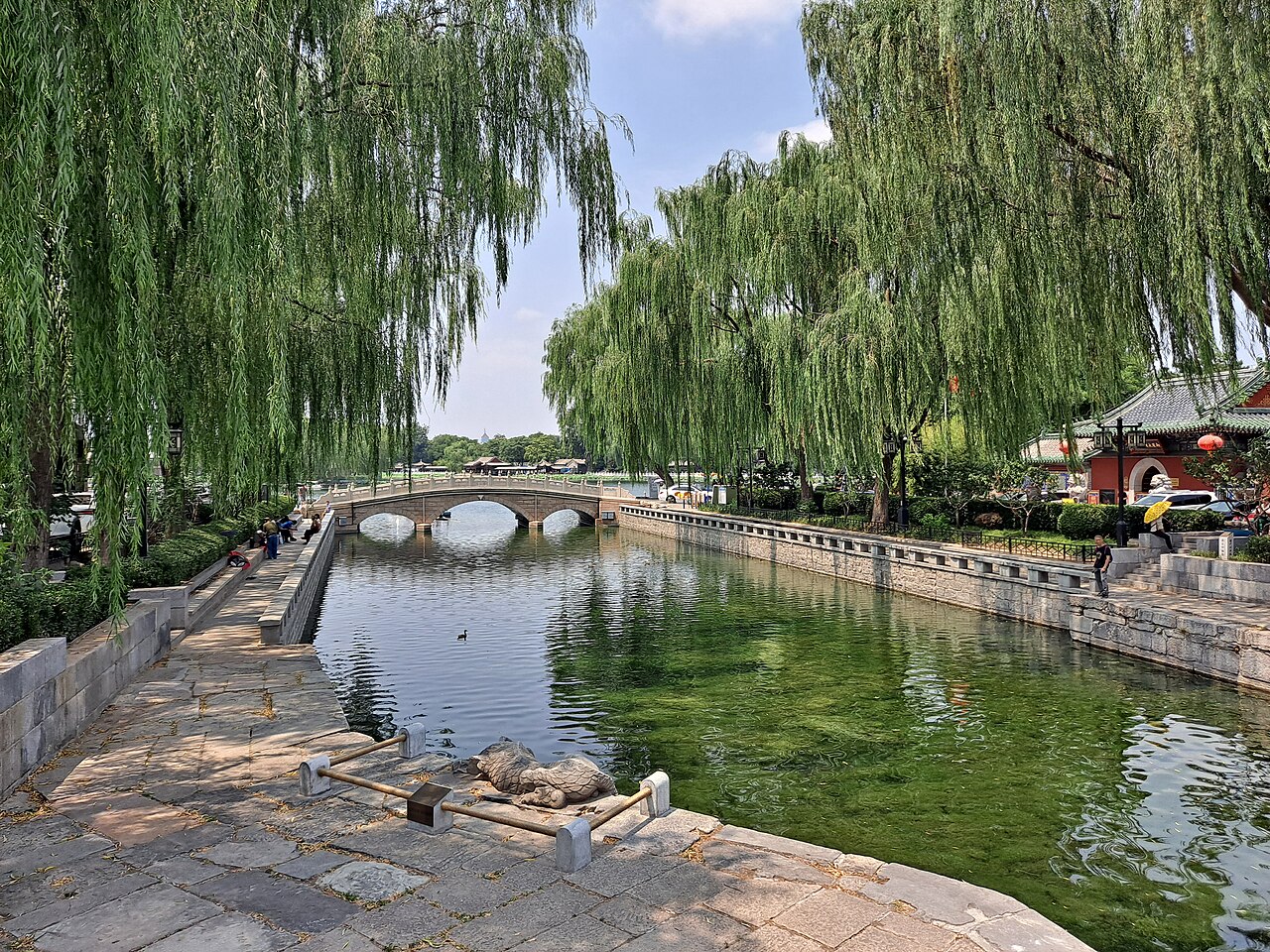
The Grand Canal, a vast waterway network spanning over 1,800 years, is a testament to China's ancient engineering prowess and its enduring significance in shaping the nation's history, economy, and culture. Inscribed as a UNESCO World Heritage Site in 2014, this monumental waterway system connects five of China's primary river basins, forming the backbone of the Empire's inland communication system.
More to come…UNESCO Description of the World Heritage Site
The Grand Canal is a vast waterway system in the north-eastern and central-eastern plains of China, running from Beijing in the north to Zhejiang province in the south. Constructed in sections from the 5th century BC onwards, it was conceived as a unified means of communication for the Empire for the first time in the 7th century AD (Sui dynasty). This led to a series of gigantic construction sites, creating the world’s largest and most extensive civil engineering project prior to the Industrial Revolution. It formed the backbone of the Empire’s inland communication system, transporting grain and strategic raw materials, and supplying rice to feed the population. By the 13th century it consisted of more than 2,000 km of artificial waterways, linking five of China’s main river basins. It has played an important role in ensuring the country’s economic prosperity and stability and is still in use today as a major means of communication.
UNESCO Justification of the World Heritage Site
Criterion (i): The Grand Canal represents the greatest masterpiece of hydraulic engineering in the history of mankind, because of its very ancient origins and its vast scale, along with its continuous development and its adaptation to circumstances down the ages. It provides tangible proof of human wisdom, determination and courage. It is an outstanding example of human creativity, demonstrating technical capabilities and a mastery of hydrology in a vast agricultural empire that stems directly from Ancient China.
Criterion (iii): The Grand Canal bears witness to the unique cultural tradition of canal management via the Caoyun system, its genesis, its flourishing, and its adaptations to the various dynasties and their successive capitals, and then its disappearance in the 20th century. It consisted of an imperial monopoly of the transport and storage of grain, salt and iron, and a taxation system. It contributed to the fundamental link between the peasant economy, the imperial court and the supply of food to the population and troops. It was a factor of stability for the Chinese Empire down the ages. The economic and urban development along the course of the Grand Canal bears witness to the functioning core of a great agricultural civilisation, and to the decisive role played in this respect by the development of waterway networks.
Criterion (iv): The Grand Canal is the longest and oldest canal in the world. It bears witness to a remarkable and early development of hydraulic engineering. It is an essential technological achievement dating from before the Industrial Revolution. It is a benchmark in terms of dealing with difficult natural conditions, as is reflected in the many constructions that are fully adapted to the diversity and complexity of circumstances. It fully demonstrates the technical capabilities of Eastern civilisations. The Grand Canal includes important, innovative and particularly early examples of hydraulic techniques. It also bears witness to specific know-how in the construction of dykes, weirs and bridges, and to the original and sophisticated use of materials, such as stone and rammed-earth, and the use of mixed materials (such as clay and straw).
Criterion (vi): Ever since the 7th century and through successive Chinese dynasties up to modern-day China, the Grand Canal has been a powerful factor of economic and political unification, and a place of major cultural interchanges. It has created and maintained ways of life and a culture that is specific to the people who live along the canal, whose effects have been felt by a large proportion of China’s territory and population over a long historical period. The Grand Canal is a demonstration of the ancient Chinese philosophical concept of the Great Unity, and was an essential element in the unity, complementarity and consolidation of the great agricultural empire of China down the ages.
Encyclopedia Record: Grand Canal (China)
The Grand Canal is a system of interconnected canals linking various major rivers and lakes in North and East China, serving as an important waterborne transport infrastructure between the north and the south during Medieval and premodern China. It is the longest artificial waterway in the world and a UNESCO World Heritage Site.Additional Site Details
Area: 20,819.11 hectares
Number of Components: 31
(iii) — Unique or exceptional testimony to a cultural tradition
(iv) — Outstanding example of a type of building or landscape
(vi) — Directly associated with events or living traditions
Coordinates: 34.6938888889 , 112.4683333333
World Heritage Research
Discover scientific research and academic studies that deepen our understanding of The Grand Canal from its history and significance to its conservation, management, and contemporary challenges.
-
Cultural communication and diversity along the Grand Canal of China: a case study of folk songs in intangible cultural heritage
Research on the Grand Canal reveals that folk songs along its route exhibit a distinct spatial distribution pattern characterized by 'distribution along the river, two cores and two belts.' This pattern is influenced significantly by natural factors such as water systems and landforms, as well as regional cultural elements. Unlike mountainous areas in western China, the Grand Canal basin's economic development and population mobility contribute to a diversified yet unified musical culture. The study, combining musicology, geography, sociology, and spatial analysis, underscores the importance of integrating folk songs into local social and economic activities for their preservation and development.
Li, L. (2023). Cultural communication and diversity along the Grand Canal of China: a case study of folk songs in intangible cultural heritage. Heritage Science, 11(1). https://doi.org/10.1186/s40494-023-00911-w
View Publication Record | Read Publication -
Spatio-Temporal Distribution Characteristics of Intangible Cultural Heritage and Tourism Response in the Beijing–Hangzhou Grand Canal Basin in China
Research reveals significant spatial and temporal variations in intangible cultural heritage (ICH) along the Beijing–Hangzhou Grand Canal, with distinct patterns between northern and southern regions. Using advanced geospatial analysis, including kernel density estimation and standard deviation ellipse modeling, the study identified directional trends and shifting centers of gravity for ICH distribution. Key drivers include natural geography, socioeconomic factors, and policy environments, while a strong positive correlation was found between ICH resources and tourism development. This finding underscores the potential for heritage-led tourism planning in the canal basin.
Chen, M., Wang, J., Sun, J., Ye, F., & Zhang, H. (2023). Spatio-Temporal Distribution Characteristics of Intangible Cultural Heritage and Tourism Response in the Beijing–Hangzhou Grand Canal Basin in China. Sustainability, 15(13), 10348. https://doi.org/10.3390/su151310348
View Publication Record | Read Publication -
Spatial Variation and Its Local Influencing Factors of Intangible Cultural Heritage Development along the Grand Canal in China
Intangible cultural heritage (ICH) along China's Grand Canal exhibits significant spatial variation, primarily concentrated at the northern and southern ends. Socioeconomic factors influence ICH distribution, but local geographic environments also play a crucial role in its formation and development. The study employed GIS spatial analysis and geodetector statistical methods to analyze ICH variations across different categories and identify influencing factors. These findings provide valuable insights for systematic regeneration and utilization of ICH resources along the Grand Canal.
Yang, J., Wang, L., & Wei, S. (2022). Spatial Variation and Its Local Influencing Factors of Intangible Cultural Heritage Development along the Grand Canal in China. International Journal of Environmental Research and Public Health, 20(1), 662. https://doi.org/10.3390/ijerph20010662
View Publication Record | Read Publication -
Linking Ecosystem Service and MSPA to Construct Landscape Ecological Network of the Huaiyang Section of the Grand Canal
A significant decline in ecosystem services along the Huaiyang Section of the Grand Canal from 1990 to 2018 highlights the urgent need for ecological restoration and protection. The study, using advanced models like MSPA, minimum cumulative resistance (MCR), and gravity model, identified 12 key ecological source patches totaling 2007.06 km² and mapped a network of 373.84 km of ecological corridors, with optimal widths of 200–400 m. The research also pinpointed 29 critical ecological breakpoints for restoration, emphasizing the severe impact of land-use changes (overlapping at 99% with ecosystem service degradation areas). This work provides a blueprint for optimizing ecological space and formulating protection plans, serving as a model for other sections of the Grand Canal.
Tang, F., Zhou, X., Wang, L., Zhang, Y., Fu, M., & Zhang, P. (2021). Linking Ecosystem Service and MSPA to Construct Landscape Ecological Network of the Huaiyang Section of the Grand Canal. Land, 10(9), 919. https://doi.org/10.3390/land10090919
View Publication Record | Read Publication -
Rise and Fall of the Grand Canal in the Ancient Kaifeng City of China: Role of the Grand Canal and Water Supply in Urban and Regional Development
The Grand Canal, a pivotal transportation artery in ancient China, significantly influenced the rise and fall of Kaifeng during the Northern Song Dynasty. Positioned at the canal's center, Kaifeng flourished as a global metropolis, driven by its strategic location that facilitated political, military, and economic exchanges between northern and southern regions. This period, dubbed 'the canal-centered era,' witnessed a transportation revolution, spurring commercial growth, urbanization, and agricultural advancements. However, the shift of the political center southward during the Yuan Dynasty altered the canal's route, diminishing Kaifeng's connectivity value and leading to its gradual decline by the Qing Dynasty. The study highlights the profound impact of water infrastructure on urban and regional development, offering insights relevant to contemporary sustainable development challenges.
Huang, W., Xi, M., Lu, S., & Taghizadeh-Hesary, F. (2021). Rise and Fall of the Grand Canal in the Ancient Kaifeng City of China: Role of the Grand Canal and Water Supply in Urban and Regional Development. Water, 13(14), 1932. https://doi.org/10.3390/w13141932
View Publication Record | Read Publication -
Tourism value assessment of linear cultural heritage: the case of the Beijing–Hangzhou Grand Canal in China
A new framework for assessing tourism value in linear cultural heritage (LCH) reveals that resource richness is the dominant factor, while natural environment and industrial economy serve as critical external supports. Using the 1800 km-long Beijing–Hangzhou Grand Canalas a case study, researchers developed an R–N–I evaluation system combining Delphi method, analytical hierarchy process, and entropy analysis to quantify tourism value across 22 cities along the canal. The findings classify tourism potential into four distinct types: 'high-value imbalance type', 'key breakthrough type', 'comprehensive strengthening type', and 'low-value restriction type'. This approach provides actionable insights for sustainable development and policy-making in LCH tourism, balancing resource utilization with environmental and economic considerations.
Zhang, S., Liu, J., Pei, T., Chan, C.-S., Wang, M., & Meng, B. (2021). Tourism value assessment of linear cultural heritage: the case of the Beijing–Hangzhou Grand Canal in China. Current Issues in Tourism, 26(1), 47–69. https://doi.org/10.1080/13683500.2021.2014791
View Publication Record | Read Publication -
The making of the Grand Canal in China: beyond knowledge and power
The inscription of the Grand Canal of China on the UNESCO World Heritage List in 2014 was not a straightforward process dictated solely by state power. Instead, it involved complex negotiations among diverse human and non-human factors, including state authorities, local bureaus, hydraulic projects, archaeological findings, and built environments. This study reveals that the final nomination dossier emerged from compromises among these varied agencies, challenging conventional critiques of World Heritage processes. By employing an actor-network approach, the research highlights a dynamic web of relationships co-produced by competing forces and interests, offering new insights into the interplay between heritage significance and state power.
Yan, H. (2020). The making of the Grand Canal in China: beyond knowledge and power. International Journal of Heritage Studies, 27(6), 584–600. https://doi.org/10.1080/13527258.2020.1846069
View Publication Record | Read Publication -
Landsenses ecological planning for the Xianghe Segment of China’s Grand Canal
A novel approach to urban planning, termed 'landsenses ecology,' integrates human sensory experiences into ecological design. This study demonstrates its application for the Xianghe Segment of China's Grand Canal (XSCGC), addressing challenges in incorporating residents' sensory data—sight, hearing, taste, smell, and touch—into sustainable development. By leveraging mixed-marching data and IoT technologies, the research bridges traditional urban planning gaps, which often overlook environmental quality and human welfare. The framework aims to enhance ecological planning by systematically analyzing both natural and human factors, offering a blueprint for future urban forms that prioritize sensory-rich environments.
Dong, R., Liu, X., Liu, M., Feng, Q., Su, X., & Wu, G. (2016). Landsenses ecological planning for the Xianghe Segment of China’s Grand Canal. International Journal of Sustainable Development & World Ecology, 23(4), 298–304. https://doi.org/10.1080/13504509.2015.1125397
View Publication Record | Read Publication -
Promoting ecosystem services through ecological planning in the Xianghe Segment of China’s Grand Canal
Ecological planning can significantly enhance ecosystem services (ES) and revitalize historic landscapes, as demonstrated by a 67% increase in ES following its implementation along the Xianghe Segment of China’s Grand Canal. This UNESCO World Heritage Site, once a vital transportation artery, now suffers from degraded water quality due to wastewater disposal. The study applied modern ecological theory to redesign the waterfront landscape, establish wetlands, and improve environmental governance, shifting the dominance of ES from regulating and supporting services to cultural and regulating ones. These measures not only restored historic landscapes but also provided a framework for sustainable heritage management, offering a practical model for balancing ecological renewal with cultural preservation.
Guo, Q., Wu, J., & Xiao, L. (2016). Promoting ecosystem services through ecological planning in the Xianghe Segment of China’s Grand Canal. International Journal of Sustainable Development & World Ecology, 23(4), 365–371. https://doi.org/10.1080/13504509.2015.1117995
View Publication Record | Read Publication -
Urbanization Impairs Surface Water Quality: Eutrophication and Metal Stress in the Grand Canal of China
Rapid urbanization significantly degrades surface water quality along the Grand Canal of China, with urban sections showing elevated levels of eutrophic nitrogen and phosphorus, as well as metals that, while within national standards, may still pose risks to aquatic life according to stricter U.S. EPA criteria. The study found a strong correlation between urbanization levels and water quality parameters, particularly electrical conductivity, nutrients, and metals, with industrial activities contributing to metal loadings. These findings highlight the urgent need for mitigation strategies to ensure sustainable urban development along this historic site.
Yu, S., Yu, G. B., Liu, Y., Li, G. L., Feng, S., Wu, S. C., & Wong, M. H. (2011). URBANIZATION IMPAIRS SURFACE WATER QUALITY: EUTROPHICATION AND METAL STRESS IN THE GRAND CANAL OF CHINA. River Research and Applications, 28(8), 1135–1148. Portico. https://doi.org/10.1002/rra.1501
View Publication Record | Read Publication -
Animations, Games, and Virtual Reality for the Jing-Hang Grand Canal
A groundbreaking approach to preserving and presenting the Jing-Hang Grand Canal, one of China's most significant cultural heritage sites, has been developed using animations, computer games, and virtual reality (VR). This method leverages advanced computer graphics techniques to create immersive digital experiences that engage both researchers and the public. The study demonstrates how VR can be effectively employed in heritage preservation, building on previous applications such as a real museum in Ename, Belgium, and a virtual Olympics museum. By integrating these technologies, the research offers a novel way to restore and showcase historical sites, enhancing both educational and cultural engagement.
Wenzhi Chen, Mingmin Zhang, Zhigeng Pan, Gengdai Liu, Huaqing Shen, Shengnan Chen, & Yong Liu. (2010). Animations, Games, and Virtual Reality for the Jing-Hang Grand Canal. IEEE Computer Graphics and Applications, 30(3), 84–88. https://doi.org/10.1109/mcg.2010.49
View Publication Record | Read Publication