World Heritage Identification Number: 1114
World Heritage since: 2006
Category: Cultural Heritage
WHE Type: Archaeological Sites
Transboundary Heritage: No
Endangered Heritage: No
Country: 🇨🇳 China
Continent: Asia
UNESCO World Region: Asia and the Pacific
Map
Discovering the Golden Age of Early Chinese Culture: An Overview of Yin Xu
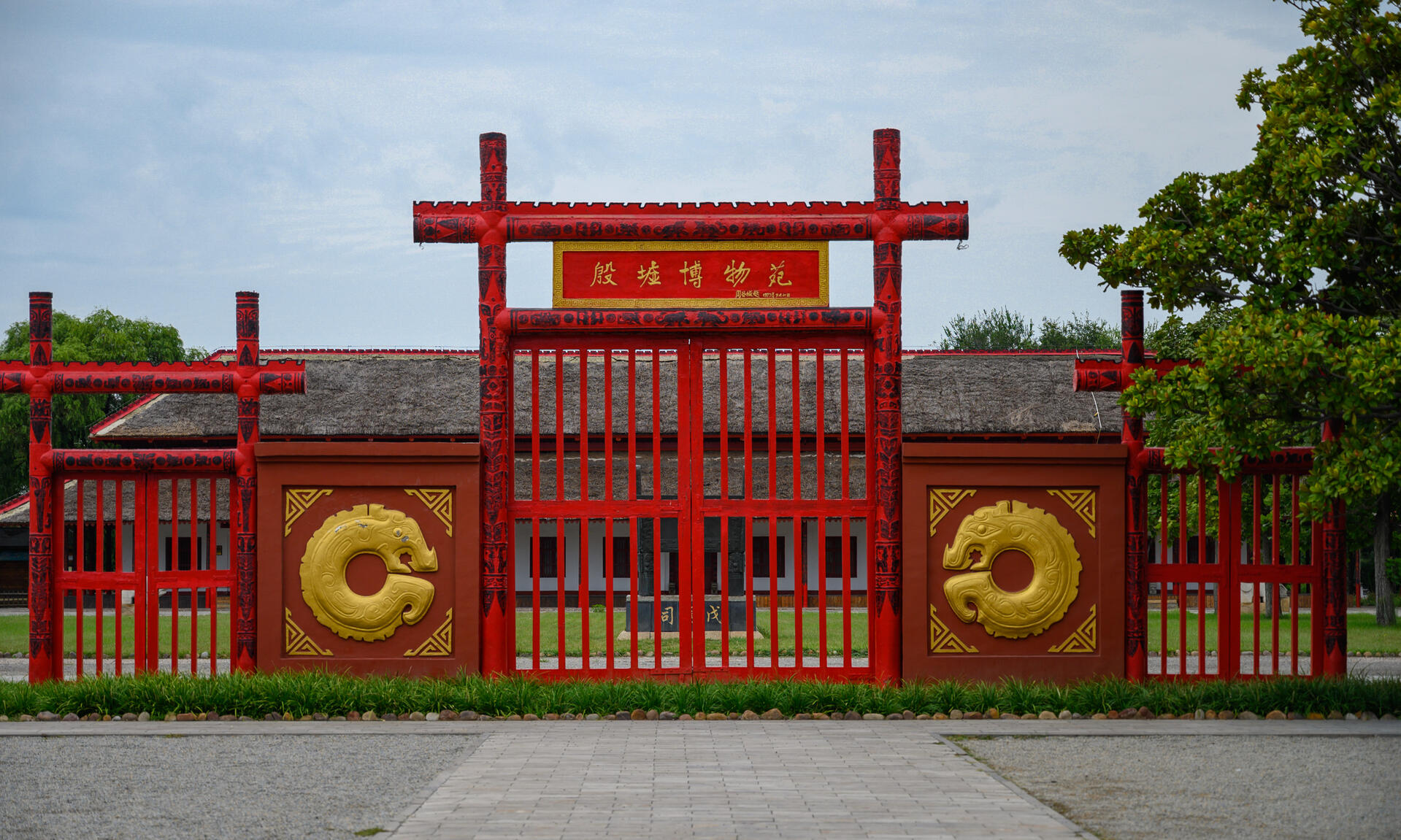
The archaeological site of Yin Xu, nestled in the heart of Anyang City, approximately 500 kilometers south of Beijing, stands as a testament to the opulence and cultural prowess of the late Shang Dynasty (1300 – 1046 BC). This significant historical location, inscribed as a UNESCO World Heritage Site in 2006, offers a captivating glimpse into the golden age of early Chinese civilization, a period characterized by remarkable advancements in craftsmanship, science, and culture.
More to come…UNESCO Description of the World Heritage Site
The archaeological site of Yin Xu, close to Anyang City, some 500 km south of Beijing, is an ancient capital city of the late Shang Dynasty (1300 - 1046 BC). It testifies to the golden age of early Chinese culture, crafts and sciences, a time of great prosperity of the Chinese Bronze Age. A number of royal tombs and palaces, prototypes of later Chinese architecture, have been unearthed on the site, including the Palace and Royal Ancestral Shrines Area, with more than 80 house foundations, and the only tomb of a member of the royal family of the Shang Dynasty to have remained intact, the Tomb of Fu Hao. The large number and superb craftsmanship of the burial accessories found there bear testimony to the advanced level of Shang crafts industry. Inscriptions on oracle bones found in Yin Xu bear invaluable testimony to the development of one of the world’s oldest writing systems, ancient beliefs and social systems.
UNESCO Justification of the World Heritage Site
Criterion (ii): Yin Xu, capital of the late Shang Dynasty, exhibits an exchange of important influences and the highest level of development in China’s ancient bronze culture, including the system of writing.
Criterion (iii): The cultural remains at Yin Xu provide exceptional evidence of cultural traditions in the Late Shang Period, and are testimony to many scientific and technical achievements and innovations, such as the solar and lunar calendar system, and the earliest evidence of systematic written Chinese language in oracle bones.
Criterion (iv): The palaces, ancestral shrines and the royal tombs of Yin Xu are outstanding examples of early Chinese architecture. They have great significance in establishing the early prototypes for Chinese palace architecture and royal tomb complexes.
Criterion (vi): The material remains discovered at Yin Xu provide tangible evidence of the early history of the system of Chinese writing and language, ancient beliefs, social systems, and major historical events, which are considered of outstanding universal significance.
Encyclopedia Record: Yinxu
Yinxu is a Chinese archeological site corresponding to Yin, the final capital of the Shang dynasty. Located in present-day Anyang, Henan, Yin served as the capital during the Late Shang period which spanned the reigns of 12 Shang kings and saw the emergence of oracle bone script, the earliest known Chinese writing. Along with oracle bone script and other material evidence for the Shang's existence, the site was forgotten for millennia. Its rediscovery in 1899 resulted from an investigation into oracle bones that were discovered being sold nearby. The rediscovery of Yinxu marked the beginning of decades of intensive excavation and study. It is one of China's oldest and largest archeological sites, and was selected by UNESCO as a World Heritage Site in 2006. Yinxu is located in northern Henan, near modern Anyang and the borders Henan shares with Hebei and Shanxi. Public access to the site is permitted.Additional Site Details
Area: 414 hectares
Number of Components: 2
(iii) — Unique or exceptional testimony to a cultural tradition
(iv) — Outstanding example of a type of building or landscape
(vi) — Directly associated with events or living traditions
Coordinates: 36.1266666666 , 114.3138888888
World Heritage Research
Discover scientific research and academic studies that deepen our understanding of Yin Xu from its history and significance to its conservation, management, and contemporary challenges.
-
Case Studies in Large-Scale Archaeological Site Conservation and Management in China: The Liangzhu, Yin Xu, and Han Yangling Sites
China's large-scale archaeological site conservation projects, including those at Yin Xu, demonstrate adaptive governance strategies to address urbanization and natural disaster threats while balancing social, economic, and ecological needs. The study identifies how government agencies restructure existing mechanisms to meet these challenges, highlighting the importance of stakeholder responsibility in local development contexts. Through a combination of literature review and field research, the authors analyze case studies such as Liangzhu, Yin Xu, and Han Yangling to provide insights into effective conservation practices for UNESCO World Heritage Sites.
Wang, D., & Nakamura, S. (2018). CASE STUDIES IN LARGE-SCALE ARCHAEOLOGICAL SITE CONSERVATION AND MANAGEMENT IN CHINA: THE LIANGZHU, YIN XU, AND HAN YANGLING SITES. História: Questões & Debates, 66(1), 113. https://doi.org/10.5380/his.v66i1.57406
View Publication Record | Read Publication -
Dynamic Monitoring of Yin Xu Site by Remote Sensing
Remote sensing reveals that the protection planning system for Yin Xu, China's 3,300-year-old Shang Dynasty capital, has been effective but is threatened by rapid urban expansion. The study used aerial photo interpretations and field-validated classifications to monitor changes in settlements, riverways, roads, factories, and green areas from 1972 to 2010. While the heritage site's protection efforts have largely succeeded, adjacent construction has negatively impacted its preservation.
Yang, R., & Peng, Y. (2014). Dynamic Monitoring of Yin Xu Site by Remote Sensing. IOP Conference Series: Earth and Environmental Science, 17, 12092. https://doi.org/10.1088/1755-1315/17/1/012092
View Publication Record | Read Publication