World Heritage Identification Number: 1732
World Heritage since: 2025
Category: Cultural Heritage
WHE Type: Buildings & Architectural Ensembles
Transboundary Heritage: No
Endangered Heritage: No
Country: 🇻🇳 Viet Nam
Continent: Asia
UNESCO World Region: Asia and the Pacific
Map
Yen Tu-Vinh Nghiem-Con Son, Kiep Bac Complex of Monuments and Landscapes: A Spiritual and Historical Haven in Vietnam
The Yen Tu-Vinh Nghiem-Con Son, Kiep Bac Complex of Monuments and Landscapes is a UNESCO World Heritage Site situated in the northern region of Vietnam. Inscribed in 2025, this extensive property encompasses approximately 20 sites spread across diverse landscapes, including forested mountains, lowlands, and river valleys. The heart of the complex lies within the Yen Tu Mountain Range, which served as the residence for the Tran Dynasty during the 13rd and 14th centuries. This site is not only significant historically but also played a pivotal role in shaping the Dai Viet kingdom through the emergence of Truc Lam Buddhism, a unique form of Zen Buddhism that originated in Vietnam.
More to come…UNESCO Description of the World Heritage Site
The property comprises 20 sites across forested mountains, lowlands, and river valleys. Centred on the Yen Tu Mountain Range, it was home to the Tran Dynasty during the 13th and 14th centuries and the birthplace of Truc Lam Buddhism, a uniquely Vietnamese Zen tradition that shaped the Dai Viet kingdom. The complex includes pagodas, temples, shrines, and archaeological remains tied to religious and historical figures. Strategically located in geologically favourable settings, it remains a vibrant pilgrimage destination.
UNESCO Justification of the World Heritage Site
Criterion (iii): Through its archaeological remains and various monuments, Yen Tu-Vinh Nghiem-Con Son, Kiep Bac Complex of Monuments and Landscapes provides exceptional testimony to the different stages of the development of Truc Lam Buddhism, a uniquely Vietnamese Zen tradition founded in the 13th century by Tran Kings, royal family, and leading monastic figures, notably King-Buddha Tran Nhan Tong. Integrating Mahayana Buddhism with Confucianism, Taoism, and local beliefs, Truc Lam Buddhism contributed to the spiritual foundation and the rise of an independent state, a resilient Vietnamese society and peace amidst global instability in the 13th century.
Criterion (vi): Yen Tu-Vinh Nghiem-Con Son, Kiep Bac Complex of Monuments and Landscapes is directly associated with the founding and diffusion of Truc Lam Buddhism. The continual celebration of rituals, festivals, and pilgrimages to the sacred sites attest to the enduring relevance of the spiritual philosophy of self-discipline, living in harmony with nature, peace-loving, and benevolence. Truc Lam Buddhism especially encourages its followers to pursue “active engagement” in the lives of people and the affairs of the country. Many intangible aspects, including scriptures, stories, poems, folklore, and legends, as well as rare woodblocks imprinted with Chinese-Nom script are attesting to the ideology and influence of Truc Lam Buddhism.
Encyclopedia Record: Yên Tử Mountain
Yên Tử is a mountain range in Vietnam spanning the provinces of Quảng Ninh, Bắc Ninh, and the city of Hải Phòng. It is also the name of the highest mountain in the range, with its summit at an elevation of 1068 m.Additional Site Details
Area: 525.748 hectares
Number of Components: 12
(vi) — Directly associated with events or living traditions
Coordinates: 21.1192555556 , 106.5353972222
Image
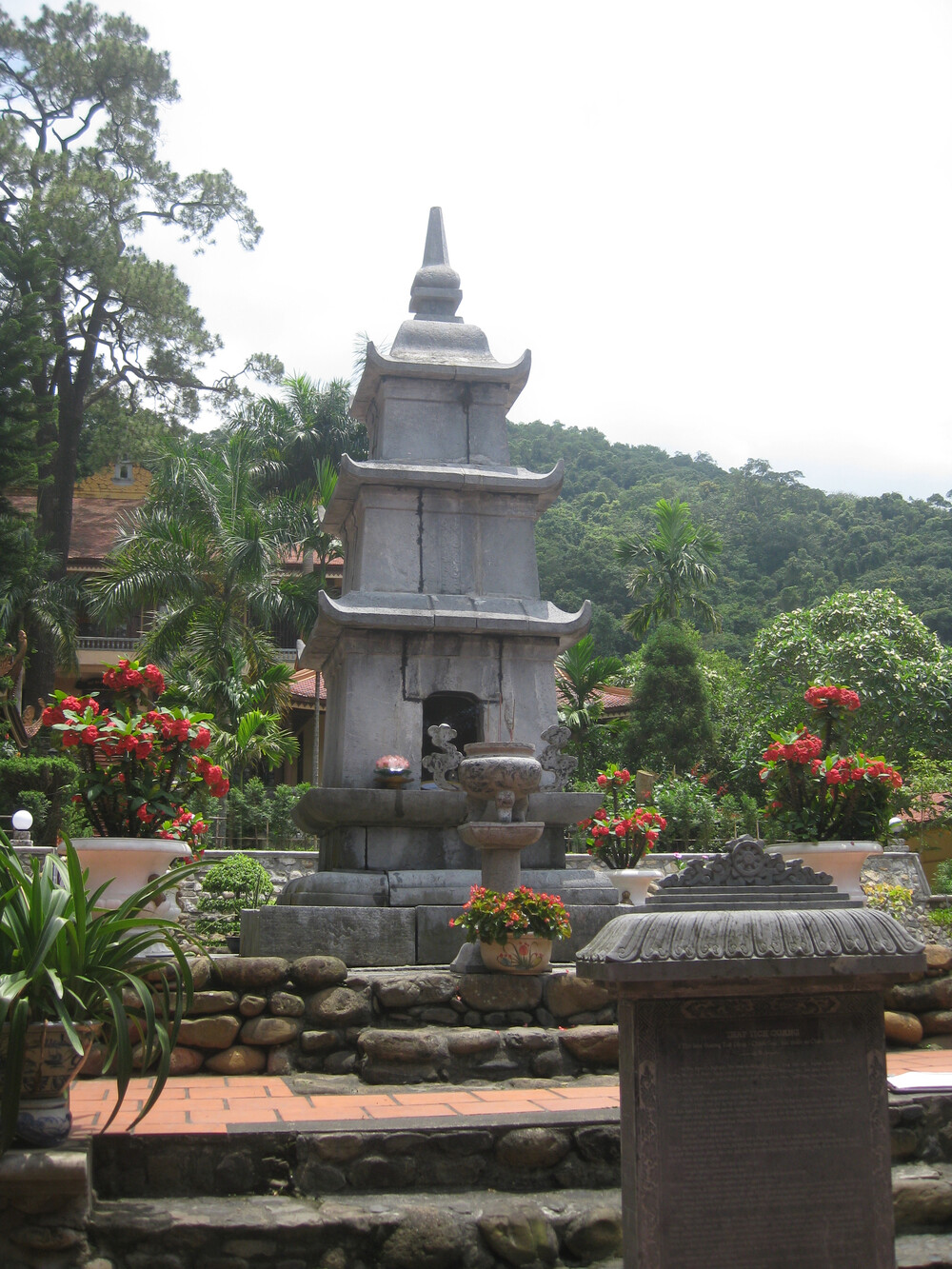
© Institute of Archaeology. Used with permission.
World Heritage Research
Discover scientific research and academic studies that deepen our understanding of Yen Tu-Vinh Nghiem-Con Son, Kiep Bac Complex of Monuments and Landscapes from its history and significance to its conservation, management, and contemporary challenges.
-
Community Roles and Living Heritage in the Conservation of Cultural Heritage in Northern Vietnam: The Case of The Yen Tu - Vinh Nghiem - Con Son, Kiep Bac Heritage Complex
Sustainable conservation of the Yen Tu-Vinh Nghiem-Con Son, Kiep Bac Heritage Complex in northern Vietnam hinges on community-centered governance models that integrate co-management, equitable benefit sharing, and visitor carrying-capacity management. This study reveals that while local communities play pivotal roles in preserving living heritage—through ritual practices, festival organization, and intergenerational cultural memory transmission—they face intensified challenges post-recognition, including tourist pressure, commercialization, and fragmented coordination. By employing qualitative document analysis, field observations, secondary tourism data, and in-depth interviews with stakeholders, the research proposes a framework leveraging digital heritage documentation and education to strengthen authenticity, integrity, and social vitality of the site.
Phuong, N. T. (2026). Community Roles and Living Heritage in the Conservation of Cultural Heritage in Northern Vietnam: The Case of The Yen Tu - Vinh Nghiem - Con Son, Kiep Bac Heritage Complex. Social Science and Human Research Bulletin, 03(05). https://doi.org/10.55677/sshrb/2026-3050-0509
View Publication Record | Read Publication