World Heritage Identification Number: 28
World Heritage since: 1978
Category: Natural Heritage
WHE Type: Protected Areas & National Parks
Transboundary Heritage: No
Endangered Heritage: No
Country: 🇺🇸 United States of America
Continent: Americas
UNESCO World Region: Europe and North America
Map
Yellowstone National Park: America's First National Park
Yellowstone National Park, located primarily in the U.S. state of Wyoming, is a testament to the breathtaking beauty and diverse ecosystems that define North America. Established in 1872, it holds the distinction of being the world's first national park, setting a precedent for preserving pristine wilderness areas for future generations.
The park spans nearly 9,000 square kilometers, making it one of the largest protected areas in the contiguous United States. Its boundaries extend slightly into the neighboring states of Montana and Idaho, but the majority of the park lies within Wyoming. This expansive territory encompasses a wide range of habitats, from extensive subalpine forests and open meadows to towering mountain ranges and steaming geothermal landscapes.
One of the most striking features of Yellowstone is its abundance of geothermal activity. More than half of the world's known geothermal features can be found here, with over 10,000 examples scattered throughout the park. These include hot springs, mud pots, and the famous geysers, of which there are more than 500. Among these, Old Faithful Geyser remains the most iconic. While often thought to erupt hourly, its current average interval is approximately 90 to 94 minutes, with individual gaps ranging from 54 to 120 minutes.
In addition to its geothermal wonders, Yellowstone is renowned for its rich and varied wildlife. The park is home to numerous large mammals, including grizzly bears, wolves, bison, and elk, as well as smaller creatures like coyotes, beavers, and black bears. The park's diverse ecosystem supports a vibrant food chain, allowing visitors to witness the intricate balance between predator and prey.
The vegetation within Yellowstone is equally diverse, with subalpine forest being the most prevalent. This unique ecosystem is characterized by coniferous trees like whitebark pine, Engelmann spruce, and Douglas fir. The park's varied topography also supports other biomes, such as grasslands, wetlands, and alpine tundra.
Yellowstone National Park continues to see high visitor numbers, with over 4.5 million recreation visits in recent years, making it one of the most visited national parks in the United States. Visitors can explore the Visitors can explore the park’s many trails on foot or horseback, enjoy cycling on park roads, take guided tours, or simply enjoy scenic drives through this magnificent landscape. The park's visitor centers provide valuable information about the area's geology, wildlife, and history, ensuring that visitors leave with a deeper appreciation for the park's natural and cultural significance, including a long history of Indigenous presence.
In summary, Yellowstone National Park stands as a testament to the beauty and diversity of North American ecosystems. With its vast geothermal landscapes, rich wildlife, and stunning vistas, it remains a must-visit destination for nature enthusiasts and casual travelers alike. As the world's first national park, it continues to inspire conservation efforts and serve as a model for preserving our planet's most precious wild places.
UNESCO Description of the World Heritage Site
The vast natural forest of Yellowstone National Park covers nearly 9,000 km2 ; 96% of the park lies in Wyoming, 3% in Montana and 1% in Idaho. Yellowstone contains half of all the world's known geothermal features, with more than 10,000 examples. It also has the world's largest concentration of geysers (more than 300 geyers, or two thirds of all those on the planet). Established in 1872, Yellowstone is equally known for its wildlife, such as grizzly bears, wolves, bison and wapitis.
UNESCO Justification of the World Heritage Site
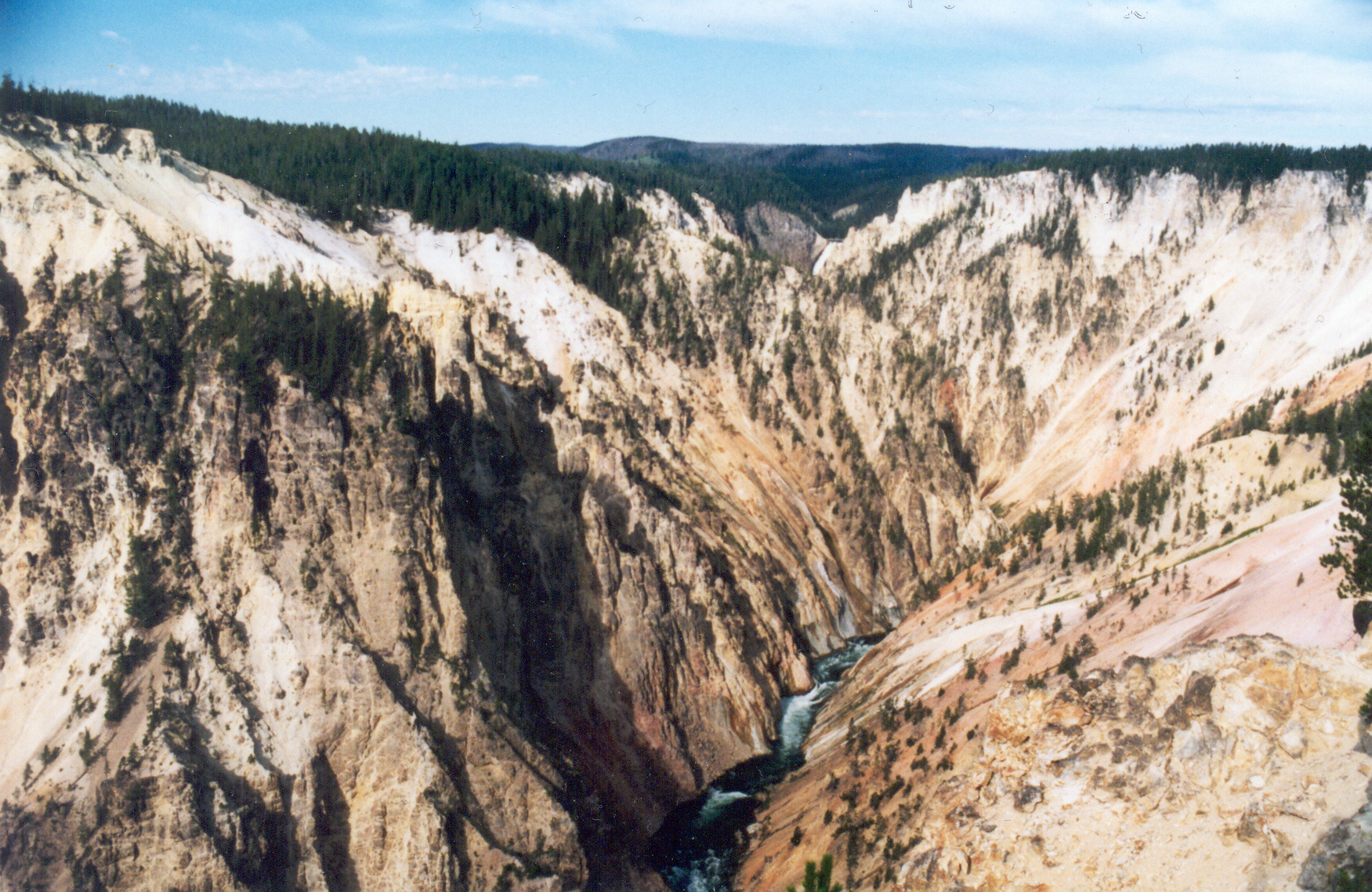
Criterion (vii): The extraordinary scenic treasures of Yellowstone include the world’s largest collection of geysers, the Grand Canyon of the Yellowstone River, numerous waterfalls, and great herds of wildlife.
Criterion (viii): Yellowstone is one of the world's foremost sites for the study and appreciation of the evolutionary history of the earth. The park has a globally unparalleled assemblage of surficial geothermal activity, thousands of hot springs, mudpots and fumaroles, and more than half of the world’s active geysers. Nearly 150 species of fossil plants, ranging from small ferns and rushes up to large Sequoia and many other tree species, have been identified in the park’s abundant fossil deposits. The world’s largest recognized caldera (45 km by 75 km – 27 miles by 45 miles) is contained within the park.
Criterion (ix): The park is one of the few remaining intact large ecosystems in the northern temperate zone of the earth. All flora in the park are allowed to progress through natural succession with no direct management being practiced. Forest fires, if started from lightning, are often allowed to burn where possible to permit the natural effects of fire to periodically assert itself. The park’s bison are the only wild, continuously free-ranging bison remaining of herds that once covered the Great Plains and, along with other park wildlife, are one of the greatest attractions.
Criterion (x): Yellowstone National Park has become one of North America's foremost refuges for rare plant and animal species and also functions as a model for ecosystem processes. The grizzly bear is one of the worlds’ most intensively studied and best-understood bear populations. This research has led to a greater understanding of the interdependence of ecosystem relationships.
Encyclopedia Record: Yellowstone National Park
Yellowstone National Park is a national park of the United States located in the northwest corner of the state of Wyoming, with small portions extending into Montana and Idaho. It was established by the 42nd U.S. Congress through the Yellowstone National Park Protection Act and signed into law by President Ulysses S. Grant on March 1, 1872. Yellowstone was the first national park in the US, and is also widely understood to be the first national park in the world. The park is known for its wildlife and its many geothermal features, especially the Old Faithful geyser, one of its most popular. While it represents many types of biomes, subalpine forest is the most abundant. It is part of the South Central Rockies forests ecoregion.Additional Site Details
Area: 898,349 hectares
Number of Components: 1
(viii) — Outstanding example representing major earth stages
(ix) — Outstanding example representing ecological and biological processes
(x) — Contains most important habitats for biodiversity
Coordinates: 44.46056 , -110.82778
IUCN World Heritage Outlook
The 2025 Conservation Outlook on Yellowstone National Park reports the following assessment:
Source: International Union for Conservation of Nature (IUCN) · View assessment
World Heritage Research
Discover scientific research and academic studies that deepen our understanding of Yellowstone National Park from its history and significance to its conservation, management, and contemporary challenges.
-
Quantifying Bufo boreas connectivity in Yellowstone National Park with landscape genetics
A novel application of Random Forests to landscape genetic data reveals that habitat permeability, topographic morphology, and temperature–moisture regimes significantly influence the connectivity of Bufo boreas (the Yellowstone toad) in Yellowstone National Park. The study found that growing-season precipitation, fire history (specifically the 1988 Yellowstone fires), cover, temperature, impervious surfaces like roads, and topographic complexity explain 56% of the variation in connectivity. Notably, habitat permeability operates on fine scales, while topographic and climatic factors affect connectivity across multiple scales, emphasizing the need for cross-scale analysis. Hierarchical analysis further showed that within-genetic clusters (identified using Structure), dispersal cover, precipitation, and impervious surfaces explained more variation (74%) than between clusters (45%), highlighting the importance of fine-scale ecological processes in shaping population structure.
Murphy, M. A., Evans, J. S., & Storfer, A. (2010). Quantifying Bufo boreas connectivity in Yellowstone National Park with landscape genetics. Ecology, 91(1), 252–261. Portico. https://doi.org/10.1890/08-0879.1
View Publication Record | Read Publication