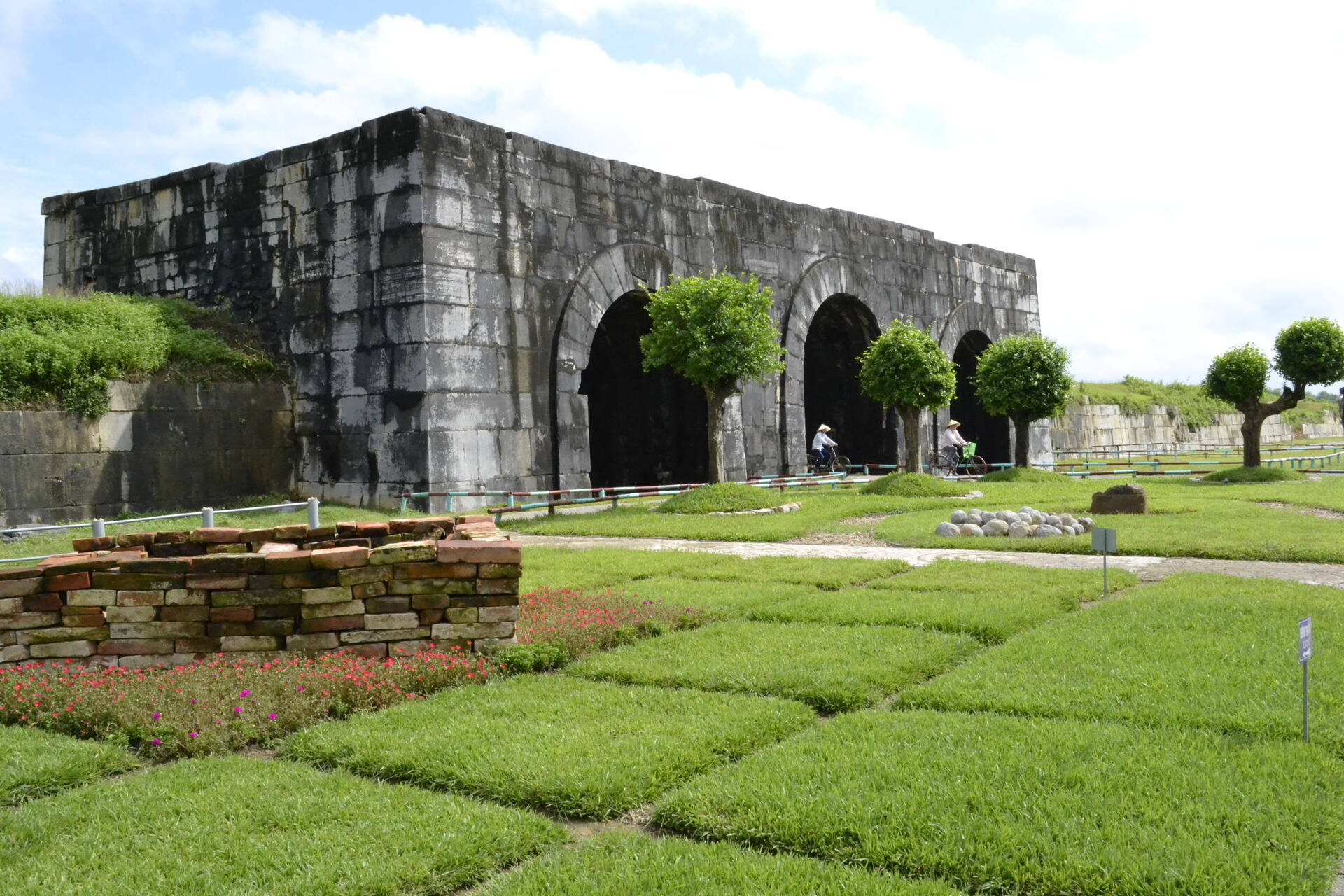
World Heritage Identification Number: 1358
World Heritage since: 2011
Category: Cultural Heritage
WHE Type: Buildings & Architectural Ensembles
Transboundary Heritage: No
Endangered Heritage: No
Country: 🇻🇳 Viet Nam
Continent: Asia
UNESCO World Region: Asia and the Pacific
Map
The Citadel of the Ho Dynasty: A Testimony to Neo-Confucianism and Southeast Asian Imperial Cities
The Citadel of the Ho Dynasty, inscribed as a UNESCO World Heritage Site in 2011, stands as a significant historical monument that offers insights into the political, economic, and cultural development of Vietnam during the 14th to the 18th centuries. Situated in the picturesque landscape of Thanh Hoa province, this 15th-century stone fortress serves as a remarkable example of the fusion of feng shui principles, neo-Confucian ideologies, and southeast Asian architectural styles.
More to come…UNESCO Description of the World Heritage Site
The 14th -century Ho Dynasty citadel, built according to the feng shui principles, testifies to the flowering of neo-Confucianism in late 14th century Viet Nam and its spread to other parts of east Asia. According to these principles it was sited in a landscape of great scenic beauty on an axis joining the Tuong Son and Don Son mountains in a plain between the Ma and Buoi rivers. The citadel buildings represent an outstanding example of a new style of south-east Asian imperial city.
UNESCO Justification of the World Heritage Site
Criterion (ii): The property exhibits Chinese Confucianism influence on a symbol of regal centralized power in the late 14th – early 15th century. It represents new developments in architectural style with respect to technology and, in adapting pre-existing geomantic city planning principles in an East Asian and South-east Asian context, makes full use of the natural surroundings and incorporated distinctly Vietnamese and East and Southeast Asian elements in its monuments and landscape.
Criterion (iv): The Ho Citadel is an outstanding example of an architectural ensemble in a landscape setting which illustrates a flowering of pragmatic Neo-Confucianism in late 14th century Viet Nam, at a time when it was spreading throughout East Asia to become a major philosophical influence on government in the region. The use of large blocks of stone testifies to the organizational power of the Neo-Confucian state, and the shift in the main axis distinguishes the Citadel layout from the Chinese norm.
Encyclopedia Record: Citadel of the Hồ Dynasty
The Citadel of the Hồ Dynasty is a 15th century stone fortress in Thanh Hóa, Vietnam. It served as the western capital of the Hồ dynasty (1398–1407) while also being an important political, economic, and cultural centre in the 16th to the 18th century. It is located in modern Tây Giai commune, Vĩnh Lộc District, in Thanh Hóa Province, in Vietnam's North Central Coast region.Additional Site Details
Area: 155.5 hectares
Number of Components: 3
(iv) — Outstanding example of a type of building or landscape
Coordinates: 20.0780555556 , 105.6047222222