World Heritage Identification Number: 441
World Heritage since: 1987
Category: Cultural Heritage
WHE Type: Archaeological Sites
Transboundary Heritage: No
Endangered Heritage: No
Country: 🇨🇳 China
Continent: Asia
UNESCO World Region: Asia and the Pacific
Map
The Mausoleum of the First Qin Emperor: A Glimpse into Ancient China's Imperial Legacy
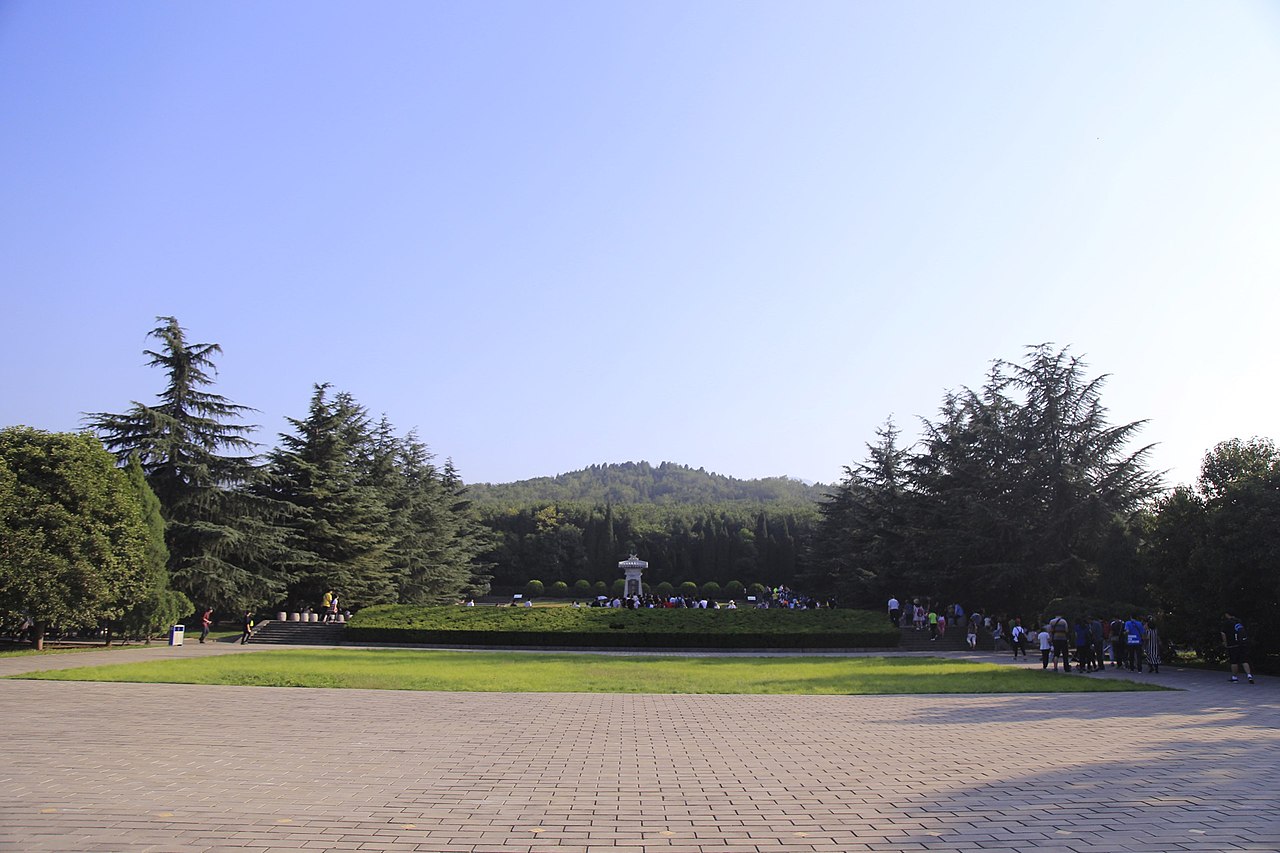
The Mausoleum of the First Qin Emperor, inscribed as a UNESCO World Heritage Site in 1987, offers a unique insight into the grandeur and intricacies of ancient China's imperial legacy. This architectural marvel, located in the Lintong District of Xi'an, Shaanxi, serves as the final resting place of Qin Shi Huang, the first emperor of the Chinese Qin dynasty.
The construction of the mausoleum began in 246 BC and continued for several decades. The layout of the complex is believed to reflect the urban plan of the Qin capital, Xianyang, which was organized into an inner and outer city. The circumference of the inner city measures approximately 2.5 kilometers, while the outer city spans around 6.3 kilometers. The tomb mound is situated in the south of the inner enclosure and faces east, aligning with the direction of the states the Emperor conquered.
At the heart of the architectural complex lies the main tomb mound, beneath which the burial chamber of the emperor is located. Although its location is known, the chamber itself remains unexcavated, contributing to the enduring mystery of the site. However, numerous associated pits and surrounding areas have yielded significant discoveries, including bronze vessels, jade artifacts, and the famous terracotta figures.
One of the most iconic features of the Mausoleum of the First Qin Emperor is the Terracotta Army. These life-sized terracotta sculptures depict the armies of Qin Shi Huang, complete with chariots, horses, and weapons. Each figure is unique, reflecting the meticulous attention to detail that characterized the Qin dynasty. The Terracotta Army is not only a testament to the artistic prowess of the period but also provides valuable insights into military organization during the time of the first emperor.
The Terracotta Warriors were not discovered until 1974, when farmers accidentally stumbled upon one of the pits containing these remarkable sculptures. Since then, ongoing excavations have revealed thousands more of these terracotta figures, hinting at the vast scale of the original army meant to protect the emperor in his afterlife.
The creation of the Terracotta Army was not merely an artistic endeavor but a feat of proto-industrial mass production. Archaeologists have determined that the figures were constructed using a modular system. Artisans utilized several standard molds to create separate body parts—torsos, legs, and arms—which were then assembled in various combinations. To ensure individual identity, specialized craftsmen hand-sculpted distinct facial features, hair styles, and expressions onto the generic head shapes before firing.
In addition to the Terracotta Army, the mausoleum complex has yielded other significant finds. Terracotta acrobats, musicians, and officials discovered in nearby pits offer insight into court life and ceremonial practices. Moreover, two elaborately crafted bronze chariots and horses, discovered in 1980, provide important evidence about the technology, warfare, and social structure of the time.
While the Terracotta Army is the most famous element, it represents only a small fraction of the vast 90-square-kilometer (56 square miles) necropolis. The site was designed as a "City of the Dead," a literal mirror of the imperial capital at Xianyang. Beyond the warrior pits, the landscape is dotted with subterranean stable yards, rare animal enclosures, and administrative offices, all populated by terracotta replicas of the Emperor’s real-world court.
The Mausoleum of the First Qin Emperor stands as a testament to the ambition, power, and cultural achievements of the first emperor of China. Its discovery has provided historians with invaluable insights into the Qin dynasty, offering a window into a formative period of Chinese history. As research and conservation efforts continue, the site remains one of the most significant archaeological complexes in the world.
UNESCO Description of the World Heritage Site
No doubt thousands of statues still remain to be unearthed at this archaeological site, which was not discovered until 1974. Qin (d. 210 B.C.), the first unifier of China, is buried, surrounded by the famous terracotta warriors, at the centre of a complex designed to mirror the urban plan of the capital, Xianyan. The small figures are all different; with their horses, chariots and weapons, they are masterpieces of realism and also of great historical interest.
UNESCO Justification of the World Heritage Site
Criterion (i): Because of their exceptional technical and artistic qualities, the terracotta warriors and horses, and the funerary carts in bronze are major works in the history of Chinese sculpture prior to the reign of the Han dynasty.
Criterion (iii): The army of statues bears unique testimony to the military organization in China at the time of the Warring Kingdoms (475-221 BCE) and that of the short-lived Empire of a Thousand Generations (221-210 BCE). The direct testimony of the objects found in situ (lances, swords, axes, halberds, bows, arrows, etc.) is evident. The documentary value of a group of hyper realistic sculptures where no detail has been neglected - from the uniforms of the warriors, their arms, to even the horses' halters - is enormous. Furthermore, the information to be gleaned from the statues concerning the craft and techniques of potters and bronze-workers is immeasurable.
Criterion (iv): The mausoleum of Qin Shi Huang is the largest preserved site in China. It is a unique architectural ensemble whose layout echoes the urban plan of the capital, Xianyang, with the imperial palace enclosed by the walls of the city, themselves encircled by other walls. This capital of the Qin (to which succeeded on the present site of Xian the capitals of the Han, Sui and Tang dynasties) is a microcosm of the Zhongguo (Middle Country) that Qin Shi Huang wanted both to unify (he imposed throughout the land a single system of writing, money, weights and measures) and to protect from the barbarians that could arrive from any direction (the army which watches over the dead emperor faces outward from the tomb).
Criterion (vi): The mausoleum of Qin Shi Huang is associated with an event of universal significance: the first unification of the Chinese territory by a centralized state created by an absolute monarch in 221 BCE.
Encyclopedia Record: Mausoleum of Qin Shi Huang
The Mausoleum of Qin Shi Huang is a tomb complex constructed for Qin Shi Huang, the first emperor of the Chinese Qin dynasty. It is located in modern-day Lintong District in Xi'an, Shaanxi. It was constructed over 38 years from 246 to 208 BC, and is situated underneath a 76-metre-tall (249 ft) tomb mound shaped like a truncated pyramid. The layout of the mausoleum is modeled on the layout of Xianyang, the capital of the Qin dynasty, which was divided into inner and outer cities. The circumference of the inner city is 2.5 km (1.6 mi) and the outer is 6.3 km (3.9 mi). The tomb is located in the southwest of the inner city and faces east. The main tomb chamber housing the coffin and burial artifacts is the core of the architectural complex of the mausoleum.Additional Site Details
Area: 244 hectares
Number of Components: 2
(iii) — Unique or exceptional testimony to a cultural tradition
(iv) — Outstanding example of a type of building or landscape
(vi) — Directly associated with events or living traditions
Coordinates: 34.381311 , 109.259951
World Heritage Research
Discover scientific research and academic studies that deepen our understanding of Mausoleum of the First Qin Emperor from its history and significance to its conservation, management, and contemporary challenges.
-
Communicating Qin Culture Globally: Constructing International Discursive Power around the Terracotta Army
The Terracotta Army of the Mausoleum of the First Emperor of Qin has emerged as a powerful global symbol of Chinese civilization, leveraging international discursive power through strategic communication initiatives. The study reveals that the museum's overseas promotion efforts—including an expansive social media presence, innovative content creation, and diversified communication channels—have effectively positioned the Terracotta Army as a cultural bridge between China and the world. By analyzing operational strategies, resource advantages, and outcomes of these initiatives, researchers demonstrate how structured global engagement can amplify the cultural significance of heritage sites, offering a model for international cultural diplomacy.
Mu, Y. (2026). Communicating Qin Culture Globally: Constructing International Discursive Power around the Terracotta Army. Scientific Journal of Humanities and Social Sciences, 8(2), 27–38. https://doi.org/10.54691/294e2z36
View Publication Record | Read Publication -
Aesthetics and technology: gold and silver ornaments from the Qin First Emperor's bronze chariots
Research on gold and silver ornaments from the Qin First Emperor's bronze chariots reveals that these components were produced using traditional piece-mould casting techniques, challenging assumptions about Western influence on early Chinese metalwork. The study employed digital microscopy, portable X-ray fluorescence (pXRF), and scanning electron microscopy (SEM) to analyze hundreds of gold and silver pieces used in chariot harnesses, canopies, and crossbows. Findings indicate that these techniques align more closely with indigenous Chinese practices, such as those used for bronze and iron manipulation, rather than Western methods like forging or filigree. The research also explores the growing significance of gold during the Warring States Period through comparative analysis with other Qin-era artifacts.
Li, X., Bevan, A., Yang, Y., Shao, W., Ma, S., Xia, Y., Zhao, K., Rehren, T., & Martinón-Torres, M. (2026). Aesthetics and technology: gold and silver ornaments from the Qin First Emperor’s bronze chariots. Archaeological Research in Asia, 46, 100715. https://doi.org/10.1016/j.ara.2026.100715
View Publication Record | Read Publication -
Study of contortion in the Qin and Han dynasties: insights from pit K9901
A groundbreaking analysis of Figurine No. 28 from Pit K9901 at the Mausoleum of the First Qin Emperor reveals that contortion techniques in Qin-Han dynasties were likely influenced by Western acrobatic traditions, challenging long-held assumptions about their origins. This study provides the first archaeological evidence linking early Chinese contortion to foreign cultural exchanges, tracing its evolution through regional adaptations. Researchers examined the figurine's physical stance and compared it with known Western contortion practices, offering new insights into ancient East-West interactions, burial beliefs, and the development of acrobatics in Chinese society. The findings bridge a critical gap in archaeological research on this understudied but culturally significant practice.
Xue, C., Xue, Y., Yang, C., Gao, R., Chen, X., & Liu, X. (2026). Study of contortion in the Qin and Han dynasties: insights from pit K9901. Npj Heritage Science, 14(1). https://doi.org/10.1038/s40494-026-02555-y
View Publication Record | Read Publication -
Craftsmanship and Manufacturing Techniques of Bone Bow‐End Plates From Pit 1 of the Qin Terracotta Army
A groundbreaking analysis of bone bow-end plates from Pit 1 of the Qin Terracotta Army reveals intricate craftsmanship and standardized manufacturing techniques used during the Qin Dynasty. Paleoproteomic analysis confirmed that these plates were specifically crafted from cervid long bones, while microwear and microscopic analyses uncovered distinct marks left by files, denticulates, chisels, abrasion, and drilling tools, indicating a sophisticated shaping and finishing process. Scanning electron microscopy (SEM) and Fourier-transform infrared spectroscopy (FTIR) further identified a multilayered surface coating consistent with modern lacquer films, suggesting the application of protective or decorative layers. These findings provide unprecedented insights into the technological organization and craftsmanship involved in Qin archery equipment production.
Liu, R., Ge, R., Shen, M., & Yang, L. (2026). Craftsmanship and Manufacturing Techniques of Bone Bow‐End Plates From Pit 1 of the Qin Terracotta Army. Archaeometry. Portico. https://doi.org/10.1111/arcm.70192
View Publication Record | Read Publication -
The Mausoleum Complex of Emperor Qin Shihuang
Archaeological discoveries at the Mausoleum of Emperor Qin Shihuang, particularly the Terracotta Army unearthed in 1974, have revolutionized understanding of China's first empire. These findings challenge long-standing historical accounts and preconceptions about Qin-period art, technology, and societal beliefs. Over five decades, multidisciplinary research involving international collaborations has uncovered auxiliary pits and tombs with diverse material remains, prompting a reevaluation of written sources like Sima Qian's Historical Records. The study highlights innovative methods in archaeological survey, excavation, conservation, and research, underscoring their significant impact on Chinese archaeology as a discipline.
Xiuzhen, L., & Hein, A. (2026). The Mausoleum Complex of Emperor Qin Shihuang. The Oxford Handbook of the History and Practice of Chinese Archaeology, 199–220. https://doi.org/10.1093/oxfordhb/9780197800324.013.0009
View Publication Record | Read Publication -
Digital Twins as Heritage Infrastructure
Digital twin technologies emerge as transformative heritage infrastructures, enabling precise monitoring, intelligent prevention, and dynamic communication for UNESCO World Heritage Sites. By synthesizing multisource sensing, refined modeling, and high-fidelity mapping, these systems create Cultural Heritage Information Models (CHIMs) and Communication Management Information Systems (CMIS), supporting real-time diagnostics, simulations, and predictive analytics. A triadic interactive model—reality space, virtual space, and cognitive space—serves as the conceptual foundation, facilitating AI-assisted virtual restoration, microclimate simulation, and immersive public engagement. Case studies from China, including the Mausoleum of the First Qin Emperor, demonstrate how digital twins address diverse heritage challenges, from underground archaeology to fragile cave art, reshaping conservation through participatory and sustainable management.
Dang, A., Zhuo, B., Zhang, Z., Weng, Y., & Moser-Samson, A. (2026). Digital Twins as Heritage Infrastructure. Navigating Dialogue and Diplomacy, 231–258. https://doi.org/10.1093/9780197910917.003.0013
View Publication Record | Read Publication -
Research on the center of mass calculation method for dynamic tilting of terracotta warriors from the mausoleum of Emperor Qin Shihuang
Research on the Terracotta Warriors from Qin Shi Huang's mausoleum reveals that the right leg and right side of the waist bear significant stress during dynamic tilting, highlighting critical areas for support in restoration. The study introduces an advanced method combining 3D laser scanning with an improved Moller-Trumbore algorithm to digitally reconstruct internal structures of fragmented warriors. By analyzing thickness data and calculating the center of mass using voxel and tetrahedral methods, it demonstrates that the voxel approach offers higher precision. Stability assessments further emphasize the need for targeted reinforcement in these high-stress regions to ensure artifact safety.
Wang, J., & Hu, Y. (2025). Research on the center of mass calculation method for dynamic tilting of terracotta warriors from the mausoleum of Emperor Qin Shihuang. International Conference on Optoelectronic Materials and Devices (ICOMD 2024), 7. https://doi.org/10.1117/12.3058807
View Publication Record | Read Publication