World Heritage Identification Number: 129
World Heritage since: 1980
Category: Cultural Heritage
WHE Type: Archaeological Sites
Transboundary Heritage: No
Endangered Heritage: No
Country: 🇭🇳 Honduras
Continent: Americas
UNESCO World Region: Latin America and the Caribbean
Map
The Maya Site of Copan: A Window into Ancient Civilization
The Maya Site of Copan, located in the Copán Department of western Honduras, is a captivating testament to the rich history and cultural achievements of the ancient Maya civilization. Inscribed as a UNESCO World Heritage Site in 1980, this significant archaeological site offers a unique glimpse into the complex society that thrived in the region between the 5th and 9th centuries CE.
More to come…UNESCO Description of the World Heritage Site
Discovered in 1570 by Diego García de Palacio, the ruins of Copán, one of the most important sites of the Mayan civilization, were not excavated until the 19th century. The ruined citadel and imposing public squares reveal the three main stages of development before the city was abandoned in the early 10th century.
UNESCO Justification of the World Heritage Site
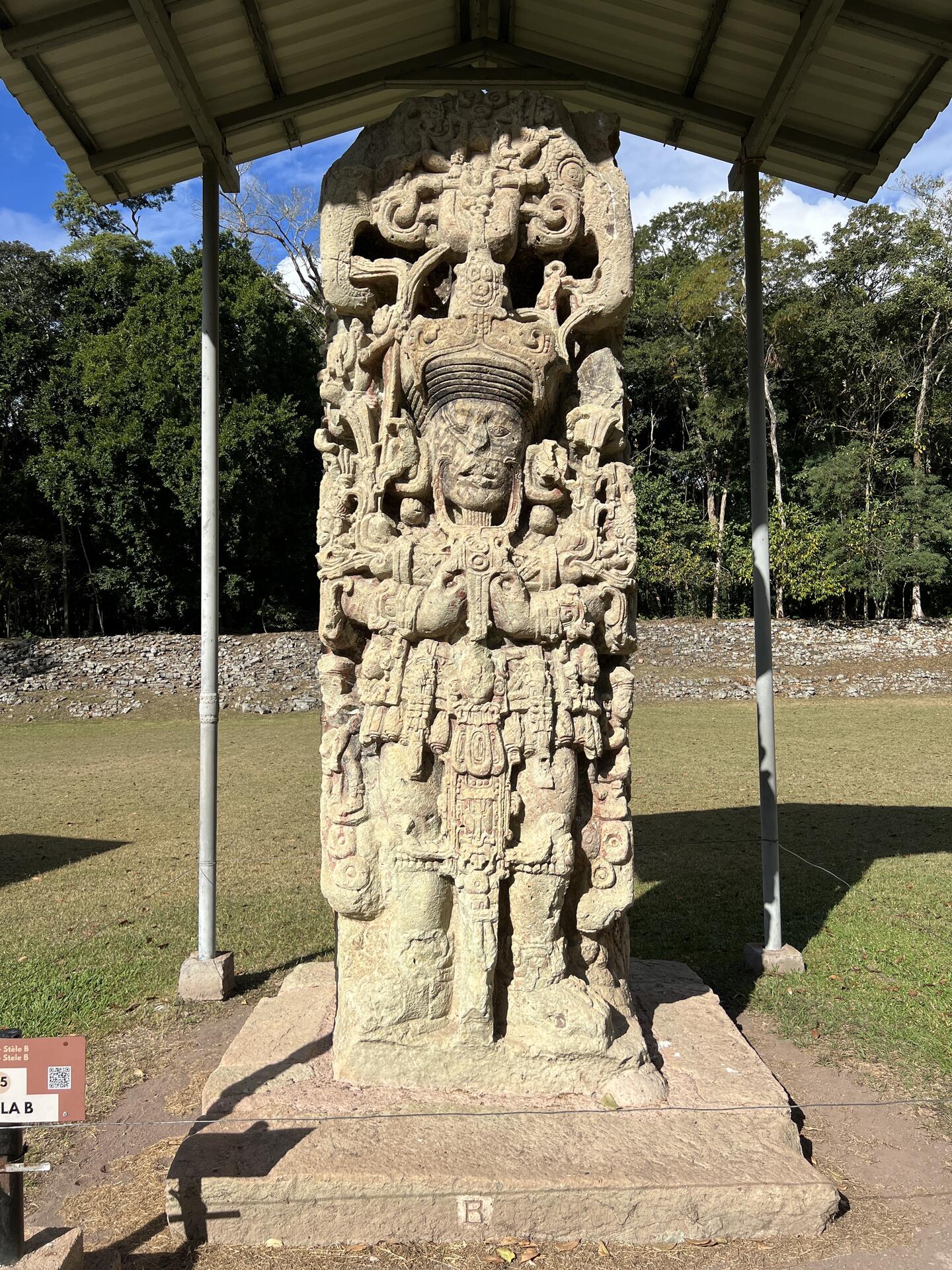
Criterion (iv): The design of the, with its temples, plazas, terraces and other features, represent a type of architectural and sculptural complex among the most characteristic of the Classic Maya Civilization. The Maya site of Copan represents one of the most spectacular achievements of the Classic Maya Period because of the number, elaboration and magnitude of its architectural and sculptural monuments. The stelae and altars at the Plaza form one of the most beautiful sculpture ensembles in the region. In both the design and execution of monuments, the Maya bequeathed a unique example of their creative genius and advanced civilization at Copan.
Criterion (vi): The lengthy inscription on the Hieroglyphic Stairway, the longest inscribed text in the Maya region, is of considerable historic significance for the site, and for a wider cultural area.
Encyclopedia Record: Copán
Copán is an archaeological site of the Maya civilization in the Copán Department of western Honduras, not far from the border with Guatemala. It is one of the most important sites of the Maya civilization, which was not excavated until the 19th century. The ruined citadel and imposing public squares reveal the three main stages of development before the city was abandoned in the early 10th century.Additional Site Details
Area: 15.095 hectares
Number of Components: 1
(vi) — Directly associated with events or living traditions
Coordinates: 14.85 , -89.13333
World Heritage Research
Discover scientific research and academic studies that deepen our understanding of Maya Site of Copan from its history and significance to its conservation, management, and contemporary challenges.
-
Foreword. The Four Heavens
Decades of pioneering research, led by David Stuart—a prominent Mayanist and MacArthur Genius award recipient—have unlocked the decipherment of Maya hieroglyphs at Copán, Honduras. This breakthrough allows scholars to read and interpret the historical narratives inscribed on ancient monuments, revealing a fascinating civilization previously shrouded in mystery. The study builds on advancements in glyph interpretation, providing unprecedented access to Maya history through epigraphic analysis. Stuart's contributions, beginning in his teenage years, have been instrumental in this scientific achievement, offering a synthesis of knowledge that bridges gaps for both academic experts and general readers.
(Ed.). (2026). Foreword. The Four Heavens, xi–xii. https://doi.org/10.1515/9780691280660-002
View Publication Record | Read Publication -
OP-394- Revisiting Subfossil Small-eared Shrews of the Genus Cryptotis Pomel, 1848 from Near Copán, Honduras, with the Description of a New Species (Mammalia: Eulipotyphla: Soricidae)
Researchers have identified a new species of small-eared shrew from subfossil remains unearthed near Copán, Honduras. This discovery challenges previous taxonomic classifications and reveals that the shrews, part of the Cryptotis goodwini clade, were significantly smaller than any known extant members of this group. The study revisits skeletal remains originally excavated in 1941–1942 from Gordon’s Cave #3, a site with extensive late Holocene bone deposits. By leveraging modern taxonomic revisions and detailed morphological analysis, the authors describe this new species, which likely persists today in the highlands north of Copán, highlighting the region's rich but understudied biodiversity.
Woodman, N., & Croft, D. A. (2026). OP-394- Revisiting Subfossil Small-eared Shrews of the Genus Cryptotis Pomel, 1848 from Near Copán, Honduras, with the Description of a New Species (Mammalia: Eulipotyphla: Soricidae). Occasional Papers, Museum at Texas Tech University. https://doi.org/10.32865/t6eb3b60
View Publication Record | Read Publication -
Assessment of tunnels stability in the Maya archaeological area of Copán, Honduras
Research at the UNESCO-listed Maya archaeological site of Copán, Honduras, reveals that tunnel stability is significantly influenced by soil saturation levels, particularly during rainy seasons. The study found that while initial excavations lacked structural support, later masonry linings helped mitigate localized collapses. Numerical analyses demonstrated that maintaining low water content in critical sections and ensuring proper drainage in lined tunnels are essential for long-term stability. This insight underscores the importance of monitoring soil moisture to prevent structural failures, providing crucial guidance for preserving such heritage sites.
Bilotta, E., Flora, A., Lourenço, P., & Pires, F. (2023). Assessment of tunnels stability in the Maya archaeological area of Copán, Honduras. E3S Web of Conferences, 382, 17004. https://doi.org/10.1051/e3sconf/202338217004
View Publication Record | Read Publication -
The Skyband Group, Copán Honduras
Excavations at the Skyband Group in Copán, Honduras, have revealed a significant elite Maya site that played a crucial role during the final years of Copán's royal dynasty. This site, dominated by palatial compounds and richly decorated structures, includes an elaborate carved throne featuring celestial imagery, suggesting its importance as a symbol of power and political influence. The findings indicate that sub-royal nobles competed for political dominance, particularly in the lead-up to the dynastic collapse around AD 800. Artifacts and burials from these buildings further emphasize their elite status and connections to Copán’s royal lineage. Notably, activity at the Skyband Group persisted even after the abrupt political decline, illustrating a 'slow collapse' process observed in other Maya centers.
David, W. (2023). The Skyband Group, Copán Honduras. https://doi.org/10.32028/9781803274294
View Publication Record | Read Publication -
Identificación y análisis de la orientación astronómica en los entierros Mayas del Periodo Clásico, en el Parque Arqueológico de Copán
Preliminary findings suggest that the orientation of Mayan burials at the UNESCO World Heritage Site of Copán, Honduras, during the Classic Period (250–900 AD), may hold significant astronomical connotations. This study builds on prior archaeoastronomical research at the site by analyzing burial orientations in relation to celestial objects, including the Sun, Moon, and Venus—key focal points for Mayan astronomers. Using methodical analysis, researchers identified variations in burial alignments that could reflect cosmological or ritualistic practices. The study contributes to the growing field of Cultural Astronomy in Honduras, offering new insights into the sophisticated astronomical knowledge embedded in this ancient civilization's funerary traditions. Further research is recommended to deepen these findings.
Pineda Montoya, M. A., & Rodríguez Carías, C. I. (2023). Identification and analysis of astronomical orientation in Mayan burials from the Classic Period, in the Copán Archaeological Park. Ciencias Espaciales, 14(2), 55–75. https://doi.org/10.5377/ce.v14i2.17070
View Publication Record | Read Publication -
Exploring inequality at Copan, Honduras: A 2D and 3D geospatial comparison of household wealth
A new analysis of household wealth at the Maya site of Copán, Honduras, reveals significantly higher inequality compared to other Maya regions. Using 2D and 3D geospatial methods, researchers calculated Gini coefficients based on household size, area, volume, and a modified volume metric during the Late Classic period (600–800 CE). The results suggest that Copán's unique urban layout—characterized by smaller house platforms, multi-patio structures, and informal groupings—correlates with greater economic disparity. While these findings provide a novel benchmark for inequality studies in Mesoamerica, the authors emphasize the need for further multi-proxy geospatial analysis and contextual comparisons to refine interpretations.
Richards-Rissetto, H. (2023). Exploring inequality at Copan, Honduras: A 2D and 3D geospatial comparison of household wealth. Ancient Mesoamerica, 34(3). https://doi.org/10.1017/s0956536123000147
View Publication Record | Read Publication -
Degradation and conservation of clay-containing stone: A review
A novel green conservation approach using bacterially-induced formation of CaCO3 cement and exopolymeric substances has shown promise in preventing or controlling clay-related damage to tuff stone at the ancient Maya site of Copán. This method, which inhibits clay swelling, offers a more effective alternative to traditional conservation materials like polymers and alkoxysilanes, often found to be ineffective against such damage. The review discusses the mechanisms behind clay-induced degradation, including scaling, flaking, spalling, exfoliation, and delamination, caused by wetting/drying cycles, while also exploring complementary processes that contribute to stone damage due to expansion/contraction.
Elert, K., & Rodriguez-Navarro, C. (2022). Degradation and conservation of clay-containing stone: A review. Construction and Building Materials, 330, 127226. https://doi.org/10.1016/j.conbuildmat.2022.127226
View Publication Record | Read Publication