World Heritage Identification Number: 1663
World Heritage since: 2023
Category: Cultural Heritage
WHE Type: Archaeological Sites
Transboundary Heritage: No
Endangered Heritage: No
Country: 🇬🇹 Guatemala
Continent: Americas
UNESCO World Region: Latin America and the Caribbean
Map
Exploring the Ancient History of National Archaeological Park Tak’alik Ab’aj
The National Archaeological Park Tak’alik Ab’aj, inscribed as a UNESCO World Heritage Site in 2023, offers a fascinating glimpse into the rich cultural history of Guatemala. Located on the Pacific Coast, this archaeological site spans over 1,700 years, providing valuable insights into the transition from the Olmec civilization to the emergence of Early Mayan culture.
More to come…UNESCO Description of the World Heritage Site
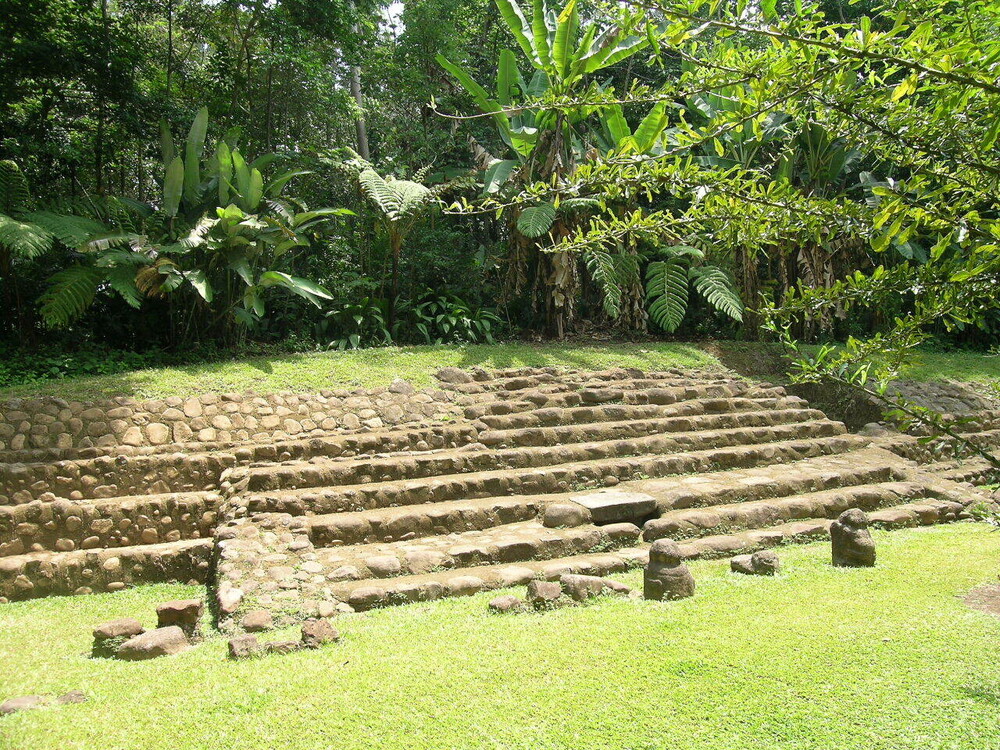
Tak’alik Ab’aj is an archaeological site located on the Pacific Coast of Guatemala. Its 1,700-year history spans a period that saw the transition from the Olmec civilization to the emergence of Early Mayan culture. Tak’alik Ab’aj had a primary role in this transition, in part because it was vital to the long-distance trade route that connected the Isthmus of Tehuantepec in today's Mexico to present-day El Salvador. Ideas and customs were shared extensively along this route. Sacred spaces and buildings were laid out according to cosmological principles, and innovative water management systems, ceramics, and lapidary art can be found. Today, Indigenous groups of different affiliations still consider the site a sacred place and visit it to perform rituals.UNESCO Justification of the World Heritage Site
Criterion (ii): Tak'alik Ab'aj played a key role in an important ancient long-distance trade route. Through the exchange of ideas, materials, and goods, it received and disseminated many of the most advanced ideas of urbanism, monumental arts and architecture, as well as water management, which were expressed in the layout, architecture and sculptural programme of the property. The architecture and urban layout were based on ancestral cosmological precepts and the spaces created were used as ritual settings for the public performances of the first rulers of the incipient kingdoms during the Preclassic period. In addition, the quantity and diversity of stone sculptures, combined with the evidence of advances in early writing, mathematics and calendrical systems found at the property, from the Preclassic period onwards, reflect the richness and diversity of cultural expressions resulting from contact with distant peoples and cultures, as well as from the transition from Olmec to Mayan cultural expressions.
Criterion (iii): Tak’alik Ab’aj is an outstanding example of the early development and use of many important cultural traditions, some of them now considered as representative of Mesoamerica, including the symbolic representation of the astronomical observations and their expression in urban planning and design, calendrical system, and hieroglyphic writing. Additionally, the re-use and re-combination of sculptures from different styles and earlier eras including, for example, sculptures of Olmec and Maya cultures, is an outstanding example of the creation of public displays or architectonic scenarios.
Encyclopedia Record: Takalik Abaj
Tak'alik Ab'aj is a pre-Columbian archaeological site in Guatemala. It was formerly known as Abaj Takalik; its ancient name may have been Kooja. It is one of several Mesoamerican sites with both Olmec and Maya features. The site flourished in the Preclassic and Classic periods, from the 9th century BC through to at least the 10th century AD, and was an important centre of commerce, trading with Kaminaljuyu and Chocolá. Investigations have revealed that it is one of the largest sites with sculptured monuments on the Pacific coastal plain. Olmec-style sculptures include a possible colossal head, petroglyphs and others. The site has one of the greatest concentrations of Olmec-style sculpture outside of the Gulf of Mexico, and was made a World Heritage Site in 2023 because of its long history of occupation.Additional Site Details
Area: 15.38 hectares
Number of Components: 1
(iii) — Unique or exceptional testimony to a cultural tradition
Coordinates: 14.6386111111 , -91.7325
Image
© Vice ministry of Cultural and Natural Heritage. Used with permission.
World Heritage Research
Discover scientific research and academic studies that deepen our understanding of National Archaeological Park Tak’alik Ab’aj from its history and significance to its conservation, management, and contemporary challenges.
-
Comparative Analysis of Preclassic and Protoclassic Burial Practices at Izapa and in Southeastern Mesoamerica
A comparative analysis of burial practices at Izapa, a key Preclassic and Protoclassic site in southeastern Mesoamerica, reveals significant shifts around 100 BCE that correlate with changes in political organization. While few burials were found in the ceremonial precinct, those identified—primarily from the Hato and Itstapa phases (100 BCE–250 CE)—highlight a transition in mortuary traditions. This study contextualizes Izapa's practices within regional patterns by comparing them to neighboring sites like El Ujuxte, Takalik Abaj, and Kaminaljuyu, offering insights into the site's evolving social structure during this pivotal period.
Lieske, R. (2018). COMPARATIVE ANALYSIS OF PRECLASSIC AND PROTOCLASSIC BURIAL PRACTICES AT IZAPA AND IN SOUTHEASTERN MESOAMERICA. Ancient Mesoamerica, 29(2), 289–307. https://doi.org/10.1017/s0956536118000226
View Publication Record | Read Publication -
Materialist Factors
Research at the National Archaeological Park Tak’alik Ab’aj reveals that Chocolá’s hydraulic engineering, including stone conduits and canals, mirrors systems found in other ancient Maya cities like Takalik Abaj and Kaminaljuyu. This suggests a deliberate sharing of technology among these polities, indicating strong interconnections between them. Additionally, the study proposes that intensive surplus cacao production—likely through large groves—contributed significantly to Chocolá’s rise as a powerful society. The 'Shook Altar,' a notable monument from the Southern Maya Region, plays a key role in this hypothesis, supporting theories of long-distance trade and economic prosperity.
Kaplan, J., & Umaña, F. P. (2018). Materialist Factors. Water, Cacao, and the Early Maya of Chocóla, 263–315. https://doi.org/10.5744/florida/9780813056746.003.0007
View Publication Record | Read Publication -
The Monuments of Chocolá and Nearby Sites
A groundbreaking catalog of over thirty previously undocumented sculptures from the Chocolá site, including stelae, pedestal monuments, and cupule altars, reveals a rich artistic corpus blending Olmec and Maya motifs. The study also suggests that the enigmatic 'Shook Altar' likely originated at Chocolá, potentially linked to water worship rituals. By analyzing recovered fragments and historical records, researchers expanded the known corpus from a single stela fragment to diverse monuments, including a potbelly monument and a 'capture' monument, while tracing the diaspora of other carved artifacts from the region.
Kaplan, J., & Umaña, F. P. (2018). The Monuments of Chocolá and Nearby Sites. Water, Cacao, and the Early Maya of Chocóla, 224–262. https://doi.org/10.5744/florida/9780813056746.003.0006
View Publication Record | Read Publication