World Heritage Identification Number: 335
World Heritage since: 1988
Category: Natural Heritage
WHE Type: Protected Areas & National Parks
Transboundary Heritage: No
Endangered Heritage: No
Country: 🇮🇳 India
Continent: Asia
UNESCO World Region: Asia and the Pacific
Map
A Glimpse into the Enchanting Nanda Devi and Valley of Flowers National Parks
The Nanda Devi and Valley of Flowers National Parks, nestled high in the picturesque West Himalayas of India, offer a captivating blend of natural beauty, biodiversity, and cultural significance. Inscribed as a UNESCO World Heritage Site in 1988, these parks have been celebrated for their exceptional landscapes, vibrant flora, and elusive fauna for over a century.
More to come…UNESCO Description of the World Heritage Site
Nestled high in West Himalaya, India’s Valley of Flowers National Park is renowned for its meadows of endemic alpine flowers and outstanding natural beauty. This richly diverse area is also home to rare and endangered animals, including the Asiatic black bear, snow leopard, brown bear and blue sheep. The gentle landscape of the Valley of Flowers National Park complements the rugged mountain wilderness of Nanda Devi National Park. Together they encompass a unique transition zone between the mountain ranges of the Zanskar and Great Himalaya, praised by mountaineers and botanists for over a century and in Hindu mythology for much longer.
UNESCO Justification of the World Heritage Site
Criterion (vii): The Nanda Devi National Park is renowned for its remote mountain wilderness, dominated by India's second highest mountain at 7,817 m and protected on all sides by spectacular topographical features including glaciers, moraines, and alpine meadows. This spectacular landscape is complemented by the Valley of Flowers, an outstandingly beautiful high-altitude Himalayan valley. Its ‘gentle’ landscape, breath-taking beautiful meadows of alpine flowers and ease of access has been acknowledged by renowned explorers, mountaineers and botanists in literature for over a century and in Hindu mythology for much longer.
Criterion (x): The Nanda Devi National Park, with its wide range of high altitude habitats, holds significant populations of flora and fauna including a number of threatened mammals, notably snow leopard and Himalayan musk deer, as well as a large population of bharal, or blue sheep. Abundance estimates for wild ungulates, galliformes and carnivores within the Nanda Devi National Park are higher than those in similar protected areas in the western Himalayas. The Valley of Flowers is internationally important on account of its diverse alpine flora, representative of the West Himalaya biogeographic zone. The rich diversity of species reflects the valley’s location within a transition zone between the Zanskar and Great Himalaya ranges to the north and south, respectively, and between the Eastern and Western Himalaya flora. A number of plant species are globally threatened, several have not been recorded from elsewhere in Uttarakhand and two have not been recorded in Nanda Devi National Park. The diversity of threatened species of medicinal plants is higher than has been recorded in other Indian Himalayan protected areas. The entire Nanda Devi Biosphere Reserve lies within the Western Himalayas Endemic Bird Area (EBA). Seven restricted-range bird species are endemic to this part of the EBA.
Encyclopedia Record: Nanda Devi and Valley of Flowers National Parks
The Nanda Devi National Park and Valley of Flowers National Parks is a UNESCO World Heritage Site in Uttarakhand, India. It possesses of two core areas about 20 km apart, made up by the Nanda Devi National Park and the Valley of Flowers National Park, plus an encompassing Combined Buffer Zone.Additional Site Details
Area: 71,210 hectares
Number of Components: 2
(x) — Contains most important habitats for biodiversity
Coordinates: 30.71667 , 79.66667
IUCN World Heritage Outlook
The 2025 Conservation Outlook on Nanda Devi and Valley of Flowers National Parks reports the following assessment:
Source: International Union for Conservation of Nature (IUCN) · View assessment
Image
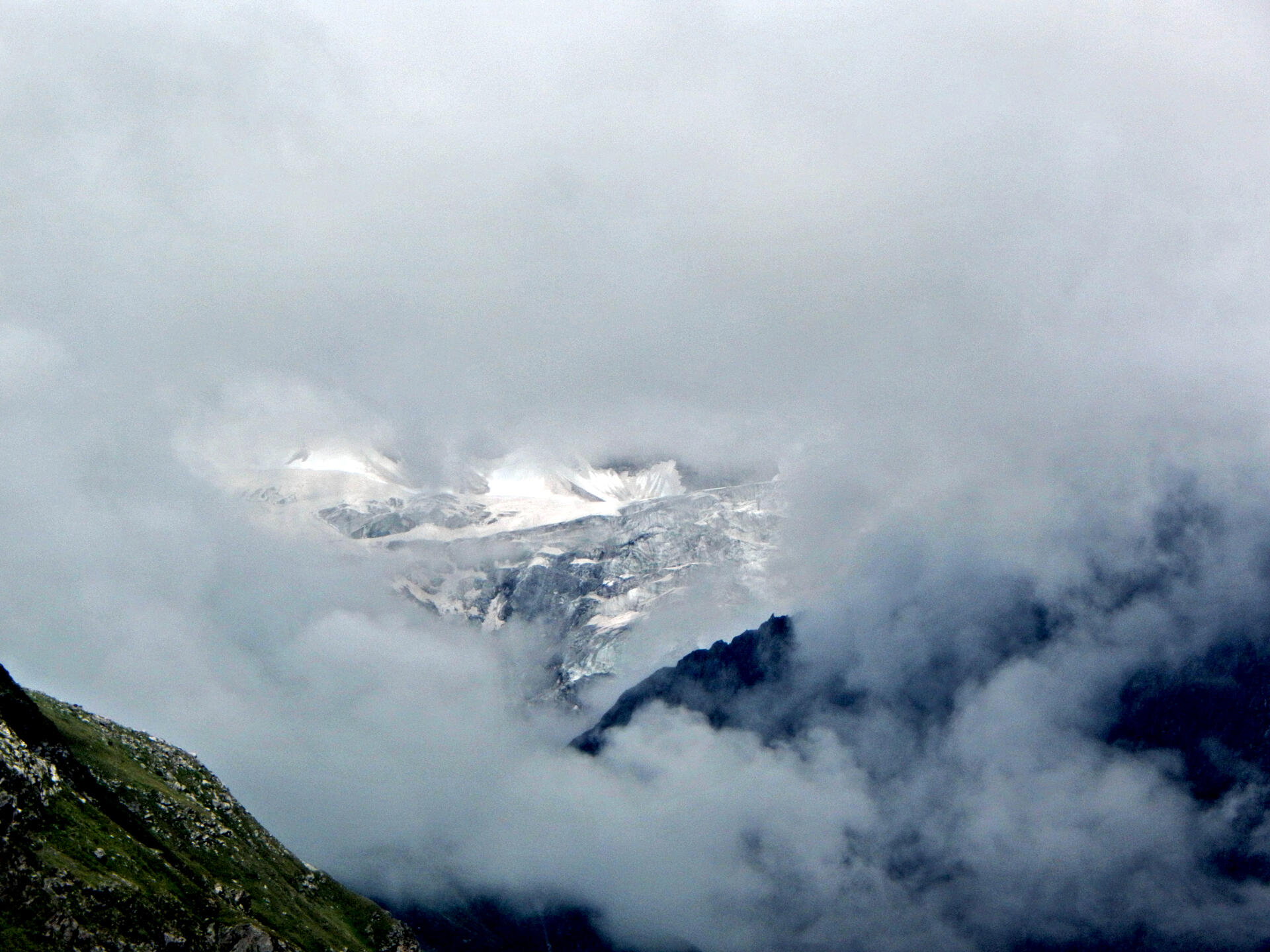
© John Muir Fan 86, CC BY-SA 4.0 Resized from original. (This derivative is under the same CC BY-SA license.)
World Heritage Research
Discover scientific research and academic studies that deepen our understanding of Nanda Devi and Valley of Flowers National Parks from its history and significance to its conservation, management, and contemporary challenges.
-
Modelling of the Valley of Flowers National Park, a World Heritage Site, by Additive Manufacturing
A groundbreaking methodology for creating 3D models of the Valley of Flowers National Park (VOFNP) has been developed using additive manufacturing. This innovative approach converts DEM data into 3D STL files, enabling the creation of detailed and accurate scaled-down models. These models serve as powerful tools for communication among stakeholders and facilitate long-term conservation monitoring. The study highlights the potential of additive manufacturing in preserving and studying this globally significant natural heritage site, which faces threats from religious tourism and population pressure.
Agrawal, S., Rana, J., Singla, A., Singh, H. N., & Beer, D. d. (2026). Modelling of the Valley of Flowers National Park, a World Heritage Site, by Additive Manufacturing. Cartographica, 61(1), 38–48. https://doi.org/10.3138/cart-2025-0007
View Publication Record | Read Publication -
"Forest Fire in Uttarakhand Curse for Economy, Ecosystem & Human Being"
Forest fires in Uttarakhand, India, pose significant threats to the region's economy, biodiversity, and water resources. Annual fires affect approximately 1750 hectares of forest, particularly during specific seasons, disrupting the delicate balance of ecosystems that support rivers, agriculture, and medicinal plants. The study highlights the critical role of forests in Uttarakhand—covering 45.43% of its geographical area—as a backbone for biodiversity and economic stability. However, these fires not only destroy forest resources but also threaten the livelihoods of local communities dependent on these ecosystems. The research underscores the urgent need for sustainable fire management strategies to protect this UNESCO World Heritage Site and its ecological significance.
Jalal, Dr. N. K. (2026). “Forest Fire in Uttarakhand Curse for Economy, Ecosystem & Human Being”. International Journal of Research and Innovation in Applied Science, 11(3), 255–262. https://doi.org/10.51584/ijrias.2026.11030024
View Publication Record | Read Publication -
Political Ecology of Transhumance Pastoralism in the Central Himalaya-Conservation, Livelihoods and Institutional Transformation: Thematic Report
Conservation policies in the Himalayas, particularly those restricting transhumant pastoral communities' access to alpine pastures, have inadvertently undermined traditional rights and livelihoods without sufficient scientific evidence of ecological harm. Traditional grazing practices, long believed to sustain biodiversity and healthy grasslands, are increasingly constrained by protected areas like Nanda Devi National Park and Valley of Flowers National Park. This study highlights the need for a balanced approach that integrates local knowledge, cultural values, and community participation into conservation strategies. By examining the political ecology of transhumance pastoralism—focusing on the Bhotiya and Van Gujjars communities—the research underscores how strict regulations have fragmented traditional grazing systems, leading to social and economic uncertainty. The findings advocate for inclusive decision-making processes that respect local institutions while protecting fragile mountain ecosystems.
R.K. Maikhuri, Girish Bhatt, Harendra Rawat, Suresh Bhatt, Rama Maikhuri, Kiran Dangawal, Chandan Negi, & Ajay Maletha. (2026). Political Ecology of Transhumance Pastoralism in the Central Himalaya-Conservation, Livelihoods and Institutional Transformation: Thematic Report. Annals of Arid Zone, 65(2), 243–253. https://doi.org/10.56093/aaz.v65i2.176994
View Publication Record | Read Publication -
Human Food in Royle’s Pika (Ochotona roylei) Diets: A Side Effect of Tourism in the Nanda Devi Biosphere Reserve, Uttarakhand, India
A shift in the dietary habits of Royle’s pika (Ochotona roylei) due to tourism-related human food availability has been observed in the Nanda Devi Biosphere Reserve, Uttarakhand, India. This small herbivorous mammal was found incorporating processed foods such as instant noodles, cooked rice, and chips into its diet, deviating from natural foraging patterns. The study highlights how increasing ecotourism, while economically beneficial, introduces unintended ecological consequences, including altered nutritional balance for the pika and habitat degradation. Research involved field observations to document dietary changes and assess their implications for wildlife and ecosystem health. These findings emphasize the need for sustainable tourism practices that mitigate negative impacts on biodiversity.
Maurya, V., Talreja, A., & Singh, A. A. (2025). Human Food in Royle’s Pika (Ochotona roylei) Diets: A Side Effect of Tourism in the Nanda Devi Biosphere Reserve, Uttarakhand, India. Ecology, Environment and Conservation, 31(2), 464–468. https://doi.org/10.53550/eec.2025.v31i02.012
View Publication Record | Read Publication -
Folklore, Religion and Traditions of Bhotiya Community: A Heritage-Based Model for Biodiversity Conservation in the Nanda Devi Biosphere, Uttarakhand, India
The Bhotiya tribe's deep-rooted connection between ecological stewardship and cultural heritage in the Nanda Devi Biosphere Reserve (NDBR) offers a sustainable model for biodiversity conservation. Their indigenous knowledge, shaped by generations of living in a fragile mountain ecosystem, aligns with modern conservation principles. This study highlights their ethnobiological traditions, particularly their expertise in medicinal plants, biodiversity, and the cultural significance of local flora and fauna. NDBR hosts diverse habitats from temperate forests to alpine meadows. The Bhotiya's livelihood, based on agriculture, pastoralism, and foraging, is intricately tied to seasonal rhythms and biodiversity. Through ethnographic methods, the study documents traditional knowledge related to medicinal and aromatic plants, wild edibles, animal resources, and conservation-oriented customs such as taboos and rituals. It underscores the community's role in biodiversity conservation and cultural resilience, advocating for the integration of traditional ecological knowledge into contemporary conservation frameworks.
Kandari, L. S., Bisht, V. K., Negi, T., Rawat, A. P., & Sharma, R. b. (2025). Folklore, Religion and Traditions of Bhotiya Community: A Heritage-Based Model for Biodiversity Conservation in the Nanda Devi Biosphere, Uttarakhand, India. Journal of Mountain Research. https://doi.org/10.51220/jmr.v20-i2.10
View Publication Record | Read Publication -
Scientific and Religious significance of ‘Himalaya Kumbh’ with particular reference to ‘Nanda Devi Raj Jat Yatra’ in Uttarakhand
The 'Himalaya Kumbh' festivals, notably the Nanda Devi Raj Jat Yatra in Uttarakhand and the Naropa Festival in Ladakh, are determined by celestial calculations involving Jupiter, the Sun, and the Moon. These calculations are believed to amplify Earth's electromagnetic fields, adding scientific significance to their spiritual importance. The Nanda Devi Raj Jat Yatra is a 12-year pilgrimage honoring Goddess Nanda Devi, where devotees gather for spiritual cleansing by bathing in sacred rivers, aiming for liberation from the cycle of rebirth. This study explores the intersection of scientific and religious significance, rooted in cultural traditions and celestial events.
Rawat, P. B. (2025). Scientific and Religious significance of ‘Himalaya Kumbh’ with particular reference to ‘Nanda Devi Raj Jat Yatra’ in Uttarakhand. Journal of Mountain Research. https://doi.org/10.51220/jmr.v20-i2.31
View Publication Record | Read Publication -
Botany of the Valley of Flowers National Park and its Environs
A comprehensive inventory of plant species in the Valley of Flowers National Park, a UNESCO World Heritage Site in the Garhwal Himalayas, reveals a rich botanical diversity with detailed documentation of flowering times, altitude ranges, vegetation habits, climate, and topography. The study identifies rare plants deserving conservation efforts, contributing critical data for biodiversity preservation. By systematically cataloging flora across varying environmental conditions, this research provides foundational insights into the ecological dynamics of one of India's most ecologically significant regions.
Wadhwa, B. M., Rao, R. R., & Hajra, P. K. (2024). Botany of the Valley of Flowers National Park and its Environs. Nelumbo, 129–175. https://doi.org/10.20324/nelumbo/v29/1987/74686
View Publication Record | Read Publication