World Heritage Identification Number: 1406
World Heritage since: 2014
Category: Natural Heritage
WHE Type: Protected Areas & National Parks
Transboundary Heritage: No
Endangered Heritage: No
Country: 🇮🇳 India
Continent: Asia
UNESCO World Region: Asia and the Pacific
Map
Great Himalayan National Park Conservation Area: A Biodiversity Haven in the Himalayas
The Great Himalayan National Park Conservation Area (GHNPCA), inscribed as a UNESCO World Heritage Site in 2014, is nestled within the western part of the towering Himalayan Mountain range in the northern Indian state of Himachal Pradesh. Spanning an expansive area of 90,540 hectares, this pristine wilderness is a testament to the breathtaking beauty and ecological importance of the Himalayan front ranges.
More to come…UNESCO Description of the World Heritage Site
This National Park in the western part of the Himalayan Mountains in the northern Indian state of Himachal Pradesh is characterized by high alpine peaks, alpine meadows and riverine forests. The 90,540 ha property includes the upper mountain glacial and snow meltwater sources of several rivers, and the catchments of water supplies that are vital to millions of downstream users. The GHNPCA protects the monsoon-affected forests and alpine meadows of the Himalayan front ranges. It is part of the Himalaya biodiversity hotspot and includes twenty-five forest types along with a rich assemblage of fauna species, several of which are threatened. This gives the site outstanding significance for biodiversity conservation.
UNESCO Justification of the World Heritage Site
Criterion (x): The Great Himalayan National Park Conservation Area is located within the globally significant “Western Himalayan Temperate Forests” ecoregion. The property also protects part of Conservation International’s Himalaya “biodiversity hot spot” and is part of the BirdLife International’s Western Himalaya Endemic Bird Area. The Great Himalayan National Park Conservation Area is home to 805 vascular plant species, 192 species of lichen, 12 species of liverworts and 25 species of mosses. Some 58% of its angiosperms are endemic to the Western Himalayas. The property also protects some 31 species of mammals, 209 birds, 9 amphibians, 12 reptiles and 125 insects. The Great Himalayan National Park Conservation Area provides habitat for 4 globally threatened mammals, 3 globally threatened birds and a large number of medicinal plants. The protection of lower altitude valleys provides for more complete protection and management of important habitats and endangered species such as the Western Tragopan and the Musk Deer.
Encyclopedia Record: Great Himalayan National Park
The Great Himalayan National Park (GHNP) is a national park in India, located in Banjar sub-division of Kullu in the state of Himachal Pradesh. The park was established in 1984 and is spread over an area of 1171 km2; elevations within the park range between 1500 and 6000 m. The Great Himalayan National Park is a habitat to numerous flora and more than 375 fauna species, including approximately 31 mammals, 181 birds, 3 reptiles, 9 amphibians, 11 annelids, 17 mollusks and 127 insects. They are protected under the strict guidelines of the Wildlife Protection Act of 1972; hence any sort of hunting is not permitted.Additional Site Details
Area: 90,540 hectares
Number of Components: 1
Coordinates: 31.8333333333 , 77.5833333333
IUCN World Heritage Outlook
The 2025 Conservation Outlook on Great Himalayan National Park Conservation Area reports the following assessment:
Source: International Union for Conservation of Nature (IUCN) · View assessment
Image
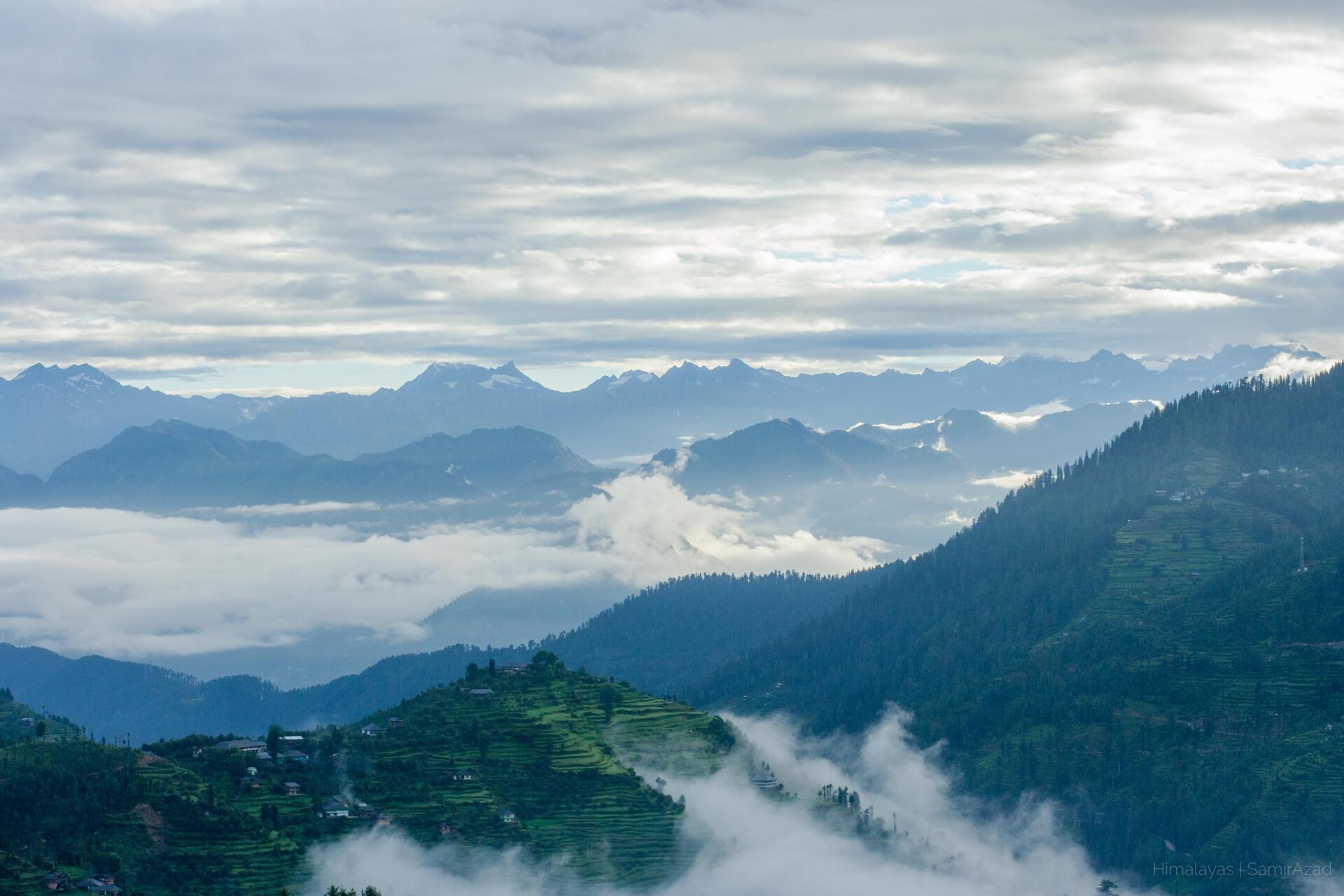
© Samir Azad, CC BY-SA 4.0 Resized from original. (This derivative is under the same CC BY-SA license.)
World Heritage Research
Discover scientific research and academic studies that deepen our understanding of Great Himalayan National Park Conservation Area from its history and significance to its conservation, management, and contemporary challenges.
-
Land Change in Tirthan Valley: The Case of Great Himalayan National Park Conservation Area
A significant increase in forest cover, rocky/barren land, agriculture/horticulture land, and settlement/built-up areas has been observed in the Tirthan Valley, part of the Great Himalayan National Park Conservation Area (GHNPCA), over the past five decades. Conversely, there has been a notable decrease in pasture/open land, snow cover, and river/water bodies. This study, utilizing multi-temporal LANDSAT satellite images, reveals substantial land use and land cover changes post-protected area status, raising concerns about the sustainability of both natural and man-made ecosystems in the region.
Irfan, M. (2023). Land Change in Tirthan Valley: The Case of Great Himalayan National Park Conservation Area. Journal of Human Ecology, 83(1-3). https://doi.org/10.31901/24566608.2023/83.1-3.3355
View Publication Record | Read Publication -
Decreasing potential suitable habitat of bumble bees in the Great Himalayan National Park Conservation area
A first-of-its-kind study projects that four bumble bee species—Bombus tunicatus, Bombus haemorrhoidalis, Bombus festivus, and Bombus asiaticus—will face heightened extinction risks in the Great Himalayan National Park Conservation Area by 2050 due to shrinking suitable habitat. Researchers used a MaxEnt species distribution model with bioclimatic and biophysical data collected between May 2018 and October 2019, identifying nine bumble bee species in the region. The Jackknife test revealed key variables influencing these projections. This decline threatens vital pollinators for Himalayan agriculture and wild ecosystems.
Singh, A. P., Chandra, A., De, K., Uniyal, V. P., & Sathyakumar, S. (2022). Decreasing potential suitable habitat of bumble bees in the Great Himalayan National Park Conservation area. Oriental Insects, 57(1), 36–53. https://doi.org/10.1080/00305316.2022.2040631
View Publication Record | Read Publication -
Faunistic account on the Heterocera of Tirthan Valley, Great Himalayan National Park Conservation Area: a preliminary checklist (Insecta: Lepidoptera)
A preliminary checklist identifies 165 species of moths (Heterocera) from the Tirthan Valley, Great Himalayan National Park Conservation Area, significantly expanding the known diversity of Lepidoptera in the region. The study, conducted between April 2018 and July 2019, highlights the dominance of Erebidae and Geometridae families, each contributing 45 species, followed by Crambidae with 30 species. This adds to the existing record of 385 moth species in the park, marking the first comprehensive documentation of Heterocera diversity in this valley. The research underscores the ecological richness of the Great Himalayan National Park Conservation Area and provides a foundational dataset for future biodiversity studies.
Singh, A. P., Chandra, A., De, K., Uniyal, V. P., & Joshi, R. (2022). Faunistic account on the Heterocera of Tirthan Valley, Great Himalayan National Park Conservation Area: a preliminary checklist (Insecta: Lepidoptera). SHILAP Revista de Lepidopterología, 50(199), 497–524. https://doi.org/10.57065/shilap.65
View Publication Record | Read Publication -
A preliminary assessment of odonate diversity along the river Tirthan, Great Himalayan National Park Conservation Area, India with reference to the impact of climate change
A recent study along the Tirthan River in the Great Himalayan National Park Conservation Area (GHNPCA) revealed 19 odonate species, including eight dragonflies and 11 damselflies, with 17 recorded for the first time. This significantly increases the known diversity of odonates in GHNPCA to 23 species across 18 genera and eight families. Notably, three species—Indothemis carnatica, Agriocnemis femina, and Argiocnemis rubescens—were documented for the first time in the western Himalayas. The study also observed a marked shift in odonate species composition over 18 years, suggesting that climate change-driven microhabitat alterations may be reshaping local biodiversity. This research highlights the vulnerability of high-altitude ecosystems to climatic shifts and underscores the need for long-term monitoring in protected areas.
Singh, A. P., De, K., Uniyal, V. P., & Sathyakumar, S. (2021). A preliminary assessment of odonate diversity along the river Tirthan, Great Himalayan National Park Conservation Area, India with reference to the impact of climate change. Journal of Threatened Taxa, 13(11), 19611–19615. https://doi.org/10.11609/jott.5427.13.11.19611-19615
View Publication Record | Read Publication -
An experimental study on bioturbation and dung removal activities of Catharsius molossus (Linnaeus, 1758) (Coleoptera: Scarabaeidae) in the Greater Himalaya
Research reveals that the dung beetle Catharsius molossus exhibits significant variation in bioturbation and dung removal activities across elevations in the Great Himalayan National Park Conservation Area, with both metrics showing a strong linear relationship to elevation. This suggests that higher-altitude habitats may experience reduced nutrient transfer from dung to soil due to diminished beetle activity, potentially impacting surrounding ecosystems. The study employed experimental methods at six distinct elevations to quantify these effects, providing new insights into the ecological role of this species in the Greater Himalaya.
Singh, A. P., De, K., Uniyal, V. P., & Sathyakumar, S. (2021). An experimental study on bioturbation and dung removal activities of Catharsius molossus (Linnaeus, 1758) (Coleoptera: Scarabaeidae) in the Greater Himalaya. Journal of Asia-Pacific Biodiversity, 14(2), 169–173. https://doi.org/10.1016/j.japb.2020.12.010
View Publication Record | Read Publication -
Heritage as Weapon: Contested Geographies of Conservation and Culture in the Great Himalayan National Park Conservation Area, India
Local communities in the Great Himalayan National Park Conservation Area (GHNPCA), India, have successfully used cultural heritage as a tool to resist conservation policies that restrict access to sacred sites. By framing their region as the 'Valley of the Gods' and leveraging tourism imagery depicting local deities, these communities have challenged global conservation agendas while channeling opposition through democratic processes. The study highlights how democracy empowers local resistance against new environmental restrictions, illustrating a complex negotiation between global heritage values and local cultural practices. This research underscores the role of heritage in shaping contested geographies, particularly in mountainous regions under pressure from expanding protected areas.
Chhatre, A., Lakhanpal, S., & Prasanna, S. (2016). Heritage as Weapon: Contested Geographies of Conservation and Culture in the Great Himalayan National Park Conservation Area, India. Annals of the American Association of Geographers, 107(2), 456–464. https://doi.org/10.1080/24694452.2016.1243040
View Publication Record | Read Publication