World Heritage Identification Number: 229
World Heritage since: 1983
Category: Cultural Heritage
WHE Type: Buildings & Architectural Ensembles
Transboundary Heritage: No
Endangered Heritage: No
Country: 🇫🇷 France
Continent: Europe
UNESCO World Region: Europe and North America
Map
The Architectural Ensemble of Place Stanislas, Place de la Carrière, and Place d'Alliance in Nancy: A Testament to Enlightened Urban Planning
The Architectural Ensemble of Place Stanislas, Place de la Carrière, and Place d'Alliance in Nancy, France, stands as a remarkable testament to the visionary urban planning of the 18th century. Inscribed as a UNESCO World Heritage Site in 1983, this architectural ensemble offers a unique blend of aesthetic beauty, functionality, and historical significance.
More to come…UNESCO Description of the World Heritage Site
Nancy, the temporary residence of a king without a kingdom – Stanislas Leszczynski, later to become Duke of Lorraine – is paradoxically the oldest and most typical example of a modern capital where an enlightened monarch proved to be sensitive to the needs of the public. Built between 1752 and 1756 by a brilliant team led by the architect Héré, this was a carefully conceived project that succeeded in creating a capital that not only enhanced the sovereign's prestige but was also functional.
UNESCO Justification of the World Heritage Site
Criterion (i): The three squares of Nancy constitute a unique artistic achievement, veritable masterpiece of creative genius.
Criterion (iv): The squares of Nancy bear witness to the oldest and most characteristic example of town planning of the Enlightenment, in a modern city where a enlightened monarch carried out an exceptional programme of public spaces and buildings, illustrating that he was receptive to the needs of the population.
Encyclopedia Record: Place Stanislas
The Place Stanislas is a large pedestrianised square in the French city of Nancy, in the Lorraine historic region. Built between 1752 and 1756 on the orders of Stanislaus I, former King of Poland and Grand Duke of Lithuania, then Duke of Lorraine, the square is one of the oldest examples of an architecturally consistent monumental public square and is an excellent example of 18th-century urban architecture. Since 1983, the architectural ensemble comprising the Place Stanislas, the extension of its axis, the Place de la Carrière and the Place d'Alliance, has been a UNESCO World Heritage Site.Additional Site Details
Area: 7 hectares
Number of Components: 1
(iv) — Outstanding example of a type of building or landscape
Coordinates: 48.69361111 , 6.183333333
Image
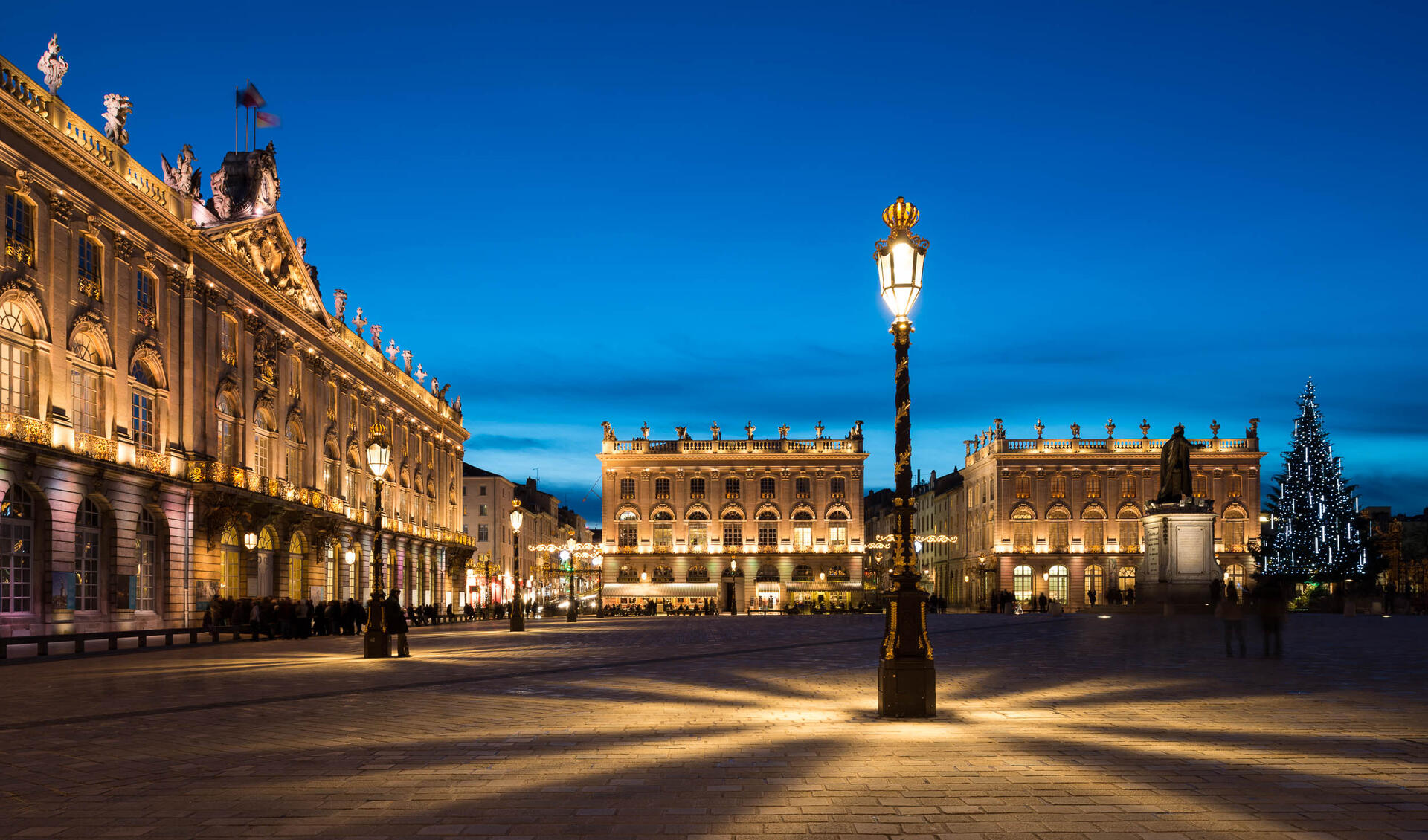
© Nicolas Cornet, CC BY-SA 4.0 Resized from original. (This derivative is under the same CC BY-SA license.)
World Heritage Research
Discover scientific research and academic studies that deepen our understanding of Place Stanislas, Place de la Carrière and Place d'Alliance in Nancy from its history and significance to its conservation, management, and contemporary challenges.
-
Héritages industriels et patrimonialisation : Nancy à l’ombre de la place Stanislas ?
Nancy, renowned for its UNESCO-listed architectural heritage and Art Nouveau charm, harbors a contrasting industrial legacy that remains largely overlooked in urban renewal efforts. While local authorities have prioritized the preservation of its celebrated landmarks like Place Stanislas, an older industrial district from the 19th century persists without significant patrimonial integration. This study reveals that, despite the absence of strong institutional support for industrial heritage conservation, remnants of this era endure within ongoing urban transformations. The research interrogates the role of industrial legacies in shaping Nancy's identity and their potential to enrich broader patrimonial narratives, challenging conventional notions of what constitutes valuable heritage in urban planning.
Barbier, L. (2023). Héritages industriels et patrimonialisation : Nancy à l’ombre de la place Stanislas ? Territoire En Mouvement, 56. https://doi.org/10.4000/tem.9299
View Publication Record | Read Publication -
Les André, une stratégie professionnelle dynastique
The André dynasty, based in Nancy since the 18th century, exemplifies a successful professional strategy by adapting to evolving market demands and political contexts. By diversifying their expertise—from architecture to engineering—they expanded their influence during industrialization in the late 19th century. Post-World War II, they shifted focus toward state commissions, securing ministerial approvals while maintaining meticulous self-representation through their agency space and promotional imagery. This study highlights their resilience, political integration, and strategic adaptation across centuries.
Bauer, C. (2021). Les André, une stratégie professionnelle dynastique. Livraisons d’Histoire de L’architecture, 41. https://doi.org/10.4000/lha.3240
View Publication Record | Read Publication -
Charles-François Guibal et son œuvre
Charles-François Guibal's (1781–1861) overlooked contributions to the documentation of Lorraine's architectural heritage, particularly through his meticulous drawings of disappearing monuments, have been recognized for their artistic merit and historical significance. His collection of 100 views, presented at the 1850 Nancy Scientific Congress and later donated to the Municipal Library, offers an unparalleled record of structures that have since vanished or deteriorated. These works, executed with remarkable precision, not only showcase his talent as a draughtsman but also serve as an invaluable resource for understanding the region's architectural evolution during the 19th century. This study highlights Guibal's pivotal role in pioneering monumental archaeology in Lorraine, bridging artistic expression and scholarly documentation.
Giuliato, G. (2020). Charles-François Guibal et son œuvre. https://doi.org/10.4000/books.edul.6587
View Publication Record | Read Publication -
Préface. Charles-François Guibal et Son Œuvre
Nancy's urban landscape stands as a testament to its rich architectural and cultural evolution, particularly under the influence of Stanislas in the 18th century. The city's transformation during this period showcased a harmonious blend of architecture, sculpture, and wrought ironwork, creating one of the world's most celebrated public squares. Additionally, Nancy emerged as a cradle for decorative arts at the turn of the 20th century with the rise of its namesake school, which significantly influenced European art movements. This study highlights Nancy's dual legacy: its Renaissance origins under Charles III and its subsequent development into a hub for artistic innovation during the Art Nouveau era.
Hénart, L. (2020). Préface. Charles-François Guibal et Son Œuvre, 7–8. https://doi.org/10.4000/books.edul.6602
View Publication Record | Read Publication