World Heritage Identification Number: 1283
World Heritage since: 2008
Category: Cultural Heritage
WHE Type: Buildings & Architectural Ensembles
Transboundary Heritage: No
Endangered Heritage: No
Country: 🇫🇷 France
Continent: Europe
UNESCO World Region: Europe and North America
Map
The Fortifications of Vauban: A Legacy of Military Architecture
The Fortifications of Vauban, inscribed as a UNESCO World Heritage Site in 2008, represents a remarkable testament to the pinnacle of classical fortifications in Western military architecture. Comprising 12 groups of fortified buildings and sites along the western, northern, and eastern borders of France, this extensive network of defensive structures bears witness to the genius of Sébastien Le Prestre de Vauban (1633-1707), a military engineer who served under King Louis XIV.
More to come…UNESCO Description of the World Heritage Site
Fortifications of Vauban consists of 12 groups of fortified buildings and sites along the western, northern and eastern borders of France. They represent the finest examples of the work of Sébastien Le Prestre de Vauban (1633-1707), a military engineer of King Louis XIV. The serial property includes towns built from scratch by Vauban, citadels, urban bastion walls and bastion towers. There are also mountain forts, sea forts, a mountain battery and two mountain communication structures. This property is inscribed as bearing witness to the peak of classic fortifications, typical of western military architecture. Vauban also played a major role in the history of fortification in Europe and on other continents until the mid-19th century.
UNESCO Justification of the World Heritage Site
Criterion (i): Vauban’s work bears witness to the peak of classic bastioned fortification, typical of western military architecture of modern times.
Criterion (ii): Vauban played a major role in the history of fortification. The imitation of his standard-models of military buildings in Europe and on the American continent, the dissemination in Russian and Turkish of his theoretical thinking along with the use of the forms of his fortification as a model for fortresses in the Far East, bear witness to the universality of his work.
Criterion (iv): Vauban’s work illustrates a significant period of human history. It is a work of the mind applied to military strategy, architecture and construction, civil engineering, and economic and social organisation.
Encyclopedia Record: Fortifications of Vauban
The Fortifications of Vauban is a UNESCO World Heritage Site made up of 12 groups of fortified buildings and sites along the borders of France. They were designed by military architect Sébastien Le Prestre de Vauban (1633–1707) during the reign of King Louis XIV. These sites include a variety of fortifications, ranging from citadels, to mountain batteries and sea fortifications, to bastion walls and towers. In addition, the site includes cities built from scratch by Vauban and communication towers. These sites were chosen because they exemplify Vauban's work, bearing witness to the influence of his designs on military and civilian engineering on a global scale from the 17th century to the 20th century.Additional Site Details
Area: 1,153.16 hectares
Number of Components: 12
(ii) — Significant interchange of human values
(iv) — Outstanding example of a type of building or landscape
Coordinates: 47.2361111111 , 6.0269444444
Image
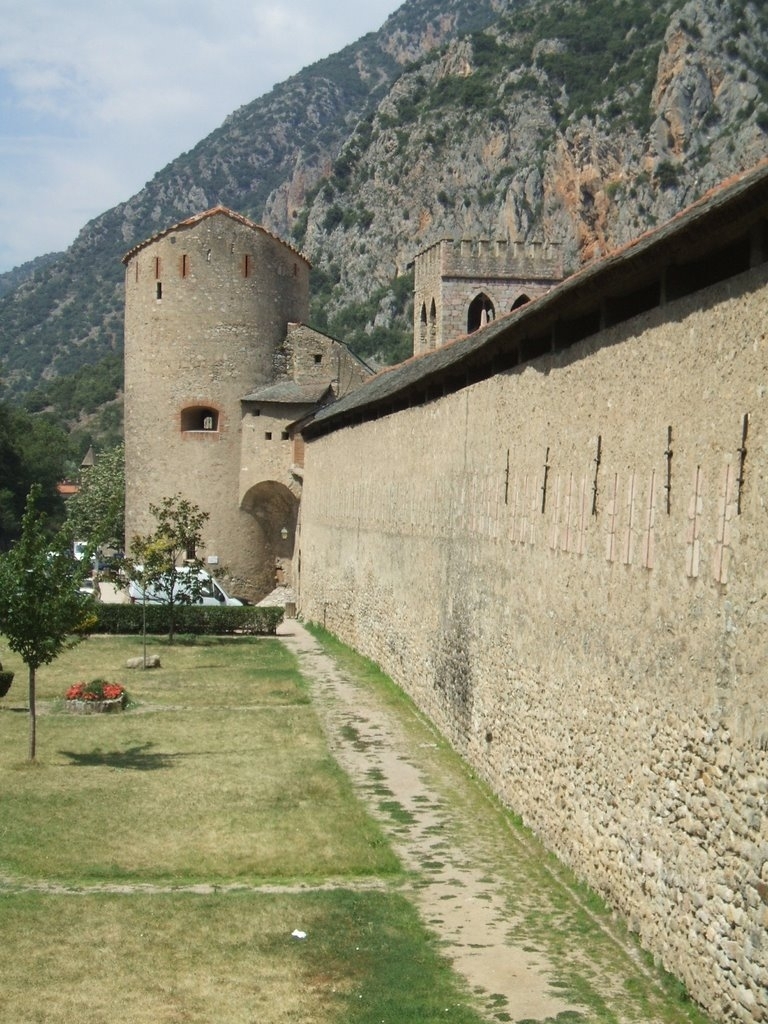
© LeZibou, CC BY-SA 3.0 Resized from original. (This derivative is under the same CC BY-SA license.)
World Heritage Research
Discover scientific research and academic studies that deepen our understanding of Fortifications of Vauban from its history and significance to its conservation, management, and contemporary challenges.
-
Defensive Architecture and the Oval Shape in Military Treatises between the 16th and 18th Centuries
A reassessment of 16th and 17th-century military treatises reveals that the oval shape, though marginalized by the dominant polygonal 'alla moderna' fortification paradigm, was conceived as a cultivated alternative. While theoretical challenges hindered its widespread adoption in large urban fortifications, smaller coastal strongholds like Fort Pâté, Fort Louvois, and Fort Lupin—part of Vauban's Atlantic coastal defense network—demonstrate its practical feasibility. These findings highlight the oval's potential as an effective design matrix in specific defensive contexts, bridging theoretical innovation with operational implementation.
Zerlenga, O., Cicala, M., Miele, R., & Cirillo, V. (2026). Defensive Architecture and the Oval Shape in Military Treatises between the 16th and 18th Centuries. PROCEEDINGS of the International Conference on Fortifications of the Mediterranean Coast FORTMED 2026. Vol. 22. https://doi.org/10.4995/fortmed2026.2026.21380
View Publication Record | Read Publication -
Besançon sous la menace d’un siège (octobre 1870-février 1871)
In the Franco-Prussian War of 1870–1871, Besançon's Vauban fortifications faced imminent threat from advancing German forces. Despite expectations of a siege, the city was spared, though repeated dangers loomed. This study examines how the population and military authorities responded to these threats, highlighting the resilience and strategic significance of Vauban’s defensive structures during wartime. The research relies on historical accounts and archival records, offering insights into civilian behavior under duress and the effectiveness of 19th-century fortifications.
Pingué, D. (2025). Besançon sous la menace d’un siège (octobre 1870-février 1871). La Guerre de Siège En 1870-1871, 133–146. https://doi.org/10.4000/14ttb
View Publication Record | Read Publication -
Les fortifications médiévales et modernes de Besançon : étude historique et archéologique
A comprehensive study of Besançon's fortifications from 1290 to 1789 reveals five distinct evolutionary phases, shaped by political upheavals and military strategies. The research combines archival analysis with architectural archaeology, uncovering lost defensive structures and tracing their transformation through medieval, early modern, Vauban-era, and later adaptations. Key findings highlight the city's strategic significance, with its morpho-geological advantages influencing fortification design across centuries. Seven specific structures were examined in detail, providing insights into construction techniques and historical context.
Berger, A. Les fortifications médiévales et modernes de Besançon : étude historique et archéologique. https://doi.org/10.70675/a46ce578z6174z457czb2caz91c62b284ea5
View Publication Record | Read Publication -
The contribution of the italian architect Giovanni Morando Visconti to the knowledge of the antiquities of Roman Dacia
Giovanni Morando Visconti, an Italian architect and engineer, made significant contributions to the understanding of Roman Dacia's antiquities during his service in the Habsburg army. His work, particularly the design of the Fortifications of Vauban in Alba Iulia, where he succumbed to the plague, left a lasting legacy. Visconti also created the first printed map of Transylvania and neighboring territories, marking civil localities, fortifications, and Roman ruins. This map remains invaluable for archaeologists today. His career, marked by close ties with General Eugene of Savoy and high imperial confidence, highlights his technical expertise and humanistic knowledge, which he applied during the Habsburg-Ottoman conflicts (1683-1699).
Timoc, C. (2022). The contribution of the italian architect Giovanni Morando Visconti to the knowledge of the antiquities of Roman Dacia. Quaestiones Romanicae, IX(3), 170–177. https://doi.org/10.35923/qr.09.03.16
View Publication Record | Read Publication