World Heritage Identification Number: 1234
World Heritage since: 2010
Category: Natural Heritage
WHE Type: Natural Landscapes & Geographic Features
Transboundary Heritage: No
Endangered Heritage: No
Country: 🇷🇺 Russian Federation
Continent: Europe
UNESCO World Region: Europe and North America
Map
Putorana Plateau: An Unspoiled Natural Haven in Northern Central Siberia
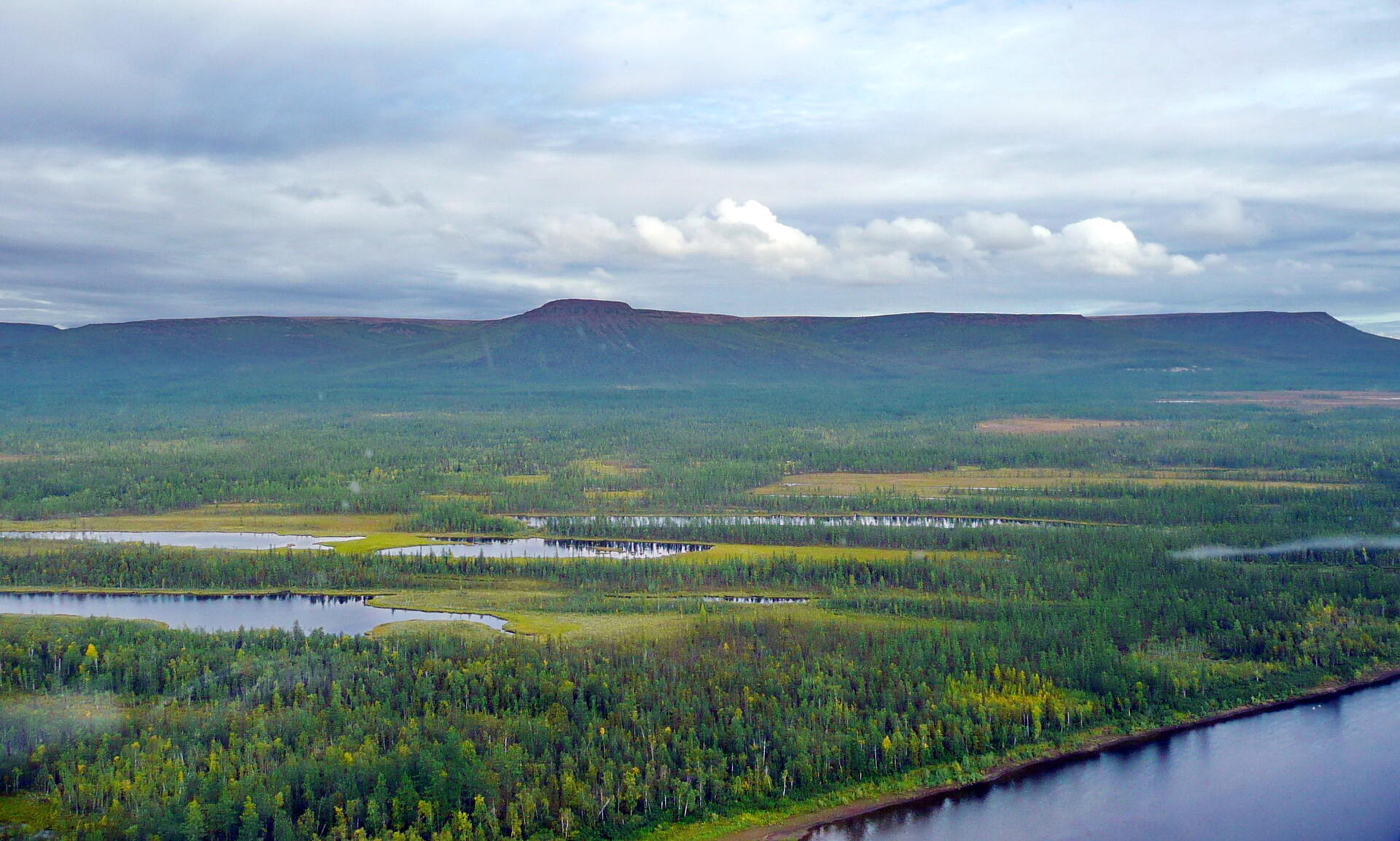
The Putorana Plateau, officially recognized as a UNESCO World Heritage Site since 2010, lies in the heart of the Putoransky State Nature Reserve, approximately 100 kilometers north of the Arctic Circle in northern Central Siberia. This remote and largely inaccessible region offers a unique opportunity to explore some of the most pristine and diverse ecosystems found anywhere on Earth.
More to come…UNESCO Description of the World Heritage Site
This site coincides with the area of the Putoransky State Nature Reserve, and is located in the central part of the Putorana Plateau in northern Central Siberia. It is situated about 100 km north of the Arctic Circle. The part of the plateau inscribed on the World Heritage List harbours a complete set of subarctic and arctic ecosystems in an isolated mountain range, including pristine taiga, forest tundra, tundra and arctic desert systems, as well as untouched cold-water lake and river systems. A major reindeer migration route crosses the property, which represents an exceptional, large-scale and increasingly rare natural phenomenon.
UNESCO Justification of the World Heritage Site
Criterion (vii): A vast and diverse landscape of striking natural beauty, the Putorana Plateau is pristine and not affected by human infrastructure. Its superlative natural features include an extensive area of layered basalt traps that has been dissected by dozens of deep canyons; countless cold water rivers and creeks with thousands of waterfalls; more than 25,000 lakes characterized by a fjord-like formation that is associated with a large variation in the relief. The immense arctic and boreal landscapes remain intact with carpets of lichens and forest that are unusual at such northern latitudes.
Criterion (ix): The property displays a comprehensive set of ecological and biological processes associated with its diverse arctic and subarctic ecosystems. Its bio-geographical location, on the border of the tundra and taiga biomes and at the transition between Western and Eastern Siberian floras, makes the property one of only a few centres of plant species richness in the Arctic. The combination of landscape diversity, remoteness, naturalness and degree of protection are extraordinary. In addition, the property may provide valuable evidence on the impacts of climate change to large-scale natural arctic ecosystems if proper monitoring and research take place.
Encyclopedia Record: Putorana Plateau
The Putorana Plateau or the Putorana Mountains is a mountainous area in Russia. It is a large massif or plateau crossed by mountain ranges. The nearest large settlement is Norilsk, where foreign travel is restricted. The city is served by Alykel Airport.Additional Site Details
Area: 1,887,251 hectares
Number of Components: 1
(ix) — Outstanding example representing ecological and biological processes
Coordinates: 69.0469444444 , 94.1580555556
IUCN World Heritage Outlook
The 2025 Conservation Outlook on Putorana Plateau reports the following assessment:
Source: International Union for Conservation of Nature (IUCN) · View assessment
World Heritage Research
Discover scientific research and academic studies that deepen our understanding of Putorana Plateau from its history and significance to its conservation, management, and contemporary challenges.
-
Spring Migration of Water Birds on the Putorana Plateau
Spring migration of water and semiaquatic birds on the Putorana Plateau occurs from May 19 to June 27, with peak activity between May 25 and June 17. This period sees up to 68 species, including dominant ones like Eurasian Wigeon, Common Teal, and Northern Pintail, migrating north, east, or west, often stopping at early-thawing river deltas. Population densities range from 15 to 227 individuals per kilometer of coastline, with higher concentrations in western regions where up to 30,000 birds may pass through surveyed points. The study analyzed eight survey sites across 250,000 km² using route censuses, revealing that lake populations are consistently smaller than those on adjacent river sections.
Romanov, A. A. (2023). SPRING MIGRATION OF WATER BIRDS ON THE PUTORANA PLATEAU. Lomonosov Geography Journal, 78(№ 5 (2023)), 79–88. https://doi.org/10.55959/msu0579-9414.5.78.5.8
View Publication Record | Read Publication -
A 1300-year multi-proxy palaeoecological record from the northwest Putorana Plateau (Russian Subarctic): environmental changes, vegetation dynamics and fire history
A recent increase in fire frequency on the northwest Putorana Plateau, a remote and human-untouched region of subarctic Siberia, has been linked to climate-driven environmental changes. The study, spanning 1300 years, revealed that dry conditions during the Medieval Climate Anomaly (680–1200 C.E.) led to high fire activity and spruce expansion beyond its current range, while the Little Ice Age (1200–1850 C.E.) brought cooling, moistening, tundra expansion, and a sharp decline in fires. Post-1990, peat accumulation and water table rise coincide with a surge in charcoal deposition, indicating heightened fire activity. Multi-proxy analysis—including pollen, macrofossils, testate amoebae, and charcoal—provided these insights, offering a rare glimpse into natural climate-vegetation-fire dynamics in this pristine subarctic landscape.
Novenko, E. Y., Mazei, N. G., Kupriyanov, D. A., Babeshko, K. V., Kusilman, M. V., Zyuganova, I. S., Tsyganov, A. N., Mazei, Y. A., Phelps, L. N., & Davis, B. A. (2022). A 1300-year multi-proxy palaeoecological record from the northwest Putorana Plateau (Russian Subarctic): environmental changes, vegetation dynamics and fire history. The Holocene, 33(2), 181–193. https://doi.org/10.1177/09596836221131693
View Publication Record | Read Publication -
Assemblages of Meiobenthic and Planktonic Microcrustaceans (Cladocera and Copepoda) from Small Water Bodies of Mountain Subarctic (Putorana Plateau, Middle Siberia)
A comprehensive study of microcrustaceans (Cladocera and Copepoda) on the Putorana Plateau, a remote subarctic region, reveals a high species richness with significant biogeographical distinctions from other Arctic regions. The research identified 36 Cladocera and 24 Copepoda species, including four newly discovered taxa, highlighting the plateau's unique faunal composition influenced by Pleistocene glacial refugia and Middle Siberia's climatic features. Environmental factors such as water body size, type of water supply, and macrophyte composition were found to significantly regulate assemblage structures, with planktonic crustaceans more affected by these variables than meiobenthic ones. This study underscores the importance of the Putorana Plateau as a glacial relict hotspot and provides critical data for monitoring anthropogenic impacts and climate change in subarctic ecosystems.
Chertoprud, E. S., Novichkova, A. A., Novikov, A. A., Fefilova, E. B., Vorobjeva, L. V., Pechenkin, D. S., & Glubokov, A. I. (2022). Assemblages of Meiobenthic and Planktonic Microcrustaceans (Cladocera and Copepoda) from Small Water Bodies of Mountain Subarctic (Putorana Plateau, Middle Siberia). Diversity, 14(6), 492. https://doi.org/10.3390/d14060492
View Publication Record | Read Publication -
Changes of Soil Properties along the Altitudinal Gradients in Subarctic Mountain Landscapes of Putorana Plateau, Central Siberia
A study on the Putorana Plateau, a remote and less-explored subarctic region of Central Siberia, reveals that slope angle significantly influences soil properties along elevational gradients. Researchers found that soils on gentle slopes exhibit thicker surface organic layers (SOL), higher pH, and greater Na+ content, alongside lower concentrations of carbon (C), nitrogen (N), aluminum (Ald), and iron (Fed). This suggests slower pedogenic processes in such environments. Conversely, steeper slopes show better differentiation of soil properties along the elevational gradient, particularly at deeper layers (0.1–0.3 m). While some characteristics, like SOL, C, N, or Ald concentrations, display clear trends with altitude—particularly on the Lama location—others do not follow a consistent pattern. The study collected data from three horizontal transects spanning elevations of 100–420 meters above sea level (a.s.l.), comparing two localities with differing slope angles through soil pits excavated to depths of 0.3–0.4 m.
Gömöryová, E., Pichler, V., Merganič, J., Fleischer, P., & Homolák, M. (2022). Changes of Soil Properties along the Altitudinal Gradients in Subarctic Mountain Landscapes of Putorana Plateau, Central Siberia. Land, 11(1), 128. https://doi.org/10.3390/land11010128
View Publication Record | Read Publication -
Late-Holocene vegetation and fire history in Western Putorana Plateau (subarctic Siberia, Russia)
A reconstruction of late-Holocene vegetation and fire history on the western Putorana Plateau, a remote UNESCO World Heritage Site in subarctic Siberia, reveals no major vegetation shifts over the last 3.9 thousand years but identifies subtle yet significant changes. Around 3.1 ka BP, forest coverage expanded, followed by gradual degradation around 2.7–2.5 ka BP, with shrubs and tundra becoming dominant. Fire activity surged between 3.0 and 2.0 ka BP, with the most recent sediments showing a sharp increase in macroscopic charcoal accumulation—indicating a rise in fire frequency since the late 19th century that has no precedent in the Late-Holocene record. The study combines pollen and charcoal analysis from three lakes along an altitudinal transect to provide insights into climate-environmental dynamics in this poorly studied region.
Novenko, E. Y., Rudenko, O. V., Mazei, N. G., Kupriyanov, D. A., Batalova, V. A., Volkova, E. M., Phelps, L. N., & Davis, B. A. (2022). Late-Holocene vegetation and fire history in Western Putorana Plateau (subarctic Siberia, Russia). The Holocene, 32(5), 433–441. https://doi.org/10.1177/09596836221074034
View Publication Record | Read Publication -
Analysis of the Avifauna Structure in the Alpine Belt of the Northwestern Putorana Plateau, Central Siberia
A study of the Putorana Plateau's alpine belt revealed a unique avifauna with 33 breeding bird species, including two first-time recordings: the red-necked stint and long-tailed skua, extending their known distribution ranges by 600 and 200 km. The research used route counts along transects to assess spatial differentiation, applying Sørensen's faunal coefficient for similarity analysis and population similarity coefficients. Passeriformes and Charadriiformes dominated (80–88%), with Arctic faunal complex species comprising 52–62% of diversity. Notably, bird abundance and density were higher than in other alpine regions, decreasing with altitude. The study highlights the plateau's ecological significance, showing how its avifauna is shaped by zonal-landscape and altitudinal patterns.
Romanov, A. A., Melikhova, E. V., Zarubina, M. A., Tarasov, V. V., & Yakovlev, V. O. (2021). Analysis of the Avifauna Structure in the Alpine Belt of the Northwestern Putorana Plateau, Central Siberia. Biology Bulletin, 48(9), 1513–1527. https://doi.org/10.1134/s106235902109020x
View Publication Record | Read Publication -
Floristic findings on the Putorana Plateau
A recent survey of the Putorana Plateau, conducted between 2018 and 2020, uncovered 61 new plant species for the region. Among these, eight were previously unknown to the entire Taimyr Municipal District of Krasnoyarsk Territory (TSR), including species like Poa vivipara and Carex buxbaumii. The study also documented 29 species new to the Putorana Plateau itself, with several listed in the Red Data Book of the Krasnoyarsk Territory due to their rarity or endangered status. Additionally, 24 previously rare or localized species were recorded at new sites, contributing valuable data for conservation efforts. The findings expand the known flora of this UNESCO World Heritage Site and highlight its ecological significance.
Pospelova, E. B., & Pospelov, I. N. (2021). Floristic findings on the Putorana Plateau. Turczaninowia, 24(3), 52–64. https://doi.org/10.14258/turczaninowia.24.3.4
View Publication Record | Read Publication -
Morphological Features and Endoparasite Fauna of Some Whitefishes and Grayling Fishes from the Eastern Part of Lake Sobachye (the Putorana Plateau)
Research on Lake Sobachye, part of the UNESCO-listed Putorana Plateau, reveals significant insights into the morphological features and endoparasite fauna of cisco, round whitefish, and Siberian grayling. The study found that the local cisco population exhibits a low average number of vertebrae, distinguishing it from other cisco species, and shows strong genetic similarity to European vendace populations. Additionally, the round whitefish in this region is confirmed as a single population with no basis for distinguishing between 'Arctic' and 'Boreal' groups. Notably, the study identified Lake Sobachye as a site of diphyllobothriasis, with cisco and whitefish acting as carriers of the cestode Diphyllobothrium dendriticum. The prevalence of this parasite in cisco has increased dramatically from 73% to 96%, along with a doubling in infestation intensity since previous studies.
Romanov, V. I., Polyaeva, K. V.,. (2019). Morphological Features and Endoparasite Fauna of Some Whitefishes and Grayling Fishes from the Eastern Part of Lake Sobachye (the Putorana Plateau). Journal of Siberian Federal University. Biology, 1–19. https://doi.org/10.17516/1997-1389-0291
View Publication Record | Read Publication -
Structure and Dynamics of Tree Stands at the Upper Timberline in the Western Part of the Putorana Plateau
Research on the Putorana Plateau reveals that forest expansion at the upper timberline, particularly on south- and southwest-facing slopes, is driven by climate warming over centuries. The study found significant changes in the altitudinal position of tree vegetation boundaries, with correlations between trunk diameters and phytomass fractions. By analyzing age structures, diachronous topographic maps, and satellite images, scientists reconstructed historical dynamics of tree stands, highlighting how shifts in climate conditions facilitate forest growth at higher elevations.
Grigor’ev, A. A., Devi, N. M., Kukarskikh, V. V., V’yukhin, S. O., Galimova, A. A., Moiseev, P. A., & Fomin, V. V. (2019). Structure and Dynamics of Tree Stands at the Upper Timberline in the Western Part of the Putorana Plateau. Russian Journal of Ecology, 50(4), 311–322. https://doi.org/10.1134/s1067413619040076
View Publication Record | Read Publication -
Anthropomorphic sculptures (idols) of Putorana plateau
Anthropomorphic sculptures (idols) on the Putorana Plateau, crafted from larch trunks without roots, are likely of Evenki origin and served as soul-keeper statues, reflecting a complex blend of indigenous religious beliefs. These idols, left behind by the Evenkis and Dolgans during their transition from nomadic to sedentary lifestyles, represent a material manifestation of historical idolatry systems. The study, combining ethnographic and geographical methods with informant data, confirmed that these sculptures were not portable and played a significant cultural role for native minorities. The research also highlights the enduring superstitions and traditions among modern Evenkis and Dolgans, integrating elements of Yakut, Nganasan beliefs, and Christianity.
Kobilyakov, I. V. (2018). Anthropomorphic sculptures (idols) of Putorana plateau. Moscow University Anthropology Bulletin (Vestnik Moskovskogo Universiteta. Seria XXIII. Antropologia), (1/2018), 110–123. https://doi.org/10.32521/2074-8132.2018.1.110-123
View Publication Record | Read Publication -
Morphological and Genetic Features of Cisco (Coregonidae: Coregonus sp.) from Lake Sobachye (Putorana Plateau)
A study of cisco (Coregonus sp.) from Lake Sobachye on the Putorana Plateau reveals a strong phylogenetic relationship with the vendace (Coregonus albula). Analysis of morphological traits and mitochondrial DNA polymorphism indicates that the Lake Sobachye population shares significant genetic and structural similarities with the vendace, challenging existing hypotheses about its origin. This research provides new insights into the evolutionary history of cisco species in the region, particularly their connections to both the vendace and the least cisco.
Borovikova, E. A., Romanov, V. I., & Nikulina, J. S. (2018). Morphological and Genetic Features of Cisco (Coregonidae: Coregonus sp.) from Lake Sobachye (Putorana Plateau). Russian Journal of Genetics: Applied Research, 8(1), 37–43. https://doi.org/10.1134/s2079059718010033
View Publication Record | Read Publication -
New Data on Biota of Some Lakes in the Western Part of the Putorana Plateau
A recent study on the Putorana Plateau's lakes, including Norilsk Lakes (Lama and Sobach’e) and Kutaramakan Lake, identified two new species: Senecella calanoides in zooplankton and five water mite species in zoobenthos. The research, conducted in 2013–2014, revealed that Lama and Sobach’e lakes share similar zooplankton compositions, differing from Kutaramakan Lake by the presence of specific copepods. A total of 64 benthic invertebrate taxa were found, with Chironomidae dominating. Kutaramakan Lake lacked amphipods, while Cobach’e Lake exhibited higher biomass, classifying it as oligotrophic to α-mesotrophic based on zooplankton and zoobenthos metrics. Lama and Kutaramakan lakes were deemed ultraoligotrophic.
Zadelenov, V. A., Bazhina, L. V., Glushchenko, L. A., Isaeva, I. G., Kleush, V. O., Shadrin, E. N., Matasov, V. V., Dubovskaya, O. P., Semenchenko, K. A.,. (2017). New Data on Biota of Some Lakes in the Western Part of the Putorana Plateau. Journal of Siberian Federal University. Biology, 10(1), 87–105. https://doi.org/10.17516/1997-1389-0010
View Publication Record | Read Publication -
Liverworts of Putorana Plateau (East Siberia): an updated checklist
A comprehensive updated checklist of liverworts from the Putorana Plateau, East Siberia, reveals 118 species, with 47 recorded for the first time. Notable discoveries include Odontoschisma francisci and Saccobasis polymorpha, which exhibit amphi-oceanic distribution patterns, along with other rare taxa like Endogemma caespiticia and Marchantia romanica. The study confirms the plateau's Hemiarctic flora while debunking 26 previously reported species that could not be re-verified. This research synthesizes recent collections with historical data to refine our understanding of this unique Arctic ecosystem.
Bakalin, V. A., & Borovichev, E. A. (2016). Liverworts of Putorana Plateau (East Siberia): an updated checklist. Arctoa, 25(1), 369–379. https://doi.org/10.15298/arctoa.25.29
View Publication Record | Read Publication -
Morphological and genetic features of cisco (coregonidae: coregonus sp.) from lake Sobachye (Putorana plateau)
A study of cisco (Coregonidae: Coregonus sp.) from Lake Sobachye on the Putorana Plateau reveals that this population is genetically and morphologically closer to European vendace (C. albula) than to other regional cisco species, such as those found in the River Pyasina. The research combined morphological analysis of 60 specimens with mitochondrial DNA sequencing of two gene fragments (ND1 and COI) from nine individuals, demonstrating minimal genetic divergence between Lake Sobachye cisco and vendace. This finding challenges previous taxonomic assumptions based solely on vertebral counts and highlights the importance of integrated morphological and molecular approaches in fish species identification.
Borovikova, E. A., Romanov, V. I., & Nikulina, J. S. (2016). Morphological and genetic features of cisco (coregonidae: coregonus sp.) from lake Sobachye (Putorana plateau). Ecological Genetics, 14(3), 47–55. https://doi.org/10.17816/ecogen14347-55
View Publication Record | Read Publication -
The Glaciation of River Imangda Valley (Western Part of Putorana Plateau) in the Late Pleistocene and Holocene
Research on the Imangda River valley, part of the Putorana Plateau, reveals four distinct moraine complexes formed during different stages of glaciation. Three of these correspond to known Late Pleistocene deglaciation phases in northwest Siberia: Karaulskaya (25–17 ky BP), Nyapanskaya (15–13 ky BP), and Norilsk (11.5–10.4 ky BP). These moraines exhibit variations in preservation, material roundness, and extent, indicating a dynamic glacial history. The study also identifies a younger moraine from the Little Ice Age, where glaciers were confined to cirques. Unlike previous assumptions, evidence suggests no solid ice cover over the plateau, though isolated ice caps with outlet glaciers may have existed. This research clarifies the complex glaciation patterns of the region during the Late Pleistocene and Holocene.
Timireva, S. N., Sarana, V. A., & Kononov, Yu. M. (2016). THE GLACIATION OF RIVER IMANGDA VALLEY (WESTERN PART OF PUTORANA PLATEAU) IN THE LATE PLEISTOCENE AND HOLOCENE. Geomorphology RAS, (1), 82–87. https://doi.org/10.15356/0435-4281-2016-1-82-87
View Publication Record | Read Publication -
Peculiarities of soil cover in the subalpine belt of the Putorana Plateau
A distinct soil classification emerges for the subalpine belts of the Putorana Plateau, revealing cryometamorphic soils (granuzems) and organic-accumulative soils as dominant in mountain tundra, alongside abrazems. In contrast, lowland forest-tundra areas are characterized by cryoturbated soils (cryozems), primarily developing on sandy loamy glaciolacustrine deposits. This study leverages a substantive-genetic classification framework, integrating morphological and physicochemical data to elucidate the unique soil dynamics shaped by subaerial aeolian processes in these high-altitude ecosystems.
Senkov, A. A. (2014). Peculiarities of soil cover in the subalpine belt of the Putorana Plateau. Contemporary Problems of Ecology, 7(6), 628–635. https://doi.org/10.1134/s1995425514060122
View Publication Record | Read Publication -
Regularities of spatial differentiation of fauna and bird population on the Putorana Plateau
Bird species diversity and population density on the Putorana Plateau decline with altitude, with the most significant drop occurring between subalpine and alpine belts. Most species span multiple altitude belts, but their abundance decreases from west to east across the plateau. Forest belt bird communities exhibit greater stability and homogeneity compared to alpine and subalpine belts, showing minimal fluctuations in diversity and density. The study analyzed 137 nesting bird species, revealing that population dynamics tend to increase toward peripheral regions of mountain systems.
Romanov, A. A., Golubev, S. V., & Melikhova, E. V. (2014). Regularities of spatial differentiation of fauna and bird population on the Putorana Plateau. Contemporary Problems of Ecology, 7(6), 618–627. https://doi.org/10.1134/s1995425514060110
View Publication Record | Read Publication -
Zooplankton of lakes in the spurs of the Putorana Plateau and adjacent territories (North of Krasnoyarsk Krai)
A comprehensive analysis of zooplankton communities in the Putorana Plateau and adjacent territories reveals that calanoid copepods dominate in terms of biomass, accounting for 78.8% of cases, with Heterocope appendiculata being the most frequent subdominant species (26.9%). The study, conducted across four large and 35 small lakes from 10 areas between 2001 and 2004, identified 14 crustacean zooplankton species for the first time in the region and expanded the known range of several species. Notably, cladoceran biomass exceeded 50% only in 31% of cases, indicating a prevalence of copepods in these ecosystems. The research also highlights that zooplankton diversity increases from north to south and east to west, correlating with climatic gradients. These findings suggest potential impacts of global warming on species distribution and community structure.
Dubovskaya, O. P., Kotov, A. A., Korovchinsky, N. M., Smirnov, N. N., & Sinev, A. Yu. (2010). Zooplankton of lakes in the spurs of the Putorana Plateau and adjacent territories (North of Krasnoyarsk Krai). Contemporary Problems of Ecology, 3(4), 401–434. https://doi.org/10.1134/s1995425510040065
View Publication Record | Read Publication