World Heritage Identification Number: 715
World Heritage since: 1995
Category: Cultural Heritage
WHE Type: Protected Areas & National Parks
Transboundary Heritage: No
Endangered Heritage: No
Country: 🇨🇱 Chile
Continent: Americas
UNESCO World Region: Latin America and the Caribbean
Map
Exploring the Cultural Landscape of Rapa Nui National Park
Rapa Nui National Park, located on Easter Island (Rapa Nui), Chile, stands as a testament to one of the most remarkable cultural achievements of the Pacific world. Recognized as a UNESCO World Heritage Site, the park holds exceptional historical and cultural value and represents the enduring legacy of the Rapa Nui people.
The island's unique cultural landscape is a result of the Polynesian society that settled there around the 4th century AD, although archaeological evidence more securely places initial human arrival between approximately 800 and 1100 AD. Over several centuries, this society developed a powerful and original tradition of monumental sculpture and architecture, entirely independent of external influences. The most iconic remnants of this culture are the nearly 900 extant stone statues known as moai.
The construction of these moai statues spanned from the 10th to the 16th century. These colossal stone figures, some reaching up to 10 meters tall, were carved out of volcanic rock and placed on ceremonial platforms known as ahu. The purpose and meaning behind these statues remain a subject of ongoing debate among scholars, but they undoubtedly played a crucial role in the religious and social life of the early Rapa Nui people.
In 1888, Chile formally annexed the island, and it wasn't until 1995 that UNESCO recognized Rapa Nui National Park as a World Heritage Site for its outstanding universal value under cultural criteria (i), (iii), and (v). The park encompasses approximately 40 percent of the island’s surface and protects not only its extraordinary archaeological remains but also elements of its fragile natural environment. This includes habitats for rare and threatened species such as the Easter Island storm petrel and other seabirds unique to the region.
In recent years, the governance of Rapa Nui National Park has undergone a significant transformation. In 2017, under the administration of then-President Michelle Bachelet, the management of the park was formally transferred to the indigenous Rapa Nui people. This historic decision marked the first time that revenue generated by the national park would be administered locally, supporting conservation efforts and contributing directly to the island’s social and cultural sustainability.
Today, the Rapa Nui National Park is under the administrative control of the Ma´u Henua Polynesian Indigenous Community. This community is responsible for the management, preservation, and protection of their ancestral lands and cultural heritage. Visitors to the park can gain insights into the rich history and culture of the Rapa Nui people through guided tours and educational programs offered by the community.
Altogether, Rapa Nui National Park offers a captivating glimpse into the past, showcasing a unique blend of cultural and natural wonders. The park serves as a reminder of the ingenuity and resilience of human societies, while also highlighting the importance of preserving our shared cultural heritage for future generations.
UNESCO Description of the World Heritage Site
Rapa Nui, the indigenous name of Easter Island, bears witness to a unique cultural phenomenon. A society of Polynesian origin that settled there c. A.D. 300 established a powerful, imaginative and original tradition of monumental sculpture and architecture, free from any external influence. From the 10th to the 16th century this society built shrines and erected enormous stone figures known as moai , which created an unrivalled cultural landscape that continues to fascinate people throughout the world.
UNESCO Justification of the World Heritage Site
Criterion (i): Rapa Nui National Park contains one of the most remarkable cultural phenomena in the world. An artistic and architectural tradition of great power and imagination was developed by a society that was completely isolated from external cultural influences of any kind for over a millennium.
Criterion (iii): Rapa Nui, the indigenous name of Easter Island, bears witness to a unique cultural phenomenon. A society of Polynesian origin that settled there c. A.D. 300 established a powerful, imaginative and original tradition of monumental sculpture and architecture, free from any external influence. From the 10th to the 16th century this society built shrines and erected enormous stone figures known as moai, which created an unrivalled landscape that continues to fascinate people throughout the world.
Criterion (v): Rapa Nui National Park is a testimony to the undeniably unique character of a culture that suffered a debacle as a result of an ecological crisis followed by the irruption from the outside world. The substantial remains of this culture blend with their natural surroundings to create an unparalleled cultural landscape.
Encyclopedia Record: Rapa Nui National Park
Rapa Nui National Park is a national park and UNESCO World Heritage Site located on Easter Island, Chile. Rapa Nui is the Polynesian name of Easter Island; its Spanish name is Isla de Pascua. The island is located in the southeastern Pacific Ocean, at the southeastern extremity of the Polynesian Triangle. The island was taken over by Chile in 1888. Its fame and World Heritage status arise from the 887 extant stone statues known by the name "moai", whose creation is attributed to the early Rapa Nui people who inhabited the island starting between 300 and 1200 AD. Much of the island has been declared as Rapa Nui National Park which, on 22 March 1996, UNESCO designated a World Heritage Site under cultural criteria (i), (iii), & (v). Rapa Nui National Park is now under the administrative control of the Ma´u Henua Polynesian Indigenous Community, which is the first autonomous institute on the island. The indigenous Rapa Nui people have regained authority over their ancestral lands and are in charge of the management, preservation and protection of their patrimony. On the first of December 2017, the ex-President Michelle Bachelet returned ancestral lands in the form of the Rapa Nui National Park to the indigenous people. For the first time in history, the revenue generated by the National Park is invested in the island and used to conserve the natural heritage.Additional Site Details
Area: 6,666 hectares
Number of Components: 1
(iii) — Unique or exceptional testimony to a cultural tradition
(v) — Outstanding example of traditional human settlement
Coordinates: -27.074403 , -109.365683
Image
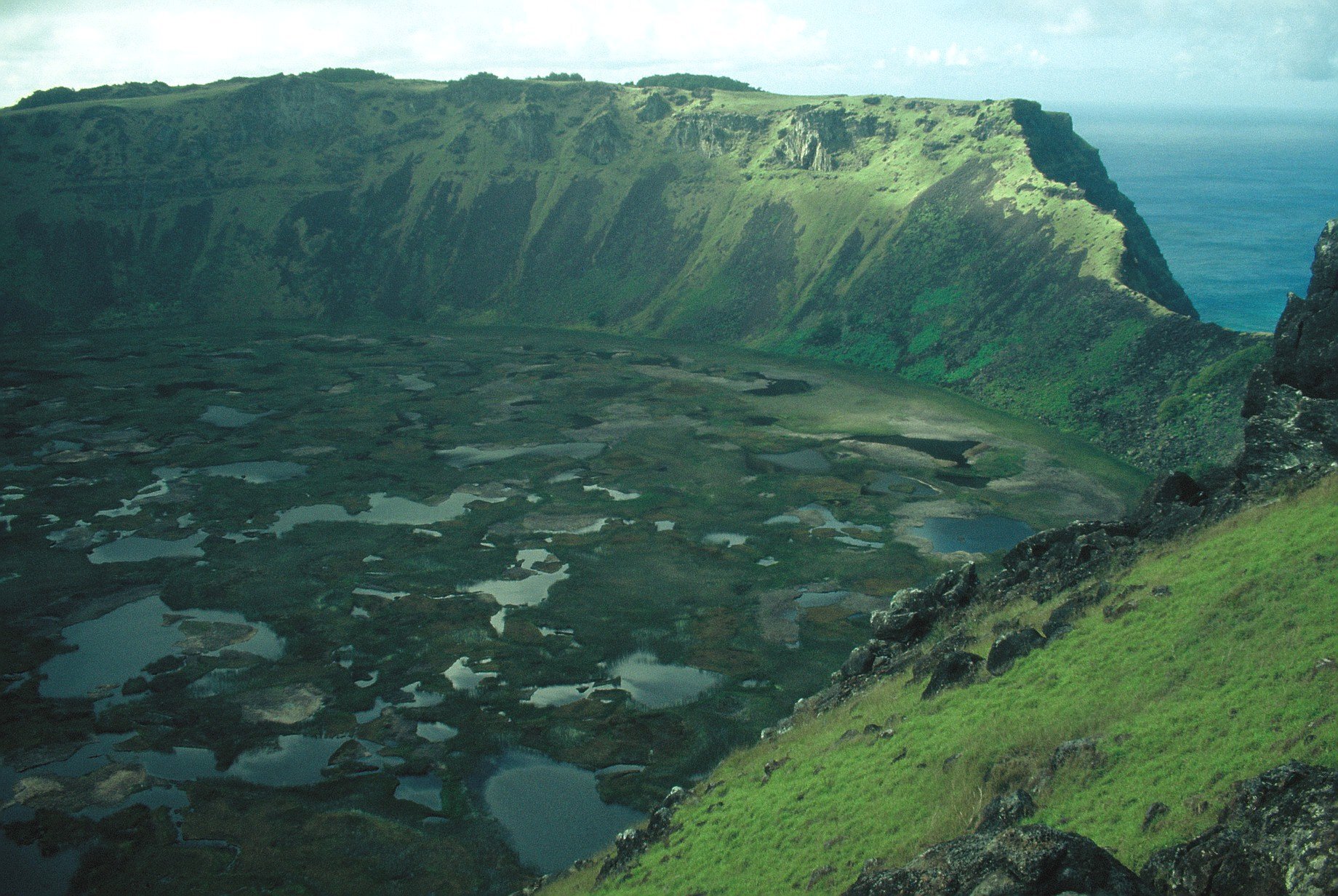
Aurbina, Public domain