World Heritage Identification Number: 1743
World Heritage since: 2025
Category: Cultural Heritage
WHE Type: Archaeological Sites
Transboundary Heritage: No
Endangered Heritage: No
Country: 🇷🇺 Russian Federation
Continent: Europe
UNESCO World Region: Europe and North America
Map
The Rock Paintings of Shulgan-Tash Cave: A Window into Prehistoric Life
The Rock Paintings of Shulgan-Tash Cave, inscribed as a UNESCO World Heritage Site in 2025, offers a unique glimpse into the lives of our prehistoric ancestors. Situated in the Southern Ural Mountains of Bashkortostan, this remarkable site is nestled within a karst massif near the Belaya and Shulgan Rivers.
More to come…UNESCO Description of the World Heritage Site
Located in the Southern Ural Mountains of Bashkortostan, the Shulgan-Tash Cave contains extensive Late Palaeolithic rock art. Set within a karst massif near the Belaya and Shulgan Rivers, it features large halls and deep chambers across two levels. The paintings depict steppe fauna—mammoths, woolly rhinoceroses, bison, horses, and a Bactrian camel—alongside anthropomorphic figures, abstract signs, and geometric motifs like the “Kapova trapezoids.” Archaeological finds offer insights into the artistic process and domestic life of its prehistoric inhabitants.
UNESCO Justification of the World Heritage Site
Criterion (iii): The Rock Paintings of Shulgan-Tash Cave provide outstanding evidence of the cultural and domestic practices of the Southern Urals Upper Palaeolithic inhabitants. The numerous paintings on the cave walls and the rich archaeological materials found in the cultural layers of the cave sediment offer important comparative and differential perspectives on domestic and cultural practices across vast areas of Europe, highlighting both common and distinctive elements in the use of cave and production of rock art. Paleontological finds, spores and pollen, charcoal, and dripstones reflect the temporal, climatic and environmental contexts of the Palaeolithic human occupation of the cave. Wall paintings and other evidence of non-utilitarian activities provide additional cultural and anthropological context. The property offers significant potential for further research and knowledge production.
Encyclopedia Record: Shulgan-Tash Cave
Shulgan-Tash Cave, also known as Kapova Cave, is a limestone karst cave in the Burzyansky District of Bashkortostan, Russia. It is located in the southern Ural Mountains, on the Belaya River in the Shulgan-Tash Nature Reserve, approximately 200 km (120 mi) south-east of Ufa.Additional Site Details
Area: 288.5 hectares
Number of Components: 1
Coordinates: 53.0494444444 , 57.0720277778
Image
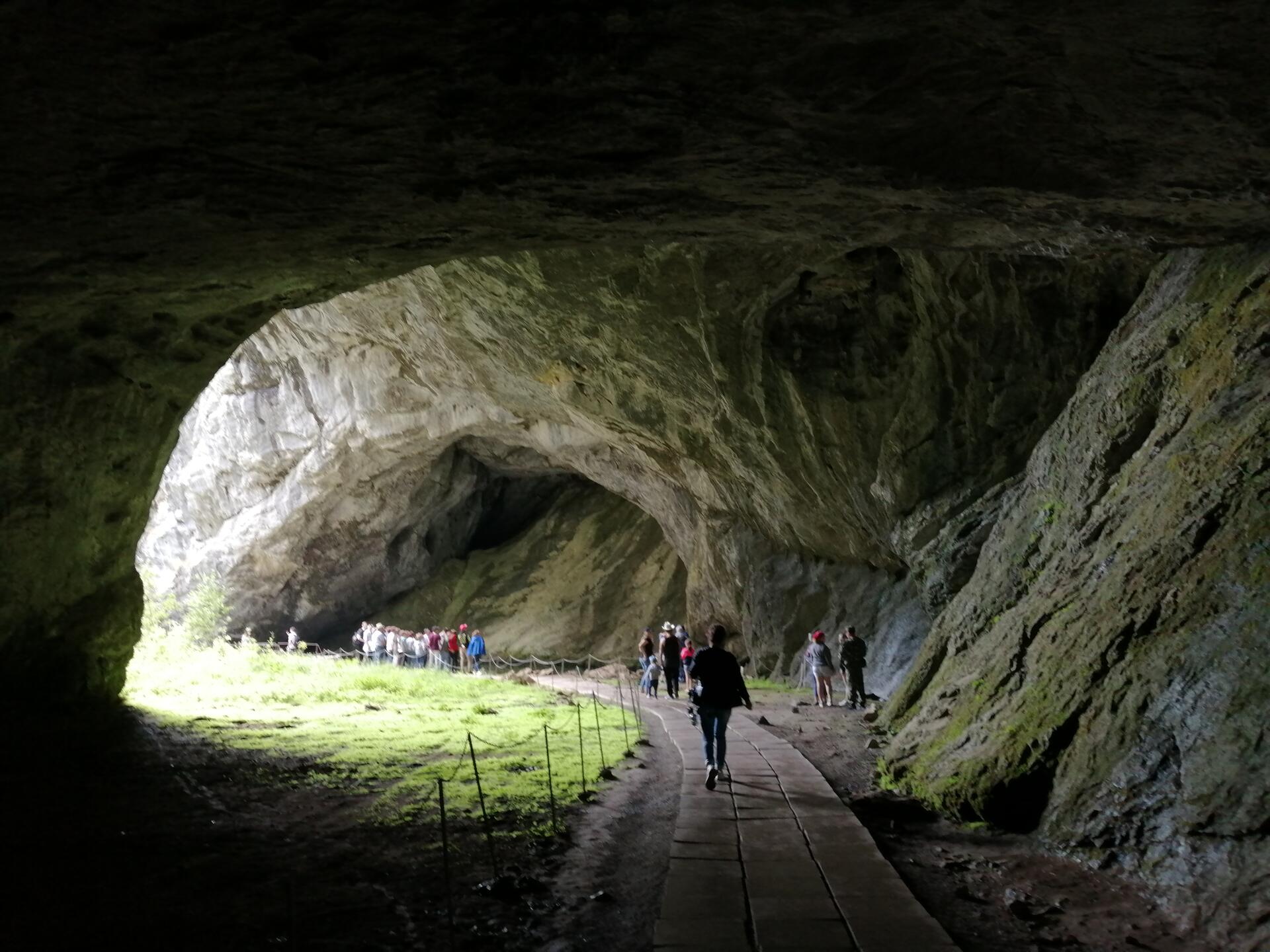
© Элиза Азатовна Мусина, CC BY-SA 4.0 Resized from original. (This derivative is under the same CC BY-SA license.)
World Heritage Research
Discover scientific research and academic studies that deepen our understanding of Rock Paintings of Shulgan-Tash Cave from its history and significance to its conservation, management, and contemporary challenges.
-
Phylogenetic Diversity of Prokaryotes in Microbial Communities Inhabiting Rock Surfaces of Shulgan-Tash (Kapova) Cave, Southern Urals
A groundbreaking metagenomic analysis of microbial colonies on the rock surfaces of Shulgan-Tash Cave revealed significant phylogenetic diversity among prokaryotes. The study found that Eubacteria dominate these communities (90%), with Archaea comprising 0.06-0.19%. Proteobacteria were the most abundant phylum (46.5-80.7%), followed by Actinobacteria (14-17.17%). Notably, non-culturable annamox bacteria, specifically Candidatus 'Scalindua brodae,' were identified in two samples near paleolithic drawings, indicating potential threats to the preservation of these ancient artworks. Additionally, three isolates of Pseudomonas mandelii were confirmed through 16S rRNA gene analysis. The findings highlight the advanced adaptation of these microbial communities to extreme cave conditions and underscore the need for continuous monitoring to protect the prehistoric paintings.
Galimzianova, N. F., Gilvanova, E. A., Ryabova, A. S., Guvatova, Z. G., Kudryavtseva, A. V., Melentiev, A. I.,. (2020). PHYLOGENETIC DIVERSITY OF PROKARYOTES IN MICROBIAL COMMUNITIES INHABITING ROCK SURFACES OF SHULGAN-TASH (KAPOVA) CAVE, SOUTHERN URALS. Èkobioteh, 3(3), 298–304. https://doi.org/10.31163/2618-964x-2020-3-3-298-304
View Publication Record | Read Publication -
The Shulgan-Tash (Kapova) Cave Protection: Unrealized Improvement Attempt, 1960–1981
An analysis of the Shulgan-Tash (Kapova) Cave, a UNESCO World Heritage Site renowned for its Paleolithic rock paintings, reveals that proposed protection and improvement projects from 1960 to 1981 remained largely unrealized. Despite extensive plans aimed at preserving the cave's integrity, enhancing tourist infrastructure, ensuring visitor safety, and implementing effective visitor management strategies, these initiatives failed to materialize. The study examines the gap between proposed solutions and actual outcomes during this critical period, highlighting the challenges in balancing conservation with development in a culturally significant site.
Gaynullin, D. A., Malikov, F. A., Grigoryev, N. N.,. (2019). THE SHULGAN-TASH (KAPOVA) CAVE PROTECTION: UNREALIZED IMPROVEMENT ATTEMPT, 1960–1981. Journal of Historical Philological and Cultural Studies, 2(64), 96–104. https://doi.org/10.18503/1992-0431-2019-2-64-96-104
View Publication Record | Read Publication