World Heritage Identification Number: 719
World Heritage since: 1995
Category: Natural Heritage
WHE Type: Natural Landscapes & Geographic Features
Transboundary Heritage: No
Endangered Heritage: No
Country: 🇷🇺 Russian Federation
Continent: Europe
UNESCO World Region: Europe and North America
Map
The Virgin Komi Forests: A Glimpse into Europe's Largest Virgin Forest
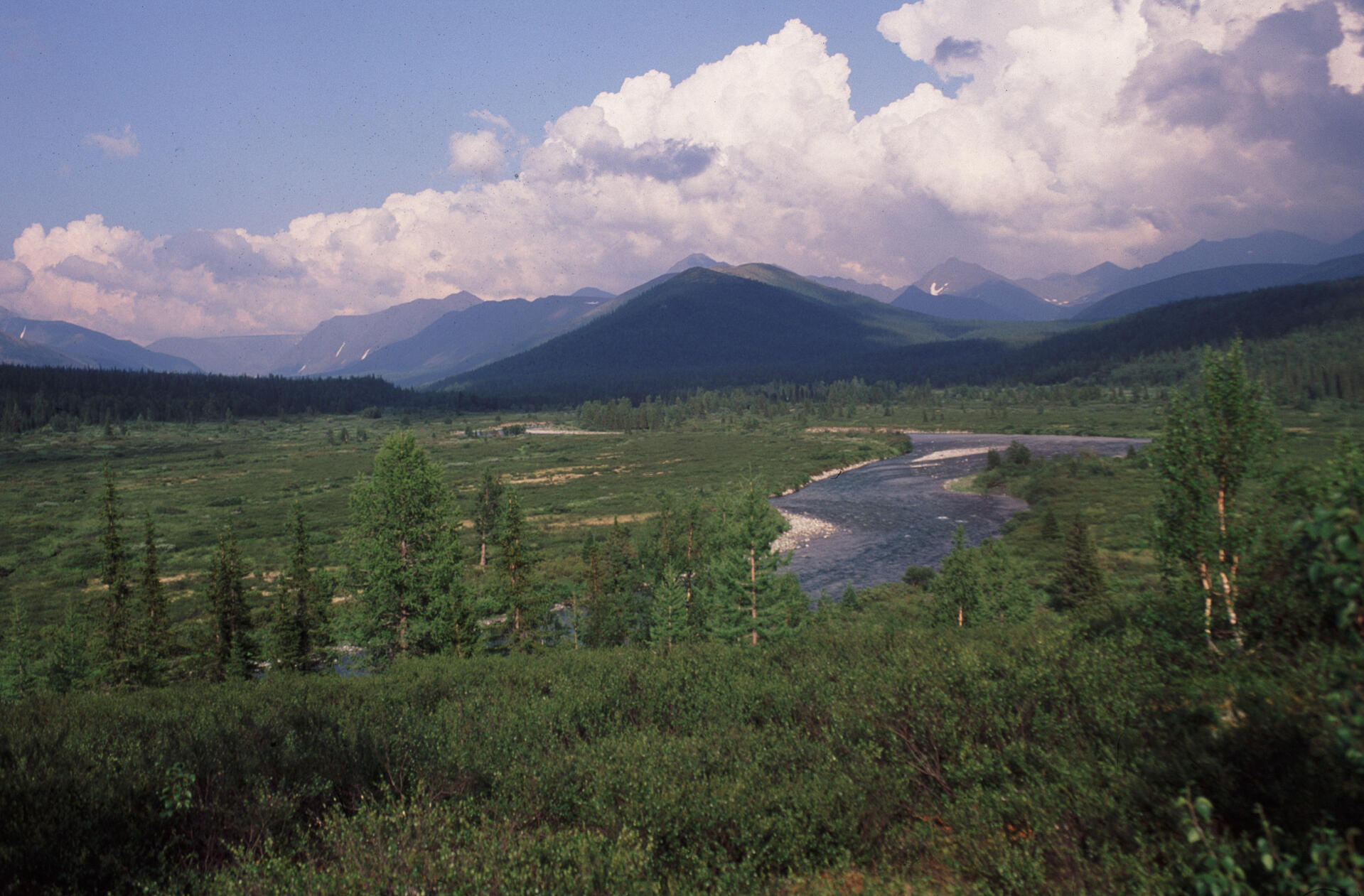
The Virgin Komi Forests, encompassing an expansive area of approximately 3.28 million hectares, stands as the largest virgin forest in Europe. Located within the Northern Ural Mountains of the Komi Republic, Russia, this UNESCO World Heritage Site offers a unique insight into the untouched beauty and biodiversity of the taiga.
More to come…UNESCO Description of the World Heritage Site
The Virgin Komi Forests cover 3.28 million ha of tundra and mountain tundra in the Urals, as well as one of the most extensive areas of virgin boreal forest remaining in Europe. This vast area of conifers, aspens, birches, peat bogs, rivers and natural lakes has been monitored and studied for over 50 years. It provides valuable evidence of the natural processes affecting biodiversity in the taiga.
Encyclopedia Record: Virgin Komi Forests
The Virgin Komi Forests is a natural UNESCO World Heritage Site in the Northern Ural Mountains of the Komi Republic, Russia. At 32,800 km2 it is the largest virgin forest in Europe.Additional Site Details
Area: 3,280,000 hectares
Number of Components: 3
(ix) — Outstanding example representing ecological and biological processes
Coordinates: 63.6258333333 , 58.9525
IUCN World Heritage Outlook
The 2025 Conservation Outlook on Virgin Komi Forests reports the following assessment:
Source: International Union for Conservation of Nature (IUCN) · View assessment
World Heritage Research
Discover scientific research and academic studies that deepen our understanding of Virgin Komi Forests from its history and significance to its conservation, management, and contemporary challenges.
-
Mosses of the Barkova and Yerkusei Mountains (Subpolar Urals, Yugyd Va National Park)
A comprehensive survey of moss flora in the Barkova and Yerkusey Mountains, part of the UNESCO-listed Virgin Komi Forests, reveals 104 species across 27 families, including four previously unrecorded species for the Subpolar Urals. The study identifies new habitats for rare mosses, emphasizing the need for biological surveillance due to their inclusion in the Red Data Book of the Komi Republic. Researchers mapped species distribution across mountain tundra and goltsy belts, providing critical data for conservation efforts in this subpolar ecosystem.
Zheleznova, G. V., Shubina, T. P., Kulyugina, E. E., Dulin, M. V., Teteryuk, L. V., Teteryuk, B. Yu.,. (2025). MOSSES OF THE BARKOVA AND YERKUSEI MOUNTAINS (SUBPOLAR URALS, YUGYD VA NATIONAL PARK). Diversity of Plant World, 3 (26), 21–37. https://doi.org/10.22281/2686-9713-2025-3-21-37
View Publication Record | Read Publication -
Use of Forest Resources and the Organization of Forestry in Northern Ural Mountains in the Second Half of the 19th and Early 20th Centuries
Historical archival documents reveal that the Northern Ural Mountains, now part of the UNESCO World Heritage Site 'Virgin Forests of the Komi,' experienced selective logging and forest resource use from the late 19th to early 20th centuries. Despite plans for large-scale logging in the Pechora River basin by a Swedish company, operations were hindered by logistical challenges. Forest governance evolved through administrative divisions, with timber primarily used for local boat-building and fuel for salt production on the Kama River. Annual logging volumes remained modest, with selective harvesting focusing on specific landscape units rather than clear-cutting. The study underscores the importance of integrating historical land-use records into ecological research to understand past impacts on these intact forests.
Aleinikov, A. A.,. (2024). USE OF FOREST RESOURCES AND THE ORGANIZATION OF FORESTRY IN NORTHERN URAL MOUNTAINS IN THE SECOND HALF OF THE 19TH AND EARLY 20TH CENTURIES. Вестник Пермского Университета. История, (2), 108–122. https://doi.org/10.17072/2219-3111-2024-2-108-122
View Publication Record | Read Publication -
New Finds of Rare Species in the Unya River Basin (Northern Urals)
Researchers have identified two rare plant species in the Unya River basin, Northern Urals, part of the UNESCO-listed 'Virgin Komi Forests.' The study discovered Astragalus karelinianus, a new taxon for the region, and confirmed the presence of Alyssum lenense Adams. These relict species, found on river rocks, represent the northernmost occurrences in the Urals, offering insights into historical flora distribution. The findings stem from field surveys conducted in 2022 within the 'Uninsky' complex reserve, highlighting the ecological significance of this protected area.
Teteryuk, L. V., & Dulin, M. V. (2023). NEW FINDS OF RARE SPECIES IN THE UNYA RIVER BASIN (NORTHERN URALS). Ботанический Журнал, 108(8), 748–751. https://doi.org/10.31857/s0006813623080082
View Publication Record | Read Publication -
Onomasticon of the National Park «Yugyd Va»: linguoculturological potential
The study reveals that the onomastic materials of the Yugyd Va National Park, a vast and ecologically significant region in Europe, hold substantial socio-cultural potential. These toponyms, derived from Finno-Ugric and Russian languages, encapsulate historical and cultural information, offering insights into the spiritual and material development of indigenous tribes. The research highlights that proper names serve as symbols and signs, transmitting significant cultural context but remaining inaccessible to those unfamiliar with the culture. This approach shifts focus from purely linguistic analysis to a broader socio-cultural interpretation, emphasizing the importance of understanding national and cultural specifics in familiarizing others with indigenous heritage.
Belyaev, A. G., Musanov, A. G.,. (2022). Onomasticon of the National Park «Yugyd Va»: linguoculturological potential. Proceedings of the Komi Science Centre of the Ural Division of the Russian Academy of Sciences, 1, 150–156. https://doi.org/10.19110/1994-5655-2022-1-150-156
View Publication Record | Read Publication -
Preservation of Unique Natural Territories of the North of Russia: from the History of the Creation of the Natural Heritage Site “The Virgin Forests of the Komi Republic”
The Virgin Komi Forests, a UNESCO World Natural Heritage Site spanning the Pechora-Ilych Reserve and Yugyd Va National Park, represent one of Europe's last expanses of primary forests. This study reveals how Soviet-era scientific efforts, driven by industrial development pressures, successfully preserved over 200 natural monuments across the Komi Republic between the 1940s and 1980s. Leveraging archival sources, it highlights the pivotal role of USSR Academy of Sciences researchers in balancing conservation with resource management, culminating in the establishment of Yugyd Va National Park as a landmark scientific achievement.
Filippova, T. P. (2020). Preservation of Unique Natural Territories of the North of Russia: from the History of the Creation of the Natural Heritage Site “The Virgin Forests of the Komi Republic”. IOP Conference Series: Earth and Environmental Science, 539(1), 12011. https://doi.org/10.1088/1755-1315/539/1/012011
View Publication Record | Read Publication -
Rare and protected vascular plants in Yugyd va National Park (Russia)
Yugyd va National Park, part of the UNESCO World Heritage Site 'Virgin Komi Forests,' harbors 120 species of rare and protected vascular plants, including nine listed in Russia's Red Data Book. This study identifies unique distributions, such as Arctic endemics Astragalus gorodkovii and Castilleja arctica subsp. vorkutensis, and highlights the park's critical role in preserving narrow-ranged species. Additionally, it reveals 31 taxa exclusive to the Republic of Komi, some with isolated populations at risk from mining threats. The research underscores the need for conservation programs, population monitoring, seed banking, and reintroduction efforts to protect these vulnerable species.
Teteryuk, L. V., Degteva, S. V., Kanev, V. A., Valuyskikh, O. E., Teteryuk, B. Yu., Kulyugina, E. E.,. (2020). Rare and protected vascular plants in Yugyd va National Park (Russia). Nature Conservation Research, 5(4). https://doi.org/10.24189/ncr.2020.051
View Publication Record | Read Publication