World Heritage Identification Number: 664
World Heritage since: 1993
Category: Cultural Heritage
WHE Type: Archaeological Sites
Transboundary Heritage: No
Endangered Heritage: No
Country: 🇪🇸 Spain
Continent: Europe
UNESCO World Region: Europe and North America
Map
Augusta Emerita: A Roman Colony Turned Spanish City - The Archaeological Ensemble of Mérida
The Archaeological Ensemble of Mérida, located in the Extremadura region of western Spain, offers a unique glimpse into the rich history of the Roman Empire's influence in Hispania. Founded in 25 BC by Roman Emperor Augustus, this ancient city, originally named Augusta Emerita, served as a resettlement destination for Emeriti soldiers from the veteran legions of the Cantabrian Wars.
More to come…UNESCO Description of the World Heritage Site
The colony of Augusta Emerita, which became present-day Mérida in Estremadura, was founded in 25 B.C. at the end of the Spanish Campaign and was the capital of Lusitania. The well-preserved remains of the old city include, in particular, a large bridge over the Guadiana, an amphitheatre, a theatre, a vast circus and an exceptional water-supply system. It is an excellent example of a provincial Roman capital during the empire and in the years afterwards.
UNESCO Justification of the World Heritage Site
Criterion (iii): The Archaeological Ensemble of Mérida is a remarkable example of a Roman city built according to all the Roman urban design rules. Mérida preserves an architecture that reflects its former role as capital in Roman and later eras.
Criterion (iv): The Archaeological Ensemble of Mérida is an outstanding example of public buildings of a major Roman provincial capital, both in its imperial heyday and its subsequent history.
Encyclopedia Record: Augusta Emerita
Augusta Emerita, also called Emerita Augusta, was a Roman colonia founded in 25 BC in present day Mérida, Spain. The city was founded by Roman Emperor Augustus to resettle Emeriti soldiers from the veteran legions of the Cantabrian Wars, these being Legio V Alaudae, Legio X Gemina, and possibly Legio XX Valeria Victrix. The city, one of the largest in Hispania, was the capital of the Roman province of Lusitania, controlling an area of over 20,000 square kilometres (7,700 sq mi). It had three aqueducts and two fora.Additional Site Details
Area: 30.77 hectares
Number of Components: 22
(iv) — Outstanding example of a type of building or landscape
Coordinates: 38.91611 , -6.33778
Image
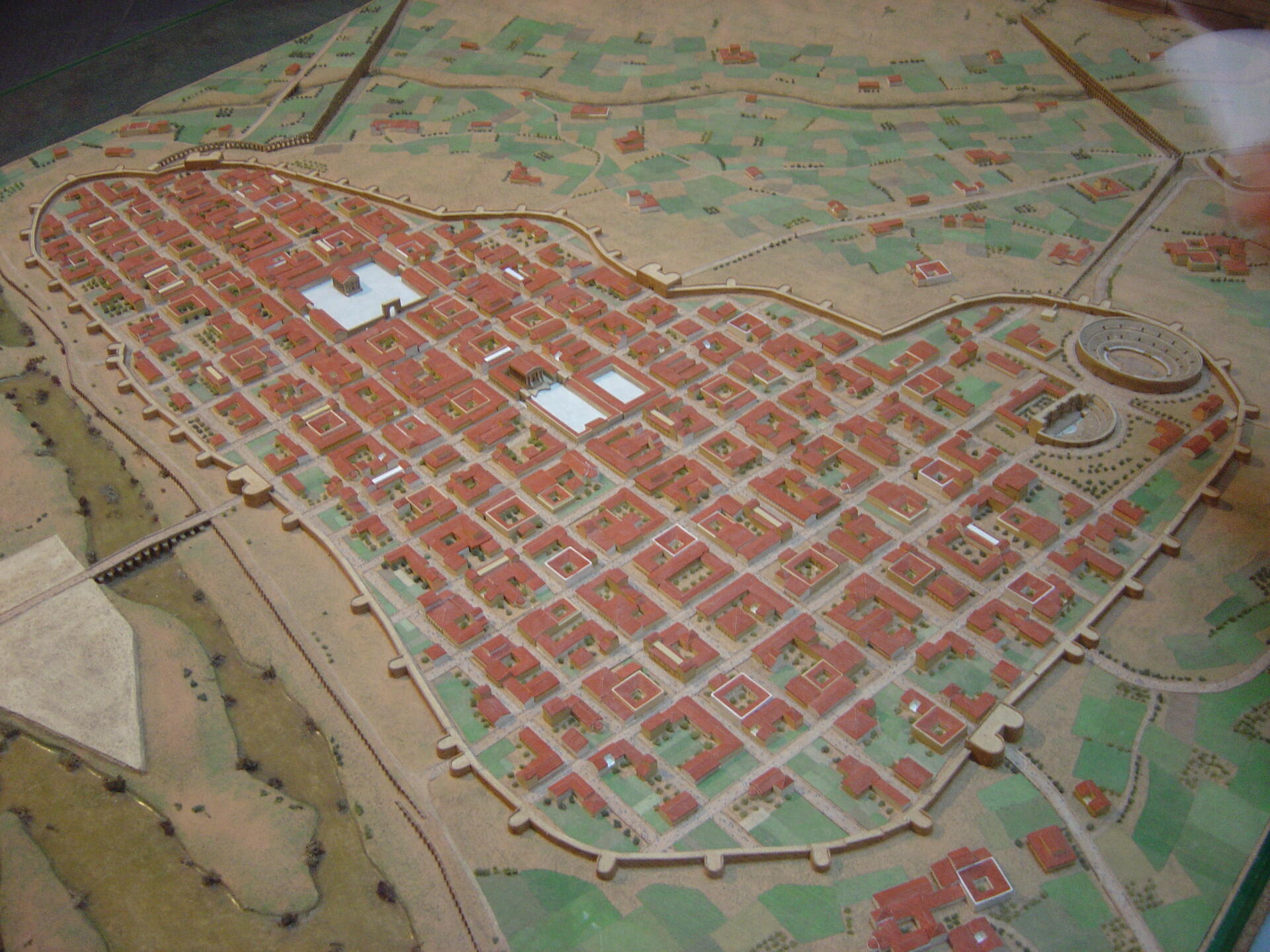
© Yuntero, CC BY-SA 3.0 Resized from original. (This derivative is under the same CC BY-SA license.)
World Heritage Research
Discover scientific research and academic studies that deepen our understanding of Archaeological Ensemble of Mérida from its history and significance to its conservation, management, and contemporary challenges.
-
Digitalización 3D automática con láser escáner, fotogrametría y videogrametría. El caso práctico del Templo de Diana (Mérida).
Automated 3D digitalization techniques, including laser scanning, photogrammetry, and videogrammetry, have emerged as efficient and rapid methods for documenting complex heritage sites. This study demonstrates their application at the Temple of Diana in Mérida, Spain—a UNESCO World Heritage Site since 1993—showcasing how these non-contact techniques can streamline documentation while preserving historical data with precision. The research highlights the adaptability of these methods to diverse applications, offering a scalable solution for heritage conservation that balances speed and accuracy.
Ortiz Coder, P., & Del Pino Espinosa, B. (2015). Digitalización 3D automática con láser escáner, fotogrametría y videogrametría. El caso práctico del Templo de Diana (Mérida). Virtual Archaeology Review, 4(8), 90. https://doi.org/10.4995/var.2013.4325
View Publication Record | Read Publication