World Heritage Identification Number: 206
World Heritage since: 1983
Category: Cultural Heritage
WHE Type: Historic Cities & Urban Areas
Transboundary Heritage: No
Endangered Heritage: No
Country: 🇵🇹 Portugal
Continent: Europe
UNESCO World Region: Europe and North America
Map
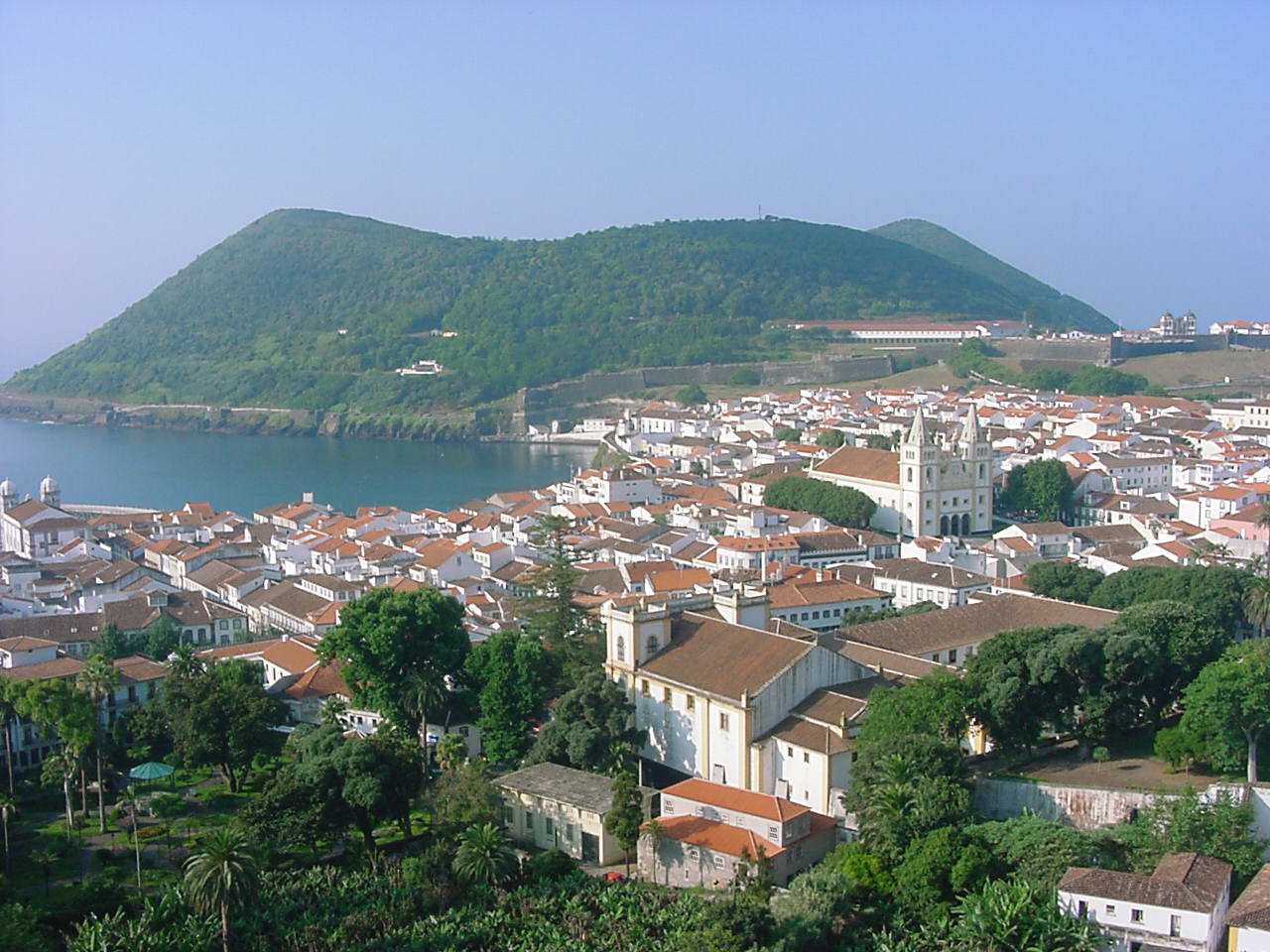
Central Zone of the Town of Angra do Heroísmo in the Azores: A Unique Blend of History and Culture
The Central Zone of the Town of Angra do Heroísmo in the Azores is a remarkable testament to the rich history and cultural heritage of Portugal's autonomous region in the Atlantic Ocean. This urban center, located on the island of Terceira, has been designated as a UNESCO World Heritage Site since 1983, making it a must-visit destination for history enthusiasts and travelers alike.
Established in 1478 and granted city status in 1534, Angra do Heroísmo, often simply referred to as Angra, played a pivotal role in the Azores' development. Its strategic location made it an essential stopover for ships traveling between Europe and the New World during the Age of Discovery. For four centuries, from the 15th to the 19th century, Angra was the primary port of call in the Azores archipelago.
Two notable fortifications, San Sebastião and San João Baptista, stand as unique examples of military architecture within the Central Zone. These fortresses were built to protect the town from potential invasions and pirate attacks.
The San Sebastião Fortress, constructed in the late 16th century, was the city's first major maritime fortification. Designed in an Italian Renaissance style, it features a bastioned layout with a triangular artillery platform to defend the bay. The San João Baptista Fortress, on the other hand, a massive polygonal citadel covering Monte Brasil, remains one of the most expansive Spanish defensive complexes built outside Spain. Both fortresses have undergone restoration efforts following damage sustained during the 1980 earthquake that struck the Azores.
In addition to its military history, Angra do Heroísmo boasts a significant religious heritage. The Church of São Gonçalo, founded in 1542, it is a masterpiece of Baroque architecture. It is renowned for its 18th-century gilded woodwork (talha dourada), painted ceilings, and intricate tile panels. Another noteworthy religious structure is the Convent of São Francisco. This 17th-century complex houses the Museum of Angra do Heroísmo, which displays artifacts ranging from military history to traditional Azorean costumes, and the Church of Our Lady of Guia.
Beyond its historical sites, Angra do Heroísmo offers visitors a glimpse into the local culture. The town's cobblestone streets, colorful buildings, and lively squares create an inviting atmosphere that encourages exploration. Traditional Azorean cuisine can be sampled at numerous restaurants, featuring dishes such as Alcatra (pot roast) and Dona Amélia pastries.
Today, Angra do Heroísmo continues to thrive as a vibrant community and a popular tourist destination. The ongoing restoration of damaged structures, such as the fortresses and churches, ensures that the town's rich history remains preserved for future generations to appreciate. Whether you are drawn to the town's military past, religious heritage, or vibrant culture, a visit to the Central Zone of the Town of Angra do Heroísmo in the Azores promises an unforgettable experience.
UNESCO Description of the World Heritage Site
Situated on one of the islands in the Azores archipelago, this was an obligatory port of call from the 15th century until the advent of the steamship in the 19th century. The 400-year-old San Sebastião and San João Baptista fortifications are unique examples of military architecture. Damaged by an earthquake in 1980, Angra is now being restored.
UNESCO Justification of the World Heritage Site
Criterion (iv): Set in the mid-Atlantic, the port of Angra, obligatory port-of-call for fleets from Africa and the Indies, is an outstanding example of a creation linked to the maritime world, within the framework of the great explorations;
Criterion (vi): Like the Tower of Belem, the Convent of the Hieronymites of Lisbon, and Goa, Angra do Heroísmo is directly and tangibly associated with an event of a universal historic significance: the maritime exploration which permitted exchanges between the great civilizations of the Earth.
Encyclopedia Record: Angra do Heroísmo
Angra do Heroísmo, or simply Angra, is a city and municipality on Terceira Island, Portugal, and one of the three capital cities of the Azores. Founded in 1478, Angra was historically the most important city in the Azores, as seat of the Bishop of the Azores, government entities, and having previously served as the capital city of Portugal during the Liberal Wars. The population in 2011 was 35,402, in an area of 239.00 km2. It was classified as a World Heritage site by UNESCO in 1983.Additional Site Details
Area: Not available
Number of Components: 1
(vi) — Directly associated with events or living traditions
Coordinates: 38.655 , -27.22