World Heritage Identification Number: 234
World Heritage since: 1986
Category: Cultural Heritage
WHE Type: Religious Sites & Sacred Architecture
Transboundary Heritage: No
Endangered Heritage: No
Country: 🇮🇳 India
Continent: Asia
UNESCO World Region: Asia and the Pacific
Map
The Churches and Convents of Goa: A Testament to Colonial Art and Architecture
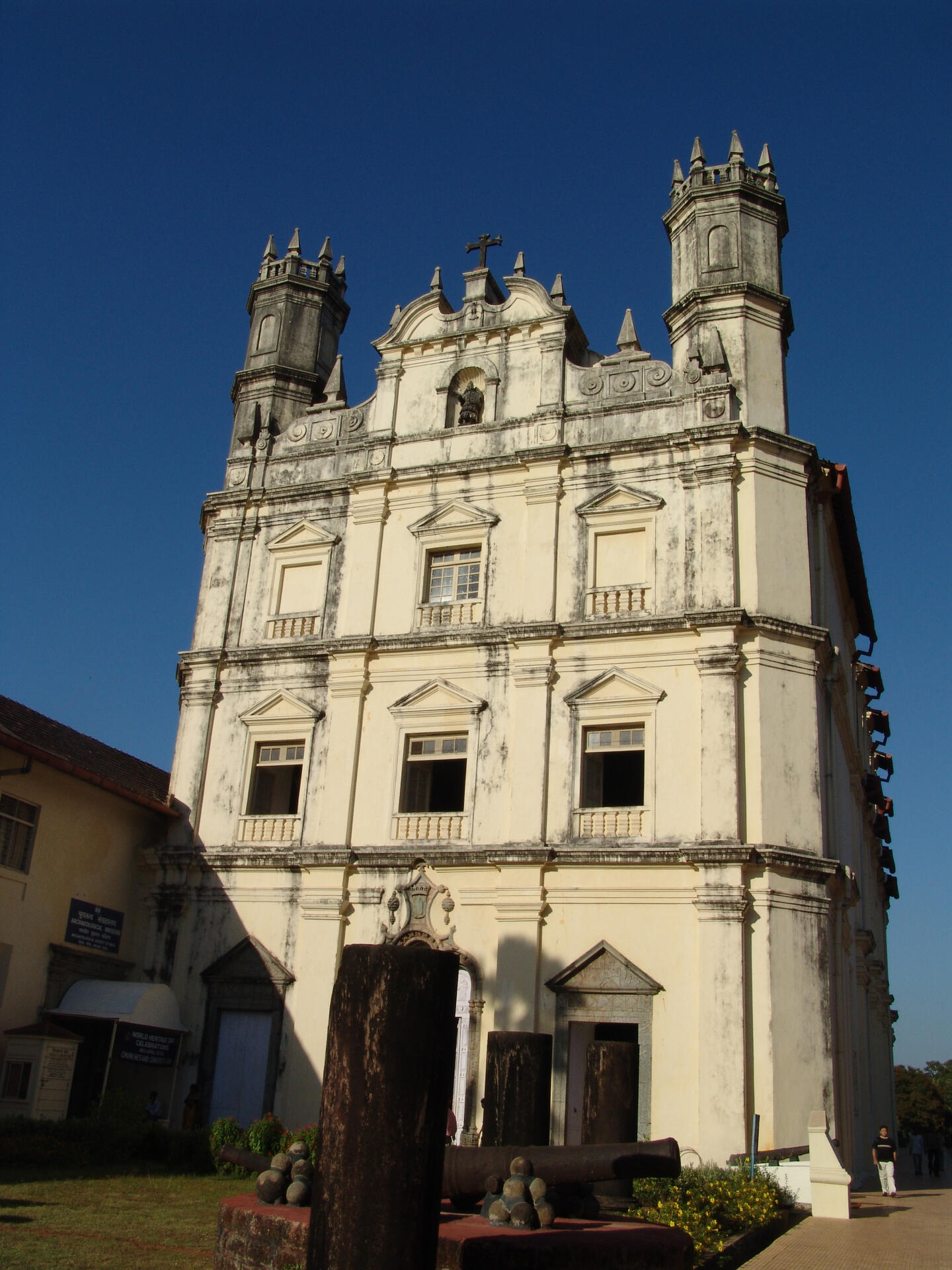
The Churches and Convents of Goa, inscribed as a UNESCO World Heritage Site in 1986, offer a unique glimpse into the rich history of colonial art and architecture that has shaped the cultural landscape of Asia. Located in Goa Velha, the former capital of the Portuguese Indies, these religious edifices stand as testaments to the Portuguese influence and their missionary endeavors in the region.
More to come…UNESCO Description of the World Heritage Site
The churches and convents of Goa, the former capital of the Portuguese Indies – particularly the Church of Bom Jesus, which contains the tomb of St Francis-Xavier – illustrate the evangelization of Asia. These monuments were influential in spreading forms of Manueline, Mannerist and Baroque art in all the countries of Asia where missions were established.
UNESCO Justification of the World Heritage Site
Criterion (ii): The monuments of Goa, “Rome of the Orient”, exerted great influence from the 16th to the 18th century on the development of architecture, sculpture and painting by spreading forms of Manueline, Mannerist and Baroque art throughout the countries of Asia where Catholic missions were established.
Criterion (iv): The churches and convents of Goa are an outstanding example of an architectural ensemble which illustrates the work of missionaries in Asia. The wealth of the ensemble compares with the Latin American ensembles included in the World Heritage List (Cuzco, 1983; Ouro Preto, 1980; Olinda, 1982; Salvador de Bahia, 1985).
Criterion (vi): At the Church of Bom Jesus, Goa conserves Saint Francis-Xavier's tomb. Beyond its fine artistic quality (commissioned in 1665 by the Grand Duke Ferdinand II of Tuscany, it was executed in Florence and includes admirable bronze work by Giovanni Battista Foggini), the tomb of the apostle of India and Japan symbolizes an event of universal significance of the influence of the Catholic religion in the Asian world in the modern period.
Encyclopedia Record: Churches and convents of Goa
Churches and Convents of Goa is the name given by UNESCO to a set of religious monuments located in Goa Velha, in the state of Goa, India, which were declared a World Heritage Site in 1986.Additional Site Details
Area: Not available
Number of Components: 1
(iv) — Outstanding example of a type of building or landscape
(vi) — Directly associated with events or living traditions
Coordinates: 15.50222 , 73.91167
World Heritage Research
Discover scientific research and academic studies that deepen our understanding of Churches and Convents of Goa from its history and significance to its conservation, management, and contemporary challenges.
-
Myth as the Catalyst of a Cultural Heritage-Building Process: The Case of Goa
Goa's cultural heritage, particularly its churches and convents, reflects a dynamic process of myth-making that has sustained its identity across centuries. The study reveals how the magnetic attraction of St. Francis Xavier’s relics, capitalized on by Catholic elites, reinforced the enduring myths of 'Golden Goa' and 'Rome of the East,' resisting urban decay and political shifts from the Portuguese Estado da Índia to Indian independence in 1961. This immaterial heritage-building process culminated in the site's inscription on UNESCO’s World Heritage List in 1986, underscoring the interplay between myth, religion, and cultural preservation.
WALTER ROSSA. (2022). Myth as the Catalyst of a Cultural Heritage-Building Process: The Case of Goa. Portuguese Literary and Cultural Studies, 81–105. https://doi.org/10.62791/hb8b6c77
View Publication Record | Read Publication