World Heritage Identification Number: 634
World Heritage since: 1994
Category: Cultural Heritage
WHE Type: Religious Sites & Sacred Architecture
Transboundary Heritage: No
Endangered Heritage: No
Country: 🇷🇺 Russian Federation
Continent: Europe
UNESCO World Region: Europe and North America
Map
The Church of the Ascension at Kolomenskoye: A Pivotal Milestone in Russian Architecture
The Church of the Ascension, nestled within the expansive grounds of Kolomenskoye, stands as a testament to the rich cultural heritage and architectural prowess of medieval Russia. Inscribed as a UNESCO World Heritage Site in 1994, this remarkable structure holds significant historical and artistic value.
More to come…UNESCO Description of the World Heritage Site
The Church of the Ascension was built in 1532 on the imperial estate of Kolomenskoye, near Moscow, to celebrate the birth of the prince who was to become Tsar Ivan IV ('the Terrible'). One of the earliest examples of a traditional wooden tent-roofed church on a stone and brick substructure, it had a great influence on the development of Russian ecclesiastical architecture.
UNESCO Justification of the World Heritage Site
Criterion (ii): The Church of the Ascension at Kolomenskoye represents an imaginative and innovative advance in Russian Orthodox Church design, which exerted a profound influence on developments in ecclesiastical architecture over a wide area of Eastern Europe.
Encyclopedia Record: Kolomenskoye
Kolomenskoye is a former royal estate situated several kilometers to the southeast of the city center of Moscow, Russia, on the ancient road leading to the town of Kolomna. The 390 hectare scenic area overlooks the steep banks of the Moskva River. It became a part of Moscow in the 1960s.Additional Site Details
Area: Not available
Number of Components: 1
Coordinates: 55.65556 , 37.67389
Image
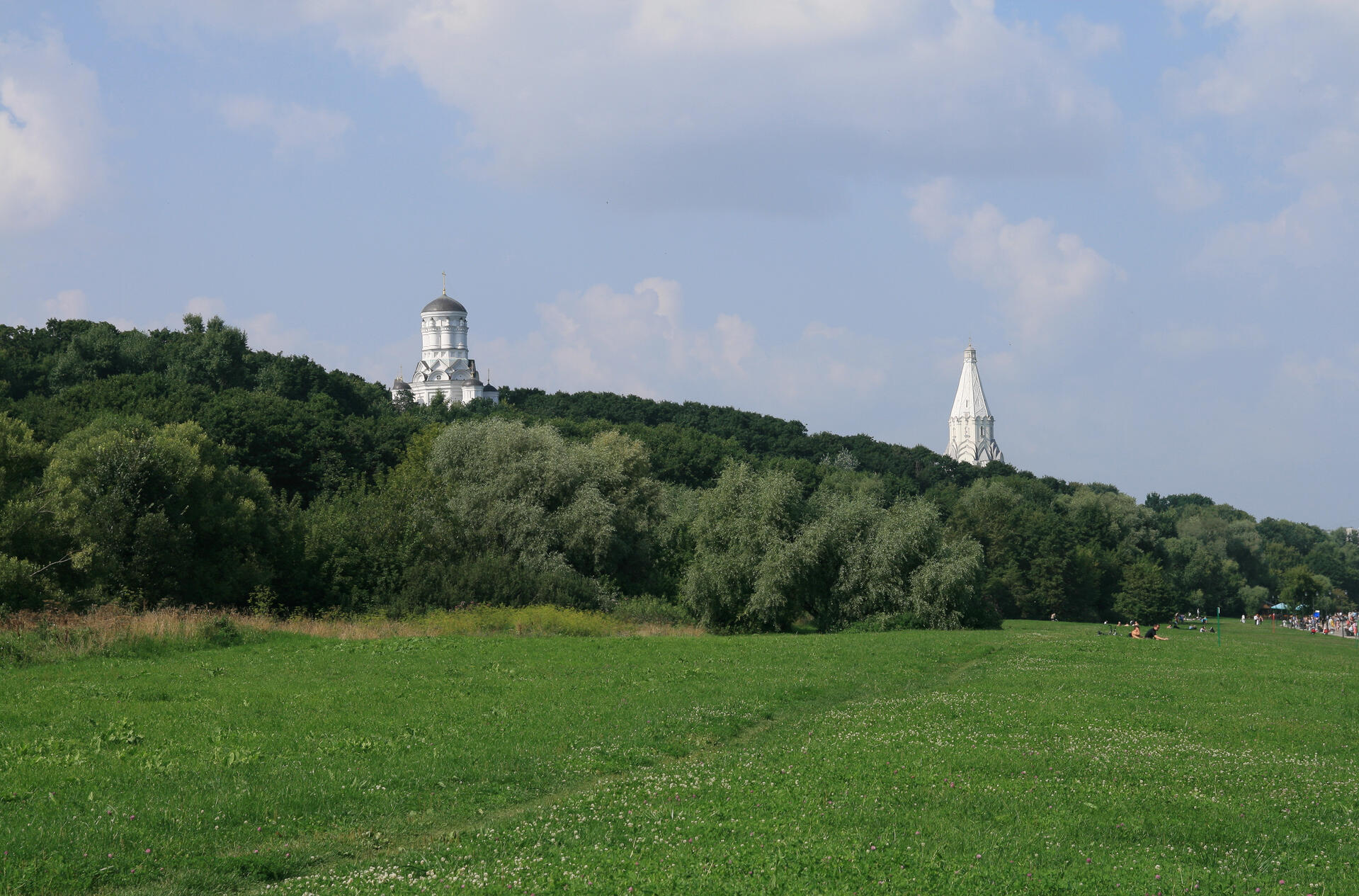
© Ludvig14, CC BY-SA 4.0 Resized from original. (This derivative is under the same CC BY-SA license.)
World Heritage Research
Discover scientific research and academic studies that deepen our understanding of Church of the Ascension, Kolomenskoye from its history and significance to its conservation, management, and contemporary challenges.
-
Il contributo degli architetti italiani alla nuova architettura russa (XV–XVI secolo): concezioni dell’antico, tradizione moscovita e stilemi rinascimentali
A new perspective on 15th–16th century Russian architecture reveals that the Council of Ferrara and Florence (1437–1439) marked a pivotal moment for architectural discourse, influencing the so-called Russian Renaissance. The study highlights the role of Italian architects from diverse backgrounds—Bologna, Venice, Tuscany—in shaping four iconic Moscow religious buildings: the Dormition Cathedral (1475), Archangel Cathedral (1505–1508), Church of the Ascension in Kolomenskoye (1532), and Saint Basil's Cathedral (1555–1561). Analysis of an overlooked 18th-century source, combined with stylistic examination, suggests that Saint Basil’s design may have involved an Italian master. These structures exemplify how foreign architects adapted to local needs by balancing traditional Moscow styles with Renaissance elements, offering a nuanced understanding of cultural exchange in Russian architecture.
Rossi, F. (2021). Il contributo degli architetti italiani alla nuova architettura russa (XV–XVI secolo): concezioni dell’antico, tradizione moscovita e stilemi rinascimentali. Mitteilungen Des Kunsthistorischen Institutes in Florenz, Bd. 60 Nr. 1 (2018): Mitteilungen des Kunsthistorischen Institutes in Florenz. https://doi.org/10.11588/MKHI.2018.1.81634
View Publication Record | Read Publication -
Urban Planning Function of Architectural Monuments and Their Restoration Experience in the XX-XXI Centuries
Restoration of architectural monuments can revitalize urban cultural heritage, serving as dominant elements that boost tourism and rejuvenate megalopolises. The study demonstrates that public and private funding, such as the 'One ruble for one square meter' program in Moscow, effectively supports preservation efforts while maintaining historical integrity. Using retrospective analysis, comparative historical methods, and inductive generalization, the research evaluates funding mechanisms and their impact on urban planning and cultural tourism. This approach highlights the dual role of restored monuments—both as symbols of heritage conservation and catalysts for economic and social development.
Pryadko, I. (2021). Urban Planning Function of Architectural Monuments and Their Restoration Experience in the XX-XXI Centuries. IOP Conference Series: Materials Science and Engineering, 1079(5), 52006. https://doi.org/10.1088/1757-899x/1079/5/052006
View Publication Record | Read Publication -
The Meaning of Shater Form in the Architecture of Russian Renaissance of the 16th Century
The Church of the Ascension in Kolomenskoye, featuring one of the first known masonry tent-shaped roofs, symbolizes Moscow's aspirations as the 'Third Rome' and its connection to Constantinople. Built in 1532 under Grand Duke Vasily III, the church's design, attributed to Italian architect Petrok Maly (Pietro Annibale di Piza), reflects Renaissance influences while adhering to Russian architectural traditions. The study clarifies the cultural and symbolic significance of the tent-shaped roof, addressing long-standing debates about its origins—whether rooted in Russian timber construction or influenced by Armenian, Georgian, or Indian traditions. By analyzing historical texts, including descriptions of Saint Sophia's ciborium in Constantinople, the research links Kolomenskoye's architecture to broader geopolitical and religious narratives of 16th-century Russia.
Shvidkovsky, D. O. (2021). THE MEANING OF SHATER FORM IN THE ARCHITECTURE OF RUSSIAN RENAISSANCE OF THE 16TH CENTURY. Scientific and Analytical Journal Burganov House. The Space of Culture, 17(3), 10–23. https://doi.org/10.36340/2071-6818-2021-17-3-10-23
View Publication Record | Read Publication