World Heritage Identification Number: 855
World Heritage since: 1998
Category: Cultural Heritage
WHE Type: Buildings & Architectural Ensembles
Transboundary Heritage: No
Endangered Heritage: No
Country: 🇧🇪 Belgium
Continent: Europe
UNESCO World Region: Europe and North America
Map
Flemish Béguinages: Medieval Communities for Lay Religious Women
The Flemish Béguinages, inscribed as a UNESCO World Heritage Site in 1998, represent a unique chapter in the history of religious life in medieval Europe. These architectural ensembles offer a glimpse into the lives of the Beguines, women who chose to dedicate their lives to God while remaining active members of society.
More to come…UNESCO Description of the World Heritage Site
The Béguines were women who dedicated their lives to God without retiring from the world. In the 13th century they founded the béguinages , enclosed communities designed to meet their spiritual and material needs. The Flemish béguinages are architectural ensembles composed of houses, churches, ancillary buildings and green spaces, with a layout of either urban or rural origin and built in styles specific to the Flemish cultural region. They are a fascinating reminder of the tradition of the Béguines that developed in north-western Europe in the Middle Ages.
UNESCO Justification of the World Heritage Site
Criterion (ii): The Flemish béguinages demonstrate outstanding physical characteristics of urban and rural planning and a combination of religious and traditional architecture in styles specific to the Flemish cultural region.
Criterion (iii): The béguinages bear exceptional witness to the cultural tradition of independent religious women in north-western Europe in the Middle Ages.
Criterion (iv): The béguinages constitute an outstanding example of an architectural ensemble associated with a religious movement characteristic of the Middle Ages, associating both secular and conventual values.
Encyclopedia Record: Beguinage
A beguinage, from the French term béguinage, is an architectural complex which was created to house beguines: lay religious women who lived in community without taking vows or retiring from the world.Additional Site Details
Area: 59.95 hectares
Number of Components: 13
(iii) — Unique or exceptional testimony to a cultural tradition
(iv) — Outstanding example of a type of building or landscape
Coordinates: 51.03097222 , 4.47375
Image
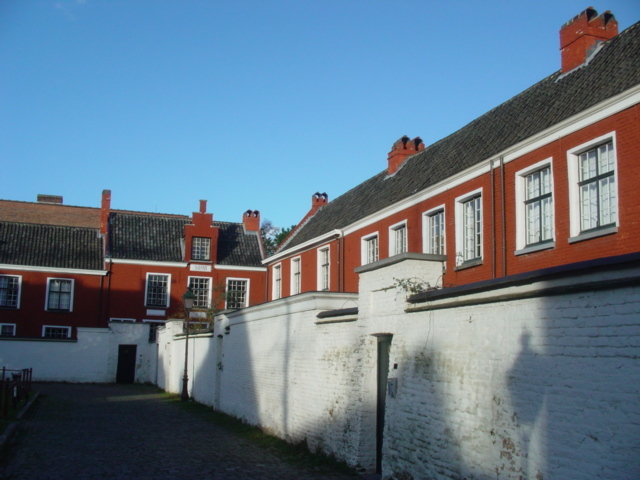
© No machine-readable author provided. Francis Schonken assumed (based on copyright claims)., CC BY-SA 3.0 Resized from original. (This derivative is under the same CC BY-SA license.)