
World Heritage Identification Number: 898
World Heritage since: 2000
Category: Natural Heritage
WHE Type: Natural Landscapes & Geographic Features
Transboundary Heritage: Yes
Endangered Heritage: No
Country: Finland, Sweden
Continent: Europe
UNESCO World Region: Europe and North America
Map
Understanding Post-Glacial Rebound: A Journey Through the High Coast / Kvarken Archipelago
The High Coast / Kvarken Archipelago, a UNESCO World Heritage Site since 2000, offers a captivating glimpse into the intricate processes that have shaped the Earth's surface over millennia. Situated in the Gulf of Bothnia, a northern extension of the Baltic Sea, this site encompasses two distinct regions: the High Coast in Sweden and the Kvarken Archipelago in Finland.
More to come…UNESCO Description of the World Heritage Site
The Kvarken Archipelago (Finland) and the High Coast (Sweden) are situated in the Gulf of Bothnia, a northern extension of the Baltic Sea. The 5,600 islands of the Kvarken Archipelago feature unusual ridged washboard moraines, ‘De Geer moraines’, formed by the melting of the continental ice sheet, 10,000 to 24,000 years ago. The Archipelago is continuously rising from the sea in a process of rapid glacio-isostatic uplift, whereby the land, previously weighed down under the weight of a glacier, lifts at rates that are among the highest in the world. As a consequence islands appear and unite, peninsulas expand, and lakes evolve from bays and develop into marshes and peat fens. The High Coast has also been largely shaped by the combined processes of glaciation, glacial retreat and the emergence of new land from the sea. Since the last retreat of the ice from the High Coast 9,600 years ago, the uplift has been in the order of 285 m which is the highest known ''rebound''. The site affords outstanding opportunities for the understanding of the important processes that formed the glaciated and land uplift areas of the Earth''s surface.
UNESCO Justification of the World Heritage Site
Criterion (viii): The High Coast/Kvarken Archipelago is of exceptional geological value for two main reasons. First, both areas have some of the highest rates of isostatic uplift in the world, meaning that the land still continues to rise in elevation following the retreat of the last inland ice sheet, with around 290 m of land uplift recorded over the past 10,500 years. The uplift is ongoing and is associated with major changes in the water bodies in post-glacial times. This phenomenon was first recognized and studied here, making the property a key area for understanding the processes of crustal response to the melting of the continental ice sheet. Second, the Kvarken Archipelago, with its 5,600 islands and surrounding sea, possesses a distinctive array of glacial depositional formations, such as De Geer moraines, which add to the variety of glacial land- and seascape features in the region. It is a global, exceptional and diverse area for studying moraine archipelagos. The High Coast and the Kvarken Archipelago represent complementary examples of post-glacial uplifting landscapes.
Encyclopedia Record: High Coast
The High Coast is a part of the coast of Sweden on the Gulf of Bothnia, in the Ångermanland province of northeast Sweden, centered in the area of the municipalities of Kramfors, Härnösand and Örnsköldsvik. It is notable as an area for research on post-glacial rebound and eustacy, in which the land rises as the covering glaciers melt, a phenomenon first recognised and studied there. Since the last ice age, the land has risen 300 meters, which accounts for the region's unusually tall cliffs. The High Coast and the Finnish Kvarken constitute the Swedish/Finnish High Coast/Kvarken Archipelago UNESCO World Heritage Site because of its exceptional geology and unique example of isostatic rebound.Additional Site Details
Area: 336,900 hectares
Number of Components: 3
Coordinates: 63.3 , 21.3
IUCN World Heritage Outlook
The 2025 Conservation Outlook on High Coast / Kvarken Archipelago reports the following assessment:
Source: International Union for Conservation of Nature (IUCN) · View assessment
Image
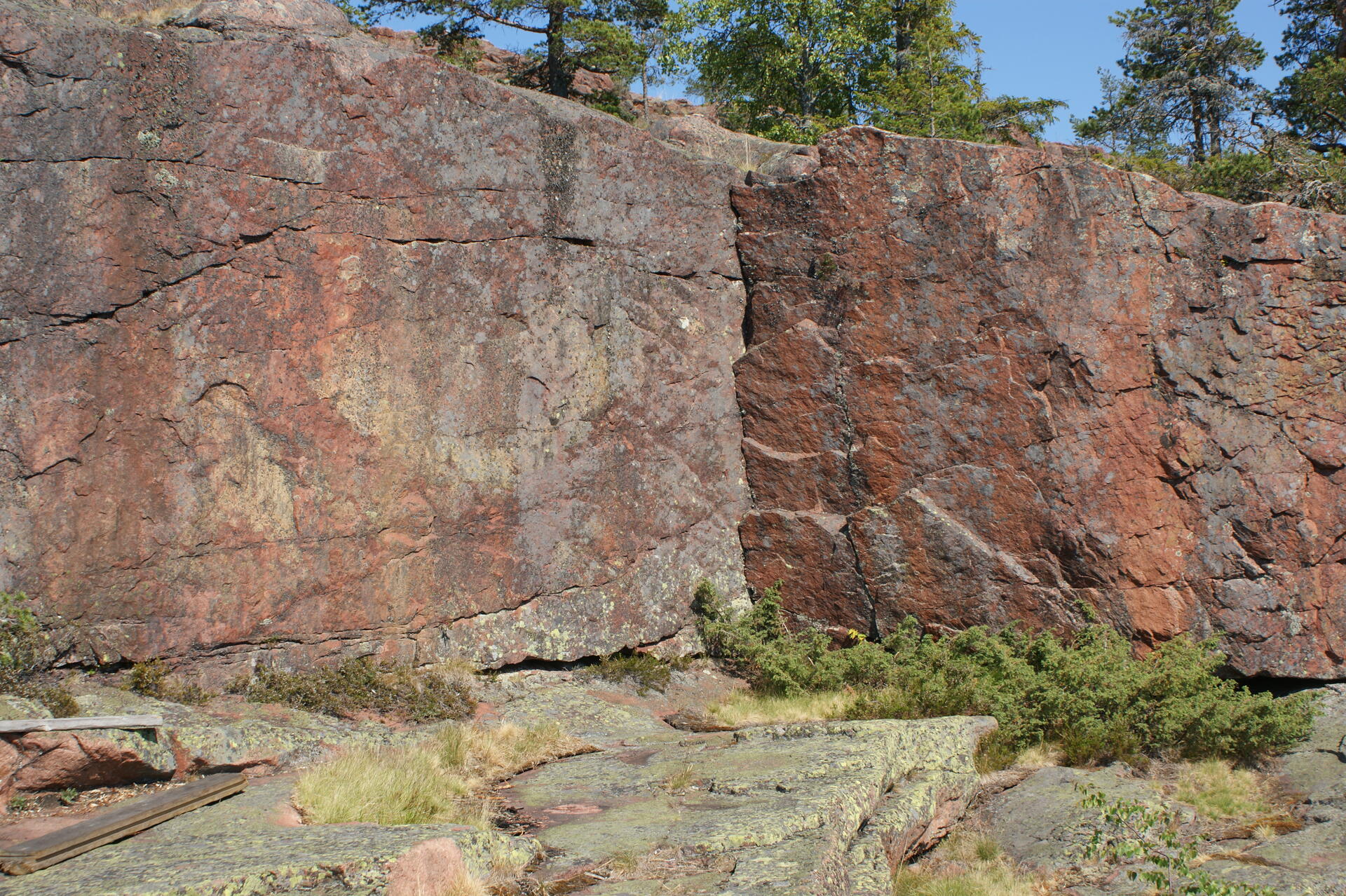
© Rialfver, CC BY-SA 3.0 Resized from original. (This derivative is under the same CC BY-SA license.)
World Heritage Research
Discover scientific research and academic studies that deepen our understanding of High Coast / Kvarken Archipelago from its history and significance to its conservation, management, and contemporary challenges.
-
Weichselian history of the Fennoscandian Ice Sheet centre, Kvarken archipelago, western Finland—flow shifts, thermal regime and deglaciation
A rapid collapse of the Fennoscandian Ice Sheet (FIS) occurred during the Early Holocene, triggered by abrupt warming and intense meltwater activity. This study reveals a sequence of six ice-flow stages in the Kvarken archipelago where postglacial uplift exposes well-preserved glacial landforms. Striation data from 700 sites indicate minimal bedrock erosion during stable ice sheet phases (MIS 4 and MIS 3/2), but a <400-year pulse of subglacial activity around 10.7–10.5 ka led to widespread erosion, flow shifts, and the formation of new landforms like megaflutings and drumlins. The ice margin retreated at unprecedented rates (200–1000 m/year), leaving De Geer moraines in deep water before final deglaciation. This case study highlights centennial-scale changes at the ice sheet bed, offering insights into past ice sheet instability and its response to climate shifts.
Putkinen, N., Tervo, T., Hall, A. M., Lunkka, J. P., Sarala, P., Breilin, O., & Nenonen, J. (2026). Weichselian history of the Fennoscandian Ice Sheet centre, Kvarken archipelago, western Finland—flow shifts, thermal regime and deglaciation. Boreas, 55(3), 670–701. Portico. https://doi.org/10.1111/bor.70064
View Publication Record | Read Publication -
Assessing the epistemic dimension of people–place relationships for inclusive ecosystem governance
A strong connection between people's knowledge and their emotional bonds to place, termed 'epistemic bonding,' significantly influences perceptions of ecosystem governance. This study found that higher epistemic bonding correlates with long-term residency, family history in the area, and a more negative stance towards official nature protection in Finland. By analyzing survey data from 306 residents of the High Coast/Kvarken Archipelago UNESCO World Heritage Site, researchers demonstrated that epistemic bonding is closely tied to place dependence and identity. This concept highlights how diverse ways of knowing shape responses to environmental decision-making, emphasizing the need for inclusive governance that recognizes multiple forms of knowledge.
Hakkarainen, V., Soini, K., & Raymond, C. M. (2025). Assessing the epistemic dimension of people–place relationships for inclusive ecosystem governance. People and Nature, 8(2), 504–523. Portico. https://doi.org/10.1002/pan3.70228
View Publication Record | Read Publication -
Trends in coastal fish stocks of the Baltic Sea
A significant increase in perch and roach catches was observed in the archipelago regions of the Sea of Åland and Archipelago Sea, likely due to ongoing coastal eutrophication. Conversely, opposite trends were noted in two areas of the Gulf of Bothnia and two Swedish coastal areas of the Baltic Proper. The Curonian Lagoon's fish community is severely impacted by human activity, while indications of reduced eutrophication emerged in the Gulf of Riga. High fishing pressure during the 1990s led to a collapse of coastal fish stocks in the West-Estonian archipelago. This study analyzed long-term trends (9–20 years) in Baltic Sea fish populations using multi-mesh gill nets and gill net series, providing insights into population status and community dynamics.
Ådjers, K., Appelberg, M., Eschbaum, R., Lappalainen, A., Minde, A., Repečka , R., & Thoresson, G. (2006). Trends in coastal fish stocks of the Baltic Sea. Boreal Environment Research Publishing Board. https://doi.org/10.60910/1EQH-9VN6
View Publication Record | Read Publication -
The air temperature change effect on water quality in the Kvarken Archipelago area
Rising air temperatures in the Kvarken Archipelago, Finland's UNESCO World Heritage site, are linked to significant changes in water quality. A 61-year analysis revealed strong correlations between air temperature and water temperature (Pearson’s r = 0.897, P < 0.0001), with increases in April and July indirectly boosting chlorophyll-a levels—a marker of phytoplankton growth—particularly in June (slope = 0.391, R² = 0.469, P < 0.0001). While the study suggests indirect effects on water quality, further research is needed to fully understand long-term impacts. The findings highlight the need for monitoring climate-driven shifts in this ecologically sensitive region.
Girgibo, N., Lü, X., Hiltunen, E., Peura, P., & Dai, Z. (2023). The air temperature change effect on water quality in the Kvarken Archipelago area. Science of the Total Environment, 874, 162599. https://doi.org/10.1016/j.scitotenv.2023.162599
View Publication Record | Read Publication -
Ladoga-Lake-Area Lambeosaurus Capture by A Falling Black Hole, and Its Re-Emergence Through Hydrated Lateral Extrusion, Explanation of The Scandinavian Peninsula and of the Finnish Lakes as Well as of the Low-Ob’s Delta and of the Novaya Zemlya
A groundbreaking study proposes that the geological formations of the Scandinavian Peninsula, Finnish lakes, and northern Russian landscapes were shaped by the catastrophic capture of two Lambeosauridae dinosaurs into a small black hole descending from the Moon. The research suggests that these creatures, drawn into the Earth's mantle, triggered seismic and eruptive processes that reshaped the region's topography, including the Urals and Novaya Zemlya. Additionally, the study explains ongoing subsidence in the Turun Saaristo and Kvarken archipelagos, along with oil reserves on Norway's coast. The hypothesis combines astrophysical and geological mechanisms to provide a novel explanation for the area's unique features.
Pirot, F., Hejl, E., & Lavin, C. (2023). Ladoga-Lake-Area Lambeosaurus Capture by A Falling Black Hole, and Its Re-Emergence Through Hydrated Lateral Extrusion, Explanation of The Scandinavian Peninsula and of the Finnish Lakes as Well as of the Low-Ob’s Delta and of the Novaya Zemlya. European Journal of Applied Sciences, 11(2). https://doi.org/10.14738/aivp.112.14421
View Publication Record | Read Publication -
Should Swedish sea level planners worry more about mean sea level rise or sea level extremes?
Swedish coastal spatial planning should prioritize sea level extremes over mean sea level rise for short-term (decades-long) planning, while long-term (century-end) strategies must account for the risk of high sea level rise. Current methods underestimate flood risks by ignoring projection and emission scenario uncertainties, time dependence, and extreme events. This study applies enhanced methods to Swedish coastal locations, revealing that extreme events dominate flood risk in shorter timeframes, whereas sustained high sea levels pose greater threats over longer periods. These findings underscore the need for adaptive planning to mitigate future flood risks effectively.
Hieronymus, M., & Kalén, O. (2022). Should Swedish sea level planners worry more about mean sea level rise or sea level extremes? Ambio, 51(11), 2325–2332. https://doi.org/10.1007/s13280-022-01748-6
View Publication Record | Read Publication -
Place‐embedded agency: Exploring knowledge–place connections for enabling plurality in governance of social–ecological systems
Research on the High Coast/Kvarken Archipelago UNESCO World Heritage Site reveals that integrating local knowledge and place-belonging can enhance inclusive governance of social-ecological systems. The study identifies five types of knowledge-place connections, which shape diverse positions on resource management. These connections influence interactions between actors inside and outside formal decision-making processes, highlighting the concept of 'place-embedded agency.' Recognizing this agency can help overcome tensions and promote plurality in governance, fostering more inclusive and effective management strategies.
Hakkarainen, V., Soini, K., Dessein, J., & Raymond, Christopher M. (2022). Place‐embedded agency: Exploring knowledge–place connections for enabling plurality in governance of social–ecological systems. People and Nature, 4(5), 1141–1158. Portico. https://doi.org/10.1002/pan3.10365
View Publication Record | Read Publication