World Heritage Identification Number: 582
World Heritage since: 1991
Category: Cultural Heritage
WHE Type: Historic Cities & Urban Areas
Transboundary Heritage: No
Endangered Heritage: No
Country: 🇫🇮 Finland
Continent: Europe
UNESCO World Region: Europe and North America
Map
The Architectural Marvel of Old Rauma: A Unique Wooden Townscape in Finland
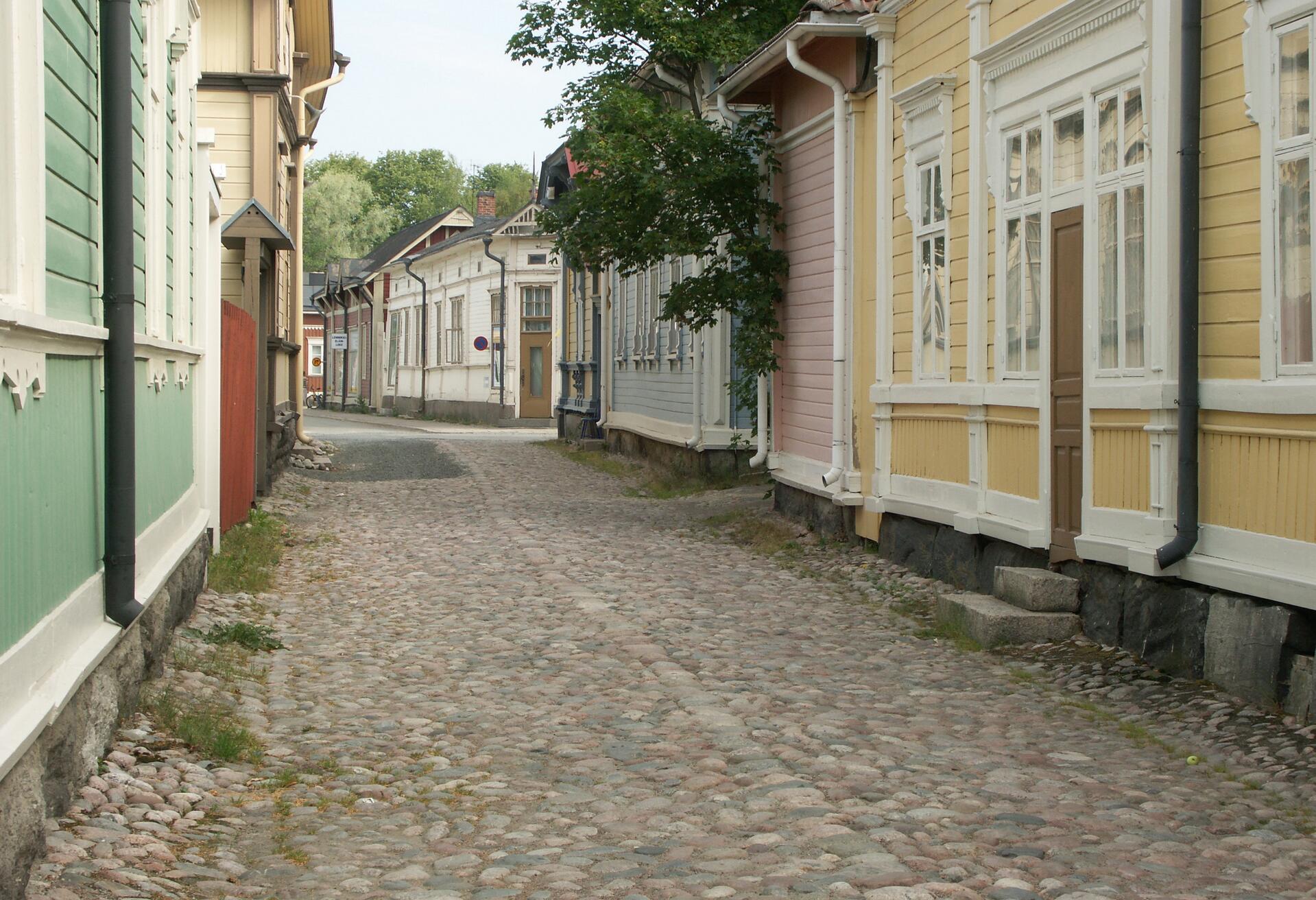
The picturesque town of Rauma, nestled on the shores of the Gulf of Bothnia in western Finland, boasts a rich history that dates back to the Middle Ages. This quaint settlement, officially recognized as a UNESCO World Heritage Site since 1991, showcases an exceptional example of Nordic urban planning and traditional wooden architecture. Known as Old Rauma, this historic district offers visitors a captivating glimpse into the past, providing insights into the lives of its early inhabitants and their cultural practices.
More to come…UNESCO Description of the World Heritage Site
Situated on the Gulf of Botnia, Rauma is one of the oldest harbours in Finland. Built around a Franciscan monastery, where the mid-15th-century Holy Cross Church still stands, it is an outstanding example of an old Nordic city constructed in wood. Although ravaged by fire in the late 17th century, it has preserved its ancient vernacular architectural heritage.
UNESCO Justification of the World Heritage Site
Criterion (iv): The town of Old Rauma constitutes one of the best preserved and most expansive examples of northern European architecture and urbanism.
Criterion (v): Old Rauma is an outstanding example of a Nordic city constructed in wood, and acts as a witness to the history of traditional settlements in northern Europe.
Encyclopedia Record: Old Rauma
Old Rauma is the wooden centre of the town of Rauma, Finland. It was inscribed on the UNESCO World Heritage List in 1991 because of its unique wooden architecture and its well-preserved medieval town layout. It is one of the only medieval towns in Finland.Additional Site Details
Area: 29 hectares
Number of Components: 1
(v) — Outstanding example of traditional human settlement
Coordinates: 61.12806 , 21.51167
World Heritage Research
Discover scientific research and academic studies that deepen our understanding of Old Rauma from its history and significance to its conservation, management, and contemporary challenges.
-
World heritage designation and residential property values: the case of Old Rauma, Finland
A UNESCO World Heritage designation, such as that of Old Rauma, Finland, does not significantly impact residential property prices per square meter. However, the total sale prices in heritage-designated areas are higher due to larger property sizes. This study employs a hedonic price model to analyze transaction data from 2005 to 2012, providing new insights into the economic implications of global heritage recognition. Unlike previous research focused on national or local levels, this work examines the influence of UNESCO's designation on residential values, contributing to discussions on heritage economics and sustainable development.
Amar, J. H. N., & Tyvimaa, T. (2022). World heritage designation and residential property values: the case of Old Rauma, Finland. Journal of Cultural Heritage Management and Sustainable Development, 14(4), 654–671. https://doi.org/10.1108/jchmsd-07-2021-0121
View Publication Record | Read Publication -
World Heritage as a subject of rights: A Hohfeldian analysis of Old Rauma
World Heritage Sites face significant threats from climate change, pandemics, and conflicts, yet legal frameworks often fail to adequately address these risks. This study applies a Hohfeldian analysis—a human rights perspective combined with Nordic legal principles—to examine the vulnerabilities of Old Rauma, a Finnish World Heritage Site. It argues that current legal mechanisms lack resilience, leaving cultural heritage exposed in capital-centric societies. The research highlights the need for adaptive legal frameworks, such as the Nordic right to roam, to mitigate conflicts and safeguard heritage for future generations.
Lehtinen, S. S. (2022). World Heritage as a subject of rights: A Hohfeldian analysis of Old Rauma. Leiden Journal of International Law, 35(4), 761–778. https://doi.org/10.1017/s092215652200053x
View Publication Record | Read Publication -
World heritage designation and residential property values: The Case of Old Rauma, Finland
Residential property values in Old Rauma, Finland, show no statistically significant increase due to its UNESCO World Heritage designation. However, properties in the area command higher total sale prices, primarily because they are significantly larger than other properties in Rauma. The study employed a hedonic price model using sales transaction data from 2005 to 2012, revealing that while heritage status may not directly boost per-square-meter prices, it contributes to overall property value through size advantages. This finding offers nuanced insights into the economic impacts of World Heritage designation, challenging assumptions about its universal benefits.
Amar, J., & Tyvimaa, T. (2022). World heritage designation and residential property values: The Case of Old Rauma, Finland. 28th Annual European Real Estate Society Conference. https://doi.org/10.15396/eres2022_21
View Publication Record | Read Publication -
Old Rauma (Finland): Living and Researching Vernacular Architecture
Old Rauma, a Finnish medieval town founded in the 15th century, stands out as one of the largest and most significant examples of Nordic traditional architecture. Despite undergoing modifications to adapt to modern lifestyles, its buildings retain distinctive features of medieval Nordic urbanism and vernacular architecture, primarily constructed from logs with stone cellars and attics serving multiple functions. A two-month field research study at Tammela Centre in Rauma revealed that many inhabitants continue to live in or repurpose these traditional dwellings, often using time-honored techniques and materials for renovations while preserving key architectural elements. The analysis employed visual surveys, bibliographical research, active participation in seminars, photographic cataloging, and interviews with local experts and residents, providing a comprehensive understanding of how this heritage site maintains its cultural and architectural integrity.
Caruso, M., & García-Soriano, L. (2020). OLD RAUMA (FINLAND): LIVING AND RESEARCHING VERNACULAR ARCHITECTURE. The International Archives of the Photogrammetry, Remote Sensing and Spatial Information Sciences, XLIV-M-1-2020, 11–18. https://doi.org/10.5194/isprs-archives-xliv-m-1-2020-11-2020
View Publication Record | Read Publication -
Crafting the City: Promoting Heritage Awareness Through Craft Making in a Historical Town
Craft making emerges as a powerful tool for fostering heritage awareness and place-based identity, according to research conducted at the UNESCO World Heritage site of Old Rauma, Finland. The study demonstrates that engaging in craft activities can deepen perceptions of placeness and contribute to local development by integrating creative practices into education. Through two craft interventions, the researchers analyzed how such activities inspire deliberation on heritage's role in daily life, highlighting the potential for sustainable heritage promotion in historical towns.
Kouhia, A., & Rönkkö, M.-L. (2020). Crafting the City: Promoting Heritage Awareness Through Craft Making in a Historical Town. International Journal of Education and the Arts, Volume 21. https://doi.org/10.26209/IJEA21N33
View Publication Record | Read Publication -
World Heritage meets Smart City in an Urban-Educational Hackathon in Rauma
A hackathon can serve as an effective innovation contest method for integrating cultural heritage with modern urban development, particularly in UNESCO World Heritage cities. This study demonstrates that dual-focused (urban and educational) hackathons, when designed with clear objectives and collaborative partnerships—such as those involving higher education institutions and local entrepreneur associations—can produce tangible outputs while addressing both academic and public sector needs. The research highlights the importance of intentional design in achieving goals, a factor often overlooked in descriptive hackathon studies. Through a case study in Rauma, Finland—a city aiming to balance its historic Old Town with smart city initiatives—the study provides insights into the process and outcomes of such events, contributing valuable knowledge for both researchers and policymakers.
Suominen, A. H., Halvari, S., & Jussila, J. (2019). World Heritage meets Smart City in an Urban-Educational Hackathon in Rauma. Technology Innovation Management Review, 9(9), 44–53. https://doi.org/10.22215/timreview/1268
View Publication Record | Read Publication -
Local conservation and perceptions of heritage in Old Rauma World Heritage Site
Residents' diverse perspectives on heritage in Old Rauma offer valuable insights for conservation management. The study identifies three distinct community groups with varying frames of reference and values about heritage, highlighting the importance of understanding local perceptions to effectively govern privately owned properties under international conventions. It suggests that fostering communication forums could enhance social learning and support practical, locally developed conservation methods. This approach would strengthen governance and advisory bodies by integrating local knowledge, needs, and community dynamics into heritage management strategies.
Haanpää, R., Puolamäki, L., & Karhunen, E. (2018). Local conservation and perceptions of heritage in Old Rauma World Heritage Site. International Journal of Heritage Studies, 25(8), 837–855. https://doi.org/10.1080/13527258.2018.1552611
View Publication Record | Read Publication