World Heritage Identification Number: 204
World Heritage since: 1982
Category: Cultural Heritage
WHE Type: Historic Cities & Urban Areas
Transboundary Heritage: No
Endangered Heritage: No
Country: 🇨🇺 Cuba
Continent: Americas
UNESCO World Region: Latin America and the Caribbean
Map
Old Havana and Its Fortification System: A Historical Overview
Old Havana, also known as Habana Vieja, serves as the historical heart of Havana, Cuba's capital city. Established in 1519, this urban center played a significant role in the development of the Caribbean region during the 17th century, becoming a major hub for maritime trade and shipbuilding. Today, Old Havana remains a vibrant and densely populated area, preserving an intriguing blend of Baroque and Neoclassical architectural treasures.
The fortification system surrounding Old Havana was crucial to the city's early growth and survival. Constructed between the 16th and 18th centuries, these defensive structures were designed to protect the city from pirate raids, naval attacks, and foreign invasions. Together, they formed one of the most complete and sophisticated military defense systems in the Americas. Key components of this system include the Castillo de los Tres Reyes del Morro, the Castillo de San Salvador de la Punta, the Castillo de la Real Fuerza, and the remnants of the former city walls.
Castillo de los Tres Reyes del Morro, commonly known as Morro Castle, stands at the entrance to Havana Harbor. Construction began in 1589 and continued into the early 17th century. Built of massive stone walls and bastions, the fortress served as Havana’s principal defense against naval threats. Its elevated position allowed it to control access to the harbor and provide early warning of approaching ships. The iconic lighthouse — originally built in 1764, with the current stone tower completed in 1845 — remains one of Havana’s most recognizable landmarks.
Directly opposite Morro Castle lies the Castillo de San Salvador de la Punta, constructed around 1590–1600. This fortress worked in tandem with Morro to defend the narrow harbor entrance, creating a deadly crossfire for hostile vessels, such as English and Dutch pirates, who frequently raided the Caribbean coastline. Over the centuries, it underwent several renovations and modifications but continues to stand as a key element of Havana’s defensive network.
The Castillo de la Real Fuerza, begun in 1558, is one of the oldest surviving stone fortresses in the Americas. Located near the harbor but within the city itself, it was designed to protect Havana from land-based assaults. Although later fortifications proved more strategically effective, the structure remains an important symbol of early Spanish military architecture. The fortress is famous for its watchtower topped by La Giraldilla, a bronze weather vane that has become a symbol of Havana.
In addition to these major fortresses, Old Havana was once enclosed by a system of city walls and bastions built primarily between 1674 and 1740. These walls defined the city’s original boundaries and offered further protection against invasion. While much of the wall system was dismantled in the 19th century to allow urban expansion, surviving sections still testify to Havana’s fortified past.
Beyond its military heritage, Old Havana is renowned for its extraordinary architectural and cultural richness. The city's historic center is home to numerous churches, palaces, and private residences adorned with arcades, balconies, wrought-iron gates, and internal courtyards. Many of these buildings date back to the 17th and 18th centuries, offering visitors a glimpse into Cuba's colonial past.
In 1982, Old Havana and its Fortification System were designated a UNESCO World Heritage Site, recognizing their outstanding universal value and significance in the history of the Americas. Today, these historic sites continue to captivate travelers from around the world, offering a fascinating window into Cuba's storied past.
UNESCO Description of the World Heritage Site
Havana was founded in 1519 by the Spanish. By the 17th century, it had become one of the Caribbean's main centres for ship-building. Although it is today a sprawling metropolis of 2 million inhabitants, its old centre retains an interesting mix of Baroque and neoclassical monuments, and a homogeneous ensemble of private houses with arcades, balconies, wrought-iron gates and internal courtyards.
Encyclopedia Record: Old Havana
Old Havana is the city-center (downtown) and one of the 15 municipalities forming Havana, Cuba. It has the second highest population density in the city and contains the core of the original city of Havana. The positions of the original Walls of Havana are the modern boundaries of Old Havana.Additional Site Details
Area: 238.7 hectares
Number of Components: 11
(v) — Outstanding example of traditional human settlement
Coordinates: 23.13333333 , -82.35
Image
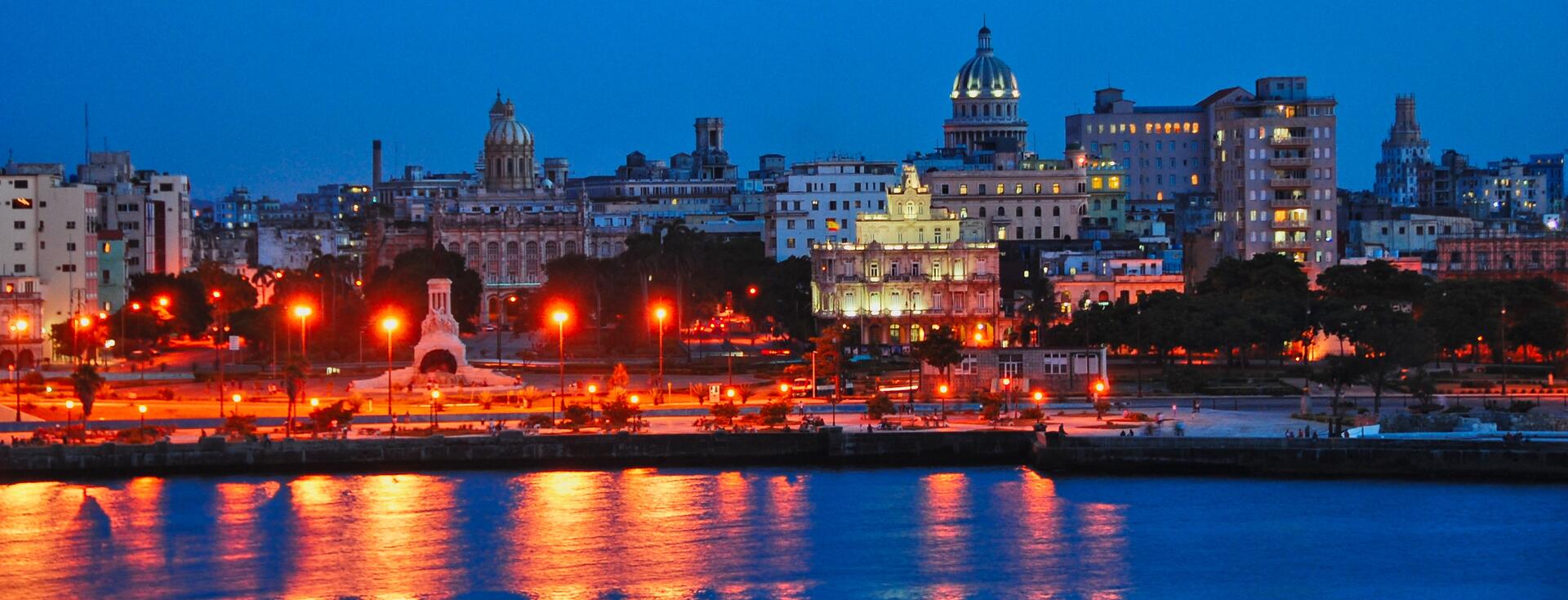
© Gabriel Rodríguez, CC BY-SA 2.0 Resized from original. (This derivative is under the same CC BY-SA license.)
World Heritage Research
Discover scientific research and academic studies that deepen our understanding of Old Havana and its Fortification System from its history and significance to its conservation, management, and contemporary challenges.
-
Tourism Refunctionalization of the Historical Center in Old Havana
Old Havana's historical center exhibits significant gentrification, driven by tourism refunctionalization following its 1982 UNESCO World Heritage designation and Cuba's 1993 focus on cultural tourism. This process has led to urban landscape renewal, displacement of low-income populations, the emergence of a Cuban middle class, and informal housing revaluation. The study, combining literature review, documentary research, and empirical analysis, highlights socio-spatial contradictions arising from commercialization pressures. These findings underscore the complex interplay between heritage preservation, tourism development, and social dynamics in UNESCO-listed sites.
González, M. K. H., & Paes, M. T. D. (2021). TOURISM REFUNCTIONALIZATION OF THE HISTORICAL CENTER IN OLD HAVANA [Dataset]. SciELO journals. https://doi.org/10.6084/M9.FIGSHARE.14307524
View Publication Record | Read Publication -
Havana in the Atlantic World
Havana's strategic role in imperial trade and its extensive fortification system, shaped significantly by the British siege of 1762-1763, highlight its complex development as a cosmopolitan hub. The city's economic transformation, dominated first by sugar production and later by tourism, reflects its evolving global significance. Post-revolutionary policies in 1959 redirected resources away from Havana, leading to urban decline, while UNESCO recognition in 1982 spurred restoration efforts. Despite economic crises following the Soviet collapse and recent challenges like natural disasters and pandemics, Havana's historical layers—from colonial fortifications to modern infrastructure—remain a testament to its enduring influence as Cuba's political and cultural capital.
Jennings, E. (2014). Havana in the Atlantic World. Oxford Bibliographies in Atlantic History. https://doi.org/10.1093/obo/9780199730414-0239
View Publication Record | Read Publication