World Heritage Identification Number: 1202
World Heritage since: 2005
Category: Cultural Heritage
WHE Type: Historic Cities & Urban Areas
Transboundary Heritage: No
Endangered Heritage: No
Country: 🇨🇺 Cuba
Continent: Americas
UNESCO World Region: Latin America and the Caribbean
Map
The Urban Historic Centre of Cienfuegos: A Unique Blend of French and Spanish Architecture
The Urban Historic Centre of Cienfuegos, situated on the Caribbean coast of southern-central Cuba, stands as a testament to the rich cultural heritage of this island nation. Inscribed as a UNESCO World Heritage Site in 2005, this colonial town offers a unique blend of French and Spanish architectural styles that have shaped its urban landscape since its founding in 1819.
More to come…UNESCO Description of the World Heritage Site
The colonial town of Cienfuegos was founded in 1819 in the Spanish territory but was initially settled by immigrants of French origin. It became a trading place for sugar cane, tobacco and coffee. Situated on the Caribbean coast of southern-central Cuba at the heart of the country’s sugar cane, mango, tobacco and coffee production area, the town first developed in the neoclassical style. It later became more eclectic but retained a harmonious overall townscape. Among buildings of particular interest are the Government Palace (City Hall), San Lorenzo School, the Bishopric, the Ferrer Palace, the former lyceum, and some residential houses. Cienfuegos is the first, and an outstanding example of an architectural ensemble representing the new ideas of modernity, hygiene and order in urban planning as developed in Latin America from the 19th century.
UNESCO Justification of the World Heritage Site
Criterion (ii): The Historic town of Cienfuegos exhibits an important interchange of influences based on the Spanish Enlightenment, and its is an outstanding early example of their implementation in urban planning in Latin America, in the 19th century.
Criterion (iv): Cienfuegos is the first and an outstanding example of an architectural ensemble representing the new ideas of modernity, hygiene and order, in urban planning as these developed in the Latin America, from the 19th century.
Encyclopedia Record: Historic Centre of Cienfuegos
The Historic Centre of Cienfuegos, is located in the city of Cienfuegos in Cuba. It was declared a UNESCO World Heritage Site in 2005, because of its outstanding Neoclassical architecture and its status as the best example of early 19th century Spanish urban planning. The historic centre contains six buildings from 1819 to 1850, 327 buildings from 1851 to 1900, and 1188 buildings from the 20th century.Additional Site Details
Area: 70 hectares
Number of Components: 1
(iv) — Outstanding example of a type of building or landscape
Coordinates: 22.145887 , -80.452183
Image
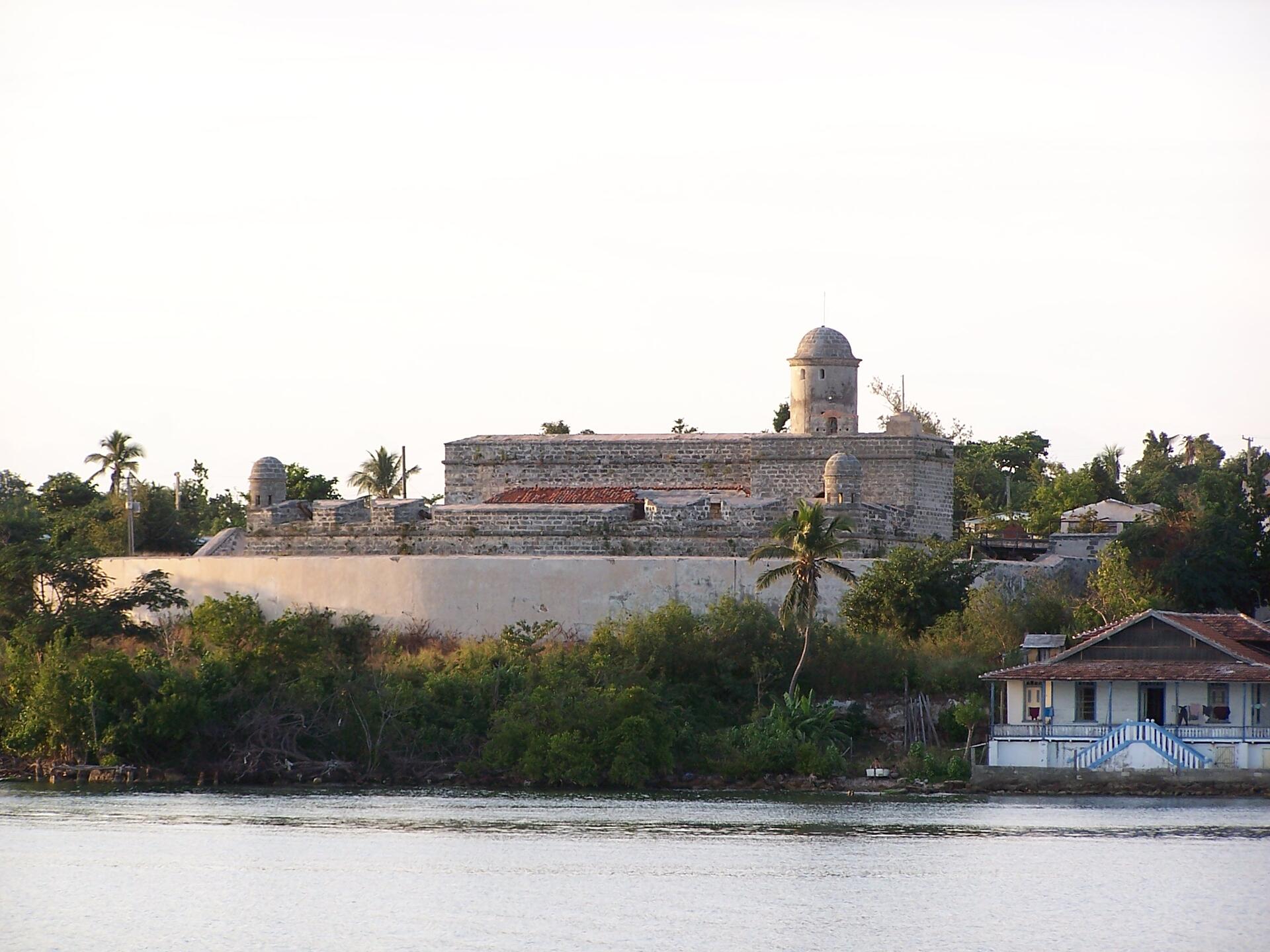
© Unknown, CC BY-SA 2.5 Resized from original. (This derivative is under the same CC BY-SA license.)
World Heritage Research
Discover scientific research and academic studies that deepen our understanding of Urban Historic Centre of Cienfuegos from its history and significance to its conservation, management, and contemporary challenges.
-
Relevance and Reliability of Outdoor SO2 Monitoring in Low-Income Countries Using Low-Cost Sensors
Low-cost SO2 sensors can provide reliable air quality data in low-income countries, as demonstrated by a study comparing their performance to high-end calibration methods. Researchers found that tropical climate calibrations in Cuba matched the accuracy of European lab calibrations, validating the use of affordable sensors for monitoring in resource-limited settings like Cienfuegos. While reliability improves with higher SO2 concentrations, the findings suggest these sensors could effectively replace expensive equipment in regions where traditional monitoring is inaccessible.
González Rivero, R. A., Schalm, O., Alvarez Cruz, A., Hernández Rodríguez, E., Morales Pérez, M. C., Alejo Sánchez, D., Martinez Laguardia, A., Jacobs, W., & Hernández Santana, L. (2023). Relevance and Reliability of Outdoor SO2 Monitoring in Low-Income Countries Using Low-Cost Sensors. Atmosphere, 14(6), 912. https://doi.org/10.3390/atmos14060912
View Publication Record | Read Publication -
Mineralogical and Chemical Tracing of Dust Variation in an Underground Historic Salt Mine
A UNESCO-recognized historic salt mine in Cienfuegos exhibits minimal atmospheric pollution underground, with dust composition primarily derived from natural geogenic sources. The study found that pollutants from surface air are quickly sedimented near the ventilation intake, while anthropogenic influences—such as tourist traffic—are localized and limited to specific areas. Using scanning electron microscopy (SEM), X-ray diffraction (XRD), and inductively coupled plasma spectroscopy (ICP), researchers analyzed dust samples from 11 sites at varying distances from the air inlet. The findings highlight the mine's relative isolation from surface pollutants, with only one site showing elevated ferruginous particles due to tourist activity. This methodology offers universal applicability for similar underground environments.
Puławska, A., Manecki, M., & Flasza, M. (2021). Mineralogical and Chemical Tracing of Dust Variation in an Underground Historic Salt Mine. Minerals, 11(7), 686. https://doi.org/10.3390/min11070686
View Publication Record | Read Publication -
El Espacio Público en Zonas de Conservación Patrimonial de Latinoamérica y El Caribe
A critical gap in urban planning methodologies for Latin American and Caribbean heritage zones is exposed: traditional approaches, such as the Logical Framework Methodology, lack adequate support for professionals designing public spaces. The study analyzed four historic centers, including Cienfuegos, finding that current methods fail to provide real-time, comprehensive data needed for sustainable decision-making. It advocates for integrating emerging technologies to track urban elements and improve conservation strategies, addressing a pressing need for more dynamic and responsive heritage management in the region.
Díaz Barbosa, J., Mayorga Cárdenas, M. Y., García Carrillo, Á., & Palmett Padilla, A. D. C. (2020). El Espacio Público en Zonas de Conservación Patrimonial de Latinoamérica y El Caribe. Módulo Arquitectura Cuc, 26, 83–112. https://doi.org/10.17981/10.17981/mod.arq.cuc.26.1.2021.04
View Publication Record | Read Publication