World Heritage Identification Number: 822
World Heritage since: 1997
Category: Cultural Heritage
WHE Type: Historic Cities & Urban Areas
Transboundary Heritage: No
Endangered Heritage: No
Country: 🇪🇪 Estonia
Continent: Europe
UNESCO World Region: Europe and North America
Map
The Historic Centre (Old Town) of Tallinn: A Medieval Gem in Modern Times
The Historic Centre (Old Town) of Tallinn, located in the capital city of Estonia, stands as a testament to the rich history and cultural heritage that has shaped this Baltic region. Inscribed as a UNESCO World Heritage Site in 1997, the Old Town of Tallinn offers visitors a glimpse into the Middle Ages, showcasing an exceptionally well-preserved urban structure dating back to the 13th century.
More to come…UNESCO Description of the World Heritage Site
The origins of Tallinn date back to the 13th century, when a castle was built there by the crusading knights of the Teutonic Order. It developed as a major centre of the Hanseatic League, and its wealth is demonstrated by the opulence of the public buildings (the churches in particular) and the domestic architecture of the merchants' houses, which have survived to a remarkable degree despite the ravages of fire and war in the intervening centuries.
UNESCO Justification of the World Heritage Site
Criterion (ii): The Historic Centre of Tallinn, among the most remote and powerful outposts of the colonizing activities of the Hanseatic League in the north-eastern part of Europe in the 13th-16th centuries, provided a crucible within which an international secular-ecclesiastical culture resulting from the interchange of Cistercians, Dominicans, the Teutonic Order and the traditions of the Hanseatic League, formed and was itself exported throughout northern Europe.
Criterion (iv): The town plan and the buildings within it constitute a remarkable reflection of the coexistence of the seat of feudal overlords and a Hanseatic trading centre within the shelter of a common system of walls and fortifications.
Encyclopedia Record: Tallinn Old Town
Tallinn Old Town is the oldest part of Tallinn, Estonia. Old Town of Tallinn has managed to wholly preserve its structure of medieval and Hanseatic origin. Old Town represents an exceptionally intact 13th century city plan. Since 1997, the area has been registered in the UNESCO World Heritage List. The old town is bordered by the Walls of Tallinn. Its area is 113 ha and there is a buffer zone of 2,253 ha.Additional Site Details
Area: 113 hectares
Number of Components: 1
(iv) — Outstanding example of a type of building or landscape
Coordinates: 59.437 , 24.74
Image
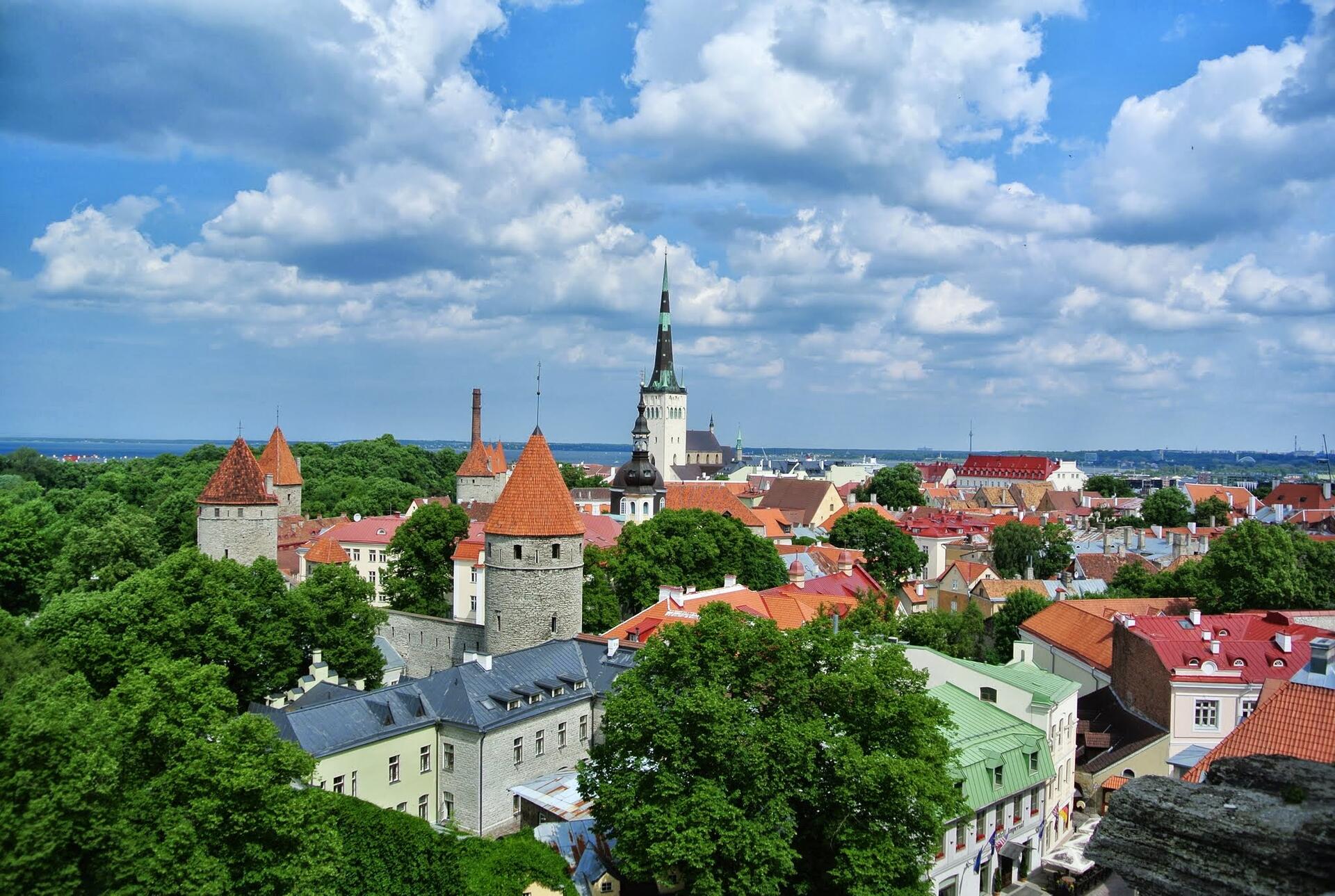
© Ben Bender, CC BY-SA 3.0 Resized from original. (This derivative is under the same CC BY-SA license.)
World Heritage Research
Discover scientific research and academic studies that deepen our understanding of Historic Centre (Old Town) of Tallinn from its history and significance to its conservation, management, and contemporary challenges.
-
Girls on the Move: Late Medieval Social Networks, Economic Conditions and Peasant Geographic Mobility between Southern Finland and Reval (Tallinn), c. 1350–1560
A significant shift in late medieval peasant migration patterns between southern Finland and Reval (Tallinn) was uncovered, revealing that female emigration from eastern Nyland surged dramatically during the 1520–1560 period, coinciding with Reval's final transit trade boom. Over 83% of migrants who passed away in Reval during this era were women, primarily younger daughters from middle and upper rural society layers, contrasting sharply with earlier periods where male migration dominated (c. 1350–1519). These women leveraged their experience in peasant merchant households to secure urban employment, suggesting motivation driven by overpopulation in home villages and Reval's labor market demands. The study, based on rare 'tovorsichte' inheritance certificates, also highlighted a geographic concentration of female migrants from parishes along the northern Gulf of Finland, directly opposite Reval.
Salminen, T. (2025). Girls on the Move: Late Medieval Social Networks, Economic Conditions and Peasant Geographic Mobility between Southern Finland and Reval (Tallinn), c. 1350–1560. Zapiski Historyczne, XC(2), 51. https://doi.org/10.15762/zh.2025.13
View Publication Record | Read Publication -
The “Venice syndrome” in Tallinn Old Town
Residents of Tallinn Old Town exhibit significantly lower tolerance for tourism compared to the general city population, with half perceiving tourism pressure as excessive during pre-pandemic peak seasons. This "Venice syndrome" reflects heightened criticism among those living in highly touristic areas, particularly concerning their living environment. The study, based on a survey of 338 residents and property owners, traces these dynamics to neoliberal tourism policies and Soviet-era urban planning, highlighting the vulnerability of local communities in heritage sites. It underscores the need to consider time-space specificities when analyzing touristification impacts.
Talk, T., Ojamäe, L., Paadam, K., & Alatalu, R. (2023). The “Venice syndrome” in Tallinn Old Town. Journal of Cultural Heritage Management and Sustainable Development, 15(5), 940–957. https://doi.org/10.1108/jchmsd-03-2022-0046
View Publication Record | Read Publication -
Performativity in Estonian Political Theatre of the 2010s
Estonian political theatre of the 2010s, particularly through Teater NO99's experimental projects, demonstrated significant performativity by blurring lines between art and reality, influencing real political processes. Key performances like Tallinn — Our City (2010) exposed corruption involving city officials, while United Estonia Assembly (2010) mirrored unfair campaign tactics, foreshadowing the rise of hyper-populism. Other works, such as Meeting of the Leadership of the Reform Party (2012) and Savisaar (2015), addressed real political scandals, with the latter even boosting electoral activity. The study identifies three strategies: role reversal, where audiences become active participants; use of public spaces to stage politics; and the integration of fictitious processes that parallel and impact real politics. These findings highlight theatre's potential as a tool for political critique and engagement.
Volodina, A. V. (2022). Performativity in Estonian Political Theatre of the 2010s. Concept: Philosophy, Religion, Culture, 6(1), 138–153. https://doi.org/10.24833/2541-8831-2022-1-21-138-153
View Publication Record | Read Publication -
Why Is There a Trefoil Motif From Karja Church in Pikk Street in Tallinn? Based on the Example of the Restoration of the In-Situ Gothic Portal in Pikk Street 7, How Medieval Is the Medieval Architecture of Tallinn Old Town?
The medieval architecture of Tallinn Old Town, while celebrated for its authenticity, reveals a more complex history when examined through the lens of specific artifacts and restoration processes. A study analyzing the Gothic portal at Pikk Street 7 demonstrates that such structures are not purely medieval but also bear significant 20th-century influences due to extensive restorations. Unlike the portal at Vene 17, which retains its original form, the Pikk Street 7 portal's restoration aimed for a dominant medieval and Gothic aesthetic, though it omitted certain medieval features like high gables with blind niches. The research, based on official documentation, press critiques, and memoirs of restorer Aarne Joonsaar, highlights how restoration practices contribute as much to the narrative of Tallinn's architectural history as the original structures themselves.
Paju, R. (2022). Why Is There a Trefoil Motif From Karja Church in Pikk Street in Tallinn? Based on the Example of the Restoration of the In-Situ Gothic Portal in Pikk Street 7, How Medieval Is the Medieval Architecture of Tallinn Old Town? Baltic Journal of Art History, 23. https://doi.org/10.12697/bjah.2022.23.02
View Publication Record | Read Publication -
Walking to Utopia and Thinking About Art Along the Way
This reflective essay offers a unique perspective on the transformative potential of urban exploration during periods of restricted access, such as lockdowns. The author describes how the closure of shops, cafés, and art galleries in Tallinn's old town during the pandemic created an environment that encouraged deeper engagement with visual art and imaginative thinking. The walk, initially purposeful, evolved into a meandering experience filled with images, ideas, and utopian reflections, demonstrating how spatial constraints can foster creative and philosophical exploration. The essay highlights the interplay between physical movement, visual art, and mental processes, suggesting that such conditions can lead to new ways of seeing and being.
Ulvi Haagensen. (2021). Walking to Utopia and Thinking About Art Along the Way. RUUKKU - Studies in Artistic Research, (17). https://doi.org/10.22501/ruu.1123907
View Publication Record | Read Publication -
Meeskäsitööliste vestlusring Heimtali laadal 25. septembril 2021 / The current state of artisanal woodwork in Estonia: a roundtable
A decline in the recognition and practice of manual skills, particularly artisanal woodwork, has been observed over recent decades, with potential for resurgence post-economic peak. The study, a roundtable discussion involving three Estonian artisan woodworkers and an academic moderator, explored the challenges and opportunities facing the field amid economic shifts like green transition and EU structural funds. Participants highlighted the need to integrate manual skills into education and improve their societal image, while expressing skepticism about long-term benefits from external funding. The discussion also noted emerging opportunities due to rising material costs and interest from top brands in relocating production to Europe. Insights emphasized the importance of local knowledge, entrepreneurship, and sustainable practices in reviving artisanal woodwork.
Rennu, M., Parts, P.-K., Bristol, M., & Kihulane, M. (2021). Meeskäsitööliste vestlusring Heimtali laadal 25. septembril 2021 / The current state of artisanal woodwork in Estonia: a roundtable. Studia Vernacula, 13, 186–197. https://doi.org/10.12697/sv.2021.13.186-197
View Publication Record | Read Publication -
Villaste rõivaste õmblusvõtted keskaegsete arheoloogiliste leidude näitel / Stitches and seams of woollen garments based on medieval archaeological findings
Research on medieval textile fragments from Tallinn, Tartu, and Pärnu reveals standardized sewing techniques used in 13th–16th century Estonian towns. Analysis of 174 woollen fragments with 321 seams identified eight distinct stitch types—including running stitch, backstitch, hemming, overcast, and buttonhole stitch—and categorized seams into construction, hems, finishes, and special details like lapped seams (linked to stockings) and reinforced seams. Techniques, such as the 2–3 mm running stitch and up to 7 mm partial backstitch, show consistency across the period and align with European counterparts. The study employed visual observation, magnifying tools, and detailed documentation to trace stitches left by rotted threads or imprints, offering insights into medieval craftsmanship and consumption habits. Findings underscore the potential for reviving these techniques in modern textile production, valuing handicraft and emotional connections to materials.
Ratas, J. (2021). Villaste rõivaste õmblusvõtted keskaegsete arheoloogiliste leidude näitel / Stitches and seams of woollen garments based on medieval archaeological findings. Studia Vernacula, 13, 98–127. https://doi.org/10.12697/sv.2021.13.98-127
View Publication Record | Read Publication