World Heritage Identification Number: 89
World Heritage since: 1979
Category: Cultural Heritage
WHE Type: Historic Cities & Urban Areas
Transboundary Heritage: No
Endangered Heritage: No
Country: 🇪🇬 Egypt
Continent: Africa
UNESCO World Region: Arab States
Map
Exploring the Rich History of Historic Cairo
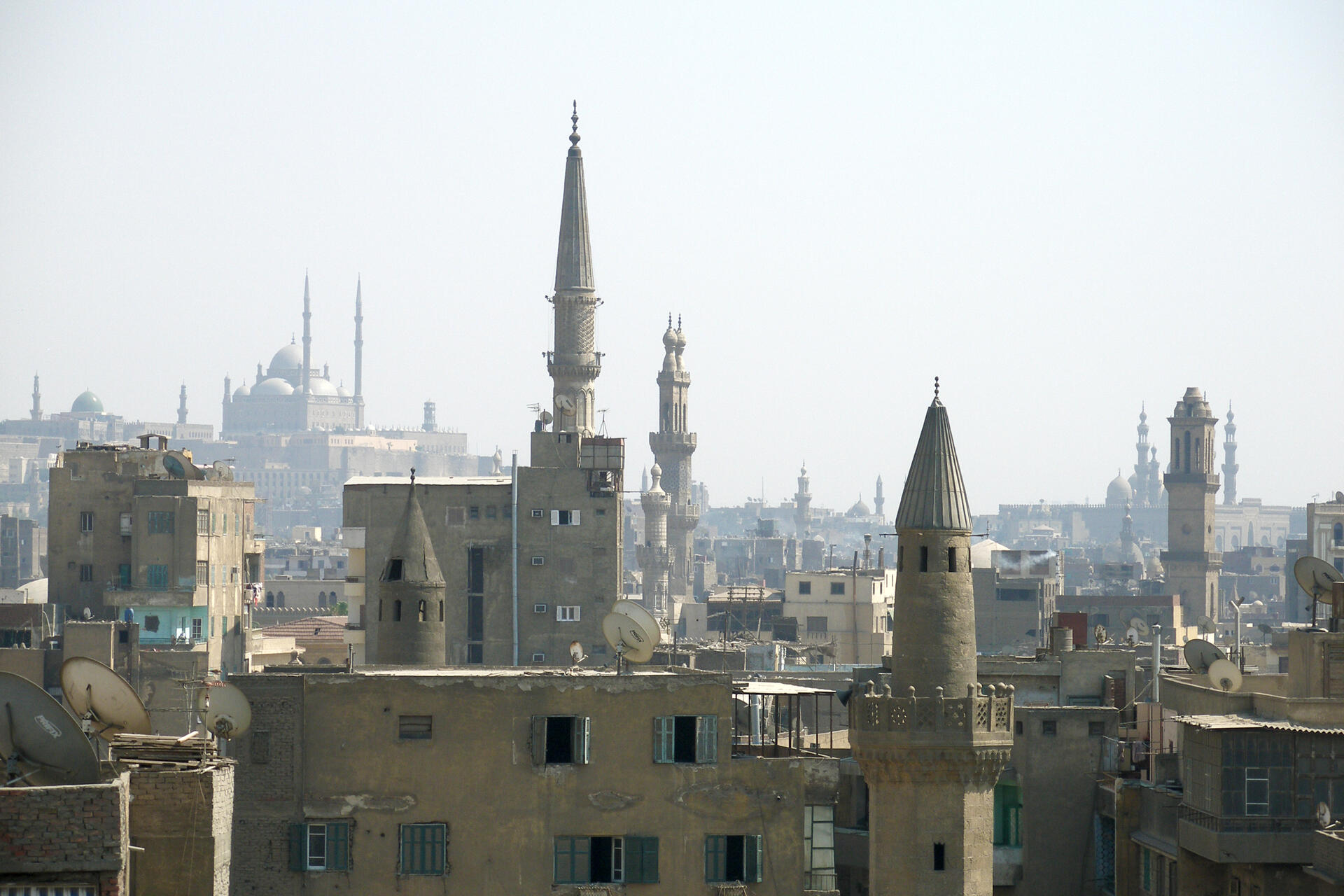
Historic Cairo, also known as Islamic Cairo or Medieval Cairo, is a captivating testament to the rich history and cultural diversity of Egypt. This ancient city, located within the modern urban area of Cairo, was founded in the 10th century and played a pivotal role in the Islamic world, reaching its golden age in the 14th century. In 1979, Historic Cairo was inscribed as a UNESCO World Heritage Site, recognizing its significant historical and architectural value.
More to come…UNESCO Description of the World Heritage Site
Tucked away amid the modern urban area of Cairo lies one of the world's oldest Islamic cities, with its famous mosques, madrasas, hammams and fountains. Founded in the 10th century, it became the new centre of the Islamic world, reaching its golden age in the 14th century.
UNESCO Justification of the World Heritage Site
Criterion (i): The great monuments of Historic Cairo are a unique ensemble of architectural and artistic masterpieces which stand tall in the sky of Cairo. Each of them expresses rare artistic, aesthetic and architectural value, which might be enough for each to be considered as of outstanding global importance in the history of art and architecture in the world. Together they are an ensemble that reflects the highpoints of Tulunid, Fatamid, and Mamluk architecture. The mosque of Ahmed ibn Tulun (876-879 AD), with its spiral minaret and symmetrical arches opening on to a vast square court, is an outstanding example of early Islamic architecture from the 9th and 10th centuries. The distinctive Fatimid architecture (969–1171 AD) is reflected in the city fortifications and gates, Al-Azhar, Al-Hakim, Al-Aqmar and Salih Tala'I mosque, and mausoleums and shrines. The extraordinary Bahri Mamluk (1250-1382 AD) and Burgi Mamluk (1382-1517 AD) monuments reign triumphant above the skyline of Cairo, the refinement of their colourful architecture, boldly defined, original and unexpected, is characterised by domes with Persian arches, minarets with finely chiselled cantilevers, tall facades with pointed arches, and balconies mounted on stalactites, like those in the complex of Sultan Qalawun, the monuments of al-Nasir Mohammad, the Madrasa of Sultan Hasan, Bimaristan al-Mu’ayyadiyah and the complex of Sultan Al-Ghori.
Criterion (v): Historic Cairo is an outstanding example of cohesive urban fabric, expressing the long coexistence of different cultures and human interaction with the environment. Its settlement was shaped by Cairo’s strategic location at the tip of the Delta, between the River Nile (east) and the Moqattam Hill (west). The historic southern port of Al-Fustat, strongly connected to the River Nile, fostered the historic development of trade with Europe, while an aqueduct, Sur Megra El-Ayoun, dating back to medieval times, created a link between the city and the river that made possible an extensive network of canals, cisterns, and sabils. The 10th century Fatimid planning centre inside the fortifications is the nucleus of the city. Its construction extended in the form of lanes representing residential Harats for different sects, races and tribes, which allowed for future development. This Fatamid Plan was greatly enlarged in the Mamluk era to become a manifestation of the application of Islamic jurisprudence in planning and spatial organization, while the Ottomans maintained the medieval urban patterns. The building of a new Cairo in the 19th century allowed Historic Cairo to remain largely intact as an outstanding example of medieval town planning. Since the second half of the 19th century, development has involved the filling up of canals to provide space for new streets and settlements. The historic city has become vulnerable due to these pressures, and from the widespread use of new architectural models and changes in original functions (such as caravanserai, madrasas and sabils).
Criterion (vi): The historic centre of Cairo constitutes an impressive material witness to the international importance of the city’s political, strategic, intellectual and commercial levels during the medieval period. Al-Azhar has been a leading theological and religious academic centre for the entire Islamic world since its foundation in 970 AD and continues to have a strong and continuing impact. Several prominent mausoleums are devoted to Imams or saints renowned by many Muslims such as the shrines of Al-Hussain, Sayyida Nafisa, Sayyida Aisha and Sayyida Ruqayya, while the Amr Ibn Al-Ass Mosque, Nilometer, Ahmed Ibn Tulun Mosque, Azhar Mosque, Qalawun Bimaristan, Sultan Hassan Madrassa, Sultan Barquq Mosque-Madrasa Complex, Mahmoud Al-Kurdi Madrasa, and Mawlawi Tekkiya are all exceptional witnesses to the pioneering ideas in medicine, chemistry, biology, water engineering and jurisprudence which combined to make Historic Cairo a major destination in the Islamic world.
Encyclopedia Record: Islamic Cairo
Islamic Cairo, or Medieval Cairo, officially Historic Cairo, refers mostly to the areas of Cairo, Egypt, that were built from the Muslim conquest in 641 CE until the city's modern expansion in the 19th century during Khedive Ismail's rule, namely: the central parts within the old walled city, the historic cemeteries, the area around the Citadel of Cairo, parts of Bulaq, and Old Cairo which dates back to Roman times and includes major Coptic Christian monuments.Additional Site Details
Area: 523.66 hectares
Number of Components: 5
(v) — Outstanding example of traditional human settlement
(vi) — Directly associated with events or living traditions
Coordinates: 30.05 , 31.26111
World Heritage Research
Discover scientific research and academic studies that deepen our understanding of Historic Cairo from its history and significance to its conservation, management, and contemporary challenges.
-
Evaluating flood and landslide hazards to cultural heritage sites in Historic Cairo
Historic Cairo faces significant vulnerability to natural disasters such as flooding and landslides. A recent study reveals that 54.1% of the area is at very low to moderate risk for floods, while 12.4% is classified as very high hazard, impacting 21 heritage sites. Additionally, 16% of the area is in high-threat zones for landslides, affecting 13 cultural sites. When considering both hazards, at least 30 sites are in high-risk areas, including 9 in very high-risk zones, particularly in central and eastern Historic Cairo. The research employed remote sensing and GIS methods, prioritizing key factors using the Analytic Hierarchy Process to generate hazard maps. These findings underscore the urgent need for targeted risk mitigation strategies to protect Historic Cairo's cultural heritage. The study provides a valuable GIS-based database and hazard maps for urban planners, policymakers, and stakeholders.
Allam, A. M., Ibrahim, M. G., Kanae, S., & Sharaan, M. (2025). Evaluating flood and landslide hazards to cultural heritage sites in Historic Cairo. Natural Hazards, 121(13), 15491–15535. https://doi.org/10.1007/s11069-025-07401-1
View Publication Record | Read Publication -
Characterization of Construction Materials of the Historic Structures in Historic Cairo: A Case Study
A detailed analysis of the Fatima Khatun Mausoleum in Historic Cairo reveals critical insights into the degradation of its 13th-century construction materials, particularly focusing on mortar and brick compositions. The study employed advanced experimental techniques to characterize these materials, identifying key factors contributing to their deterioration. Findings highlight the importance of understanding historical material properties for effective conservation strategies. This research provides a foundation for preserving similar structures, offering actionable data for restoring Historic Cairo's architectural heritage.
ELYAMANI, A., REDA, A., ABDEL-HAFEZ, M., MOURAD, S. A., HASSAN, M. M.,. (2023). Characterization of Construction Materials of the Historic Structures in Historic Cairo: A Case Study. International Journal of Conservation Science, 14(2), 599–616. https://doi.org/10.36868/ijcs.2023.02.15
View Publication Record | Read Publication -
Prioritization of Heritage Buildings in Historic Cairo for Restoration Funding
Historic Cairo, a UNESCO World Heritage Site with hundreds of deteriorating Coptic and Islamic structures, faces significant tourism revenue loss due to closed sites from urban expansion, pollution, and aging. A decision support system inspired by infrastructure asset management (IAMS) is proposed to prioritize restoration funding for maximum socioeconomic benefit. This structured approach evaluates building conditions, unique heritage value, and expected tourism gains, guiding policy makers in rational fund allocation. The model aims to rejuvenate Historic Cairo and boost Egypt's tourism economy, addressing the critical gap between preservation needs and limited resources.
Mourad., S., Hegazy, T., Mamdouh, A., Elyamani, A., & Saad, D. (2023). Prioritization of Heritage Buildings in Historic Cairo for Restoration Funding. International Journal of Advances in Structural and Geotechnical Engineering, 07(01), 20–28. https://doi.org/10.21608/asge.2023.218432.1053
View Publication Record | Read Publication -
Heritage in the Street: Megawra | BEC’s Athar Lina Initiative in Historic Cairo
A groundbreaking initiative, Athar Lina, demonstrates that heritage can be a resource for community empowerment and sustainable urban development. Based in al-Khalifa, Historic Cairo, this participatory project, led by Megawra-Built Environment Collective, has successfully conserved six monuments from the 12th to 14th centuries while addressing critical challenges like groundwater rise. Its innovative Ground Water Research Project extracts and reuses water for community benefits such as irrigation, showcasing a practical solution to heritage site degradation. Beyond conservation, Athar Lina integrates heritage education, urban revitalization, and income-generation strategies through its Heritage Design Thinking School, proving that heritage can drive economic growth while preserving cultural legacy.
al-Ibrashy, M. (2021). Heritage in the Street: Megawra | BEC’s Athar Lina Initiative in Historic Cairo. The Journal of Public Space, (Vol. 6 n. 1), 241–256. https://doi.org/10.32891/jps.v6i1.1462
View Publication Record | Read Publication -
New architectural intervention in historically sensitive contexts: humanistic approach in historic Cairo
A new architectural intervention framework for historically sensitive contexts, particularly in UNESCO World Heritage Sites like Historic Cairo, has emerged from recent research. This approach goes beyond formalistic design principles by integrating socio-cultural and economic humanistic dimensions to guide the development of new structures within historic areas. The study analyzed a case project at MSA University in Cairo, which received international recognition for its seamless integration with the historic environment, to establish principles that address both physical and non-physical aspects of architectural intervention. It also evaluates whether existing local design guidelines adequately capture the complexities of blending new and historic buildings. The findings aim to inform decision-makers at all levels, enhancing the preservation and quality of historic built environments.
Abdelsalam, T. (2021). New architectural intervention in historically sensitive contexts: humanistic approach in historic Cairo. HBRC Journal, 17(1), 41–59. https://doi.org/10.1080/16874048.2020.1863745
View Publication Record | Read Publication -
LEED v4.1 operations & maintenance for existing buildings and compliance assessment: Bayt Al-Suhaymi, Historic Cairo
Bayt Al-Suhaymi, a historic Islamic building in Cairo, demonstrates that traditional architectural design elements can achieve compliance with modern sustainability standards. The study found that passive design features—such as orientation, façade treatments, and selected materials—significantly enhance indoor environmental quality (IEQ) and energy efficiency, enabling the building to meet LEED v4.1 criteria for Gold certification. Measurements of temperature variance, humidity, TVOC, and CO2 levels revealed optimal IEQ, while the assessment of other LEED categories confirmed its potential for sustainable recognition. This research highlights the compatibility of historic Islamic architecture with contemporary green building frameworks.
ElSorady, D. A., & Rizk, S. M. (2020). LEED v4.1 operations & maintenance for existing buildings and compliance assessment: Bayt Al-Suhaymi, Historic Cairo. Alexandria Engineering Journal, 59(1), 519–531. https://doi.org/10.1016/j.aej.2020.01.027
View Publication Record | Read Publication -
Reaccessing marginalized heritage sites in historic Cairo: a cross-case comparison
A comprehensive assessment model has been developed to prioritize interventions for marginalized heritage sites in Historic Cairo, offering a strategic approach to conservation that integrates contextual, economic, social, and administrative factors. The study demonstrates that reaccessing these sites can serve as a preventive measure against encroachment while promoting networks of marginal heritage landscapes, thereby facilitating documentation and rehabilitation efforts. Through a cross-case comparison of four sites, the research proposes accessibility intervention strategies that leverage soft transformations to address urban risks and challenges posed by inaccessible heritage. This framework not only serves as a decision-making tool for policymakers but also emphasizes social empowerment in the design, management, and monitoring of heritage conservation plans.
Elsayed, D. S. I. (2020). Reaccessing marginalized heritage sites in historic Cairo: a cross-case comparison. Journal of Cultural Heritage Management and Sustainable Development, 10(4), 375–397. https://doi.org/10.1108/jchmsd-01-2019-0005
View Publication Record | Read Publication -
Knowledge and skills associated to craftsmanship for built heritage conservation and rehabilitation: Case study—Historic Cairo
Historic Cairo's traditional craftsmanship, such as stonemasonry and plasterwork, is at risk due to rapid urban pressures but holds significant potential for heritage conservation. This study identifies key influences on these skills and explores their reintegration into architectural rehabilitation efforts. Using a holistic approach rooted in doctoral research at the Raymond Lemaire International Centre for Conservation, it examines how preserving craftsmanship can revitalize local communities while safeguarding cultural identity. The findings highlight the urgent need to address challenges threatening these living traditions, offering actionable insights for sustainable heritage management.
Waked, I., Balen, K. V., & Pini, D. (2019). Knowledge and skills associated to craftsmanship for built heritage conservation and rehabilitation: Case study—Historic Cairo. Professionalism in the Built Heritage Sector, 109–116. https://doi.org/10.1201/9780429397912-14
View Publication Record | Read Publication -
Redefining Static and Dynamic Spaces Genius integration in Historic Cairo
Historic Cairo's streets, renowned for their intimacy and walkability, are threatened by rapid socio-cultural changes. The study reveals that the integration of static and dynamic spaces—determined by enclosure degree, wall thickness, opening width, and activity nature—is crucial to maintaining urban space functionality and behavioral needs. Through observational analysis, researchers identified how these spatial variations adapt to community requirements, offering insights into preserving the city's unique character amid modernization pressures.
El Husseiny, A. M., & El Husseiny, A. A. (2018). Redefining Static and Dynamic Spaces Genius integration in Historic Cairo. Asian Journal of Behavioural Studies, 3(9), 161. https://doi.org/10.21834/ajbes.v3i9.71
View Publication Record | Read Publication -
Green Architecture as a Concept of Historic Cairo
Traditional architecture of Historic Cairo demonstrates significant potential for enhancing thermal comfort in hot arid climates through passive design methods. This study highlights that the El-Suhaimi house, a historic structure, offers sustainable solutions applicable to modern green architecture. By analyzing this case study using Design Builder simulation software, researchers confirmed its environmental adaptability and local identity. The findings suggest that integrating elements from historic Cairo's architectural style can inform contemporary green building practices, providing a model for environmentally conscious urban development in similar climates.
Saleh, H. S., & Saied, S. Z. (2017). Green Architecture as a Concept of Historic Cairo. Procedia Environmental Sciences, 37, 342–355. https://doi.org/10.1016/j.proenv.2017.03.064
View Publication Record | Read Publication -
Searching for Urban Patterns; An Assessment of Historic Edges and Its Surrounding Context: Historic Cairo as a Case Study
Historic Cairo exhibits repetitive spatial, architectural, and land-use patterns along its urban edges, which create distinct barriers influencing surrounding activities. These patterns suggest potential for learning from successful interventions applied to similar configurations, regardless of cultural or contextual differences. The study develops a quantitative analytical framework capable of measuring micro and macro-level spatial configurations, revealing cause-and-effect relationships between edge structures and their surroundings. This method enables targeted urban planning strategies that leverage identified patterns to enhance intervention success within historic city fabrics.
Mohareb, N. (2016). SEARCHING FOR URBAN PATTERNS; AN ASSESSMENT OF HISTORIC EDGES AND ITS SURROUNDING CONTEXT: HISTORIC CAIRO AS A CASE STUDY. International Journal of Architectural Research: ArchNet-IJAR, 10(2), 67. https://doi.org/10.26687/archnet-ijar.v10i2.1015
View Publication Record | Read Publication -
Integration of Static and Dynamic Spaces in Historic Cairo: A Community Spirit that May Vanish
Historic Cairo's streets, renowned for their intimacy and walkability, are threatened by rapid socio-cultural changes that disrupt the balance between static and dynamic urban spaces. The study reveals that the integration of these spaces—defined by enclosure degree, wall thickness, opening width, and activity nature—is crucial for fostering community spirit and behavioral needs. Through observation, researchers analyzed how variations in these factors influence urban dynamics, highlighting the vulnerability of this centuries-old town to modernization pressures.
Husseiny, A. M. E., & Husseiny, A. A. E. (2012). Integration of Static and Dynamic Spaces in Historic Cairo: A Community Spirit that May Vanish. Procedia - Social and Behavioral Sciences, 68, 687–699. https://doi.org/10.1016/j.sbspro.2012.12.259
View Publication Record | Read Publication