World Heritage Identification Number: 1186
World Heritage since: 2005
Category: Natural Heritage
WHE Type: Natural Landscapes & Geographic Features
Transboundary Heritage: No
Endangered Heritage: No
Country: 🇪🇬 Egypt
Continent: Africa
UNESCO World Region: Arab States
Map
Unveiling the Evolutionary Story: Wadi Al-Hitan (Whale Valley)
Wadi Al-Hitan, also known as Whale Valley, is a remarkable paleontological site located in the Western Desert of Egypt, approximately 150 kilometers southwest of Cairo in the Faiyum Governorate. This unique location has been designated a UNESCO World Heritage Site since July 2005 due to its exceptional significance in understanding the evolutionary journey of whales.
More to come…UNESCO Description of the World Heritage Site
Wadi Al-Hitan, Whale Valley, in the Western Desert of Egypt, contains invaluable fossil remains of the earliest, and now extinct, suborder of whales, Archaeoceti. These fossils represent one of the major stories of evolution: the emergence of the whale as an ocean-going mammal from a previous life as a land-based animal. This is the most important site in the world for the demonstration of this stage of evolution. It portrays vividly the form and life of these whales during their transition. The number, concentration and quality of such fossils here is unique, as is their accessibility and setting in an attractive and protected landscape. The fossils of Al-Hitan show the youngest archaeocetes, in the last stages of losing their hind limbs. Other fossil material in the site makes it possible to reconstruct the surrounding environmental and ecological conditions of the time.
UNESCO Justification of the World Heritage Site
Criterion (viii): Wadi Al-Hitan is the most important site in the world to demonstrate one of the iconic changes that make up the record of life on Earth: the evolution of the whales. It portrays vividly their form and mode of life during their transition from land animals to a marine existence. It exceeds the values of other comparable sites in terms of the number, concentration and quality of its fossils, and their accessibility and setting in an attractive and protected landscape.
Encyclopedia Record: Wadi al Hitan
Wādī al-Ḥītān is a paleontological site in the Faiyum Governorate of Egypt, some 150 kilometres (93 mi) south-west of Cairo. It was designated a UNESCO World Heritage Site in July 2005 for its hundreds of fossils of some of the earliest forms of whale, the archaeoceti. The site reveals evidence for the explanation of one of the greatest mysteries of the evolution of whales: the emergence of the whale as an ocean-going mammal from a previous life as a land-based animal.Additional Site Details
Area: 20,015 hectares
Number of Components: 1
Coordinates: 29.33333 , 30.18333
IUCN World Heritage Outlook
The 2025 Conservation Outlook on Wadi Al-Hitan (Whale Valley) reports the following assessment:
Source: International Union for Conservation of Nature (IUCN) · View assessment
Image
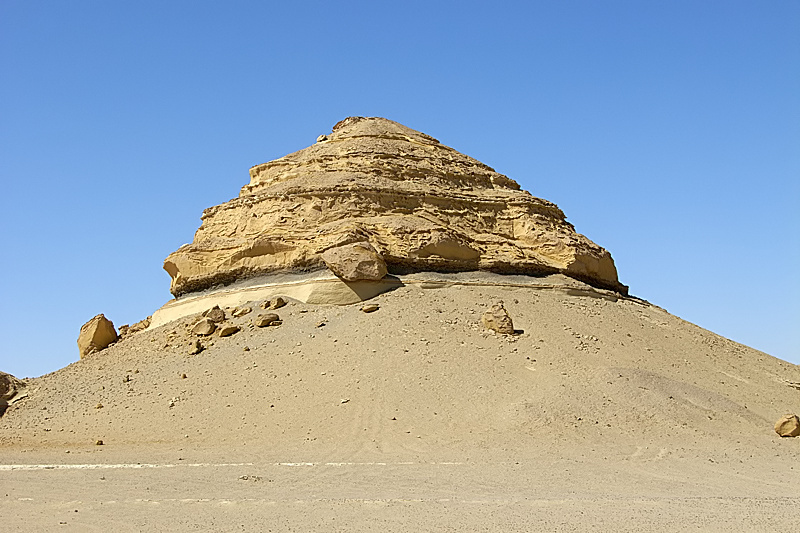
© Roland Unger, CC BY-SA 3.0 Resized from original. (This derivative is under the same CC BY-SA license.)
World Heritage Research
Discover scientific research and academic studies that deepen our understanding of Wadi Al-Hitan (Whale Valley) from its history and significance to its conservation, management, and contemporary challenges.
-
Wadi Al-Hitan or ‘Valley of Whales’ – an Eocene World Heritage Site in the Western Desert of Egypt
Wadi Al-Hitan, or the 'Valley of Whales,' is a UNESCO World Heritage Site renowned for its exceptional fossil record, particularly of Eocene whales. This site preserves some of the most complete skulls and skeletons of archaic whales, such as Basilosaurus isis and Dorudon atrox, dating back 38 to 36 million years. The fossils, found in sedimentary strata formed during fluctuating sea levels, provide a unique window into the Tethys Sea's nearshore marine environments. Additionally, the site includes remains of other marine life such as sea cows, crocodiles, turtles, bony fishes, and sharks. The exposed geological layers allow for detailed stratigraphic analysis, making Wadi Al-Hitan invaluable for both scientific research and public education.
Gingerich, P. D. (2023). Wadi Al-Hitan or ‘Valley of Whales’ – an Eocene World Heritage Site in the Western Desert of Egypt. Geological Society, London, Special Publications, 543(1), 421–430. https://doi.org/10.1144/sp543-2022-203
View Publication Record | Read Publication