
World Heritage Identification Number: 1314
World Heritage since: 2009
Category: Natural Heritage
WHE Type: Natural Landscapes & Geographic Features
Transboundary Heritage: Yes
Endangered Heritage: No
Country: Denmark, Germany, Netherlands (Kingdom of the)
Continent: Europe
UNESCO World Region: Europe and North America
Map
The Wadden Sea: A Unique Intertidal Ecosystem on the North Sea
The Wadden Sea, located in the southeastern part of the North Sea, is a unique intertidal ecosystem renowned for its rich biodiversity and significant ecological importance. This vast, shallow body of water stretches between the northwestern European coastline and the Frisian Islands, covering an area of approximately 11,430 square kilometers. In 2009, the Dutch and German sections of the Wadden Sea were inscribed onto the UNESCO World Heritage List, with the Danish part added in 2014, recognizing its outstanding universal value as a large-scale, intertidal ecosystem where natural processes continue to function largely undisturbed.
The Wadden Sea is characterized by its complex network of tidal channels, sandy shoals, sea-grass meadows, mussel beds, sandbars, mudflats, salt marshes, estuaries, beaches, and dunes. These diverse habitats provide essential living conditions for a multitude of plant and animal species, making it an important refuge for various populations of migratory and resident fauna.
A particularly important feature of the Wadden Sea is its role for migratory birds during their annual journeys. The region lies on the East Atlantic Flyway, providing critical stopover sites for millions of birds each year. Species such as the red knot, oystercatcher, godwit, and avocet rely on the Wadden Sea’s rich intertidal zones to refuel during migration. The area also hosts significant numbers of common eiders, which mainly use the Wadden Sea for moulting and wintering rather than breeding.
Marine mammals are another integral component of the Wadden Sea's diverse ecosystem. Harbour seals, grey seals, and harbor porpoises inhabit these waters, contributing to the overall health and balance of the ecosystem. The presence of these animals not only highlights the ecological significance of the Wadden Sea but also underscores its importance as a vital component of the larger North Sea ecosystem.
Plant life thrives in the Wadden Sea as well, with various species of algae, sea grasses, and other submerged vegetation playing essential roles in maintaining water quality and providing food sources for numerous organisms. Salt marshes along the coastline offer additional habitat for a wide array of plant species, which in turn support a diverse community of invertebrates and birds.
Despite its remarkable ecological importance, the Wadden Sea faces numerous threats from human activities. Pollution, overfishing, and coastal development pose significant challenges to the long-term sustainability of this fragile ecosystem. To mitigate these threats, various conservation efforts have been implemented, including the establishment of protected areas and the implementation of sustainable fishing practices.
To bring it all together, the Wadden Sea represents a unique and irreplaceable intertidal ecosystem that plays a critical role in maintaining the ecological balance of the North Sea. Its rich biodiversity, including numerous bird and marine mammal species, underscores its importance as a vital refuge and stopover point for migratory birds. However, ongoing threats from human activities necessitate continued conservation efforts to ensure the long-term sustainability of this remarkable ecosystem.
UNESCO Description of the World Heritage Site
The Wadden Sea is the largest unbroken system of intertidal sand and mud flats in the world. The site covers the Dutch Wadden Sea Conservation Area, the German Wadden Sea National Parks of Lower Saxony and Schleswig-Holstein, and most of the Danish Wadden Sea maritime conservation area. It is a large, temperate, relatively flat coastal wetland environment, formed by the intricate interactions between physical and biological factors that have given rise to a multitude of transitional habitats with tidal channels, sandy shoals, sea-grass meadows, mussel beds, sandbars, mudflats, salt marshes, estuaries, beaches and dunes. The area is home to numerous plant and animal species, including marine mammals such as the harbour seal, grey seal and harbour porpoise. Wadden Sea is one of the last remaining large-scale, intertidal ecosystems where natural processes continue to function largely undisturbed.
UNESCO Justification of the World Heritage Site
Criterion (viii): The Wadden Sea is a depositional coastline of unparalleled scale and diversity. It is distinctive in being almost entirely a tidal flat and barrier system with only minor river influences, and an outstanding example of the large-scale development of an intricate and complex temperate-climate sandy barrier coast under conditions of rising sea-level. Highly dynamic natural processes are uninterrupted across the vast majority of the property, creating a variety of different barrier islands, channels, flats, gullies, saltmarshes and other coastal and sedimentary features.
Criterion (ix): The Wadden Sea includes some of the last remaining natural large-scale intertidal ecosystems where natural processes continue to function largely undisturbed. Its geological and geomorphologic features are closely entwined with biophysical processes and provide an invaluable record of the ongoing dynamic adaptation of coastal environments to global change. There are a multitude of transitional zones between land, sea and freshwater that are the basis for the species richness of the property. The productivity of biomass in the Wadden Sea is one of the highest in the world, most significantly demonstrated in the numbers of fish, shellfish and birds supported by the property. The property is a key site for migratory birds and its ecosystems sustain wildlife populations well beyond its borders.
Criterion (x): Coastal wetlands are not always the richest sites in relation to faunal diversity; however this is not the case for the Wadden Sea. The salt marshes host around 2,300 species of flora and fauna, and the marine and brackish areas a further 2,700 species, and 30 species of breeding birds. The clearest indicator of the importance of the property is the support it provides to migratory birds as a staging, moulting and wintering area. Up to 6.1 million birds can be present at the same time, and an average of 10-12 million each year pass through the property. The availability of food and a low level of disturbance are essential factors that contribute to the key role of the property in supporting the survival of migratory species. The property is the essential stopover that enables the functioning of the East Atlantic and African-Eurasian migratory flyways. Biodiversity on a worldwide scale is reliant on the Wadden Sea.
Encyclopedia Record: Wadden Sea
The Wadden Sea is an intertidal zone in the southeastern part of the North Sea. It lies between the coast of northwestern continental Europe and the range of low-lying Frisian Islands, forming a shallow body of water with tidal flats and wetlands. It has high biological diversity and is an important area for both breeding and migrating birds. In 2009, the Dutch and German parts of the Wadden Sea were inscribed on UNESCO's World Heritage List and the Danish part was added in June 2014.Additional Site Details
Area: 1,143,403 hectares
Number of Components: 8
(ix) — Outstanding example representing ecological and biological processes
(x) — Contains most important habitats for biodiversity
Coordinates: 53.5286111111 , 8.5561111111
IUCN World Heritage Outlook
The 2025 Conservation Outlook on Wadden Sea reports the following assessment:
Source: International Union for Conservation of Nature (IUCN) · View assessment
Image
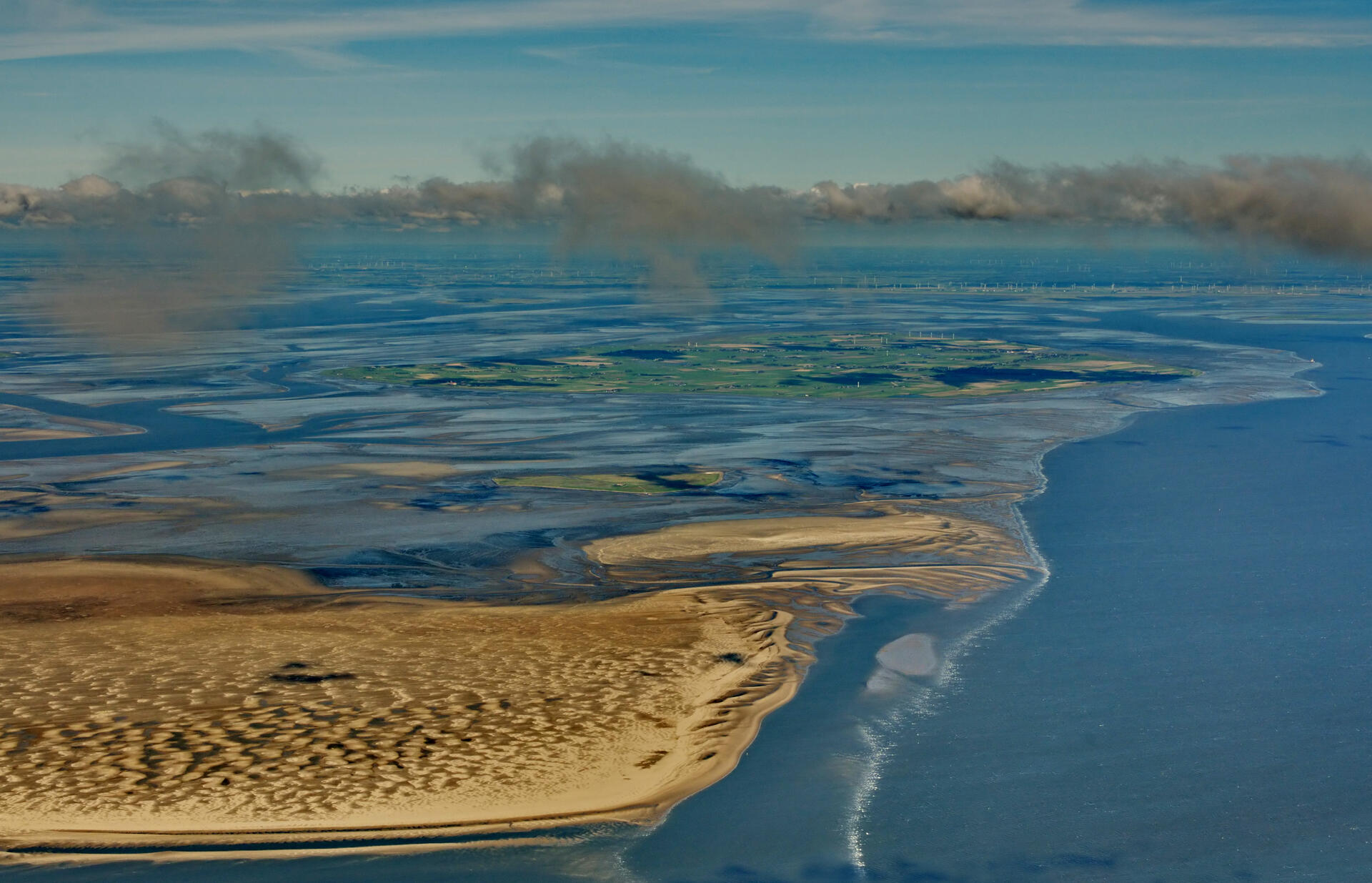
© Ralf Roletschek, CC BY-SA 3.0 Resized from original. (This derivative is under the same CC BY-SA license.)