World Heritage Identification Number: 272
World Heritage since: 1987
Category: Cultural Heritage
WHE Type: Historic Cities & Urban Areas
Transboundary Heritage: No
Endangered Heritage: No
Country: 🇩🇪 Germany
Continent: Europe
UNESCO World Region: Europe and North America
Map
The Hanseatic City of Lübeck: A Medieval Gem in Modern Times
The Hanseatic City of Lübeck, located in the northern German state of Schleswig-Holstein, stands as a testament to the enduring legacy of medieval trade and political power. Founded in the 12th century, Lübeck flourished as the leading city and de facto center of the Hanseatic League, a powerful confederation of merchant guilds and market towns that dominated the economic landscape of northern Europe from the 13th to the 17th centuries. Today, the city retains much of its historical charm while maintaining a vibrant modern character.
Lübeck's rich history is evident in its architectural heritage. The historic old town, shaped largely between the 13th and 16th centuries, showcases an impressive array of patrician residences, public monuments, churches, and salt storehouses. One such monument is the Holstentor, a brick gate built between 1464 and 1478 that serves as the symbol of Lübeck. This iconic structure, with its distinctive towers and ornate carvings, provides a glimpse into the city's past grandeur.
The gate’s cultural significance extends well beyond the city itself. The Holstentor was featured on the reverse of the 50 Deutsche Mark banknote, underscoring its status as a nationally recognized emblem of German history and trade. This recognition was later reaffirmed when the Holstentor appeared on Germany’s €2 commemorative coin for Schleswig-Holstein, issued as part of the Federal States series.
Religious buildings also play a significant role in Lübeck's urban fabric. Among them, the Marienkirche (Church of Our Lady) stands out. Constructed between 1303 and 1350, it is one of the largest brick Gothic churches in the world. Its impressive dimensions and intricate interior details attest to the wealth and influence of the city during the Middle Ages.
Despite suffering extensive damage during World War II, Lübeck's historic core has been meticulously restored, preserving its unique character. The city's commitment to preserving its heritage has earned it recognition as a UNESCO World Heritage Site since 1987.
Beyond its historical significance, Lübeck is a bustling contemporary city with a diverse economy. It continues to serve as a vital hub for maritime commerce, particularly with the Nordic countries. The city's strategic location on the Trave River and the Baltic Sea has contributed to its continued importance in trade and transportation.
In addition to its commercial activities, Lübeck boasts a rich cultural scene. The city hosts numerous festivals and concert series, including major events associated with the Schleswig-Holstein Music Festival and other renowned concert series, which attracts renowned musicians and audiences from around the globe. The city's museums, such as the Museumsquartier St. Annen, the European Hansemuseum, the Buddenbrookhaus, and the Günter Grass House, offer in-depth insights into the city’s history, art, and literary heritage.
In sum, the Hanseatic City of Lübeck offers visitors a captivating blend of medieval charm and modern vibrancy. Its well-preserved historic center, symbolized by the Holstentor, provides a tangible link to the city's illustrious past in its leading role as “Queen” of the Hanseatic League. Meanwhile, its thriving contemporary economy, cultural events, and museums ensure that Lübeck remains a compelling destination for travelers seeking to explore the rich tapestry of northern European history.
UNESCO Description of the World Heritage Site
Lübeck – the former capital and Queen City of the Hanseatic League – was founded in the 12th century and prospered until the 16th century as the major trading centre for northern Europe. It has remained a centre for maritime commerce to this day, particularly with the Nordic countries. Despite the damage it suffered during the Second World War, the basic structure of the old city, consisting mainly of 15th- and 16th-century patrician residences, public monuments (the famous Holstentor brick gate), churches and salt storehouses, remains unaltered.
UNESCO Justification of the World Heritage Site
Criterion (iv): As outstanding examples of types of buildings, the most authentic areas of the Hanseatic City of Lübeck exemplify the power and the historic role of the Hanseatic League.
Encyclopedia Record: Lübeck
Lübeck, officially the Hanseatic City of Lübeck, is a city in Northern Germany. With around 220,000 inhabitants, it is the second-largest city on the German Baltic coast and the second-largest city in the state of Schleswig-Holstein, after its capital of Kiel. It is the 36th-largest city in Germany.Additional Site Details
Area: 81.1 hectares
Number of Components: 3
Coordinates: 53.86667 , 10.69167
Image
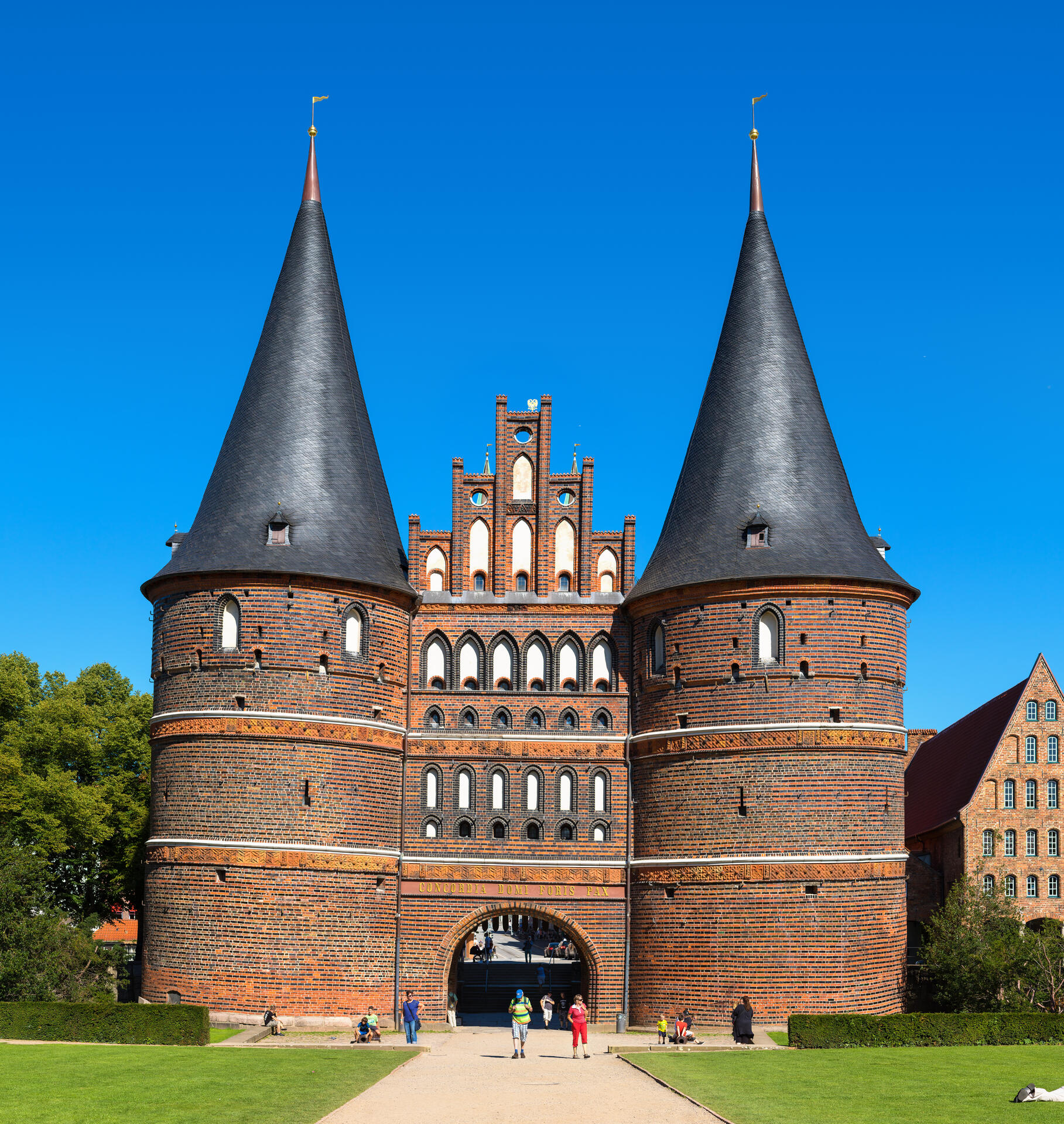
© Christian Wolf (www.c-w-design.de), CC BY-SA 3.0 de Resized from original. (This derivative is under the same CC BY-SA license.)
World Heritage Research
Discover scientific research and academic studies that deepen our understanding of Hanseatic City of Lübeck from its history and significance to its conservation, management, and contemporary challenges.
-
Rolf Hammel-Kiesow i jego badania nad historią Hanzy i miast hanzeatyckich
Rolf Hammel-Kiesow's scholarly work on the history of the Hanseatic League and its cities, particularly Lübeck, is highlighted for its critical approach to historiographical tradition and deep engagement with historical sources. His research, spanning over three decades, focused on the spatial and socio-topographic structure of Lübeck, comparative economic studies of the Hanseatic region from 1300 to 1800, and synthetic analyses of the Hanseatic League's organization. Key contributions include his doctoral dissertation on property ownership in late medieval Lübeck and his leadership in significant research centers. His methodology combined rigorous source analysis with advanced methodological reflection, setting a benchmark for historical studies in the field.
Czaja, R. (2026). Rolf Hammel-Kiesow i jego badania nad historią Hanzy i miast hanzeatyckich. Zapiski Historyczne. Poświęcone Historii Pomorza I Krajów Bałtyckich, XCI(2), 95–109. https://doi.org/10.15762/zh.2026.15
View Publication Record | Read Publication -
Councils, Conflicts, Correspondence
A comparative analysis of the diplomatic strategies employed by the city councils of Lübeck and Reval during the 15th and 16th centuries reveals how magistrates navigated complex conflicts that often exceeded their formal jurisdiction. The study highlights a flexible approach to the common good and pragmatic reciprocity, balancing relationships with citizens, overlords, the Hanse, and foreign rulers. By examining written correspondence and face-to-face negotiations at regional and Hanseatic diets, the research uncovers diverse tactics used by diplomats in managing intercity disputes and large-scale conflicts, offering new insights into European urban political thought and practice of the period.
Manger, C. (2026). Councils, Conflicts, Correspondence. Studies in European Urban History (1100-1800). https://doi.org/10.1484/m.seuh-eb.5.138166
View Publication Record | Read Publication -
The Invention of the Old City. A Didactic Experiment: Three Projects for Lübeck
Recent urban transformations in Lübeck's medieval Gründungsviertel (Founders District) demonstrate the effectiveness of critical reconstruction principles, which blend historical morphology with contemporary design. This approach, tested through a didactic experiment at Politecnico di Milano, successfully replaced outdated post-war structures around the Marktplatz and Buddenbrookhaus with new buildings that reinterpret original forms while maintaining legibility. The study highlights how such interventions can preserve urban character while addressing modern needs, offering a model for other German city centers facing similar challenges.
Caja, M., & Sacerdoti, P. (2025). The Invention of the Old City. A Didactic Experiment: Three Projects for Lübeck. Urban Morphology versus Urban Redevelopment and Revitalisation, 477–495. https://doi.org/10.1007/978-3-031-77752-3_24
View Publication Record | Read Publication -
A new bridge for the historic city centre of Lübeck
A new footbridge, the Stadtgrabenbrücke, has been designed to address congestion at key entrances to Lübeck's historic city center while adhering to strict preservation and accessibility standards. The bridge, commissioned in 2021, ensures a minimum 5-meter clearance above water and a 3% gradient toward the old town island, balancing functionality with historical integrity. Located in the moat’s nature conservation area, it symbolizes a connection between past and future, serving both tourists and residents. The study highlights the challenges of integrating modern infrastructure within UNESCO-protected sites while preserving visual and ecological sensitivity.
Schäfer, C., LEZIUS, H., Pfisterer, M., & Vielhaber, T. (2025). A new bridge for the historic city centre of Lübeck. Footbridge Chur 2025, Chur: In Situ. https://doi.org/10.24904/footbridge2025.62
View Publication Record | Read Publication -
Fragments from the book about the Narva trade Nowgorodfahrer from Lübeck: Fees on goods exported from Narva during the Livonian War
A rare merchant's book from the Hanseatic city of Lübeck reveals that export fees on goods from Narva during the Livonian War (1563–1577) were not only a key revenue source for the Nowgorodfahrer trade association but also reflected political instability in the Baltic region. The analysis of commodity lists—covering 1563, 1564, 1568, and 1577—showed that fluctuations in fees correlated with shifts in regional power dynamics, providing a previously overlooked economic lens on wartime trade. These fees supported collective activities such as warehouse maintenance, ship chartering, and personnel costs, offering new insights into Hanseatic commercial logistics during conflict.
Ushakov, A. V. (2025). Fragments from the book about the Narva trade Nowgorodfahrer from Lübeck: Fees on goods exported from Narva during the Livonian War. Петербургский Исторический Журнал, 1(45), 227–237. https://doi.org/10.51255/2311-603x_2025_1_227
View Publication Record | Read Publication -
The politics of reciprocity: urban councils and intercity conflict management in Reval (Tallinn) and Lübeck, c. 1470–1570
Hanseatic cities employed sophisticated diplomatic strategies to manage intercity conflicts while preserving economic and political cooperation. This study examines disputes between Lübeck and Reval (Tallinn) from 1470 to 1570, revealing how urban councils navigated tensions over trade fraud, debt, and inheritance without undermining their Hanseatic partnerships. The research highlights the delicate balance cities maintained—defending their burghers while upholding collective interests—through a combination of legal negotiation, mediation, and strategic alliances. By analyzing archival records and diplomatic correspondence, the study demonstrates how reciprocity in conflict resolution sustained both local and regional stability during this pivotal period.
Manger, C. (2024). The politics of reciprocity: urban councils and intercity conflict management in Reval (Tallinn) and Lübeck, c. 1470–1570. Urban History, 52(2), 374–387. https://doi.org/10.1017/s0963926824000117
View Publication Record | Read Publication -
The Lübeck Magistrate 1594 Open Letters from the Russian State Archives of Ancient Documents
A rare collection of 16 open letters from the Lübeck City Council, dated 1594 and preserved in the Russian State Archives of Ancient Documents, sheds light on the Russian-Hanseatic trade dynamics following the Livonian War (1558–1583) and preceding the Trade Peace Agreement of 1603. These letters, issued to Hanseatic merchants traveling to Russia, served as certifications of goods' Hanseatic origin, providing critical insights into commodity exchange rules and German merchant privileges in Russian markets. The study reveals that these merchants were closely connected to Lübeck’s ‘Novgorod guests’ (Nowgorodfahrer), a prominent commercial association that played a pivotal role in late medieval and early modern trade between Russia and the Hansa. By comparing these letters with similar documents from Tallinn City Archives, researchers identified key features of this trade relationship, including possessory signs used by merchants. The analysis highlights the significance of archival materials in reconstructing economic interactions during this transitional period.
Ushakov, A. V. (2024). THE LÜBECK MAGISTRATE 1594 OPEN LETTERS FROM THE RUSSIAN STATE ARCHIVES OF ANCIENT DOCUMENTS. History and Archives, 6(2), 140–152. https://doi.org/10.28995/2658-6541-2024-6-2-140-152
View Publication Record | Read Publication