
World Heritage Identification Number: 1555
World Heritage since: 2021
Category: Cultural Heritage
WHE Type: Historic Cities & Urban Areas
Transboundary Heritage: Yes
Endangered Heritage: No
Country: Belgium, Netherlands (Kingdom of the)
Continent: Europe
UNESCO World Region: Europe and North America
Map
The Colonies of Benevolence: A Transnational Serial Property Testifying to an Enlightenment Experiment in Social Reform
The Colonies of Benevolence, inscribed on the UNESCO World Heritage List in 2021, represent a significant chapter in the history of social reform and settler colonialism. Spanning across three countries – the Netherlands, Belgium, and France – this transnational serial property offers a unique insight into an 19th-century model of pauper relief, known as an agricultural domestic colony.
More to come…UNESCO Description of the World Heritage Site
The transnational serial property is an Enlightenment experiment in social reform. These cultural landscapes demonstrate an innovative, highly influential 19th-century model of pauper relief and of settler colonialism, which today is known as an agricultural domestic colony. The property encompasses four Colonies of Benevolence in three component parts: Frederiksoord-Wilhelminaoord and Veenhuizen in the Netherlands, and Wortel in Belgium. Together they bear witness to a 19th century experiment in social reform, an effort to alleviate urban poverty by establishing agricultural colonies in remote locations. Established in 1818, Frederiksoord (the Netherlands) is the earliest of these Colonies and home to the original headquarters of the Society of Benevolence, an association which aimed to reduce poverty at the national level. The other component parts were constructed between 1820 and 1823. In Frederiksoord-Wilhelminaoord, small farms along planted avenues were built for families and this Colony was referred to as ‘free’. Wortel is a hybrid Colony, first built for families and called ‘free’, later inhabited by beggars and vagrants and catalogued as ‘unfree’. In Veenhuizen large dormitory structures and larger centralized farms along planted avenues were built for orphans, beggars and vagrants that worked under the supervision of guards. This colony was called ‘unfree’. Each component part has a distinctive spatial character, connected to the target group for which it was built, and a specific organization of the work, with either family farms or institutions with working farms for groups of individuals. The Colonies were designed as panoptic settlements along orthogonal lines. They feature residential buildings, farm houses, churches and other communal facilities. At their peak in the mid-19th century, over 11,000 people lived in such Colonies in the Netherlands. In Belgium their number peaked at 6,000 in 1910.
UNESCO Justification of the World Heritage Site
Criterion (ii): The Colonies of Benevolence bear testimony to an exceptional and nationwide Enlightenment experiment in social reform, through a system of large agricultural home colonies. They proposed a model of social engineering based upon the notion of ‘productive labour’, with the aim of transforming poor people into ‘industrious’ citizens and uncultivated ‘wastelands’ into productive land. In addition to work, education and moral upliftment were considered essential contributions to the aim of transforming poor people into self-reliant citizens. The Colonies of Benevolence were developed as systematic self-sustaining agricultural settlements with state-of-the-art social facilities. As such, the Colonies of Benevolence pioneered the domestic colony model, attracting considerable international attention. For more than a century, they exerted an influence on various types of custodial care in Western Europe and beyond.
Criterion (iv): The Colonies of Benevolence are an outstanding example of domestic agricultural colonies created in the 19th century with the social aim of poverty alleviation. Deliberately cultivated as ‘islands’ in remote domestic heath and peatland areas, the Colonies implemented the ideas of a panoptic institution for the poor in their functional and spatial organisation. They are an outstanding example of a landscape design that represents an agricultural home colony with a social aim. The landscape patterns reflect the original character of the different types of Colonies and their subsequent evolution, and illustrate the extent, the ambition and the evolution of this social experiment in its flourishing period (1818-1918).
Encyclopedia Record: Society of Humanitarianism
The Society of Humanitarianism was a Dutch private organization set up in 1818 by general Johannes van den Bosch to help poor families, mostly from the big cities, improve their lot in the aftermath of the Napoleonic French occupation by granting them farming land. He petitioned William I of the Netherlands for its formation and bought uncultivated land in Drenthe for the poor to exploit. The Estate 'Westerbeeksloot' in what is now Frederiksoord was the society's administrative center. The estate at Frederiksoord and the colonies built by the Society at Wilhelminaoord, Wortel and Veenhuizen were inscribed on the UNESCO World Heritage List in 2021 for their testimony to a unique 19th century philosophical movement and their outstanding urban planning.Additional Site Details
Area: 2,012 hectares
Number of Components: 3
(iv) — Outstanding example of a type of building or landscape
Coordinates: 53.0422222222 , 6.3915888889
Image
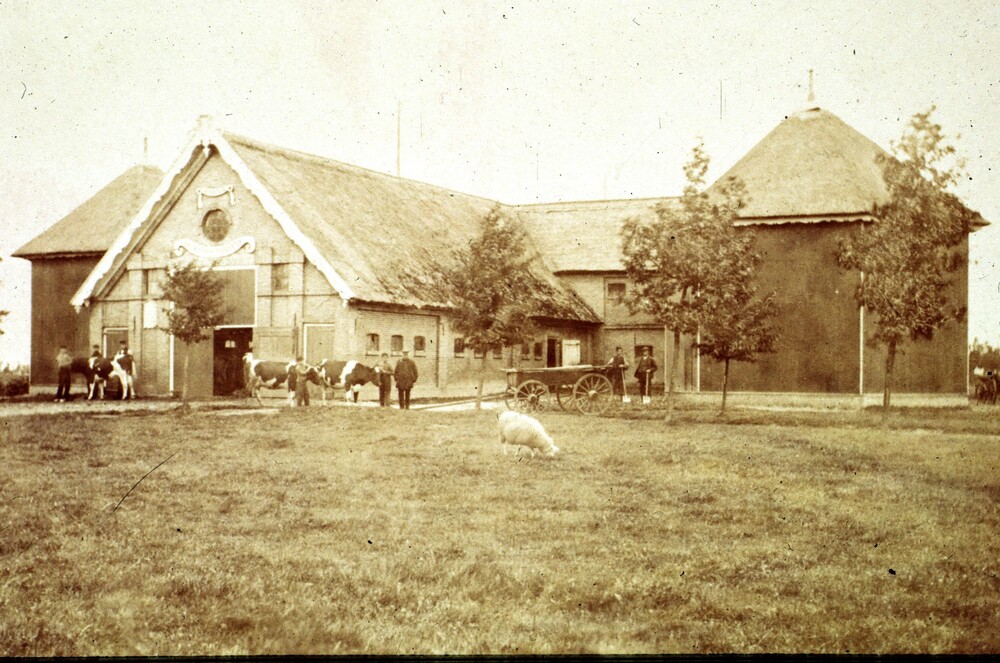
© Maatschappij van. Used with permission.
World Heritage Research
Discover scientific research and academic studies that deepen our understanding of Colonies of Benevolence from its history and significance to its conservation, management, and contemporary challenges.
-
From common land to farmhouses: agricultural penal colonies and the project of modern rurality in Sardinia, Italy
Sardinia's agricultural penal colonies, established between the 1860s and 1960s, served as 'institutions of dispossession' that accelerated the ideological shift away from feudalism, commonality, and pastoralism. These colonies, part of a broader European trend, were designed to reshape rural landscapes through large-scale spatial planning, intersecting with internal colonization and settler colonialism. The study analyzes their role in Italy's political transitions, comparing them to similar projects like the Dutch 'Colonies of Benevolence' and France's Mettray penal colony. It highlights their impact on Sardinia's rural domain, linking them to later civilian agrarian plans such as Fascist reclamation efforts and post-war reforms.
Puddu, S. (2023). From common land to farmhouses: agricultural penal colonies and the project of modern rurality in Sardinia, Italy. The Journal of Architecture, 28(7), 1184–1213. https://doi.org/10.1080/13602365.2023.2297477
View Publication Record | Read Publication -
Colonies of benevolence: A carceral archipelago of empire in the greater Netherlands
The Colonies of Benevolence, an early 19th-century Dutch social experiment, emerged as a model for pauper relief and rehabilitative discipline, challenging traditional notions of imprisonment. This 'carceral archipelago' served as a blueprint for domestic settler colonialism and was widely emulated across Europe and in Java, lasting over a century. The study reveals that this system addressed Liberalism's contradictions by disciplining the property-less without incarceration, offering insight into its dual role as both a colony and a 'prison designed not to be a prison.' By analyzing Foucault's omission of colonialism, the research contextualizes the experiment within broader imperial dynamics.
Schrauwers, A. (2020). Colonies of benevolence: A carceral archipelago of empire in the greater Netherlands. History and Anthropology, 31(3), 352–370. https://doi.org/10.1080/02757206.2020.1762592
View Publication Record | Read Publication -
Levende cultuurlandschappen als Werelderfgoed
This study highlights that change within UNESCO World Heritage Sites, particularly 'living' or 'continuing' cultural landscapes, is feasible but requires careful management and a focus on quality. The research challenges traditional European notions of heritage authenticity and the nature-culture divide by incorporating perspectives from Asia and Africa. It emphasizes the importance of involving landscape architects and adopting concepts like layered landscapes and path dependency to guide sustainable development. The study examines five case studies, including the Colonies of Benevolence, to illustrate these principles.
RENES, H. (2019). Levende cultuurlandschappen als Werelderfgoed. Tijdschrift Voor Historische Geografie, 4(3), 168–184. https://doi.org/10.5117/thg2019.3.004.rene
View Publication Record | Read Publication