World Heritage Identification Number: 1683
World Heritage since: 2023
Category: Cultural Heritage
WHE Type: Buildings & Architectural Ensembles
Transboundary Heritage: No
Endangered Heritage: No
Country: 🇳🇱 Netherlands (Kingdom of the)
Continent: Europe
UNESCO World Region: Europe and North America
Map
A Journey Through Time: The Eisinga Planetarium in Franeker
The Eisinga Planetarium in Franeker, located in the province of Friesland, Netherlands, stands as a testament to human curiosity and ingenuity. This unique astronomical marvel, inscribed as a UNESCO World Heritage Site in 2023, offers a captivating glimpse into the past, providing visitors with an opportunity to witness the celestial movements as they were understood during the 18th century.
More to come…UNESCO Description of the World Heritage Site
Built between 1774 and 1781, this property is a moving mechanical scale model of the solar system as it was known at the time. Conceived and built by an ordinary citizen – the wool manufacturer Eise Eisinga – the model is built into the ceiling and south wall of the former living room/bedroom of its creator. Powered by one single pendulum clock, it provides a realistic image of the positions of the Sun, the Moon, the Earth and five other planets (Mercury, Venus, Mars, Jupiter and Saturn). The planets revolve around the Sun in real time and the distance between the planets is at scale. The model fills the entire ceiling of the room, making it one of the earliest predecessors of the ceiling and projection planetariums of the 20th and 21st centuries.UNESCO Justification of the World Heritage Site
Criterion (iv): The Koninklijk Eise Eisinga Planetarium (Royal Eise Eisinga Planetarium) is an outstanding example of an 18th-century orrery, representing exceptional creativity in its technical design and execution. The orrery provides an up-to-date and realistic image of the positions of the Sun, the Moon, the Earth and the five other planets that were known at the time. The planetarium mechanism is ingeniously attached to the original beam construction of the house, which was specially adapted for this purpose. In operation almost continuously since 1781, it consists of simple but robust components, such as wooden hoops and discs, and iron pins. As a technological ensemble, it continues to contribute to the dissemination of astronomical knowledge, and in particular to the understanding of the heliocentric model of the Universe. The property is also associated with the transfer of scientific knowledge to a wider audience in 18th-century society.
Encyclopedia Record: Eise Eisinga Planetarium
The Royal Eise Eisinga Planetarium is an 18th-century orrery in Franeker, Friesland, Netherlands. It is currently a museum and open to the public. The orrery has been on the top 100 Dutch heritage sites list since 1990. In September 2023, it received the status of UNESCO World Heritage Site. It is the oldest working orrery in the world.Additional Site Details
Area: 0.009 hectares
Number of Components: 1
Coordinates: 53.187375 , 5.5437527778
Image
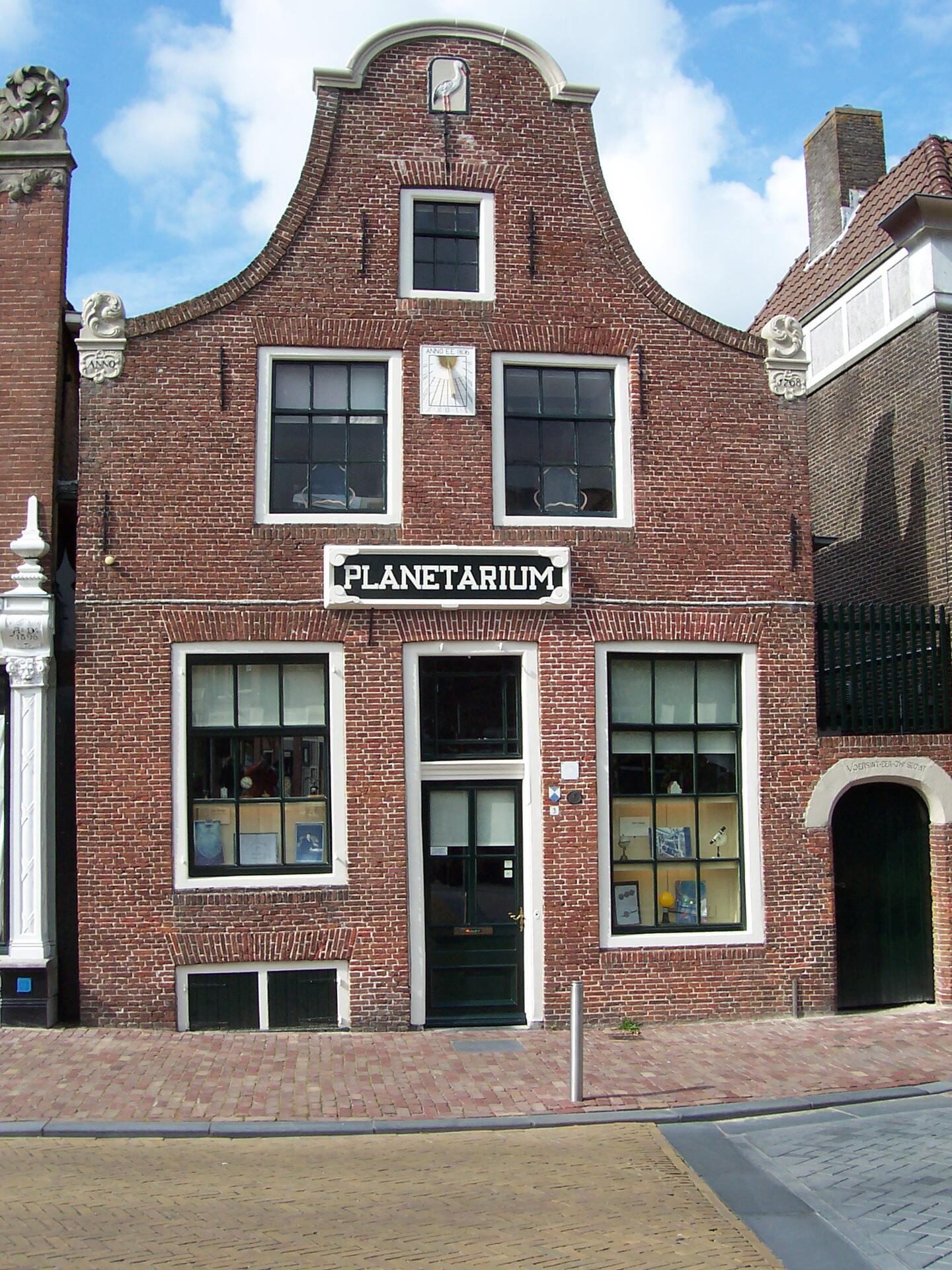
© Bouwe Brouwer, CC BY-SA 3.0 Resized from original. (This derivative is under the same CC BY-SA license.)
World Heritage Research
Discover scientific research and academic studies that deepen our understanding of Eisinga Planetarium in Franeker from its history and significance to its conservation, management, and contemporary challenges.
-
Eise Eisinga's World: The Profile of a Devotee to Astronomy between Enlightenment and Romanticism
Eise Eisinga, the creator of the Franeker Planetarium, is not merely an autodidact working in isolation but a devotee to astronomy and mathematics shaped by his time. This study challenges the long-held belief that Eisinga's work was unknown to others, instead revealing him as part of a broader network of knowledge exchange across 18th-century Netherlands. By tracing his connections and contextualizing his contributions within the intellectual landscape near universities, the research sheds light on how astronomy and mathematics thrived outside formal academic institutions during the Enlightenment and Romanticism eras.
Dijkstra, A. (2025). Eise Eisinga’s World: The Profile of a Devotee to Astronomy between Enlightenment and Romanticism. Cultivating and Communicating Natural and Technical Knowledge around 1800, 47–78. https://doi.org/10.5117/9789463728577_ch03
View Publication Record | Read Publication -
Eise Eisinga was here
The Eisinga Planetarium, built by Eise Eisinga between 1774 and 1781, faces challenges to its authenticity due to alterations around 1900. While the ceiling and bedsteewand remain authentic, repairs and modifications—such as installing a stove and replacing windows for ventilation—have reduced the instrument's original state. Despite this, the Planetarium retains significant historical value and remains eligible for UNESCO World Heritage status. The study, based on government architect Jacobus van Lokhorst's reports, highlights the tension between preservation and necessary alterations, raising concerns about future authenticity as visitor numbers increase.
Vreeling, S. (2022). Eise Eisinga was here. Bulletin KNOB, 20–33. https://doi.org/10.48003/knob.121.2022.2.745
View Publication Record | Read Publication